Artwork
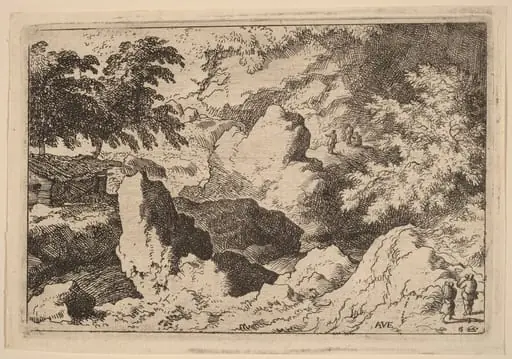
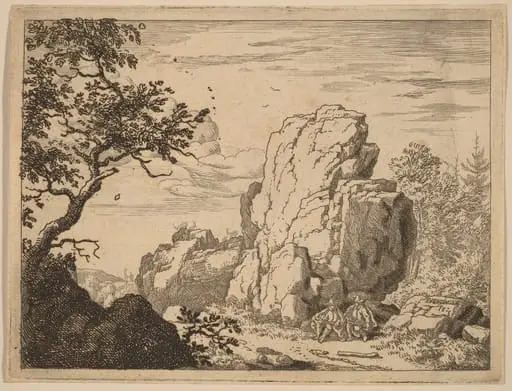
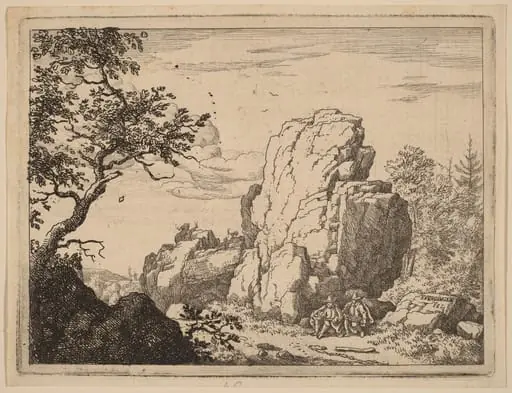
Three Men on a Rock
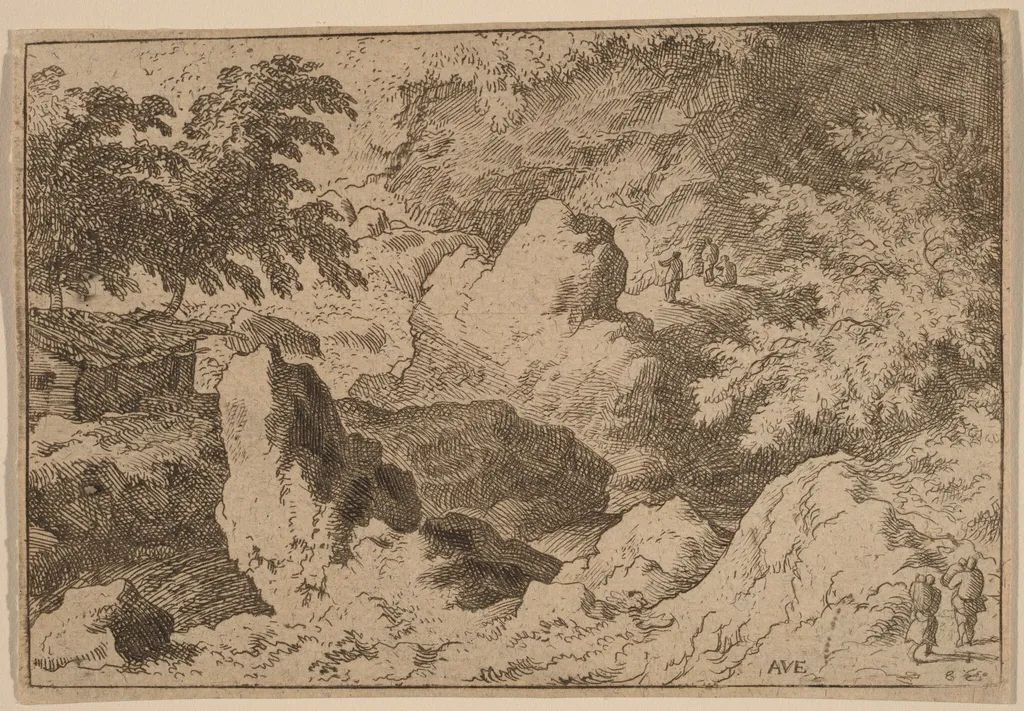
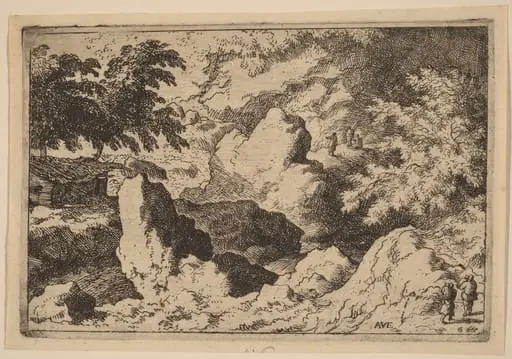
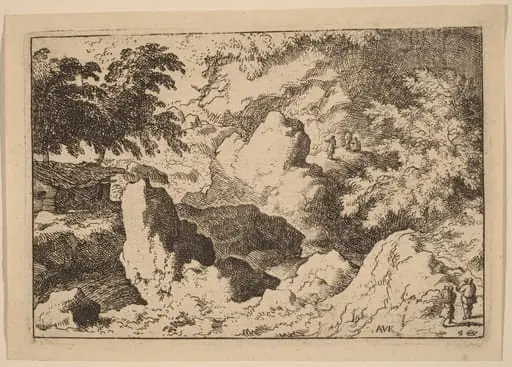
Three Men on a Rock is an ink print by the Baroque artist Allart van Everdingen. It dates from 1650 and is held in the collection of the National Gallery of Art.
About this work
Overview
Created circa 1650, *Three Men on a Rock* is a black‑and‑white print by Dutch artist Allart van Everdingen. Combining etching with engraving, the work presents a compact composition of three diminutive figures perched on a craggy outcrop amid a rugged, forested landscape. The piece exemplifies the printmaking practice that was prevalent in the Dutch Republic during the mid‑seventeenth century.
Subject & Meaning
The image concentrates on a solitary, rocky promontory occupied by three seated men, whose small scale emphasizes the dominance of the surrounding wilderness. By placing human figures within an untamed terrain, Everdingen underscores the tension between civilization and nature, a recurring theme in his landscape oeuvre.
Technique & Style
Everdingen employed a hybrid of etching and engraving on a copper plate. The etching process allowed him to incise fine, spontaneous lines that convey the texture of bark, rock, and grass, while the engraved passages add sharper, controlled edges to define form. The resulting surface is marked by dense, scratchy strokes that give the scene a tactile, almost rugged quality.
History & Provenance
The print belongs to Everdingen’s active period as a printmaker, when he produced numerous etchings and mezzotints for the Dutch market. Though specific ownership records are scarce, the work has been documented in several 19th‑century collections of Dutch prints and continues to appear in catalogues of Everdingen’s graphic output.
Artist & collection
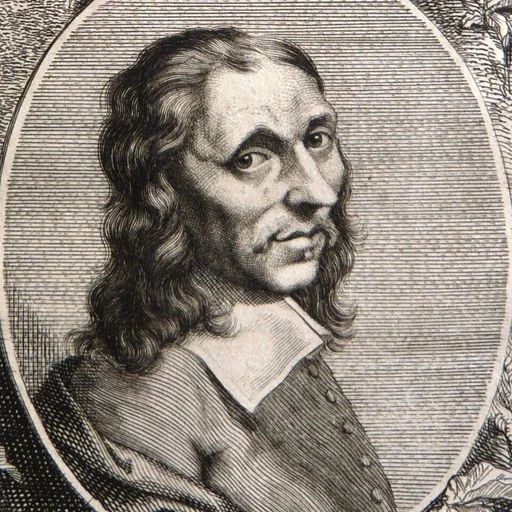
Artist
Allaert van Everdingen (Dutch pronunciation: ; bapt. 18 June 1621 – 8 November 1675 (buried)), was a Dutch Golden Age painter and printmaker in etching and mezzotint.