Artwork
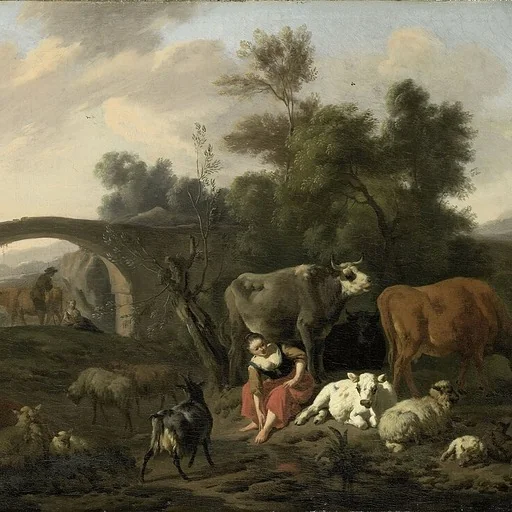
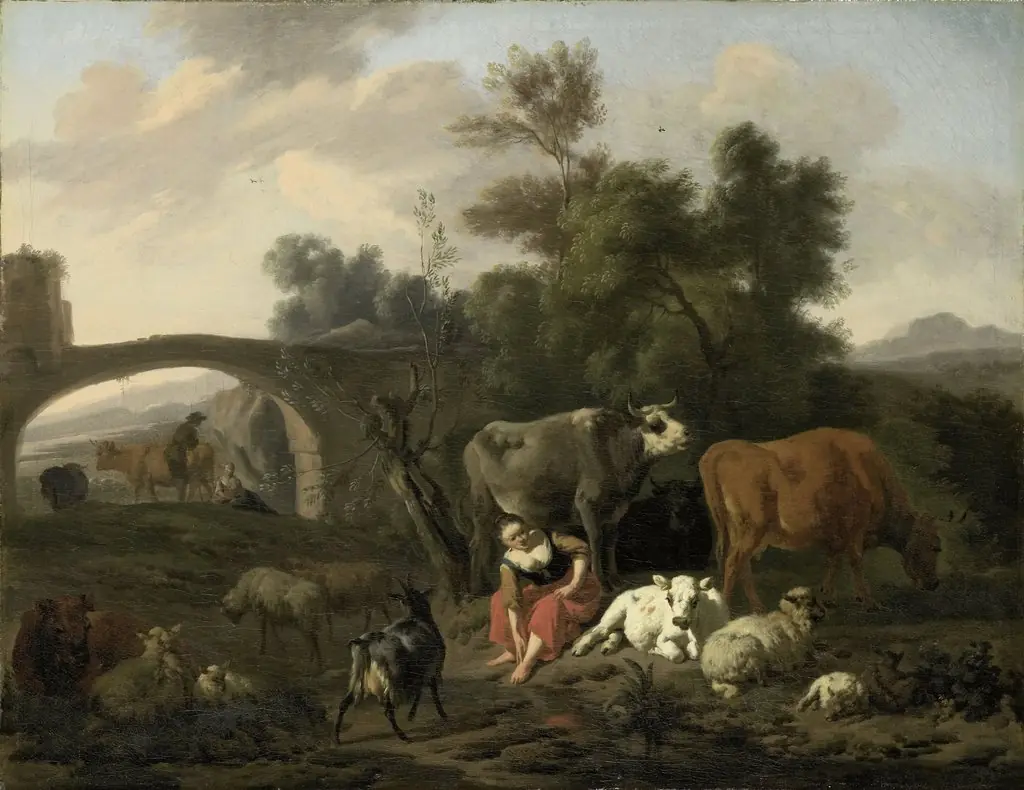
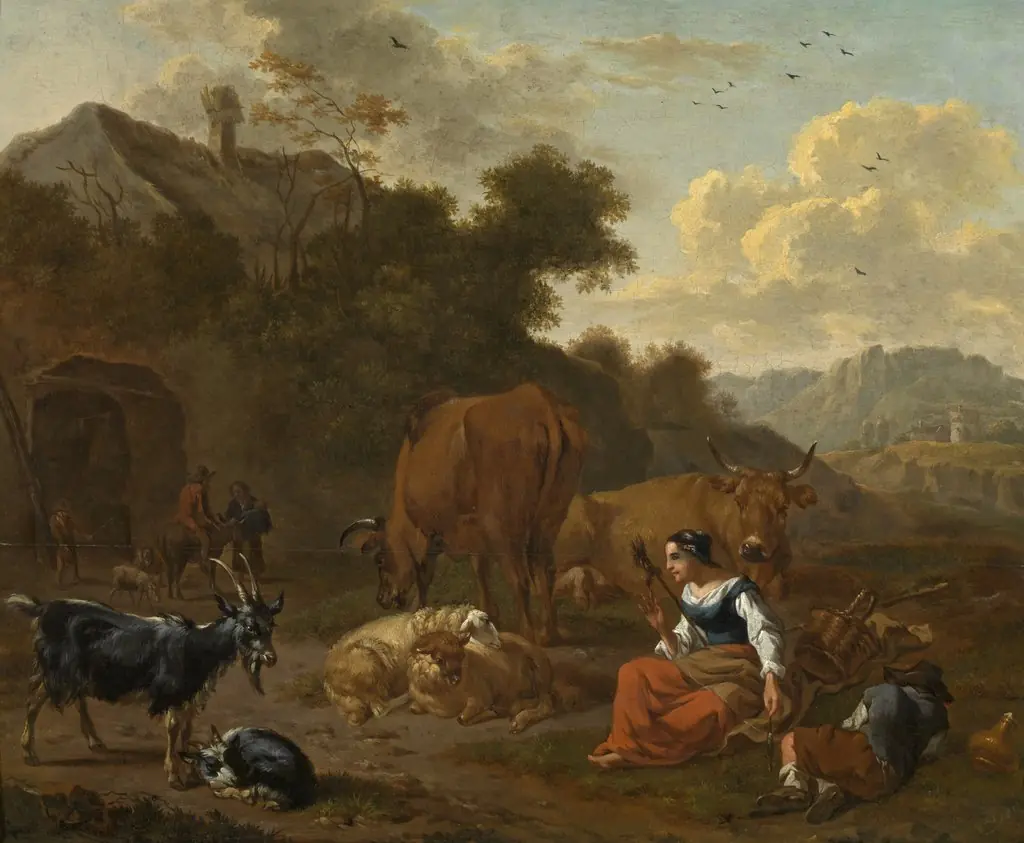
Mountainous landscape with a shepherdess and cows
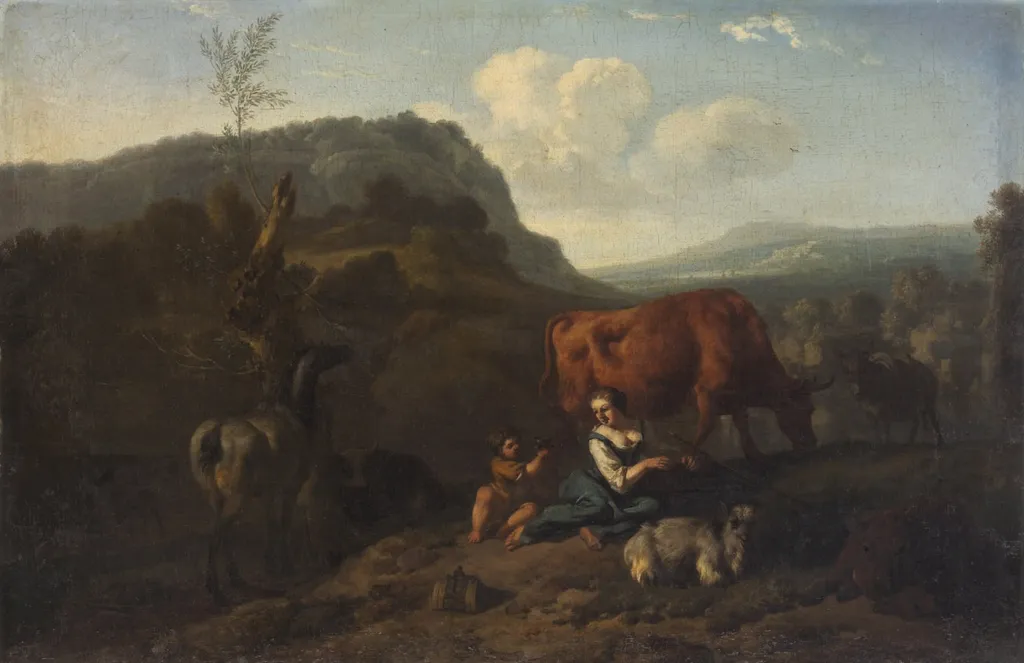
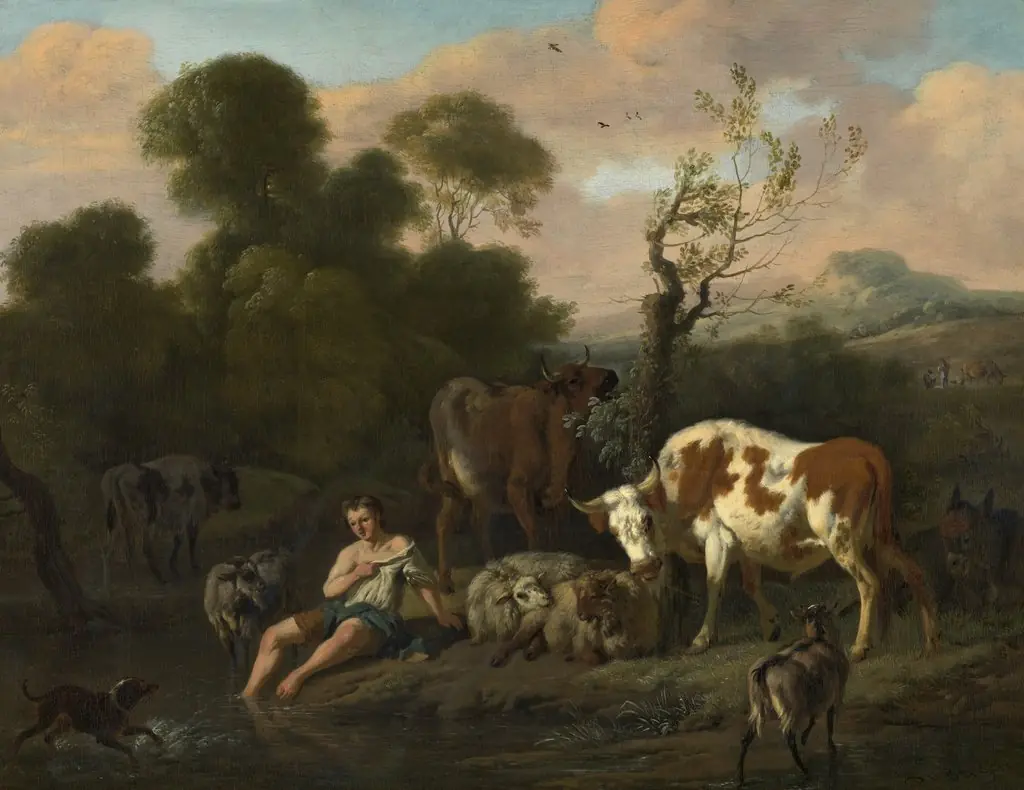
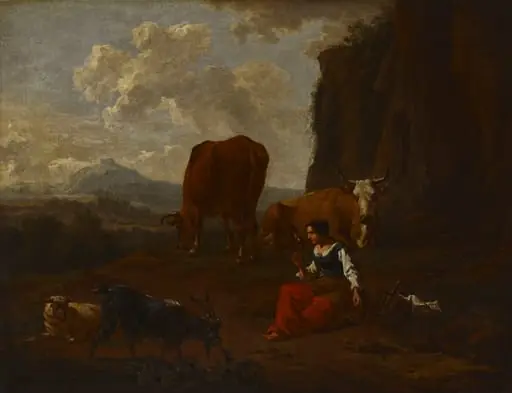
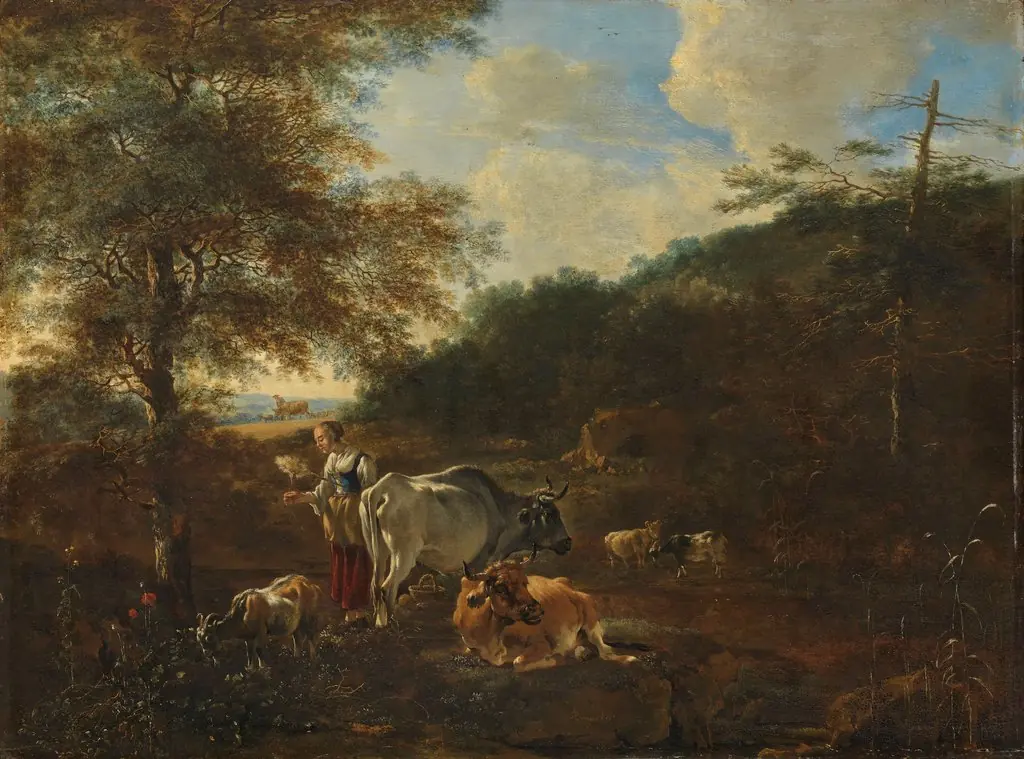
Mountainous landscape with a shepherdess and cows is an oil painting by the Dutch Golden Age artist Dirck van der Bergen. It dates from 1690 and is held in the collection of the Kunsthistorisches Museum.
About this work
Overview
The painting reflects a quiet, observational approach to pastoral life, typical of Dutch and Flemish landscape traditions of the late 17th century.
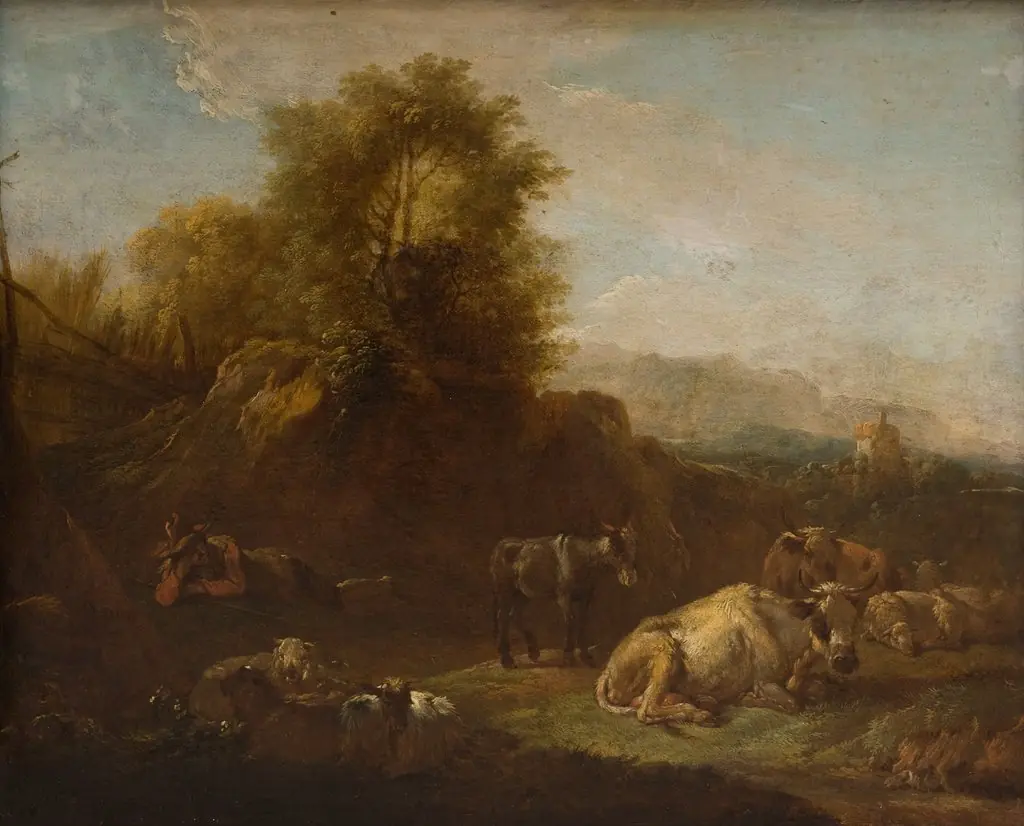
Painted in 1690 by Dirck van der Bergen, this oil-on-canvas work depicts a tranquil rural scene in a mountainous region. It belongs to the collection of the Kunsthistorisches Museum in Vienna. The composition centers on a shepherdess at rest with her herd, framed by rolling hills and distant peaks. The painting reflects a quiet, observational approach to pastoral life, typical of Dutch and Flemish landscape traditions of the late 17th century.
Subject & Meaning
The shepherdess, seated calmly amid her cattle, embodies a quiet diligence rather than dramatic narrative. Her simple attire and serene expression suggest harmony with the natural world. The presence of livestock and the undisturbed landscape imply an idealized, uneventful rhythm of rural labor. There is no overt symbolism; the meaning lies in the contemplative stillness and the dignity of everyday pastoral existence.
Technique & Style
Van der Bergen employs soft, warm tonalities to evoke a gentle atmosphere, with muted earth tones in the foreground giving way to cooler blues and grays in the distant mountains. Brushwork is restrained, favoring smooth transitions over texture or detail. The sky, lightly clouded, provides a calm backdrop that enhances the scene’s quietude. The composition is balanced, with the shepherdess positioned to guide the viewer’s eye through the layered landscape.
History & Provenance
The painting has been in the collection of the Kunsthistorisches Museum since at least the 19th century, though its earlier ownership is undocumented. It was likely acquired during a period of expanded interest in Dutch and Flemish landscape painting. No significant alterations or restorations are recorded, and the work remains in stable condition, preserving its original palette and surface.
Context
Created during a time when Dutch and Flemish artists increasingly turned to serene, non-narrative landscapes, this work aligns with a broader trend of valuing quiet naturalism over grand historical or religious themes. Van der Bergen, though less known than contemporaries like Ruisdael, contributed to a regional tradition that celebrated the dignity of rural life through understated observation rather than dramatic effect.
Legacy
Dirck van der Bergen’s painting remains a modest but representative example of late 17th-century pastoral landscape painting. It contributes to the understanding of how everyday rural scenes were rendered with calm precision, reflecting contemporary tastes for tranquility and natural order. While not widely reproduced, it continues to serve as a quiet reference within the museum’s broader collection of Northern European landscapes.
Artist & collection