Artwork
Landscape with a Rustic Bridge and Cattle
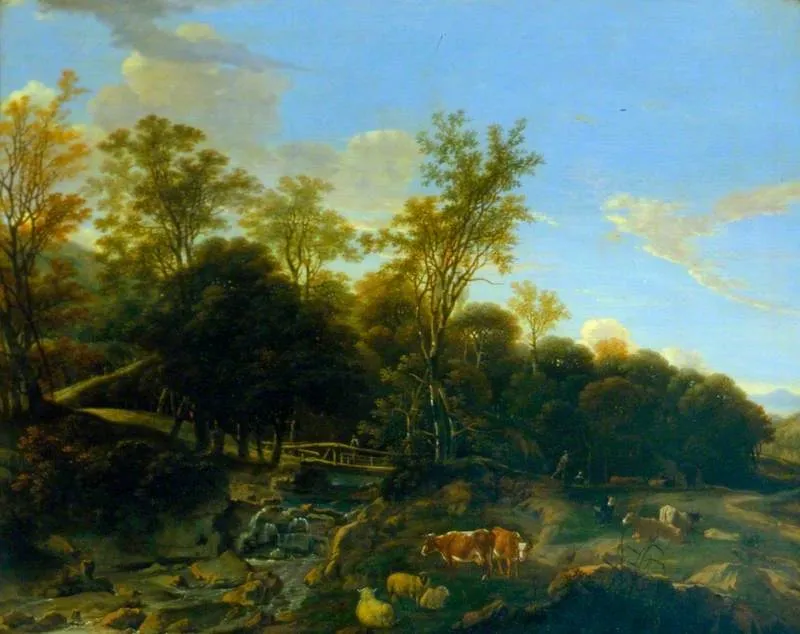
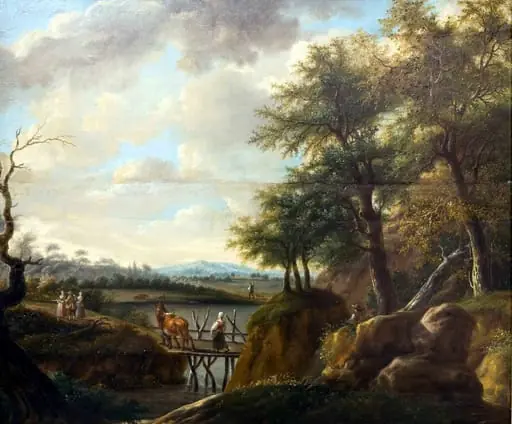
Landscape with a Rustic Bridge and Cattle is an oil painting by the Dutch Golden Age artist Dirck van der Lisse. It dates from 1648 and is held in the collection of the Victoria and Albert Museum.
About this work
Overview
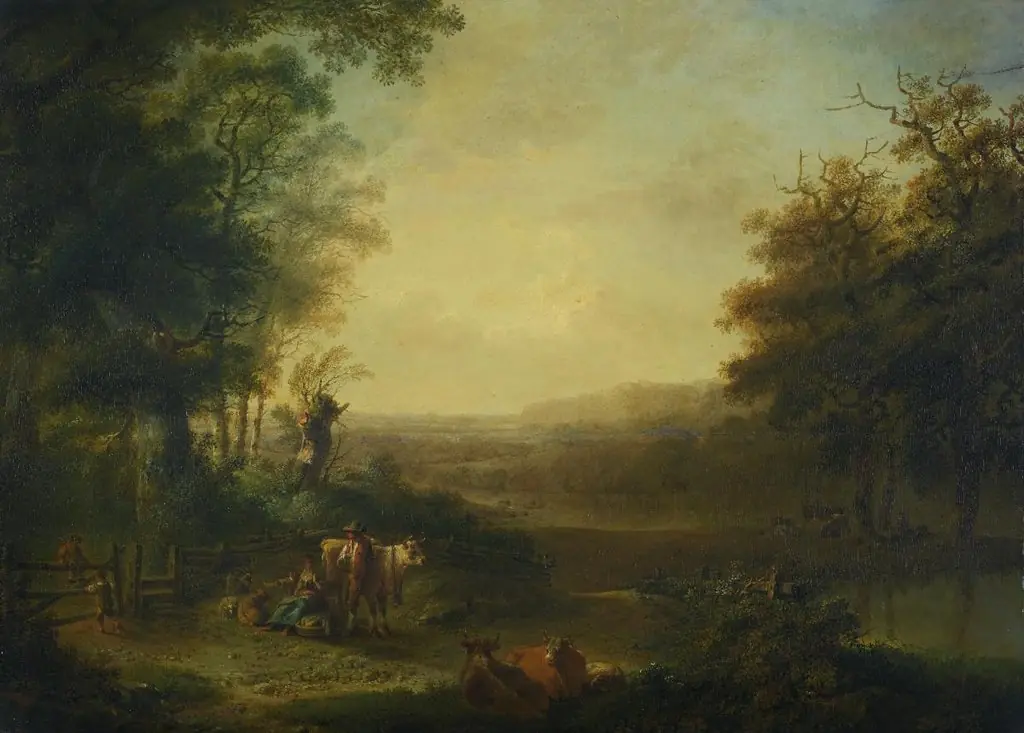
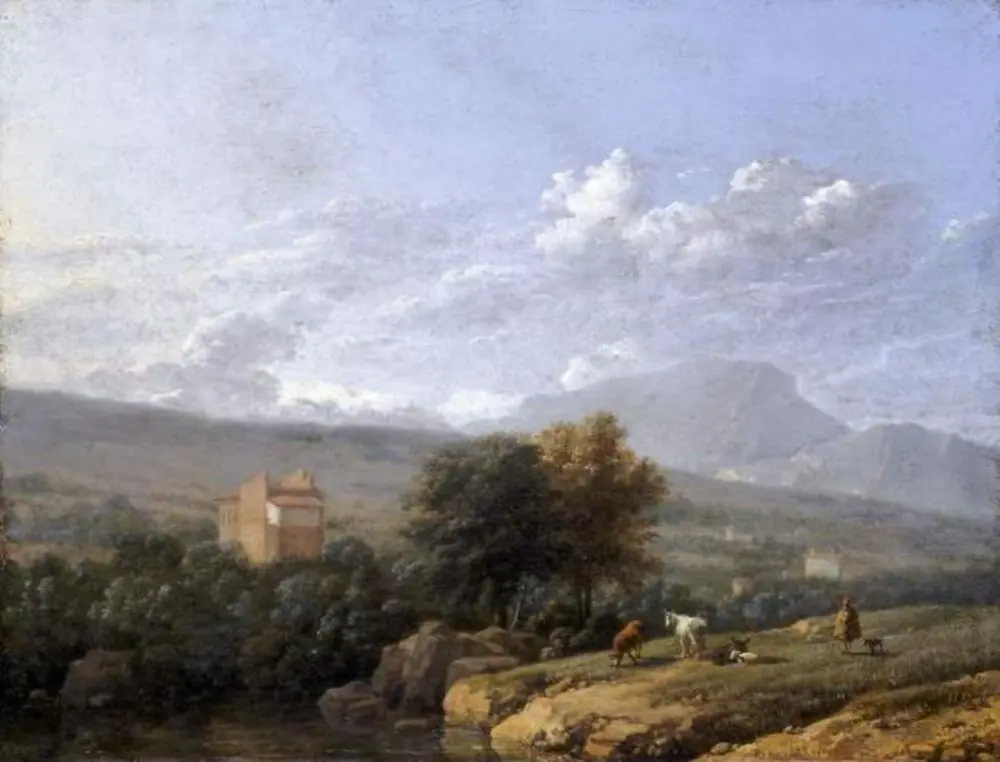
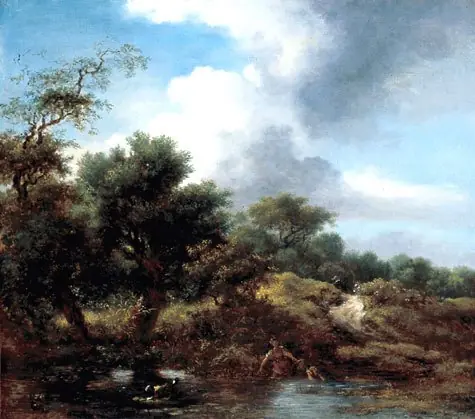
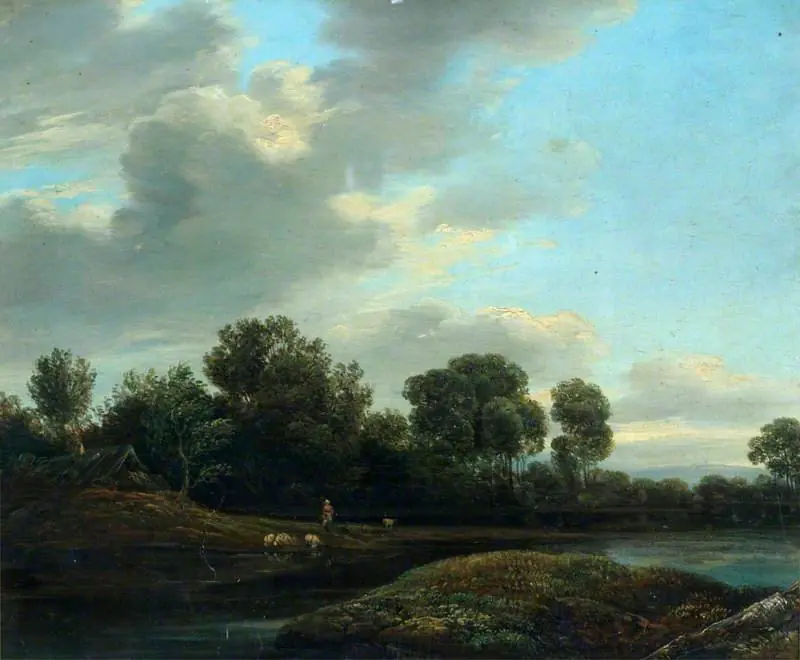
Painted around 1648, this oil-on-canvas landscape by Dirck van der Lisse presents a quiet rural scene centered on a wooden bridge crossing a narrow stream.
Painted around 1648, this oil-on-canvas landscape by Dirck van der Lisse presents a quiet rural scene centered on a wooden bridge crossing a narrow stream. The composition is grounded in naturalism, with grazing cattle in the foreground and a soft, open sky above. It reflects the Dutch tradition of tranquil countryside views, emphasizing harmony between land, animals, and human structures without overt narrative.
Subject & Meaning
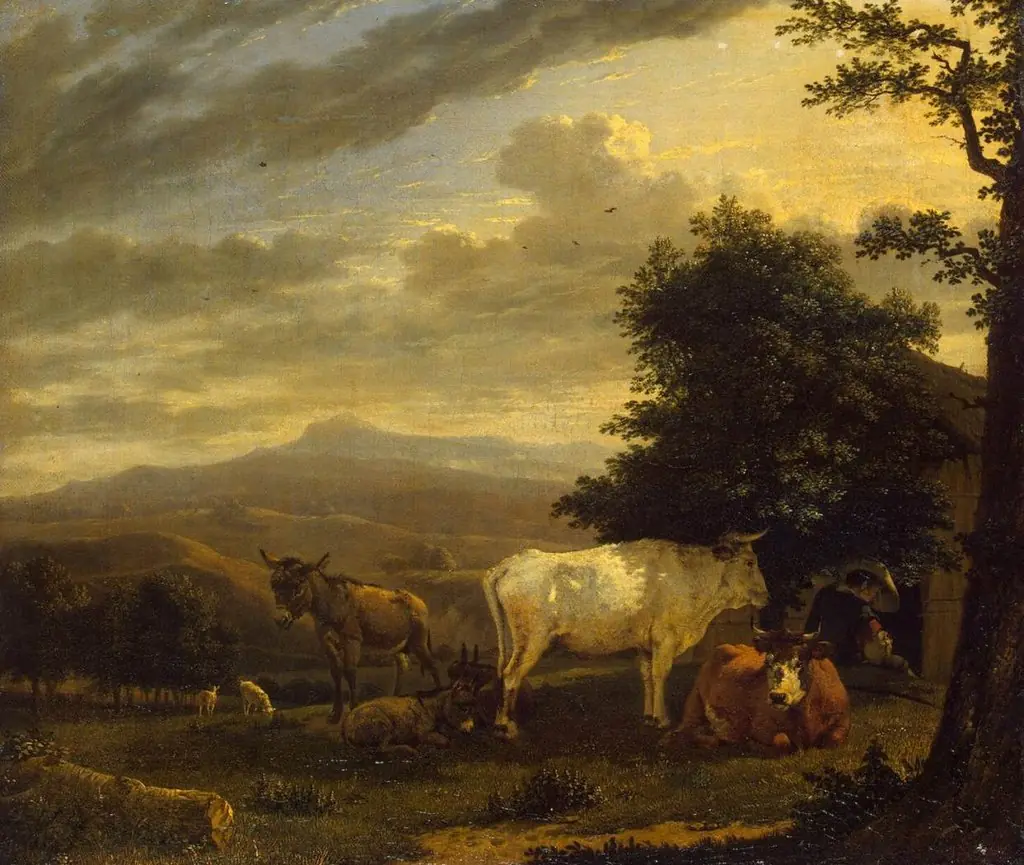
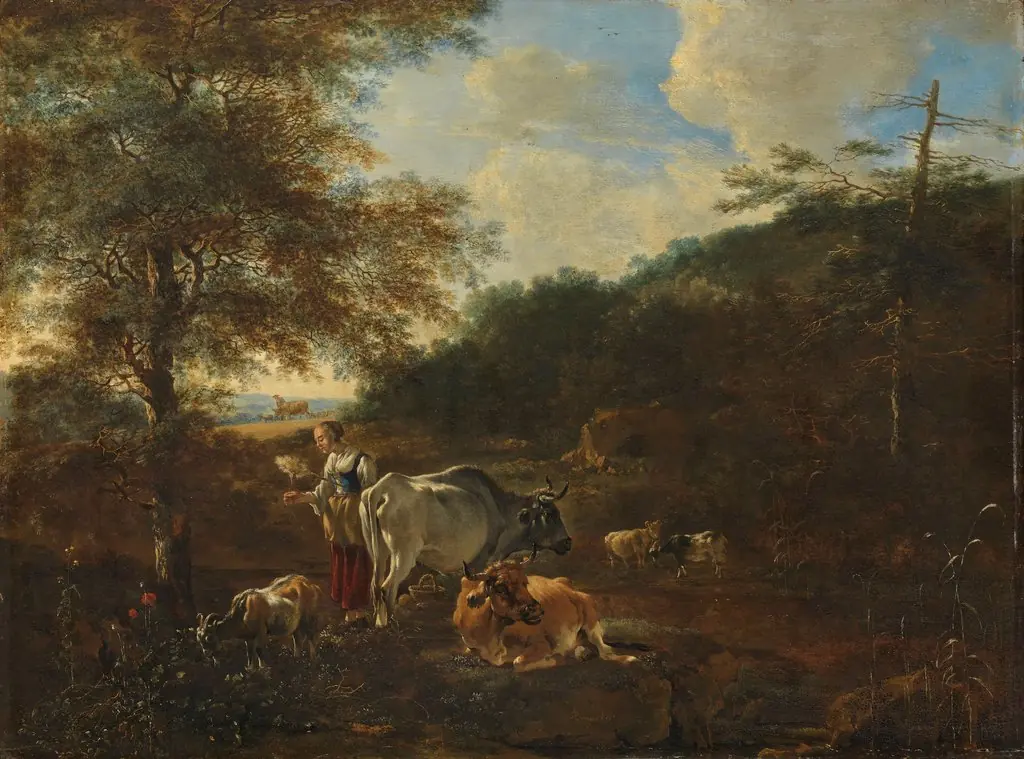
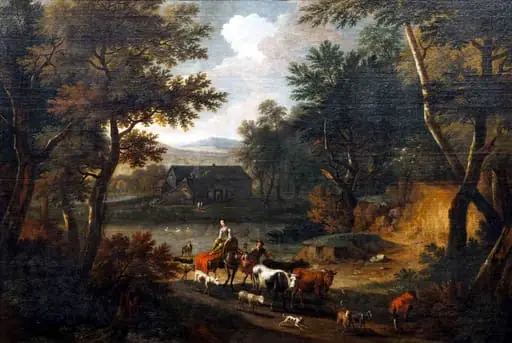
The painting portrays an unremarkable moment in the countryside: cattle resting near a simple bridge, framed by trees and open sky. There is no human figure, suggesting a focus on the rhythms of rural life rather than human activity. The scene conveys stillness and continuity, evoking the quiet dignity of agricultural existence in mid-17th-century Holland.
Technique & Style
Van der Lisse employs subtle gradations of warm ochres, browns, and soft blues to model form and suggest atmospheric depth. Brushwork is precise yet unobtrusive, particularly in the rendering of foliage and the textured hide of the cattle. The bridge acts as a visual anchor, guiding the eye through the space with gentle perspective and balanced light, characteristic of Dutch landscape conventions of the period.
History & Provenance
The painting entered the collection of the Victoria and Albert Museum in the 19th century, likely acquired as part of a broader interest in Dutch Golden Age works. Its attribution to Dirck van der Lisse is consistent with stylistic comparisons to his other known landscapes. No earlier provenance is documented, but its condition suggests it remained in private hands before institutional acquisition.
Context
Created during the Dutch Golden Age, this work aligns with a flourishing market for landscape painting among middle-class collectors who valued depictions of familiar, unidealized rural life. Van der Lisse, active in The Hague, was part of a generation of artists who moved away from dramatic compositions toward calm, observational scenes that celebrated the everyday environment.
Legacy
Though not among van der Lisse’s most widely recognized works, this painting exemplifies the quiet, observational approach that defined much of Dutch landscape art in the mid-1600s. It contributes to the broader understanding of how artists of the time translated ordinary scenes into enduring visual records of place, light, and natural order.
Artist & collection