Artwork
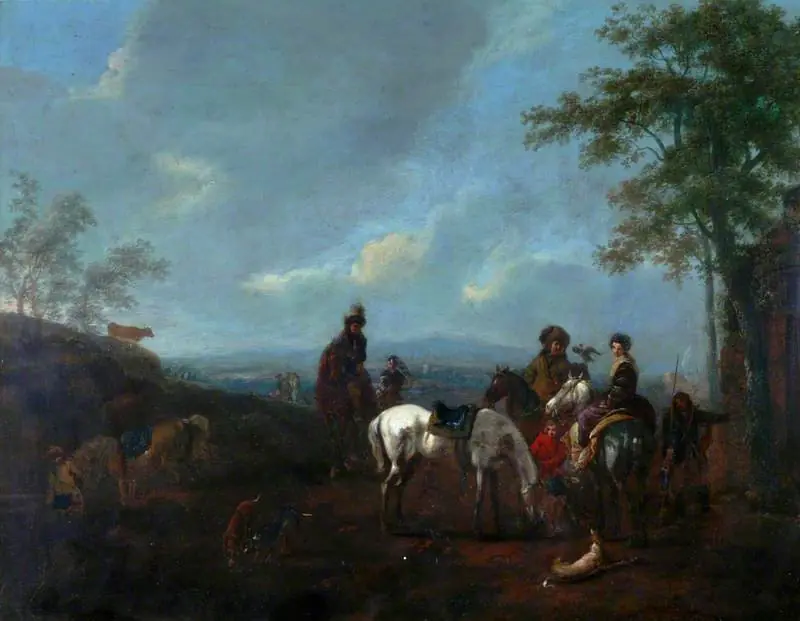
A Hunting Party in a Landscape
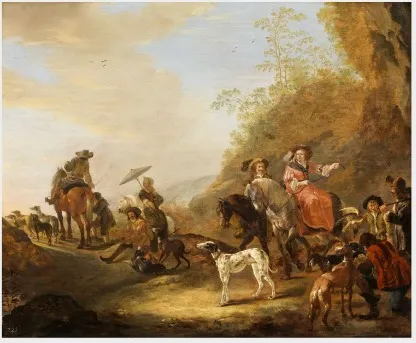
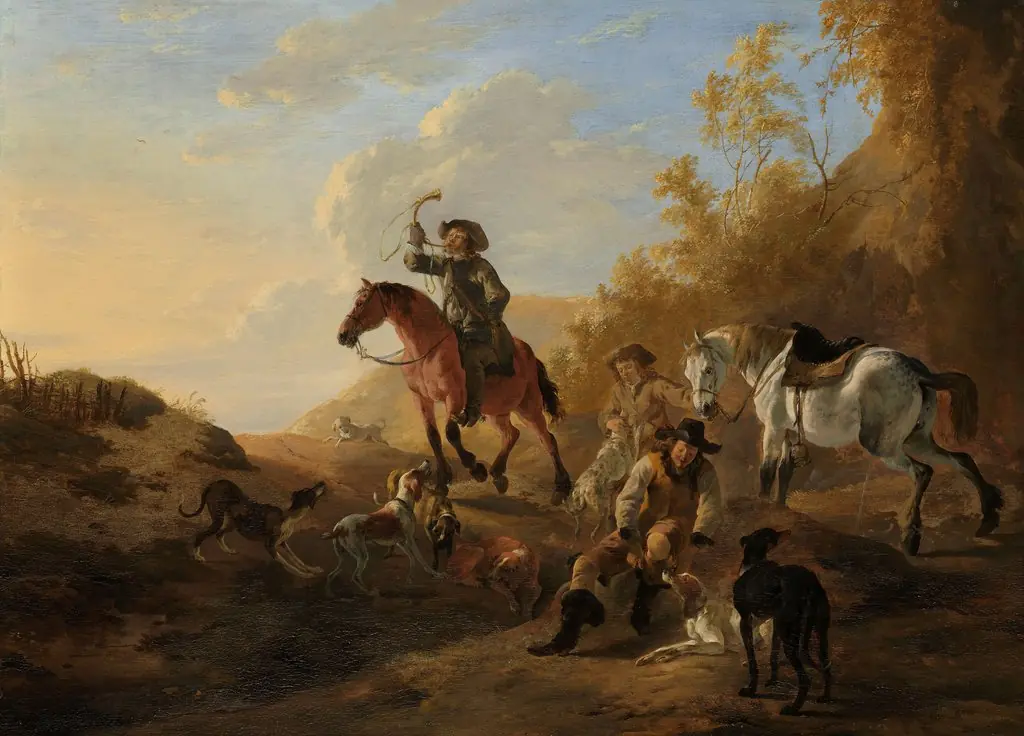
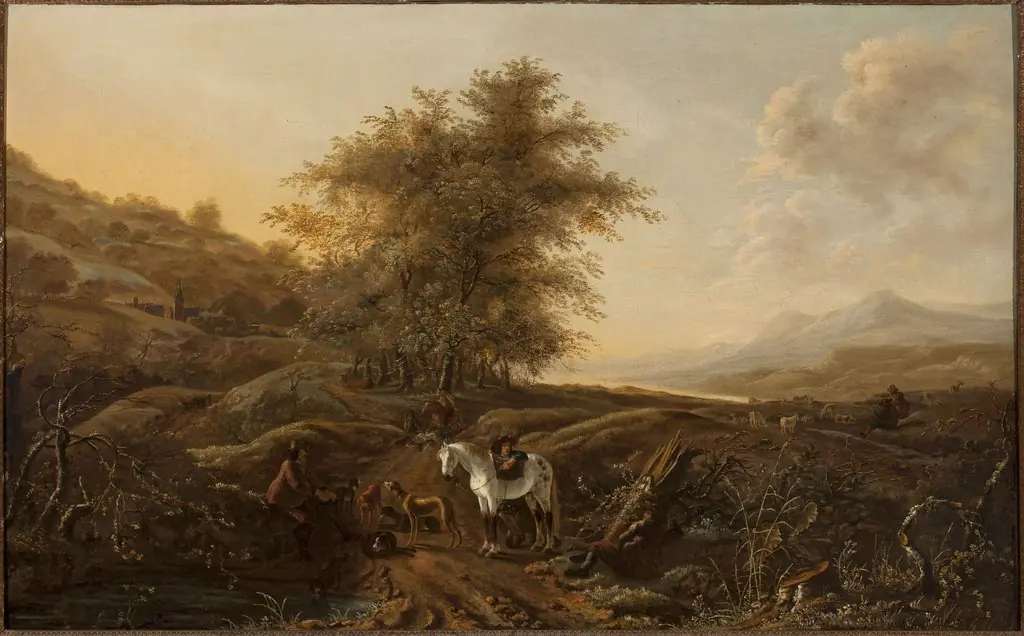
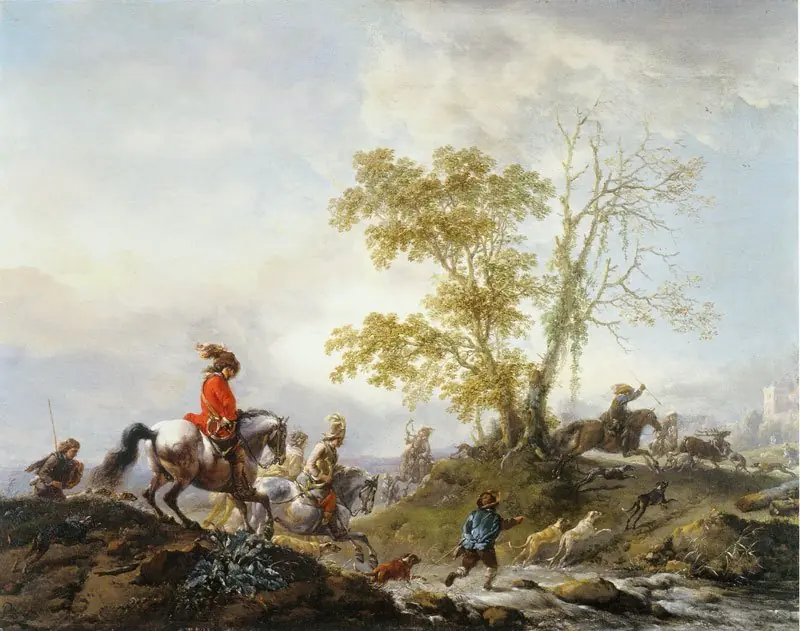
A Hunting Party in a Landscape is an oil painting by the Dutch Golden Age artist Dirk Stoop. It dates from 1646 and is held in the collection of the National Gallery of Ireland.
About this work
Overview
Painted in 1646 by Dirk Stoop, a Dutch artist known for both painting and printmaking, this oil-on-canvas work captures a moment of rural aristocratic leisure.
Painted in 1646 by Dirk Stoop, a Dutch artist known for both painting and printmaking, this oil-on-canvas work captures a moment of rural aristocratic leisure. Stoop, who spent time abroad, brought a cosmopolitan sensibility to his landscapes. The painting is part of the National Gallery of Ireland’s collection and exemplifies the Dutch Golden Age’s interest in everyday scenes rendered with naturalistic detail.
Subject & Meaning
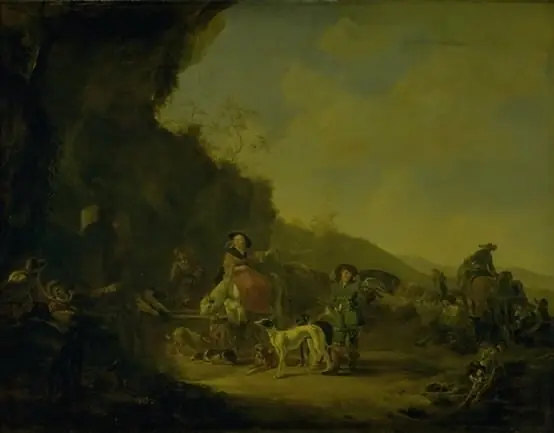
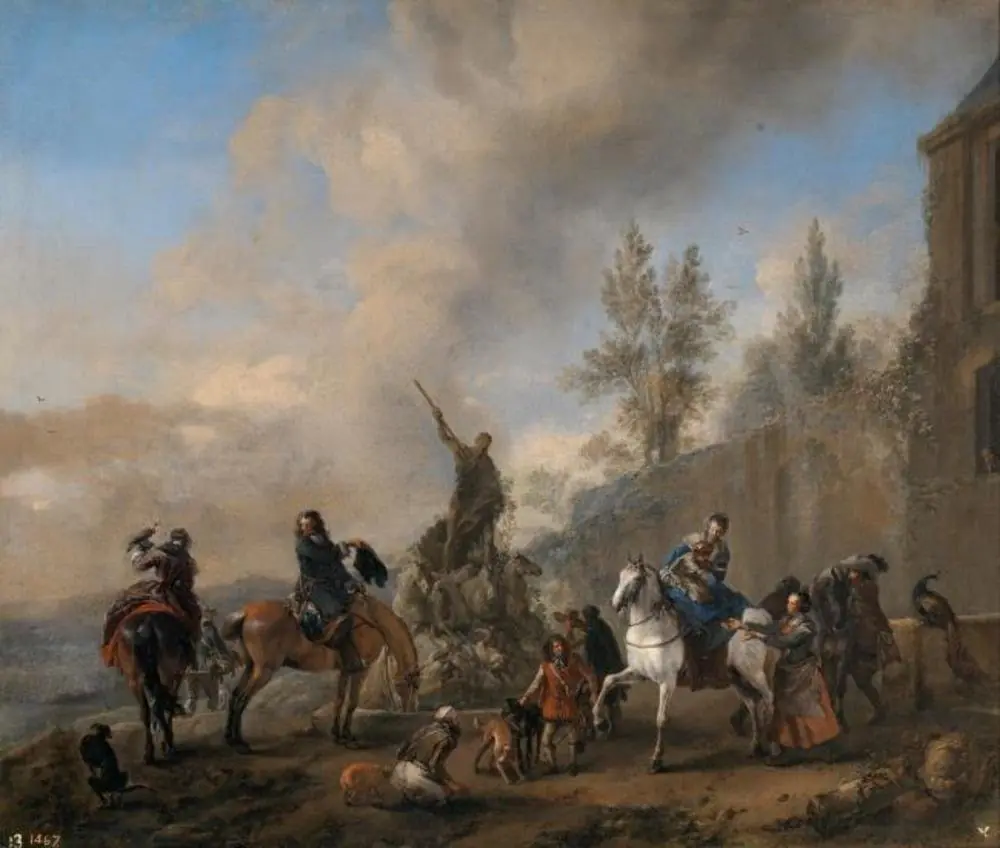
The scene depicts a hunting party paused near a rocky outcrop, with riders and hounds arranged in a loose, dynamic formation. Hunting was a social activity among the Dutch elite, symbolizing control over nature and status. The presence of dogs and horses, along with the figures’ varied postures, suggests movement and anticipation rather than completion, emphasizing the ritual rather than the kill.
Technique & Style
Stoop employed warm earth tones and careful modulation of light to create spatial depth and tactile texture. The contrast between the white-spotted dog in the foreground and the darker figures behind draws the eye, guiding the viewer through the composition. His handling of brushwork is precise yet fluid, capturing the texture of fur, fabric, and rock without overt dramatization.
History & Provenance
Dirk Stoop, active in the mid-17th century, traveled through France and Italy before settling in the Netherlands. This painting, dated 1646, likely originated in his Dutch period. It entered the National Gallery of Ireland’s collection in the 20th century, though its earlier ownership remains undocumented. Its survival reflects the enduring interest in Dutch landscape and genre scenes among collectors.
Context
During the Dutch Golden Age, landscape painting flourished as secular subjects replaced religious themes. Hunting scenes, while less common than pastoral views, appealed to wealthy patrons who valued displays of leisure and natural order. Stoop’s work aligns with contemporaries like Jan van Goyen, blending topographical accuracy with atmospheric nuance to reflect a society increasingly focused on terrestrial harmony.
Legacy
Though not among the most widely studied artists of his time, Stoop’s work contributes to the broader understanding of Dutch landscape traditions. His integration of human activity within natural settings influenced later genre painters. This painting remains a quiet example of how everyday pursuits were elevated through careful observation and restrained composition in 17th-century Dutch art.
Artist & collection
Artist
Dirk Stoop (c. 1618–1686) was a widely travelled painter and engraver of the Dutch Golden Age. Alternative versions of his name include Dirck Stoff, Theodorus (van der) Stoop, Thierry (the French version) and…