Artwork
Untitled
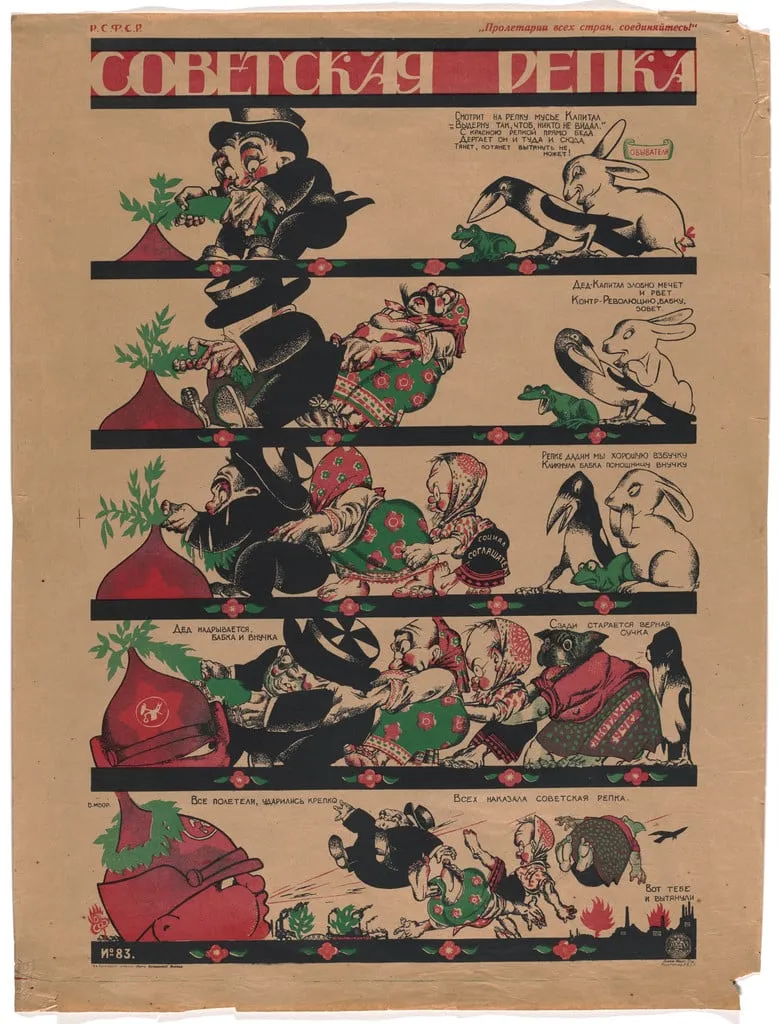
Untitled is a print by Dmitrii Moor. It dates from 1920 and is held in the collection of the Museum of Modern Art.
About this work
Overview
The composition relies on flat, unmodulated color and simplified forms, characteristic of early 20th-century graphic design.
Created around 1920, this letterpress print by Dmitrii Moor is part of The Museum of Modern Art’s collection. It presents a sequence of stylized figures and animals arranged in three horizontal bands. The composition relies on flat, unmodulated color and simplified forms, characteristic of early 20th-century graphic design. Its production method and visual language reflect the era’s interest in accessible, mass-reproducible imagery.
Subject & Meaning
The print depicts three distinct scenes: a man with a rabbit and a green form, a woman surrounded by animals in a vivid dress, and another man with a bird and similar green object. No narrative or symbolic code is explicitly stated, but the recurring green element and animal motifs suggest a playful, possibly satirical tone. The figures appear detached from realistic context, inviting interpretation as abstracted social types or whimsical archetypes.
Technique & Style
Executed in letterpress, the work uses bold outlines and primary colors—red, green, black—to define its forms. Shapes are reduced to essential contours, avoiding shading or texture. The graphic simplicity aligns with contemporary poster design and propaganda aesthetics, yet the tone diverges into lightheartedness. The arrangement of panels creates a rhythmic, almost comic-strip flow, emphasizing movement and visual repetition over depth or perspective.
History & Provenance
The print originates from the early Soviet period, a time when graphic arts were rapidly evolving as tools for public communication. Moor, known for political posters, occasionally produced more decorative works. This piece entered MoMA’s collection as part of its broader effort to document international modernist design. Its exact provenance prior to acquisition remains undocumented, though it likely circulated in artistic or experimental print circles.
Context
In the aftermath of the Russian Revolution, visual artists experimented with new forms to reach broad audiences. While Moor is best known for agitprop, this work reflects a broader trend of integrating folk motifs and cartoonish forms into print media. Its whimsical tone contrasts with the era’s dominant political imagery, suggesting a space for artistic play amid ideological urgency.
Legacy
Though less widely recognized than Moor’s political posters, this print exemplifies the versatility of Soviet graphic design in the 1920s. It demonstrates how formal experimentation with color, shape, and layout extended beyond propaganda into more personal or decorative realms. Its inclusion in MoMA’s collection underscores its value as a document of early modernist print culture beyond Western Europe and America.
Artist & collection

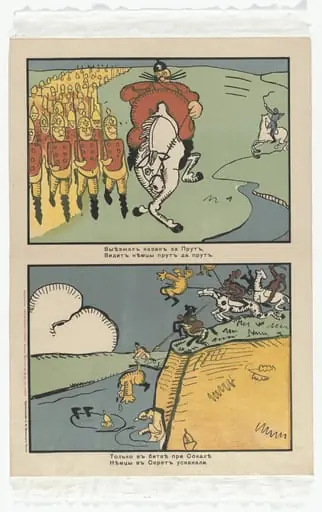 Untitled
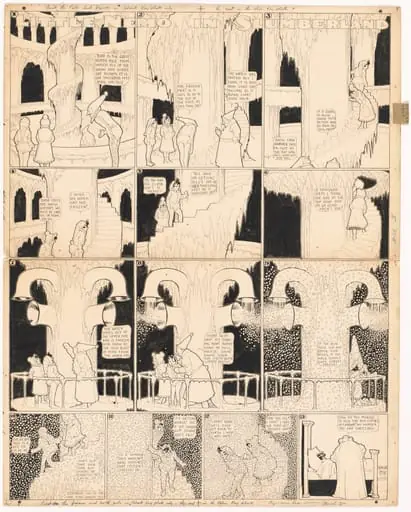 Little Nemo in Slumberland: Climbing the Great North Pole
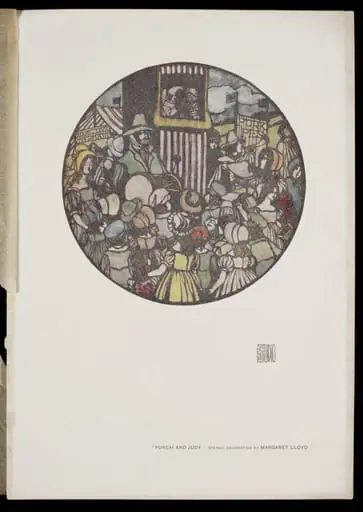 George Speaight Punch & Judy Collection
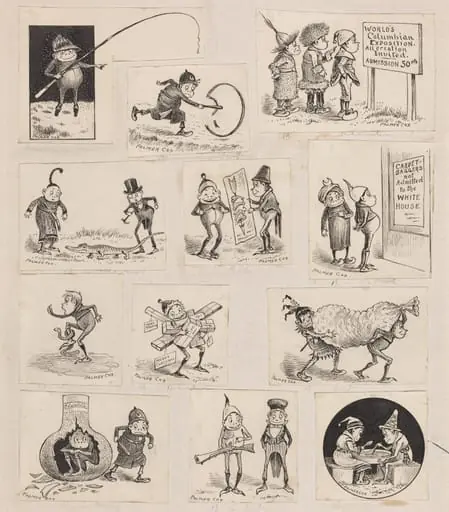 Brownies at Home - Twelve Vignettes
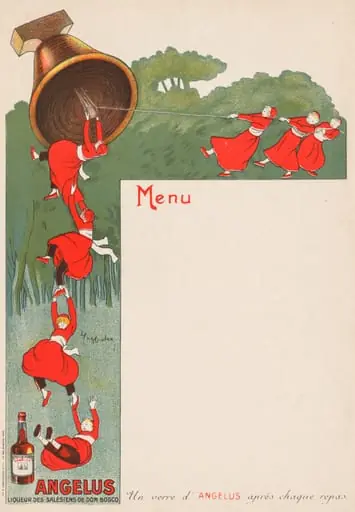 Menu Page (Angelus: Liqeur des Salésiens de Dom Bosco)
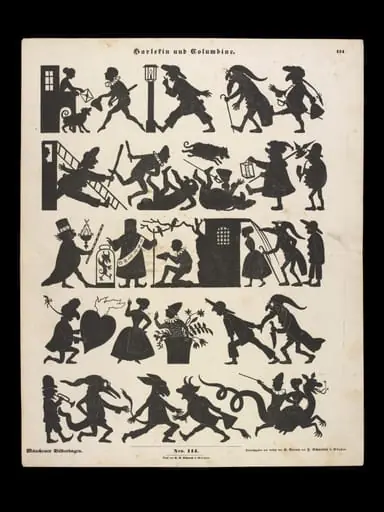 H Beard Print Collection
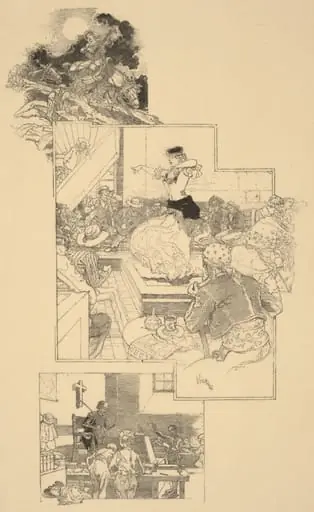 On the Trail of Don Quixote
 Untitled
 Les Vieilles histoires: Sagesse
 Vous voulez accompagner à pied le corps de votre - Oui c'est une occasion de marche un peu.