Artwork
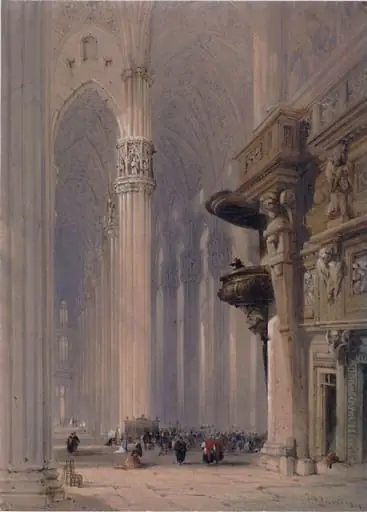
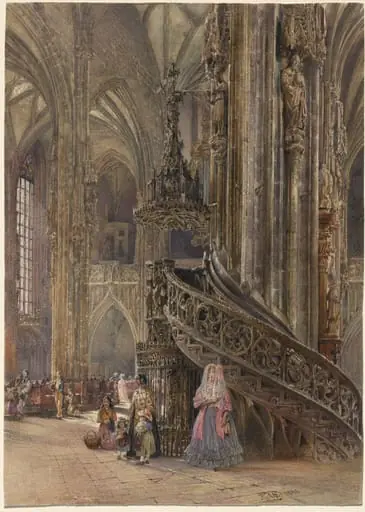
Interior of Burgos Cathedral
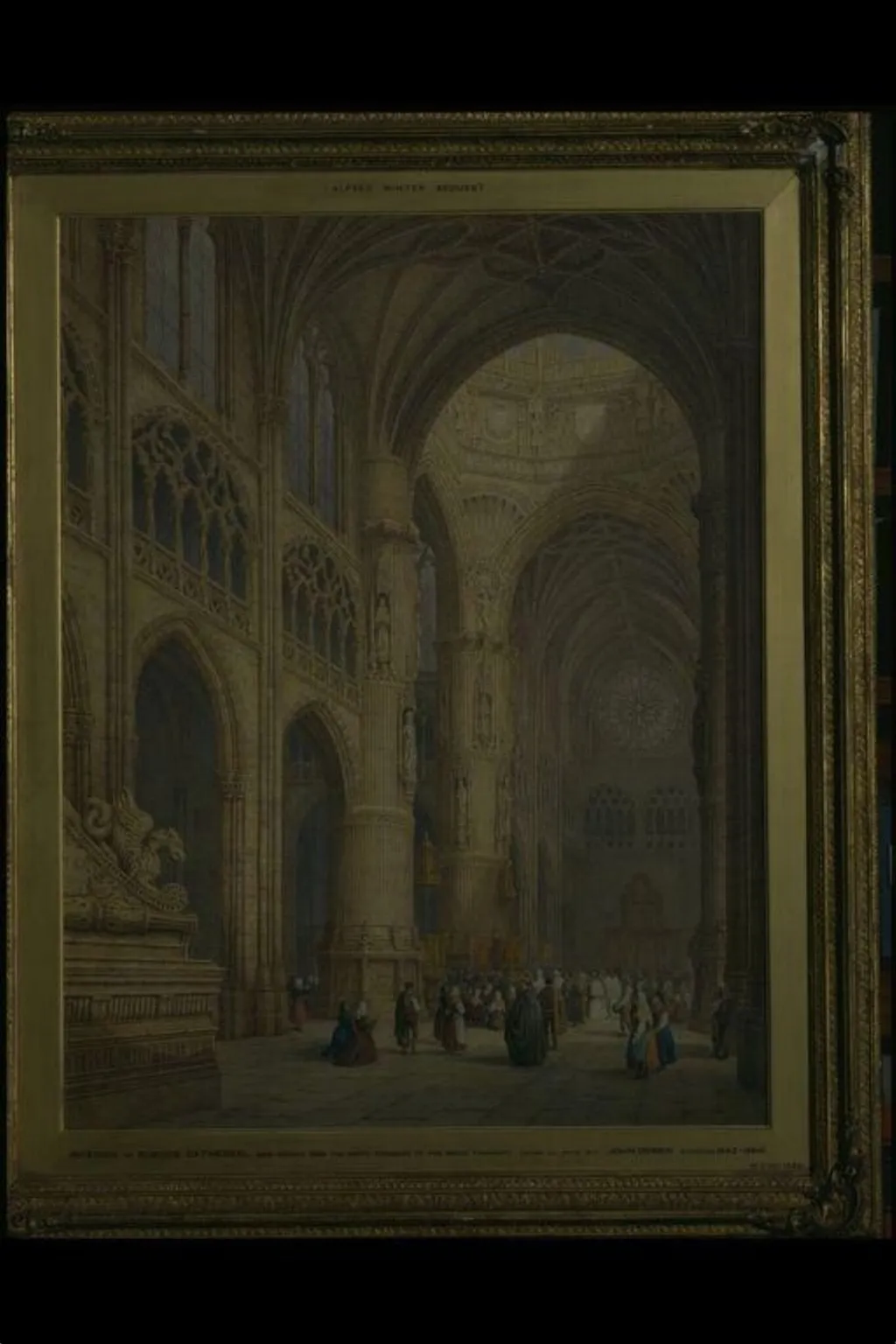
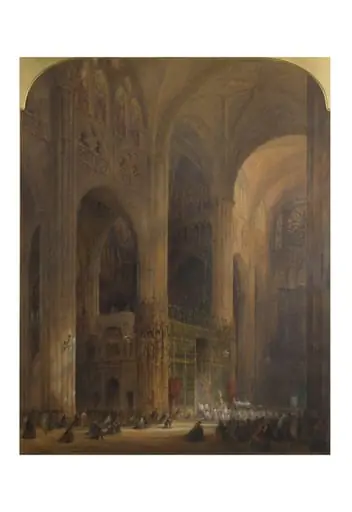
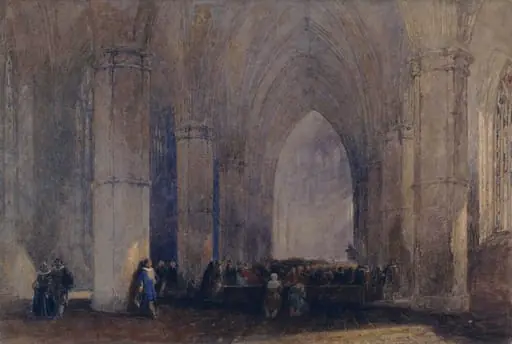
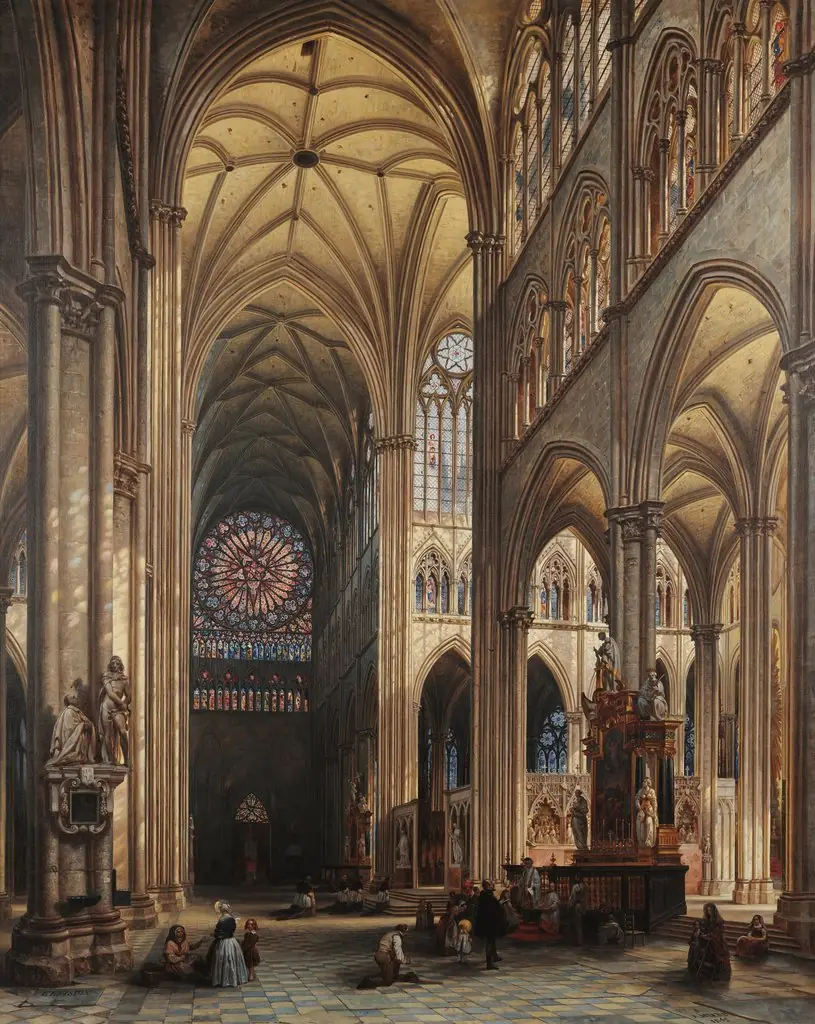
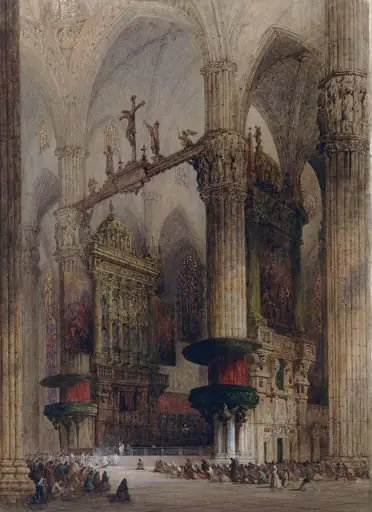
Interior of Burgos Cathedral is a watercolor work on paper by the British Romanticist artist John Dobbin. It dates from 1874 and is held in the collection of the Victoria and Albert Museum.
About this work
Overview
Its modest scale and delicate medium contrast with the monumental architecture it portrays, emphasizing atmosphere over grandeur.
John Dobbin’s 1874 watercolour captures the interior of Burgos Cathedral in Spain, rendered with quiet precision. The work is signed and annotated by the artist, who later made minor adjustments to the composition. Its modest scale and delicate medium contrast with the monumental architecture it portrays, emphasizing atmosphere over grandeur. The piece reflects a 19th-century interest in documenting sacred spaces through intimate, observational means.
Subject & Meaning
The scene presents the cathedral’s nave under natural light filtering through stained-glass windows, casting soft hues across the stone floor. Figures in period attire move subtly through the space, their presence underscoring the building’s function as a place of worship and daily life. The absence of dramatic action invites contemplation, suggesting reverence for architecture as a vessel of spiritual and historical continuity.
Technique & Style
Dobbin employed transparent watercolour washes to achieve a luminous, atmospheric effect. Soft edges and muted tonal transitions mimic the diffused light within the cathedral, avoiding sharp outlines to enhance realism. The technique aligns with contemporary British watercolour practices, where subtlety and light were prioritized over detail, allowing the architecture’s scale to emerge through suggestion rather than definition.
History & Provenance
Created during Dobbin’s travels in Spain, the work was likely made as a personal record of his visit. It entered the Victoria and Albert Museum’s collection in the late 19th century, where it remains part of its holdings of 19th-century British watercolours. The artist’s annotations on the piece indicate his ongoing engagement with the work, suggesting it held personal significance beyond its documentary function.
Context
In the 1870s, British artists increasingly traveled to continental Europe to study Gothic architecture, often producing watercolours as both artistic exercises and ethnographic records. Dobbin’s work fits within this trend, reflecting a broader cultural fascination with medieval cathedrals as symbols of spiritual and aesthetic heritage, viewed through the lens of Romantic realism rather than religious devotion.
Legacy
The watercolour endures as a quiet example of 19th-century topographical art, valued for its sensitivity to light and space rather than its novelty. It contributes to a broader archive of architectural studies by British watercolourists, offering insight into how travelers perceived and recorded sacred spaces. Its preservation in a major museum underscores its role as a historical document of visual culture.
Artist & collection

Artist
John Dobbin was an English landscape painter, the son of John and Elizabeth who lived in Weaver's Yard.