Artwork
Interior of the Cathedral of Amiens
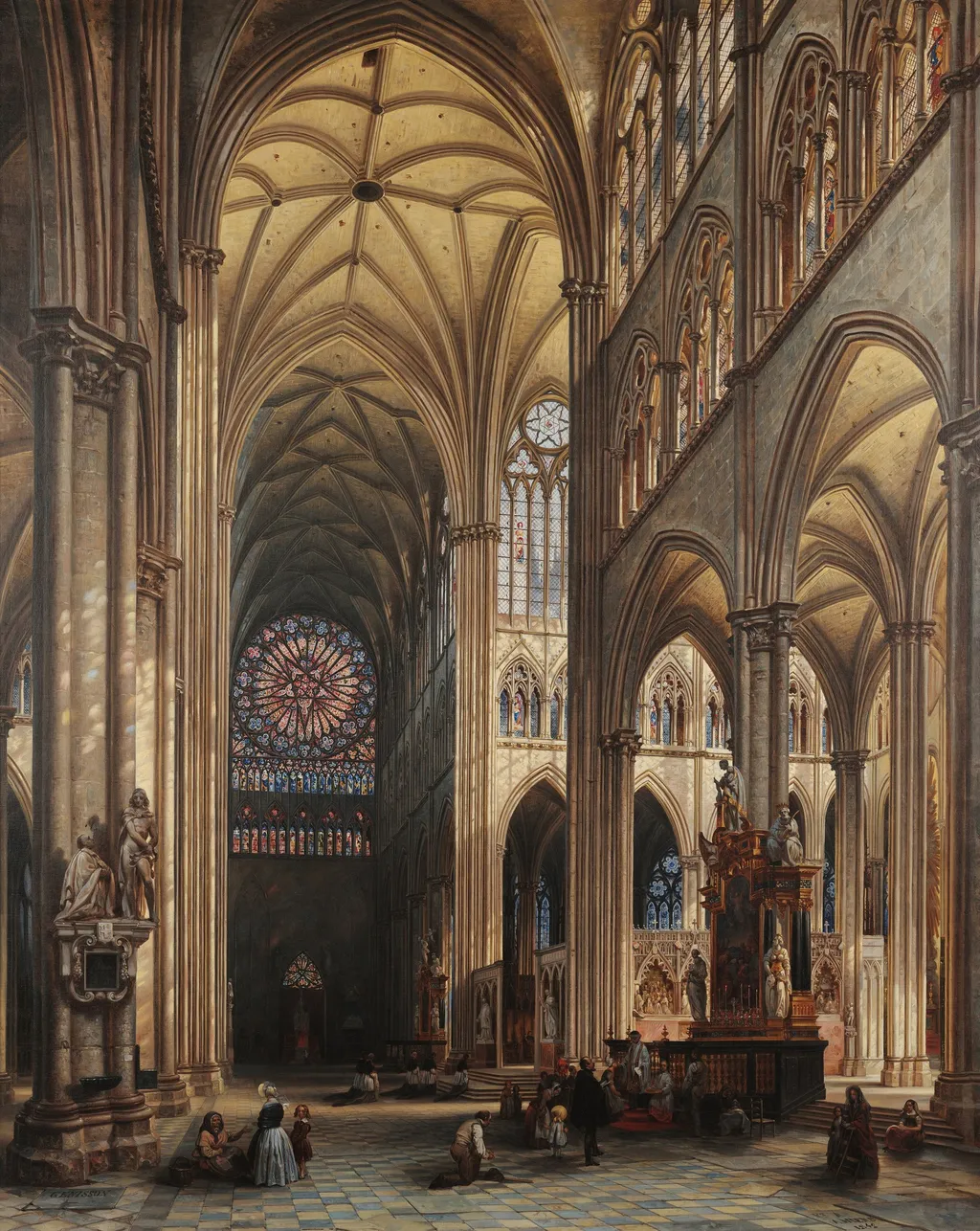
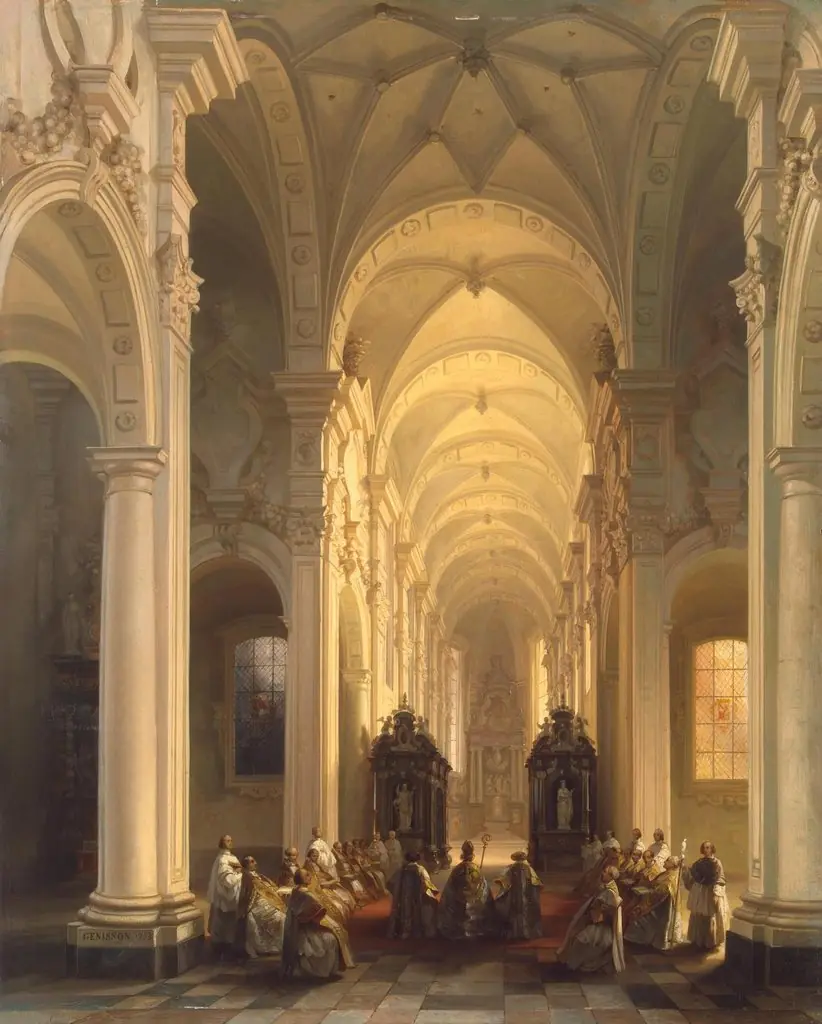
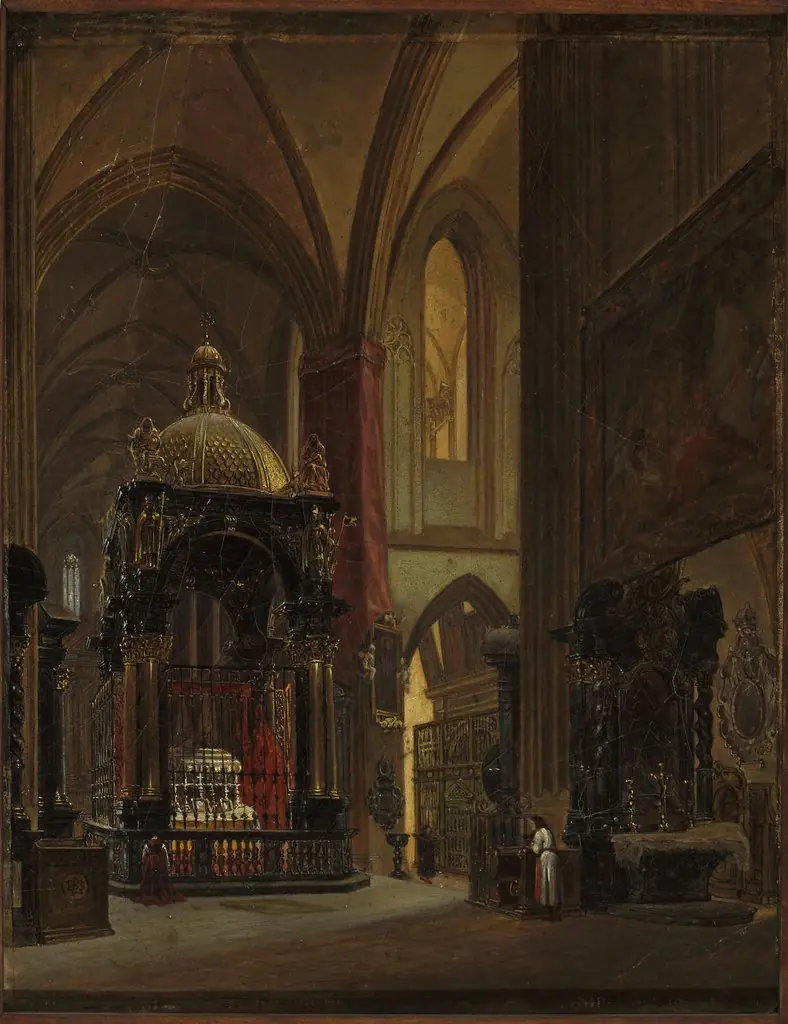
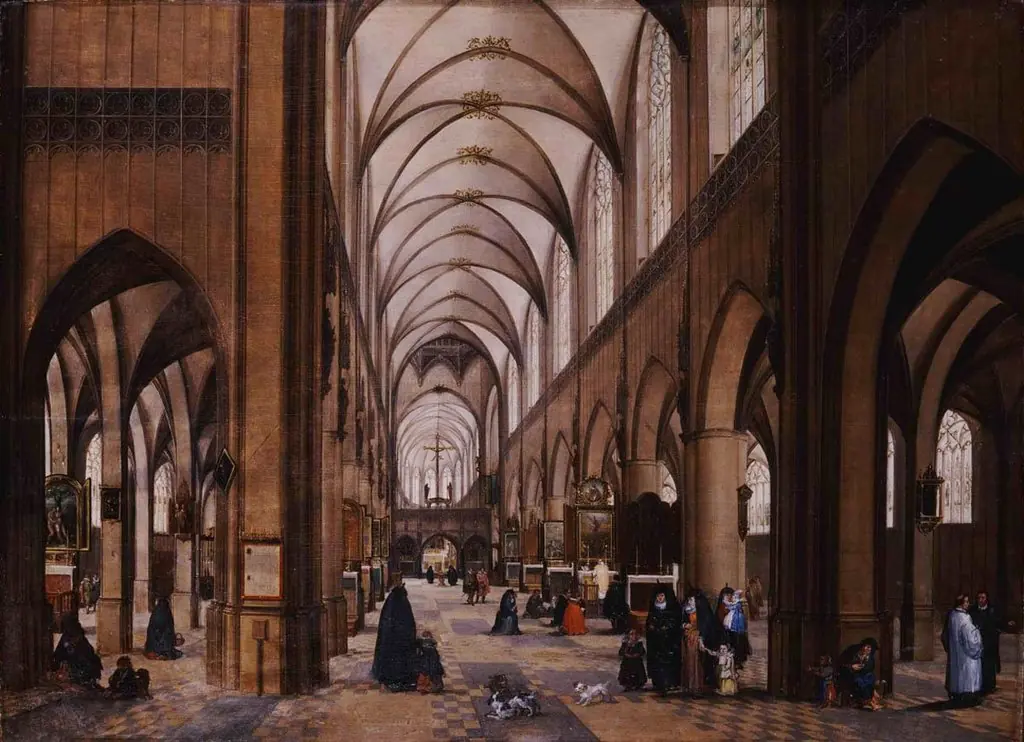
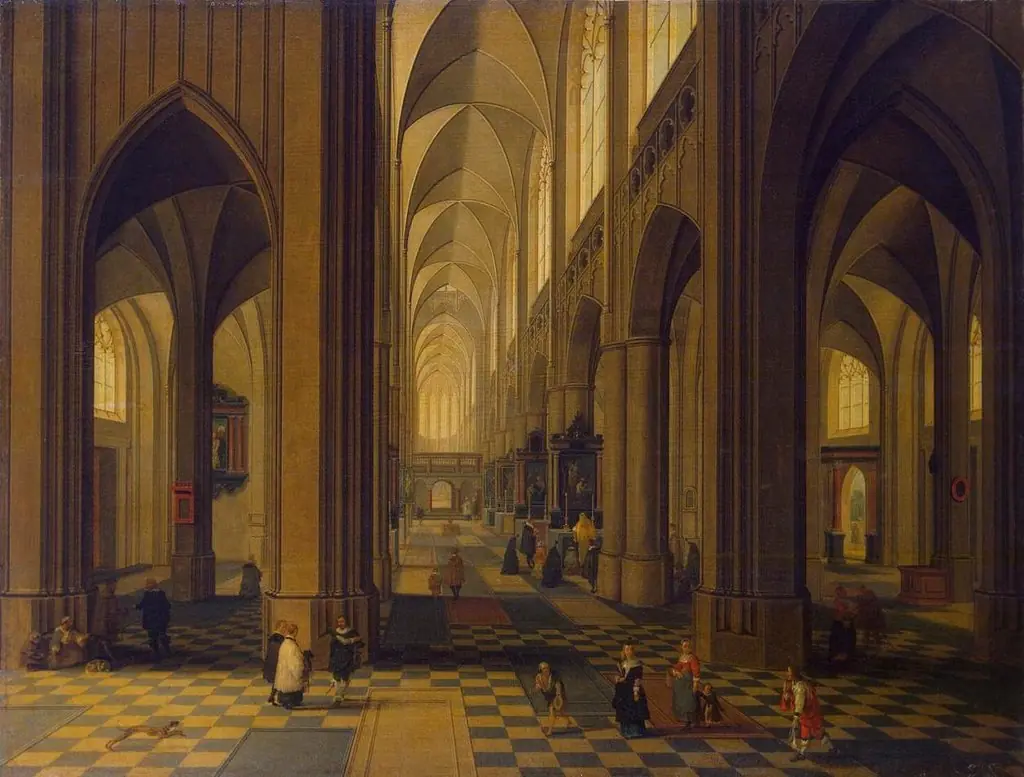
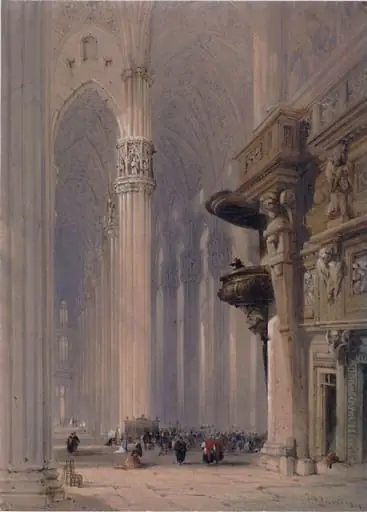
Interior of the Cathedral of Amiens is an oil painting by Jules Victor Génisson. It dates from 1842 and is held in the collection of the Pinacoteca de São Paulo.
About this work
Overview
The painting is part of the Pinacoteca do Estado de São Paulo’s collection, reflecting its significance in 19th-century European architectural representation.
Painted in 1842 by Belgian artist Jules Victor Génisson, this oil on canvas work captures the interior of Amiens Cathedral. Génisson, known for his architectural subjects, rendered the nave with precision, emphasizing spatial depth and structural detail. The painting is part of the Pinacoteca do Estado de São Paulo’s collection, reflecting its significance in 19th-century European architectural representation.
Subject & Meaning
The scene depicts the cathedral’s central nave, framed by towering columns and culminating in a luminous rose window. Figures scattered across the floor—some seated, others kneeling—suggest quiet devotion, grounding the grand architecture in human presence. The composition invites contemplation of sacred space, not as an idealized vision but as a lived, atmospheric environment shaped by light and scale.
Technique & Style
Génisson employed fine brushwork to render stone textures, tiled flooring, and stained glass with meticulous care. Light filters through the rose window, casting colored patterns onto the floor and walls, enhancing the sense of depth. The palette is restrained yet rich, with muted tones balanced by the vivid hues of the glass, creating a harmonious interplay between structure and illumination.
History & Provenance
Completed in 1842, the painting emerged during a period of renewed interest in medieval architecture across Europe. Génisson’s focus on Amiens Cathedral aligns with broader scholarly and artistic efforts to document historic monuments. It entered the Pinacoteca do Estado de São Paulo’s collection in the 20th century, likely through acquisition or donation, preserving its place outside its original cultural context.
Context
In the early 19th century, artists across Europe turned to Gothic cathedrals as subjects of both aesthetic and historical study. Génisson’s work reflects this trend, paralleling the writings of figures like Viollet-le-Duc and the rise of architectural preservation movements. His depiction of Amiens aligns with a growing desire to record sacred spaces before industrialization altered their surroundings.
Legacy
Though Génisson is not widely known today, this painting remains a careful record of Amiens Cathedral’s interior as it appeared in the mid-1800s. It contributes to a visual archive of ecclesiastical architecture, offering insight into how 19th-century viewers perceived and experienced sacred spaces. Its presence in a Brazilian collection underscores the global circulation of European artistic documentation.
Own this work as a print
Artist & collection
Artist
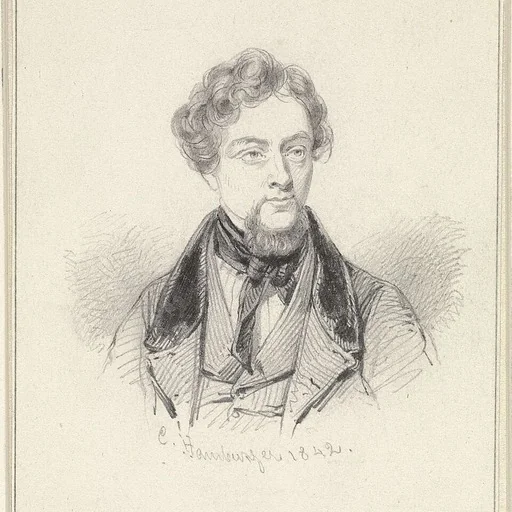
Jules Victor Génisson (French pronunciation: ; 24 February 1805 – 10 October 1860) was a Belgian painter, chiefly known for his architectural painting.