Artwork
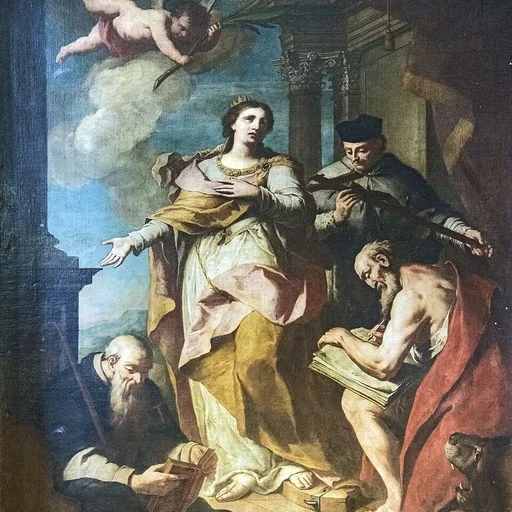
Saint Teresa of Ávila Contemplating the Cross
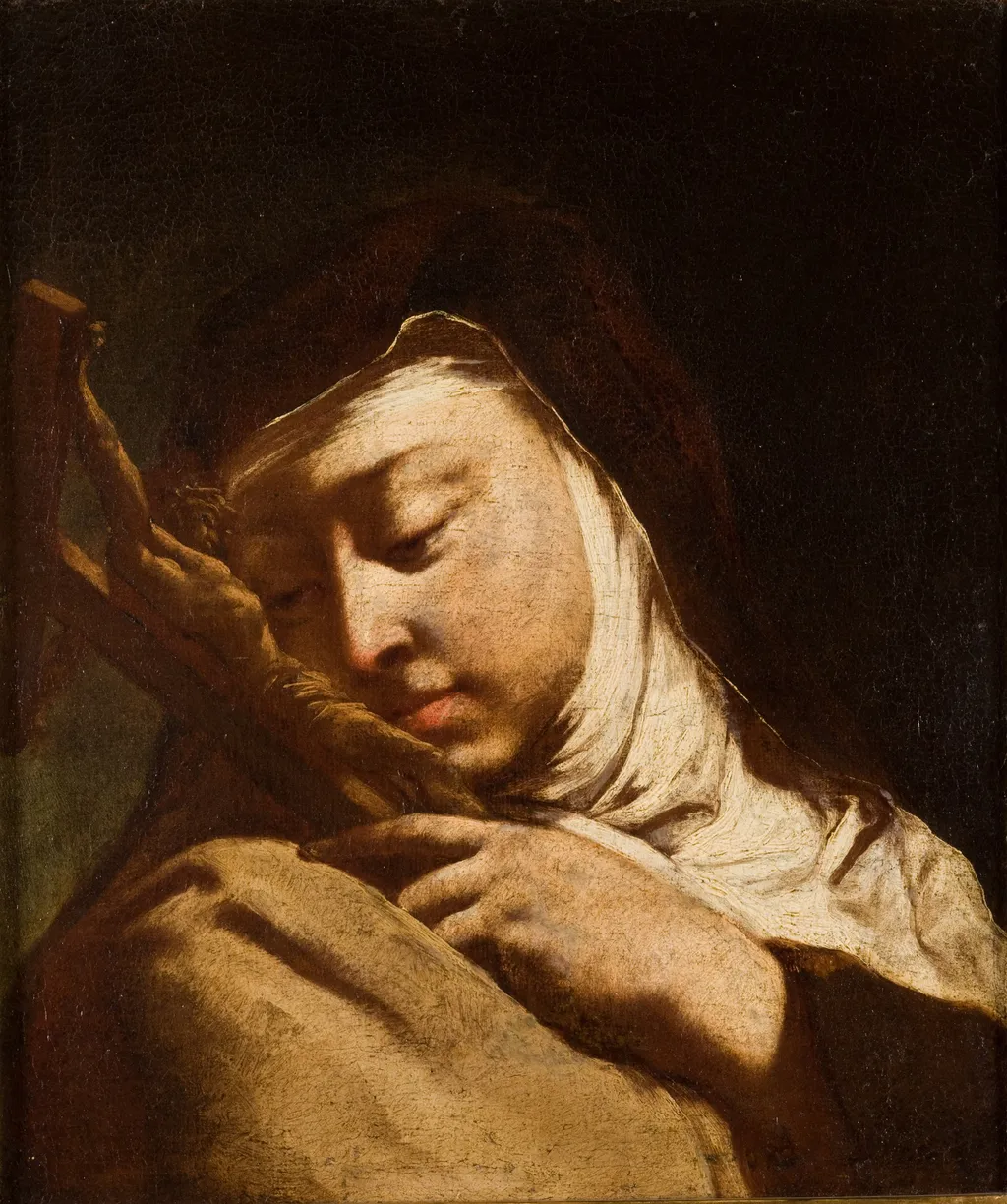
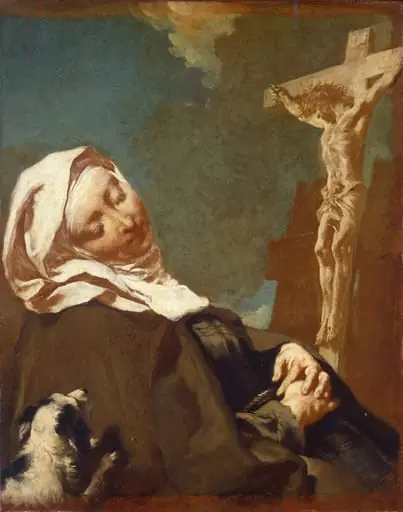
Saint Teresa of Ávila Contemplating the Cross is an oil painting by the Rococo painting artist Domenico Maggiotto. It dates from 1745 and is held in the collection of the National Museum in Kraków.
About this work
Overview
Domenico Maggiotto’s 1745 oil painting portrays Saint Teresa of Ávila in a moment of private devotion. Executed in the Venetian tradition, the work reflects the quiet introspection favored in mid-18th-century religious imagery. It is currently held in the National Museum in Kraków, where it stands as one of the few surviving devotional pieces by the artist outside Italy.
Subject & Meaning
The painting captures Saint Teresa, the 16th-century Spanish mystic and reformer, in silent prayer with a wooden cross. Her closed eyes and upward tilt of the head suggest an inward spiritual experience, consistent with her writings on divine union. The absence of dramatic elements emphasizes contemplation over ecstasy, aligning with her later, more restrained spiritual phase.
Technique & Style
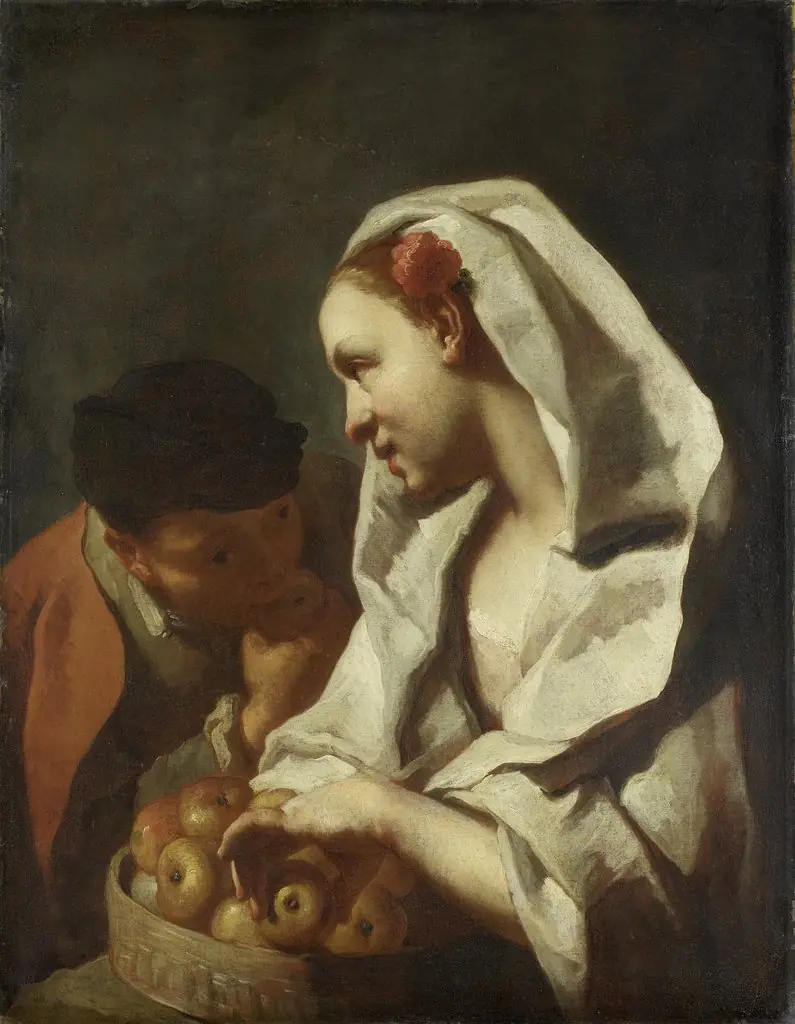
Maggiotto employs soft chiaroscuro and muted tones to isolate the figure against a deep, neutral background. The white habit and headscarf are rendered with delicate brushwork, while the dark drapery adds weight and contrast. The elongated fingers and subtle modeling of the face reflect his training under Piazzetta, blending Venetian colorism with a restrained Rococo sensibility.
History & Provenance
Painted in 1745, the work likely originated in Venice, where Maggiotto was active as both painter and engraver. It entered the collection of the National Museum in Kraków in the 19th century, possibly through ecclesiastical or aristocratic channels. Its presence in Poland suggests wider circulation of Italian devotional art in Central Europe during the Enlightenment.
Context
In mid-18th-century Venice, religious subjects remained popular despite growing secular trends. Maggiotto’s approach—calm, intimate, and focused on individual piety—mirrored broader Catholic devotional practices after the Counter-Reformation. Unlike Baroque exuberance, this painting favors stillness, reflecting a shift toward personal spirituality in religious art.
Legacy
Though Maggiotto is better known for his engravings, this painting offers insight into his ability to convey spiritual depth through restraint. It remains a rare example of his figural work outside Italy and contributes to understanding how Venetian artists adapted religious themes for audiences beyond their home region.
Artist & collection
Artist
Domenico Maggiotto or Domenico Fedeli (1713 – 16 April 1794) was an Italian painter and engraver who lived and worked mainly in Venice.