Artwork
David with His Foot in a Noose in an Initial O
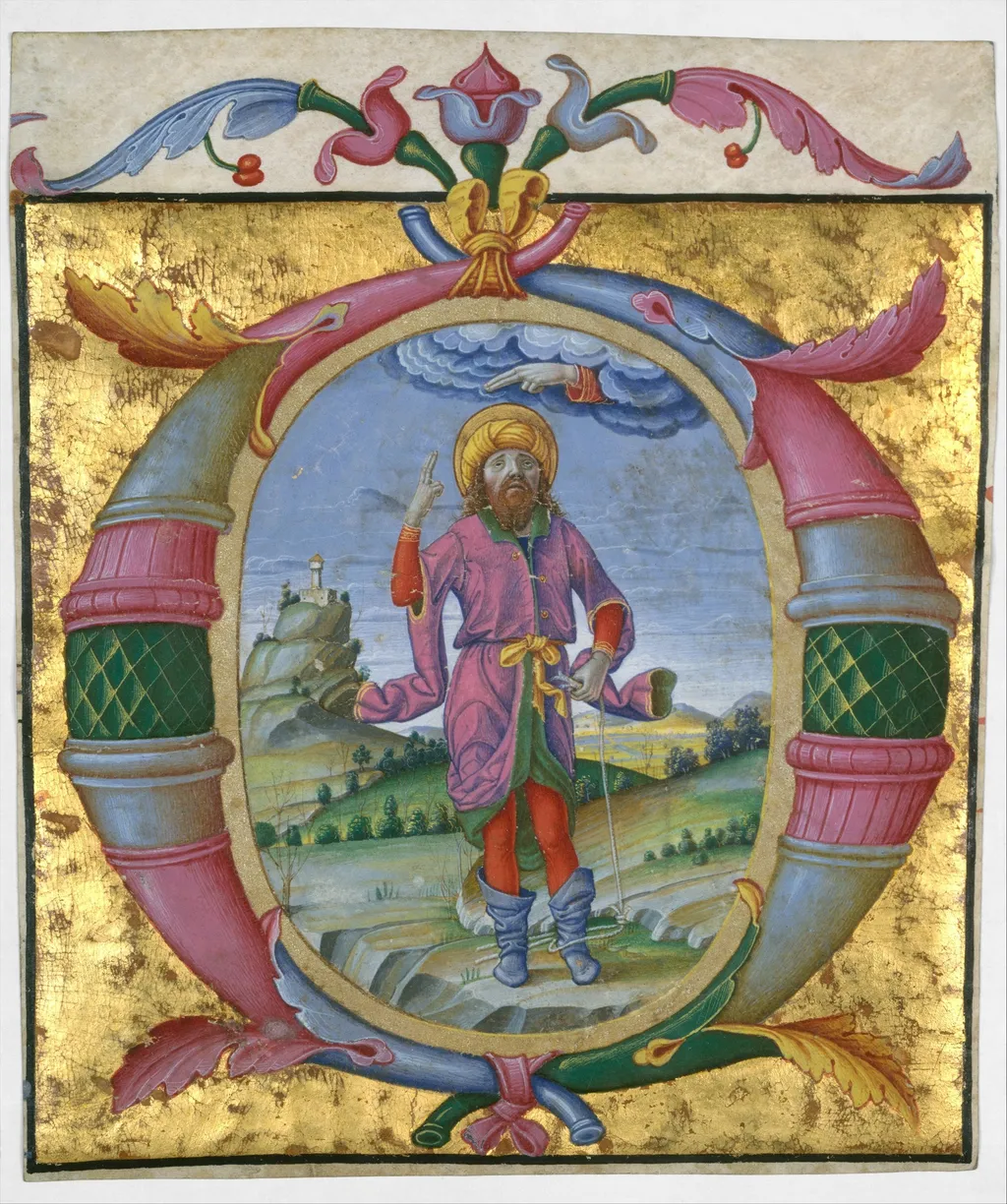
David with His Foot in a Noose in an Initial O is an unspecified painting by the Early Renaissance artist Domenico Morone. It dates from 1500 and is held in the collection of the Metropolitan Museum of Art.
About this work
Overview
This painting, now housed at The Metropolitan Museum of Art, is a religious work that showcases the artist's style within the burgeoning Renaissance in Verona.
Domenico Morone, an early exponent of the Veronese school, created *David with His Foot in a Noose in an Initial O* around 1500. This painting, now housed at The Metropolitan Museum of Art, is a religious work that showcases the artist's style within the burgeoning Renaissance in Verona. It presents a figure, likely David, within an illuminated initial, integrating narrative and decorative elements.
Subject & Meaning
The painting depicts a male figure, identified as David, standing within a large, brightly colored initial "O." He wears a red robe and yellow hat, holding a staff while gesturing skyward. A notable and unusual detail for a religious scene is the noose ensnaring his foot, which may allude to a specific narrative or symbolic meaning within the broader religious context of the work, possibly related to temptation or struggle.
Technique & Style
Morone's work exemplifies the vibrant palette characteristic of early Renaissance painting. The central figure is framed by an elaborate, decorative letter "O," featuring pink columns, a gold background, and swirling red and blue motifs. Behind David, a verdant, undulating landscape with a distant structure provides depth, contrasting with the detailed foreground. The integration of the figure into an initial suggests its original function as part of an illuminated manuscript or larger text.
Context
Created around 1500, this painting places Domenico Morone among the pioneering artists of the Veronese school during the early Renaissance. This period saw a flourishing of artistic innovation in Verona, with painters like Morone developing distinct regional styles. The work reflects the era's blend of religious iconography with emerging naturalistic tendencies, particularly in its landscape elements and the detailed rendering of the figure.
Artist & collection
Artist
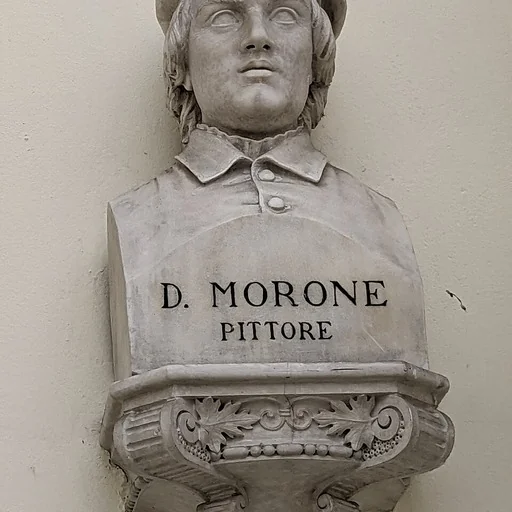
Domenico Morone (c. 1442 – 1518) was an Italian painter from Verona, painting in an early Renaissance style. Much of his work has not survived, notably his fresco cycles. He was considered by Vasari to be second only to…
