Artwork
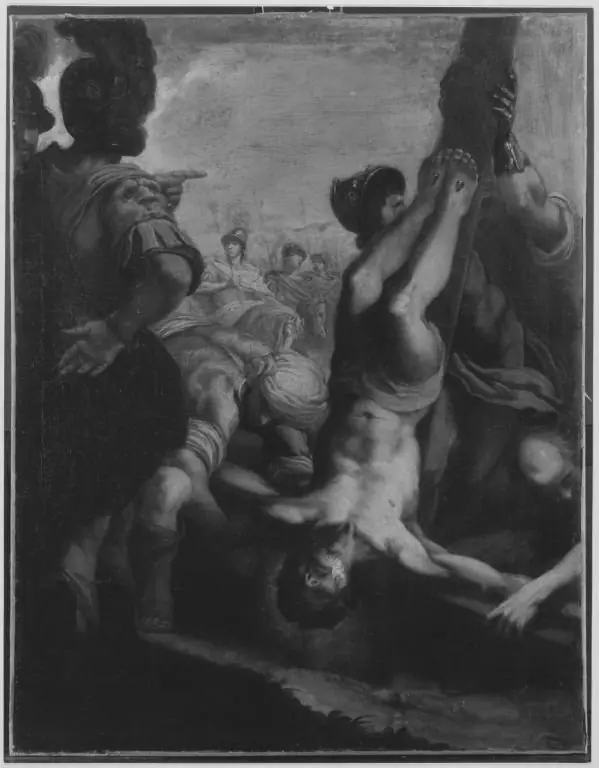
Kreuzigung Christi (Kopie nach dem Altarbild der Münchner Augustinerkirche) (Kopie nach)
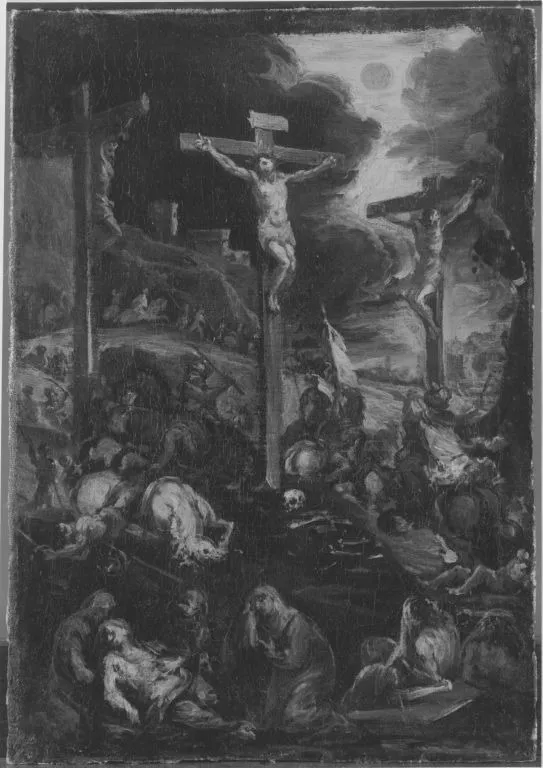
Kreuzigung Christi (Kopie nach dem Altarbild der Münchner Augustinerkirche) (Kopie nach) is an unspecified painting by the Mannerist artist Domenico Tintoretto. It dates from 1607 and is held in the collection of the Bavarian State Painting Collections.
About this work
Overview
Domenico Tintoretto’s early‑17th‑century work, dated around 1607, is a copy of the altar painting originally displayed in the Augustinian church of Munich. Executed in oil on canvas, the piece now belongs to the collection of the Alte Pinakothek, where it is presented as a representative example of Venetian religious art of the period.
Subject & Meaning
The composition depicts the crucifixion of Christ, placing the central figure on a solitary cross amid a densely populated foreground. Surrounding figures—soldiers, mourners, and onlookers—are arranged in varied poses, conveying the emotional turbulence and theological gravity associated with the Passion narrative.
Technique & Style
Tintoretto employs a dramatic chiaroscuro, allowing stark shafts of light to pierce a darkened sky and illuminate key facial expressions and gestures. The brushwork varies between smooth modeling in the central figures and a more impasto, textured application in the surrounding crowd, enhancing the sense of movement and tension.
History & Provenance
Created as a replica of the original altar piece, the painting entered the Bavarian royal collection in the 19th century before being transferred to the Alte Pinakothek. Its provenance reflects the broader practice of copying masterworks for devotional and instructional purposes during the Venetian Baroque era.
Context
The work belongs to a tradition of large‑scale crucifixion scenes that proliferated in Counter‑Reformation churches, intended to inspire contemplation of Christ’s sacrifice. Tintoretto’s approach aligns with the dramatic visual language championed by his father, Jacopo Tintoretto, while adapting it to the tastes of early‑modern Munich patrons.
Legacy
Although a copy, the painting illustrates Domenico Tintoretto’s capacity to convey narrative intensity through light and composition. It continues to serve as a reference point for scholars studying the transmission of Venetian artistic conventions beyond Italy in the early 1600s.
Artist & collection

Artist
Domenico Robusti, also known as Domenico Tintoretto, was an Italian painter from Venice. He grew up under the tutelage of his father, the renowned painter Jacopo Tintoretto.

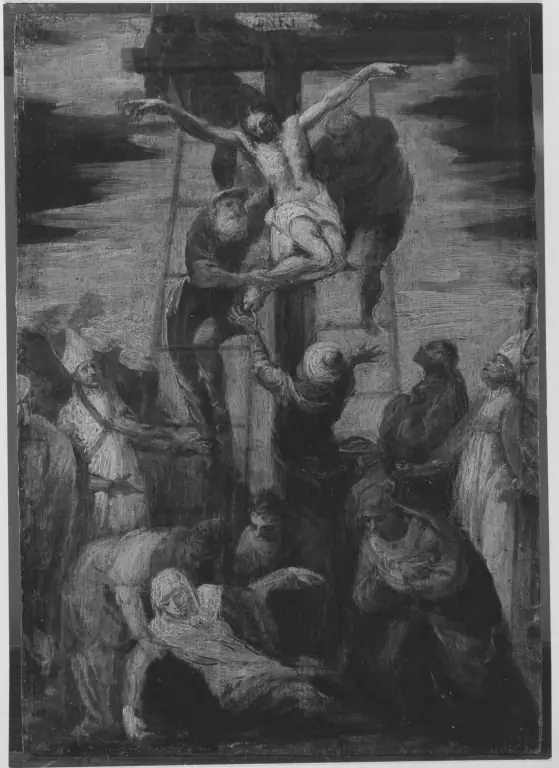 Kreuzabnahme Christi
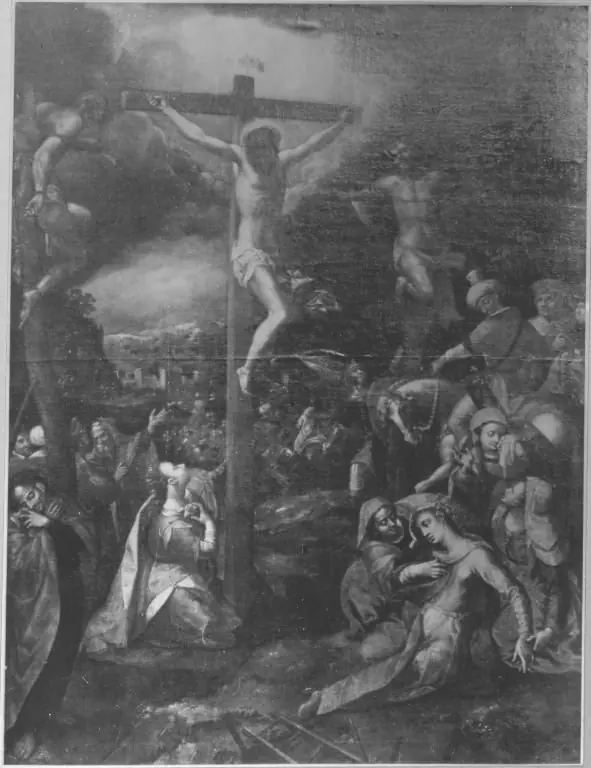 Kreuzigung Christi (Kopie nach)
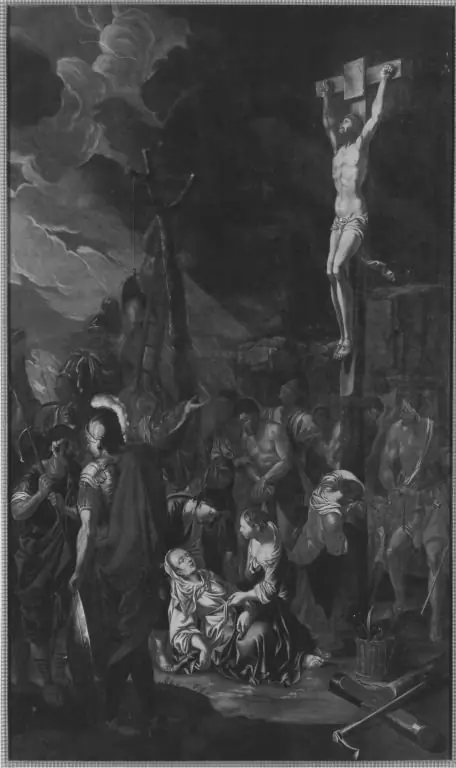 Kreuzigung
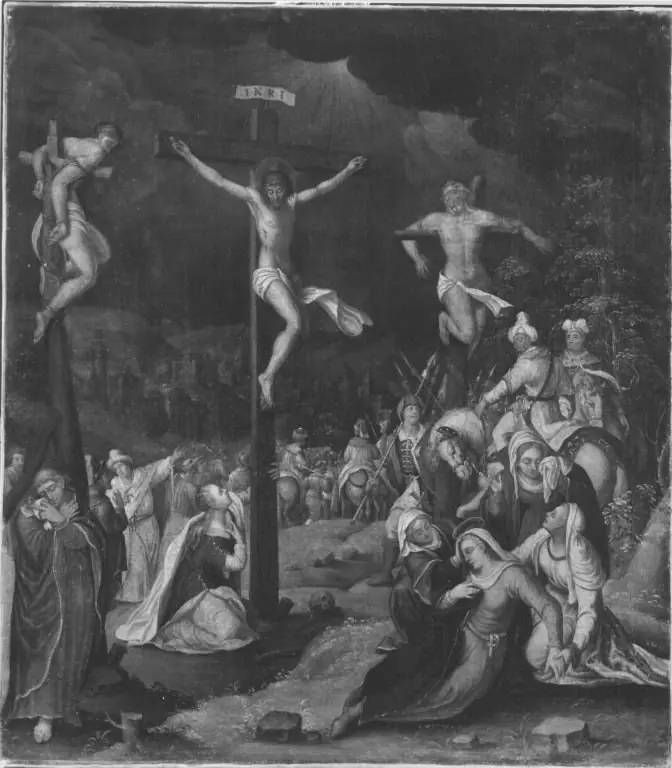 Kreuzigung Christi
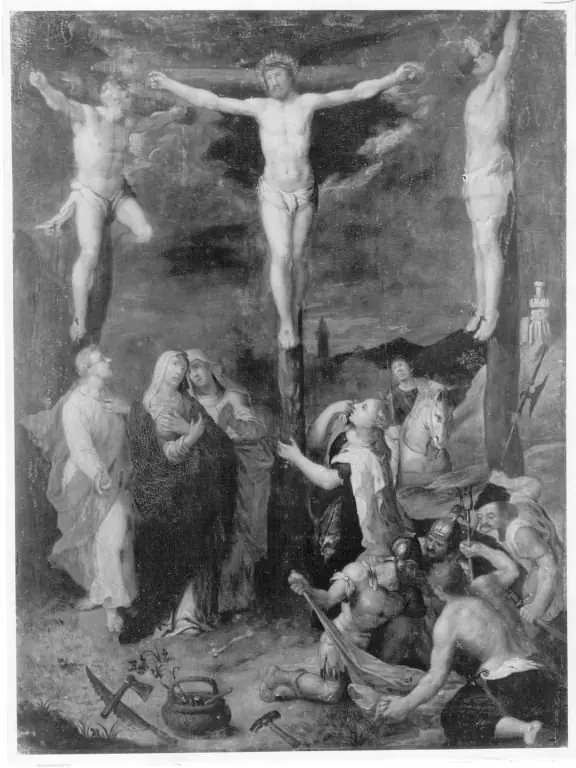 Christus am Kreuz
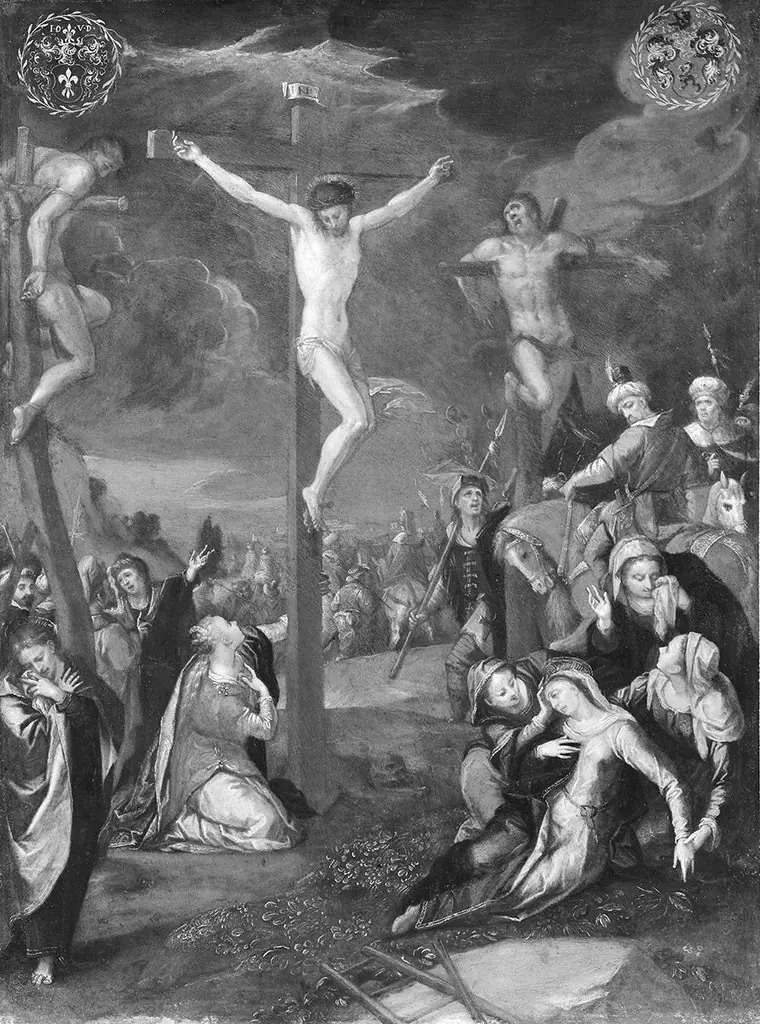 Kalvarienberg (Kopie nach)
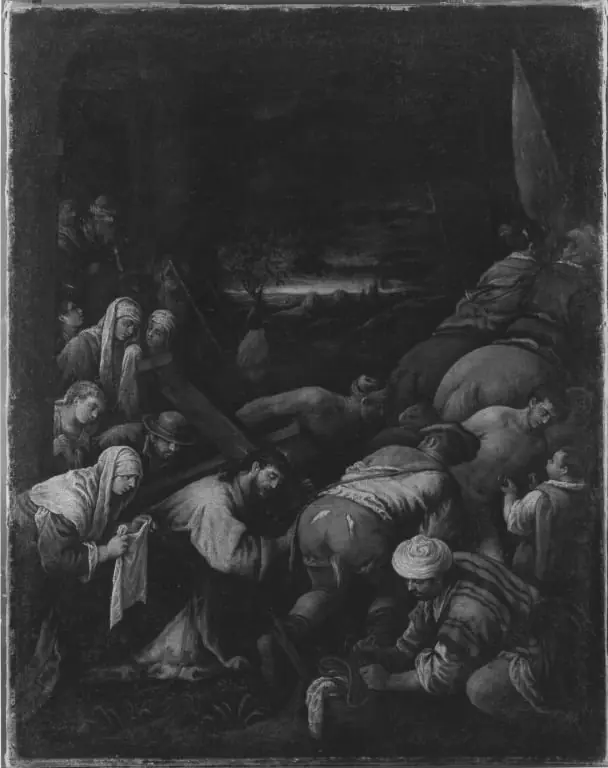 Kreuztragung Christi (Werkstattkopie)
 Christus am Kreuz (Schule)
 Episodes from the Passion and the Resurrection of Christ
 Lamentation of Christ (after Raphael)
 Christus am Kreuz
 Die Kreuzigung des hl. Petrus