Artwork
Venus and Mars with Cupid and the Three Graces in a Landscape
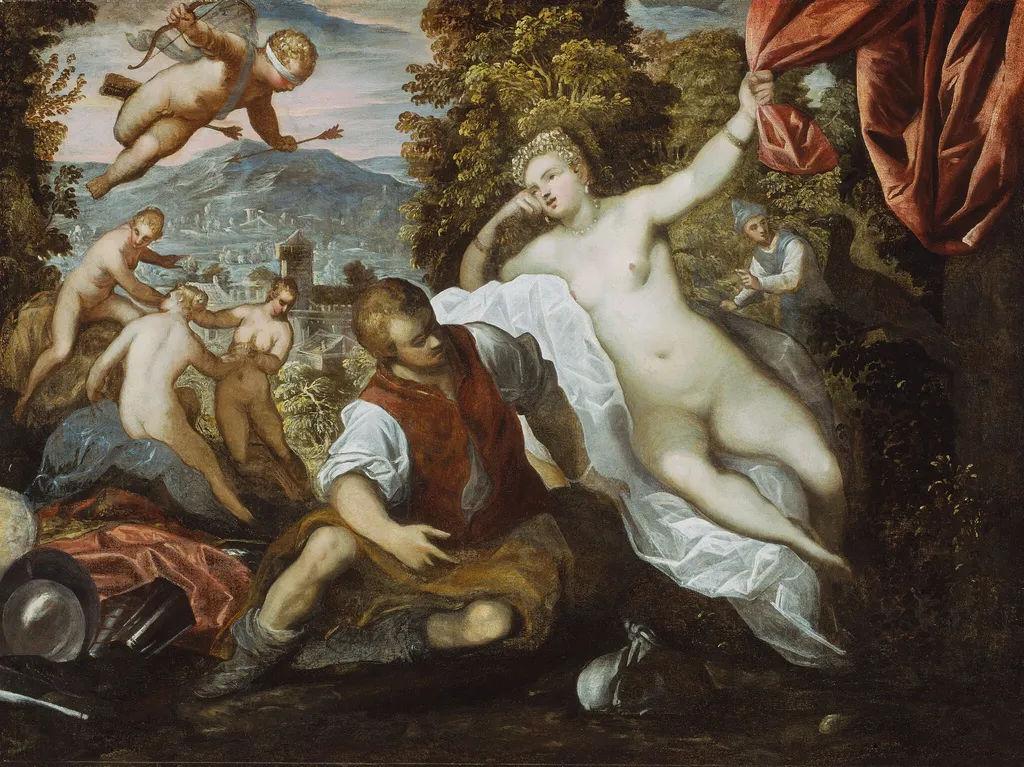
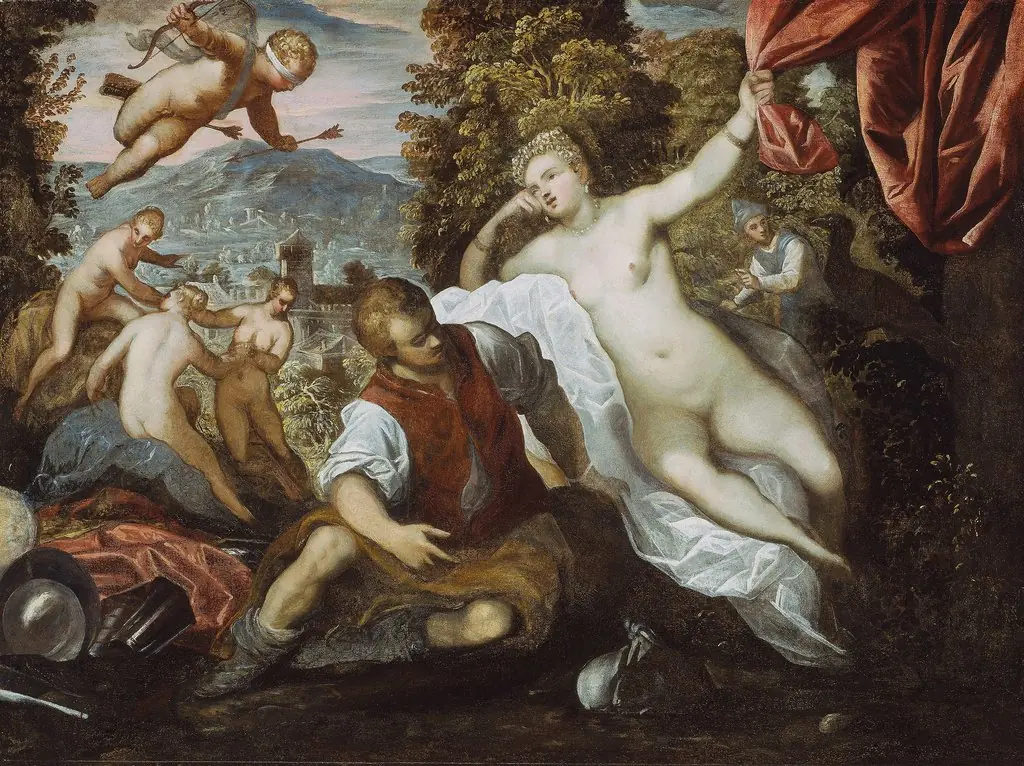
Venus and Mars with Cupid and the Three Graces in a Landscape is an oil painting by the Mannerist artist Domenico Tintoretto. It dates from 1590 and is held in the collection of the Art Institute of Chicago.
About this work
You see a god and goddess lounging in a leafy glade: Mars in armor, Venus half-dressed, Cupid playing at their feet, and three dancing Graces in the background.
You see a god and goddess lounging in a leafy glade: Mars in armor, Venus half-dressed, Cupid playing at their feet, and three dancing Graces in the background.
The painting is full of tiny jokes. Mars’s helmet is stuffed with fruit—maybe a dig at how love makes warriors silly. The Graces’ see-through scarves are painted so thin you can count every thread. It’s like a gossip column from 1590, dressed up as mythology.
If you like this light touch, look up the technique called *glazing*.
Overview
Painted in 1590, this oil on canvas work by Domenico Tintoretto depicts a mythological scene set in a dappled woodland. The composition centers on Venus and Mars reclining together, accompanied by Cupid at their feet and the Three Graces dancing in the distance. The painting blends classical figures with playful, almost whimsical details, suggesting a narrative beyond traditional allegory.
Subject & Meaning
The figures represent classical deities associated with love and war, but their interaction defies solemnity. Mars, still clad in armor, rests idly while fruit fills his helmet—a subtle mockery of martial pride subdued by desire. Cupid’s mischief and the Graces’ movement imply the enduring, lighthearted influence of love over force, turning myth into a quiet satire of human folly.
Technique & Style
Tintoretto employed glazing to achieve translucent layers, particularly in the Graces’ diaphanous scarves, where individual threads are rendered with precision. The landscape is built with delicate brushwork, allowing light to filter through foliage naturally. These methods create a tactile richness, enhancing the painting’s intimate, almost theatrical atmosphere without overt drama.
History & Provenance
The painting entered the Art Institute of Chicago’s collection in the early 20th century, though its earlier ownership remains undocumented. It was likely produced for a private patron in Venice, where Tintoretto worked within a tradition of mythological scenes infused with domestic charm rather than grandeur. Its survival in good condition reflects careful preservation over centuries.
Context
In late 16th-century Venice, mythological paintings often served as intellectual entertainment for elite collectors. Tintoretto’s approach diverged from his father’s dramatic style, favoring subtle humor and refined detail. This work aligns with a trend of blending classical themes with everyday wit, reflecting a cultural appetite for art that felt both elevated and familiar.
Legacy
The painting exemplifies how Venetian artists reimagined myth through understated observation rather than heroic scale. Its attention to texture and quiet irony influenced later genre-infused mythologies in 17th-century Europe. While not widely exhibited, it remains a quiet reference point for studies of domesticated classical imagery in Renaissance painting.
Own this work as a print
Artist & collection

Artist
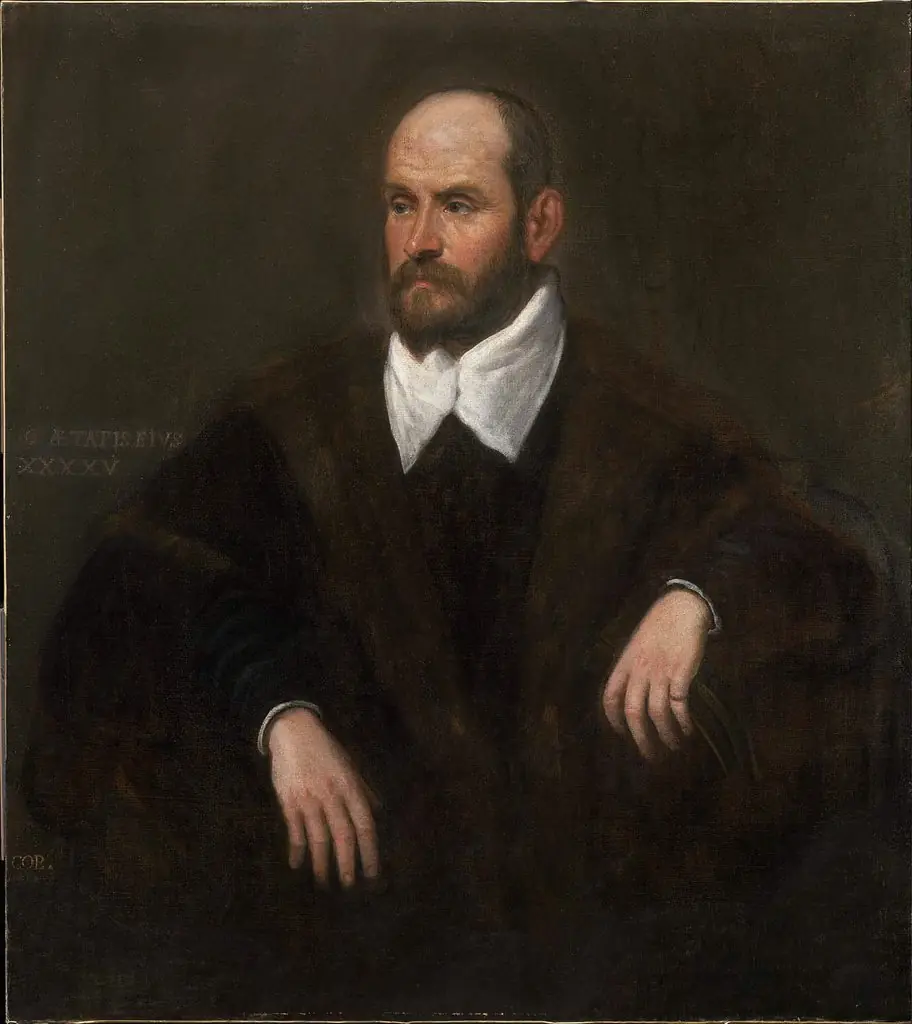
Domenico Robusti, also known as Domenico Tintoretto, was an Italian painter from Venice. He grew up under the tutelage of his father, the renowned painter Jacopo Tintoretto.

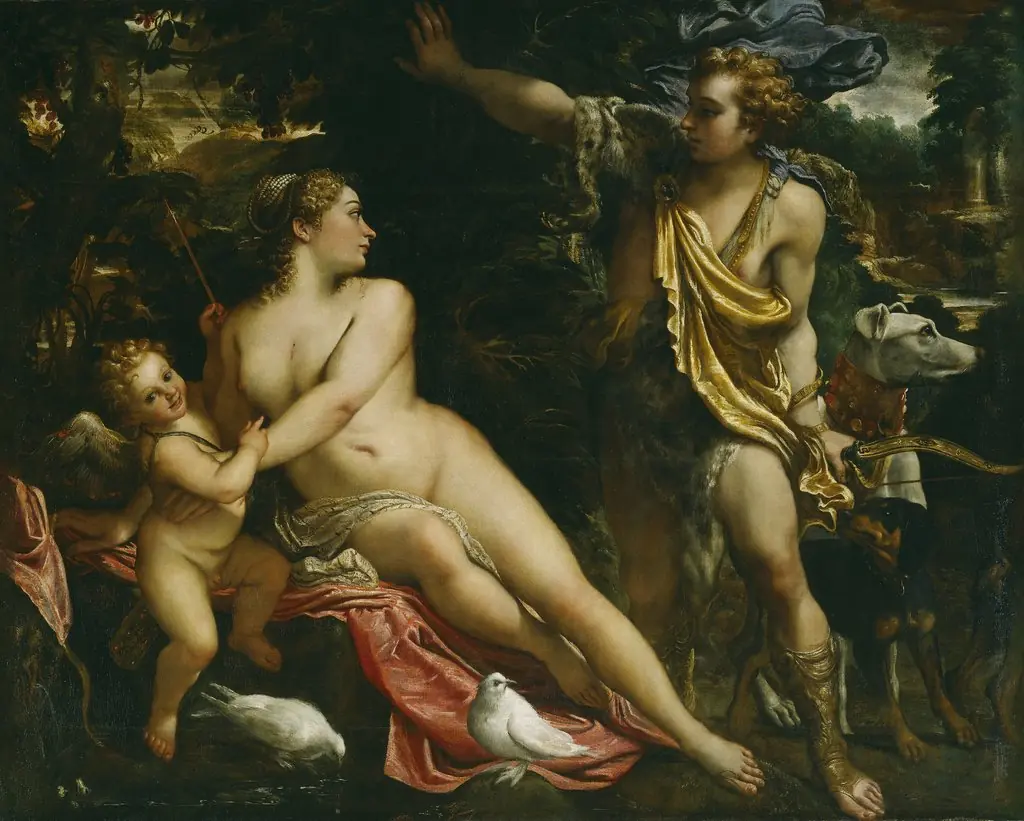 Venus, Adonis and Cupid
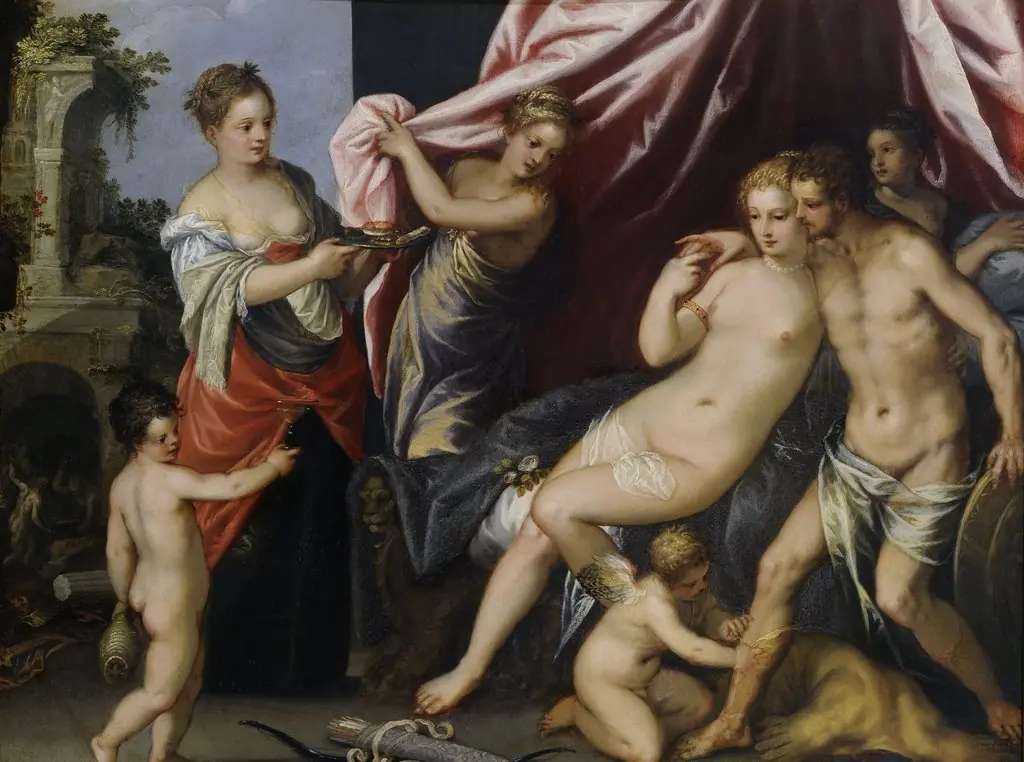 Venus and Mars
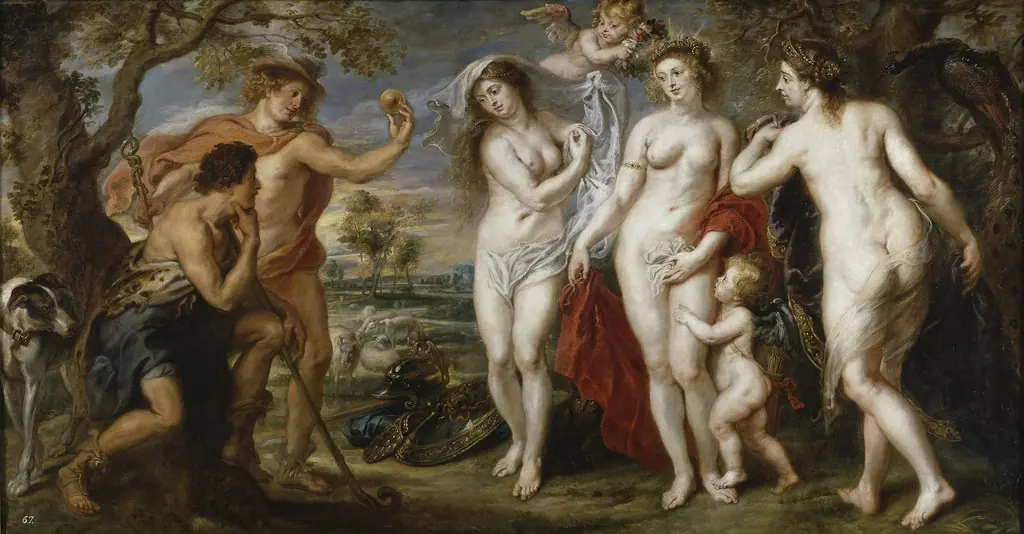 The Judgement of Paris
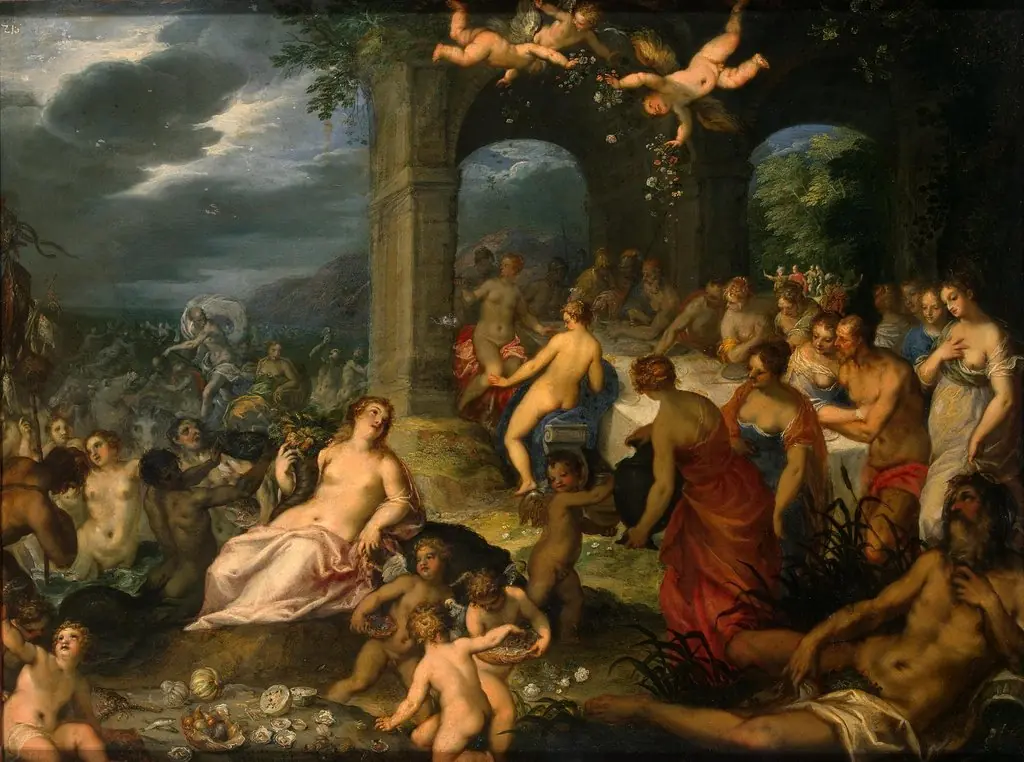 Feast of the Gods (The Marriage of Peleus and Thetis)
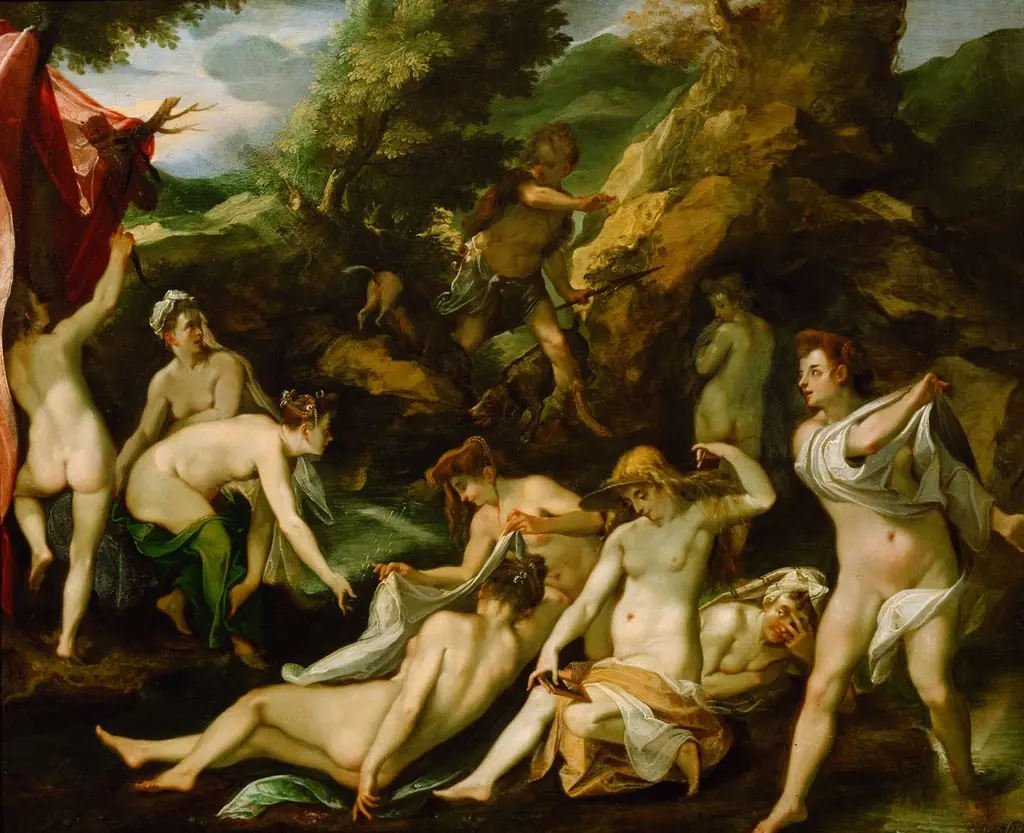 Diana and Actaeon
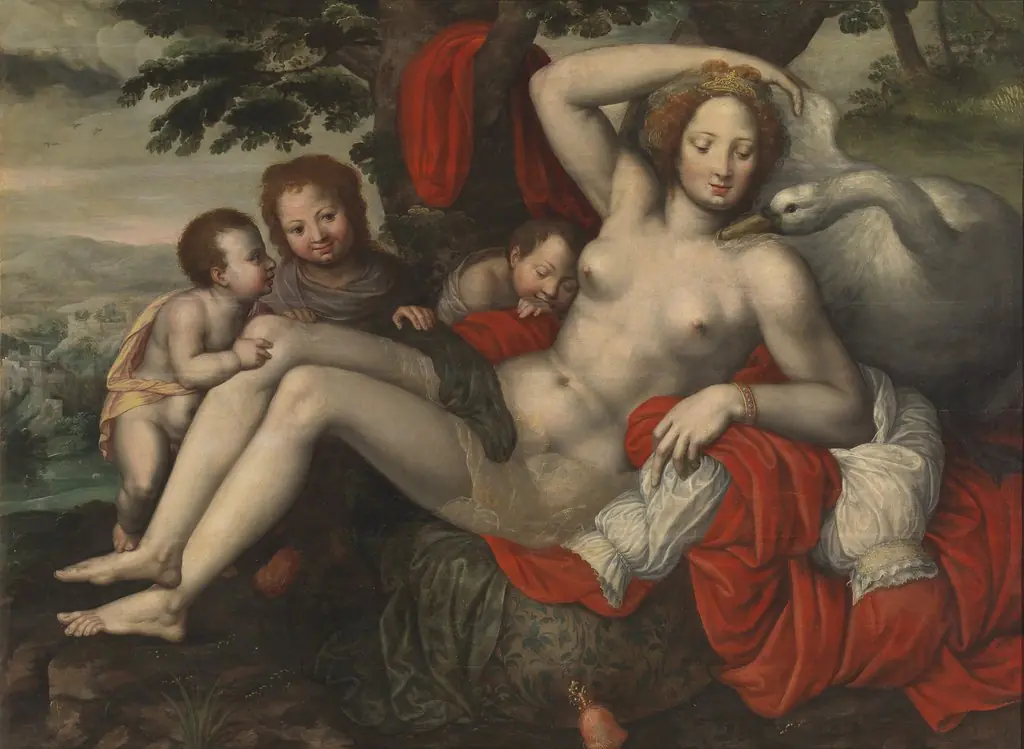 Leda and the Swan
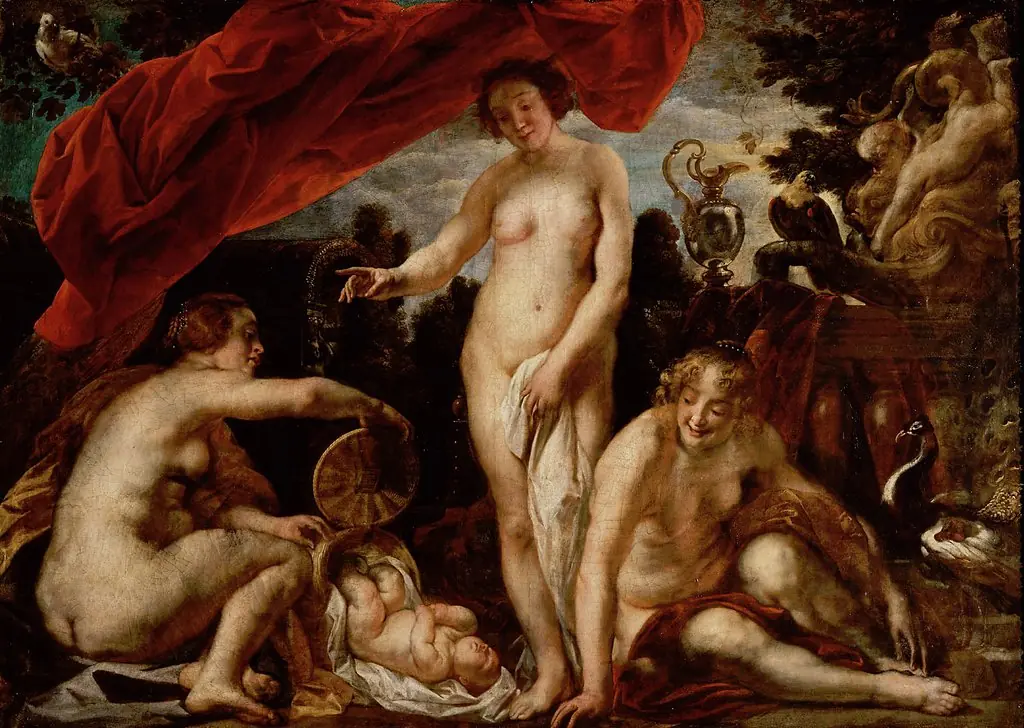 Daughters of Kekrops Finding Erichthonios.
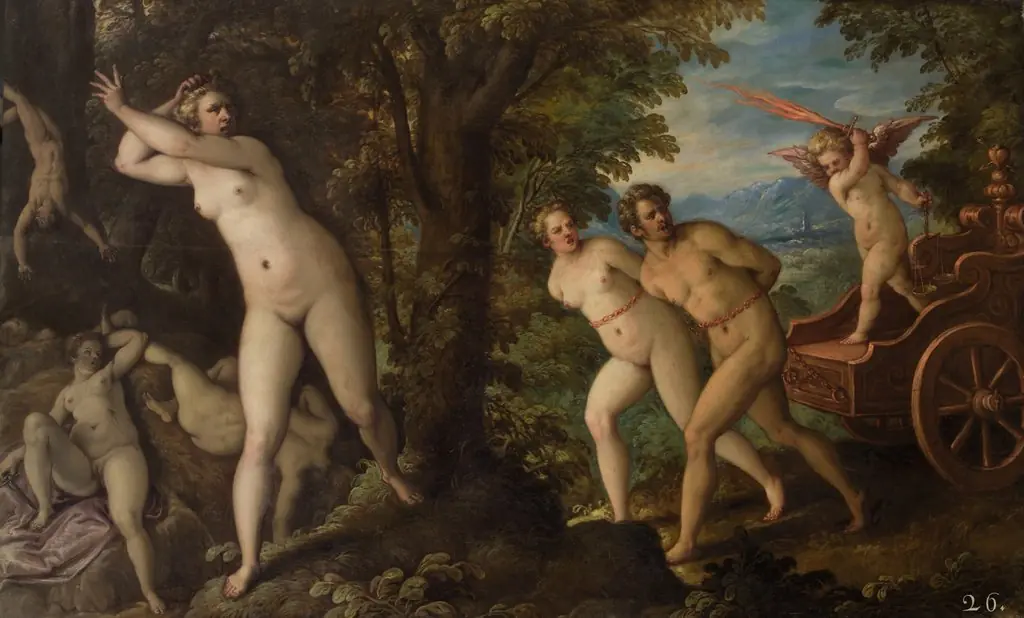 Punishment of Love
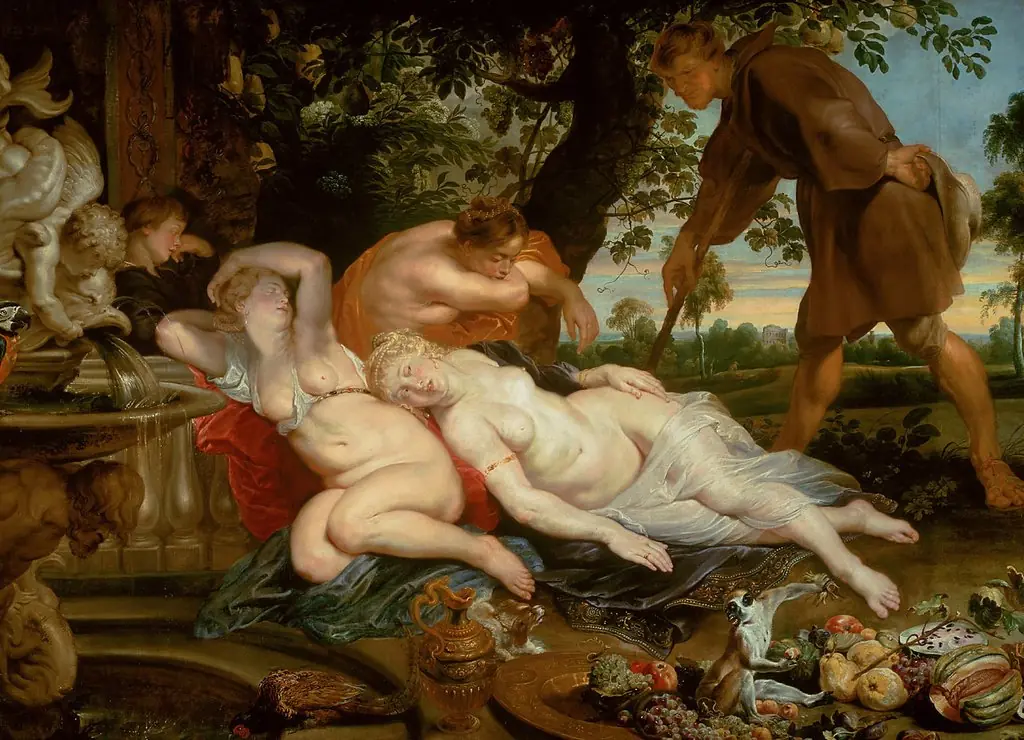 Cimone and Efigenia
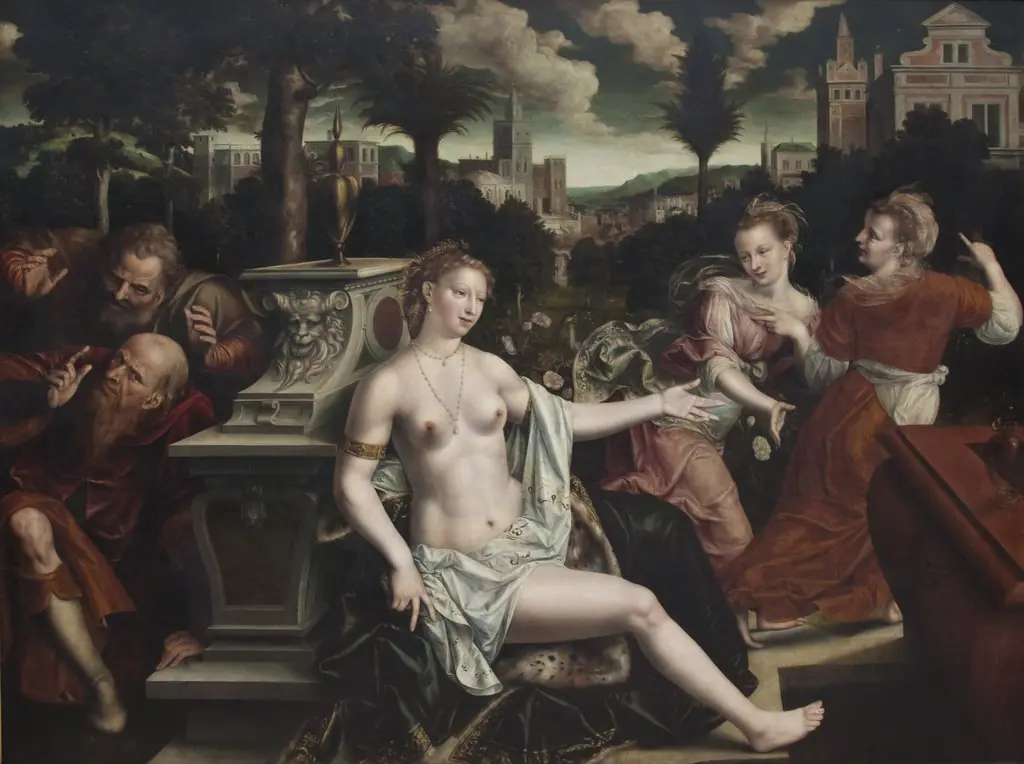 Susanna spyed upon by the Elders (Daniel 13:1-63)
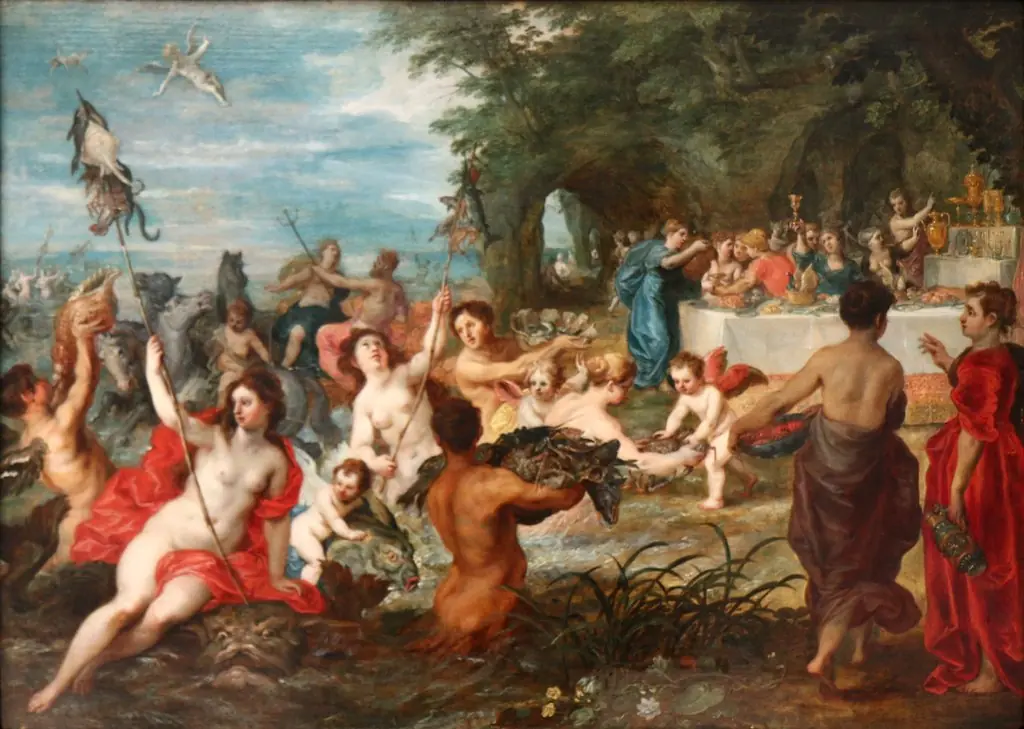 The wedding of Thetis and Peleus