Artwork
Lacemaker
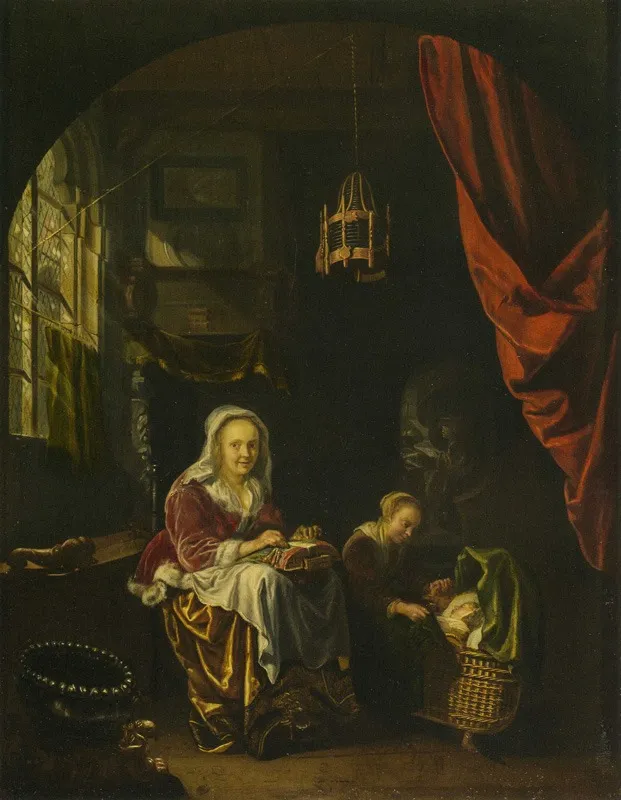
Lacemaker is an oil painting by the Dutch Golden Age artist Domenicus van Tol. It dates from 1660 and is held in the collection of the Hermitage Museum.
About this work
Overview
Domenicus van Tol’s oil painting Lacemaker, executed in 1660, presents an intimate domestic interior. The composition centers on a modestly furnished room where two women attend to a child, while a lace pillow rests nearby. The work is part of the State Hermitage Museum’s collection, offering a glimpse into everyday life in the Dutch Golden Age.
Subject & Meaning
The scene portrays a mother or caretaker seated beside a window, gently holding a lace pillow, a tool associated with the painstaking craft of lace making. A small child, positioned in a basket, looks up toward the figures, suggesting a tender familial interaction. The inclusion of an infant’s bed and the lace pillow underscores themes of domestic labor and nurturing.
Technique & Style
Van Tol employs pronounced chiaroscuro, allowing the daylight streaming from the window to illuminate the women’s faces while the surrounding space recedes into shadow. This contrast directs the viewer’s eye to the central figures and the delicate texture of the lace pillow. The muted palette and careful modeling of light enhance the sense of quiet realism.
History & Provenance
Created in the mid‑seventeenth century, Lacemaker has remained in the public domain since its acquisition by the State Hermitage Museum. The painting’s provenance traces back to the Russian imperial collection, where it was catalogued as a representative example of Dutch genre painting, reflecting the museum’s long‑standing interest in Northern European art.
Artist & collection