Artwork
Untitled
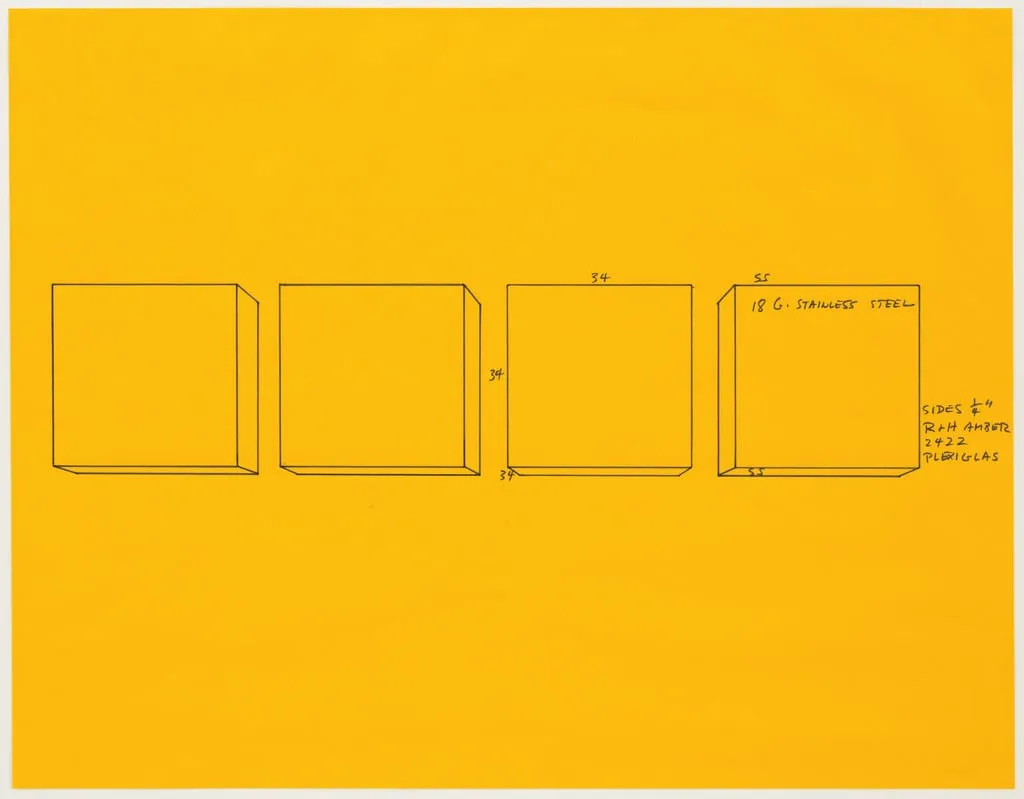
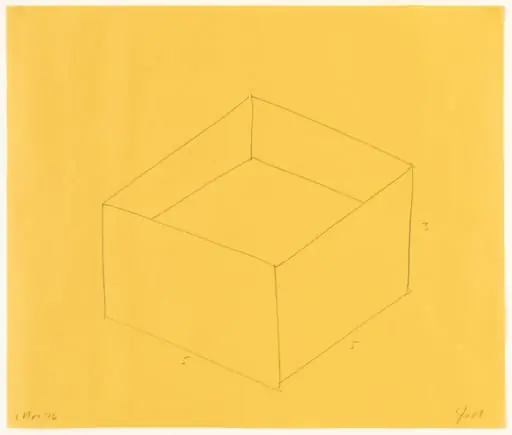
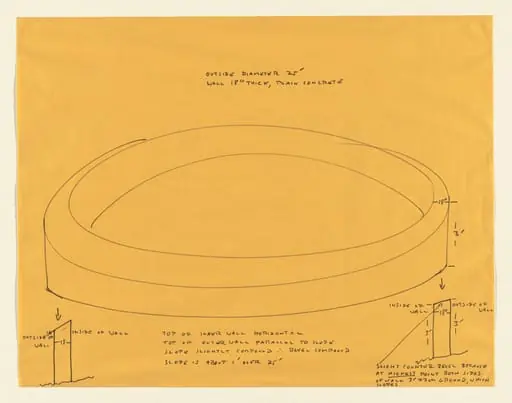
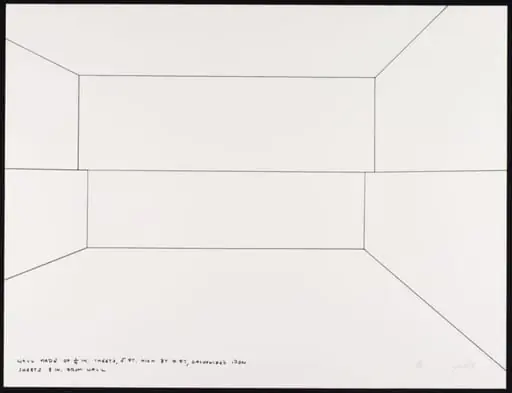
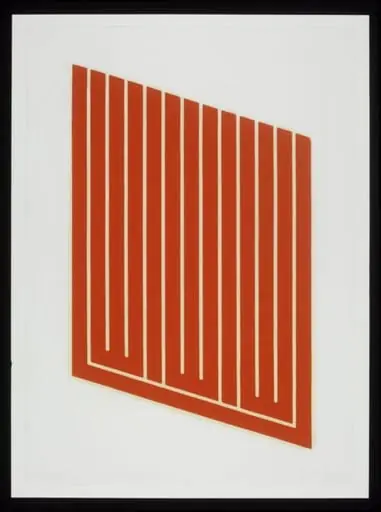
Untitled is a paint drawing by Donald Judd. It dates from 1966 and is held in the collection of the Museum of Modern Art.
About this work
Overview
The piece is part of his broader investigation into how objects occupy and define space without symbolic or expressive intent.
Created in 1966, this drawing by Donald Judd uses felt-tip pen on colored paper to explore geometric form and spatial order. It belongs to a series of works in which Judd stripped visual language to its essentials, rejecting traditional composition in favor of direct, non-hierarchical arrangements. The piece is part of his broader investigation into how objects occupy and define space without symbolic or expressive intent.
Subject & Meaning
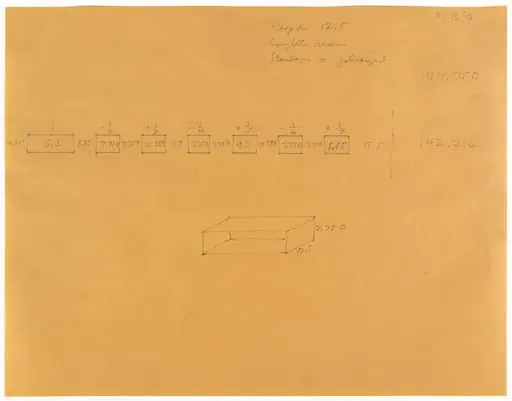
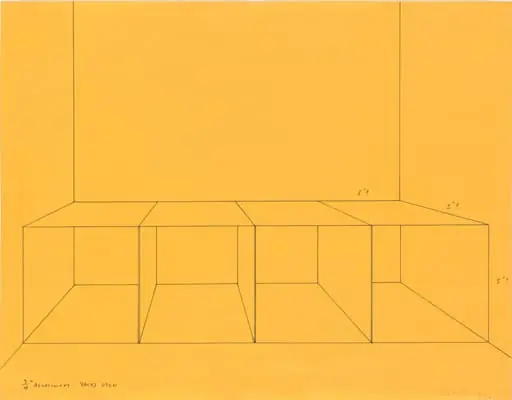
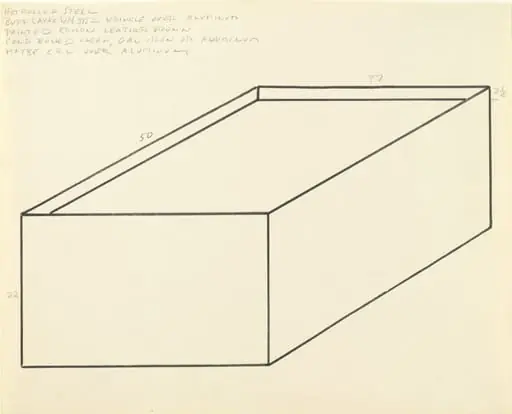
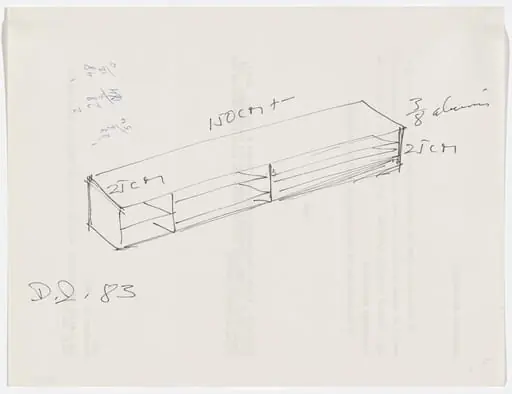
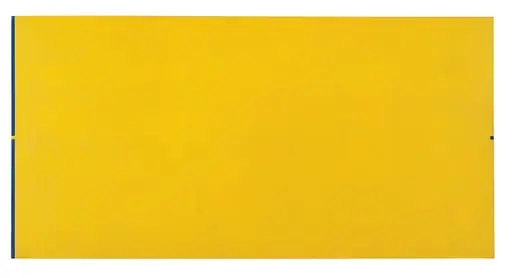
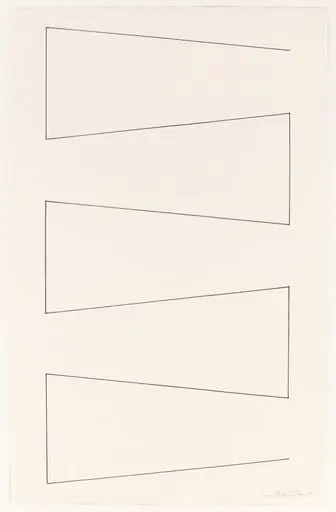
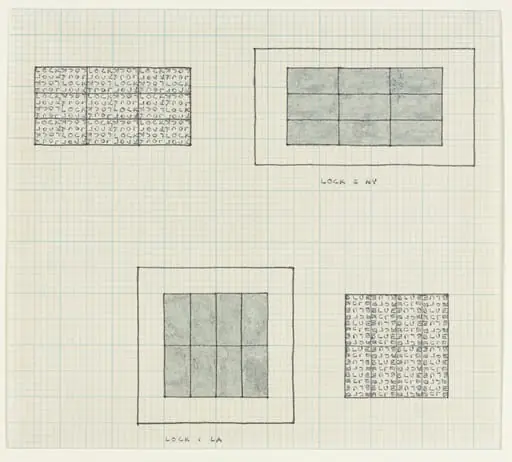
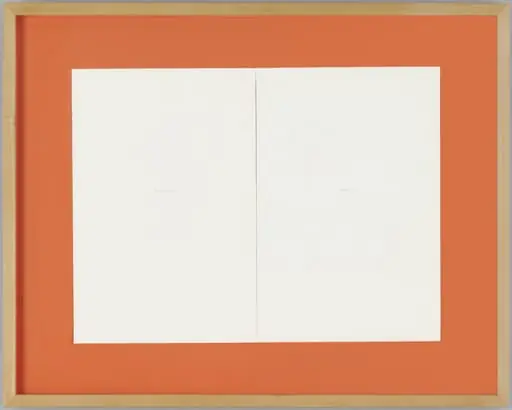
The drawing presents four black-outlined rectangles, each differing in size, arranged left to right in ascending scale. There is no narrative or metaphor; the subject is the relationship between form, scale, and surface. The sequence suggests progression without climax, emphasizing seriality and objecthood over emotional or symbolic content, aligning with Judd’s rejection of illusionism in art.
Technique & Style
Judd employed a single tool—felt-tip pen—to render precise, unmodulated outlines on a vivid yellow ground. The lines are uniform in weight, corners sharp, and edges clean, eliminating any trace of the artist’s hand. The high-contrast palette enhances the flatness of the forms, reinforcing their presence as physical entities rather than representations. The paper’s color is not a backdrop but an active component of the work’s structure.
History & Provenance
This drawing emerged during a pivotal moment in Judd’s career, shortly after the publication of his influential 1964 essay 'Specific Objects.' It reflects his shift from painting to three-dimensional construction, though here he still worked on paper to test spatial ideas. The work was produced in New York, amid a circle of artists redefining sculpture and drawing through industrial materials and systematic methods.
Context
In the mid-1960s, Judd and peers like Carl Andre and Dan Flavin challenged the conventions of painting and sculpture, favoring industrial fabrication and non-compositional arrangements. This drawing aligns with that ethos: it avoids gesture, symbolism, and hierarchy, instead proposing art as a direct encounter with material and space. It was made alongside his early metal and acrylic boxes, extending his ideas into two dimensions.
Legacy
The drawing exemplifies Judd’s enduring influence on minimalist and conceptual practices. Its clarity and restraint became a model for artists seeking to remove subjective expression from form. By treating drawing not as preparatory but as complete, Judd expanded the possibilities of the medium, influencing generations who prioritize objecthood, repetition, and spatial logic over traditional aesthetics.
Artist & collection
Artist
Donald Clarence Judd (June 3, 1928 – February 12, 1994) was an American artist associated with minimalism.