Artwork
Untitled
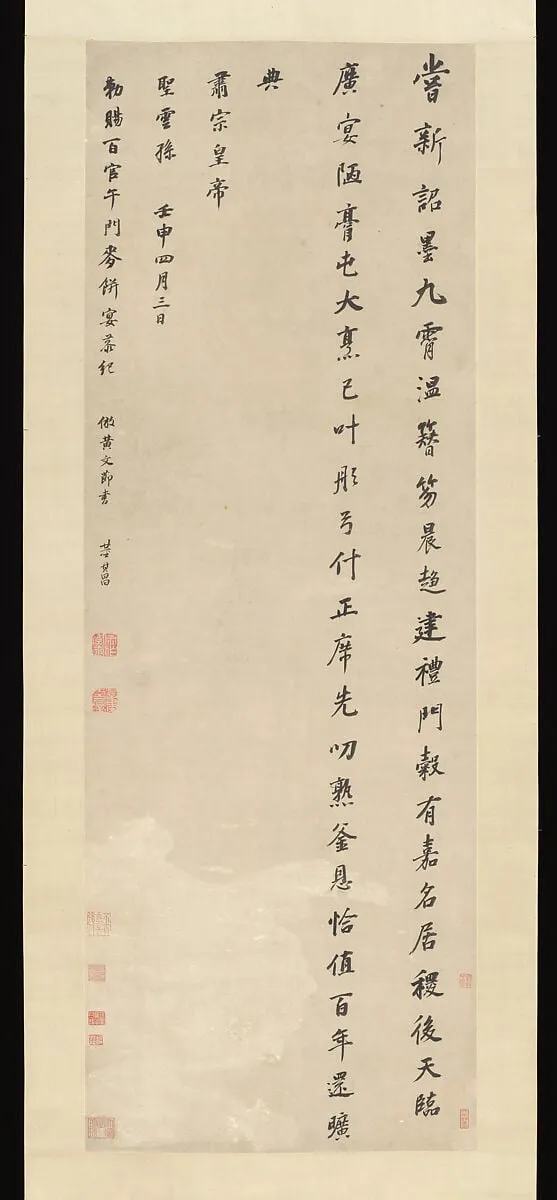
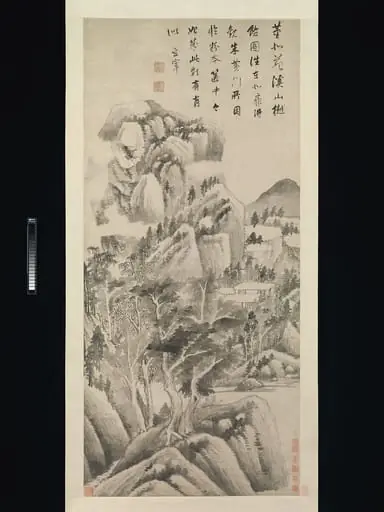
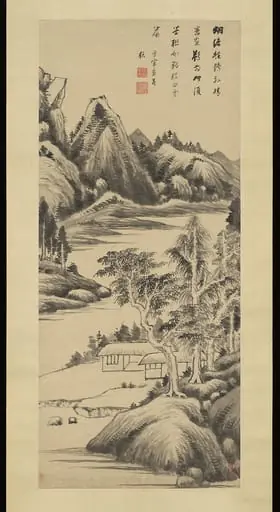
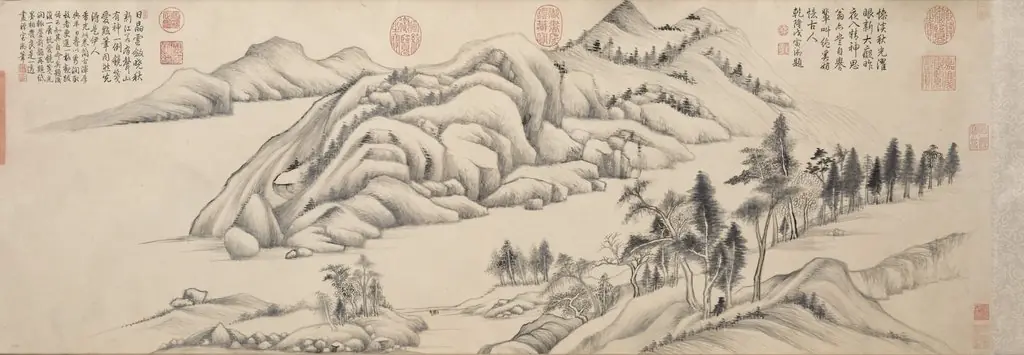
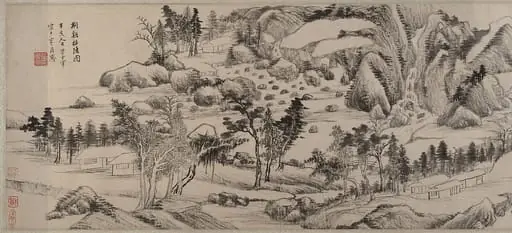
Untitled is an ink painting by the Baroque artist Dong Qichang. It dates from 1632 and is held in the collection of the Metropolitan Museum of Art.
About this work
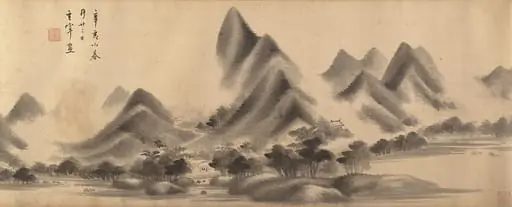
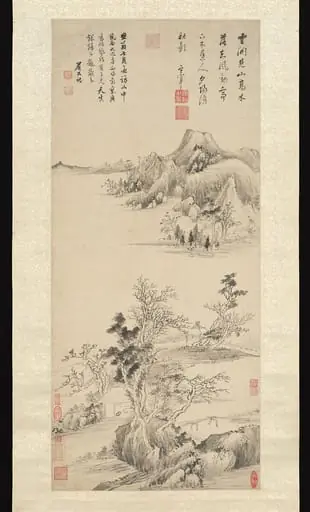
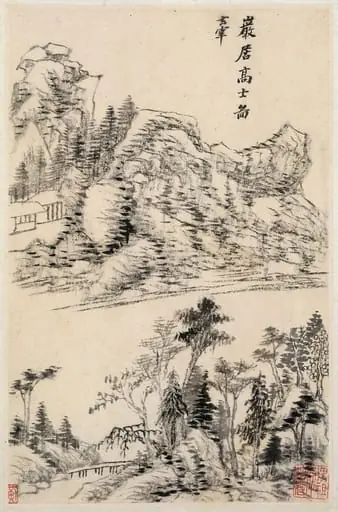
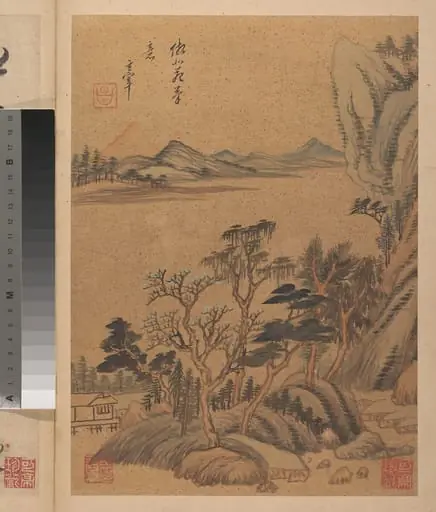
You see black ink on white paper: a few quick brushstrokes form jagged rocks, a twisted pine, and a waterfall that vanishes into mist.
Dong Qichang painted this in 1632, but he was also a poet and calligrapher. The same hand that wrote verses wrote these strokes—so the painting feels like a poem you can see.
To see how ink can be both quiet and bold, look up the subject *poetry, china*.
Overview
Created in 1632, this hanging scroll by Dong Qichang presents a monochrome landscape rendered in ink on paper. The composition belongs to the late Ming painting tradition and conveys a lyrical atmosphere through sparse, expressive brushwork. Though untitled, the work reflects the artist’s integration of visual art with his poetic sensibility.
Subject & Meaning
The scene suggests a secluded natural setting: rugged rocks rise sharply, a solitary pine twists upward, and a cascade of water disappears into an indistinct mist. These elements evoke themes common in Chinese poetry—solitude, the passage of time, and the harmony between humanity and the natural world.
Technique & Style
Dong employs swift, varied strokes that balance density and emptiness. The jagged rocks are outlined with abrupt, angular lines, while the pine’s bark is suggested by a few twisting marks. The waterfall is rendered through a cascade of ink washes that dissolve into a soft, atmospheric veil, illustrating the ink’s capacity for both vigor and subtlety.
History & Provenance
Dong Qichang (1555–1636), a noted Ming dynasty scholar-official, was also a prolific poet and calligrapher. The scroll reflects his practice of uniting poetry, calligraphy, and painting, a hallmark of his artistic theory. The work has remained within collections that emphasize Ming literati art, underscoring its role as a visual counterpart to his written verse.
Artist & collection

Artist
Dong Qichang (Chinese: 董其昌; pinyin: Dǒng Qíchāng; Wade–Giles: Tung Ch'i-ch'ang; courtesy name Xuanzai (玄宰); 1555–1636) was a Chinese art theorist, calligrapher, painter, and politician of the later period of the Ming dynasty.