Artwork
A Study of Pine Trees
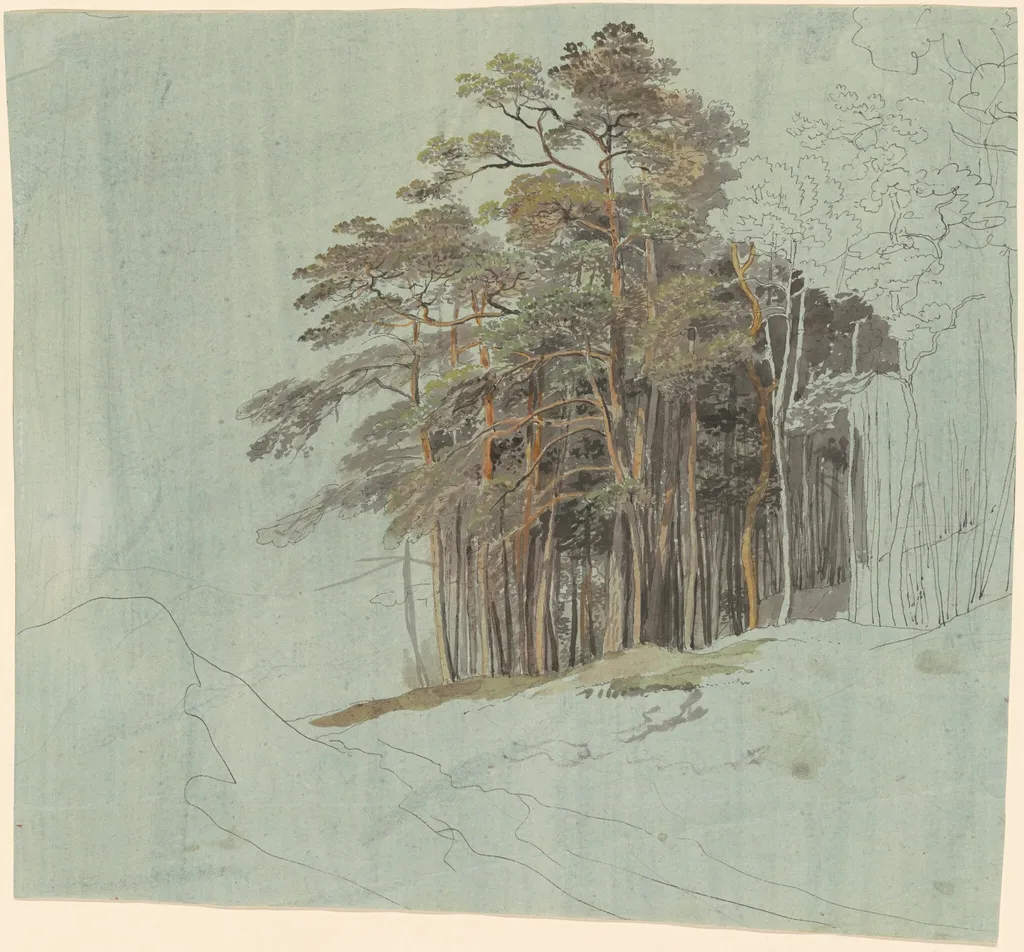
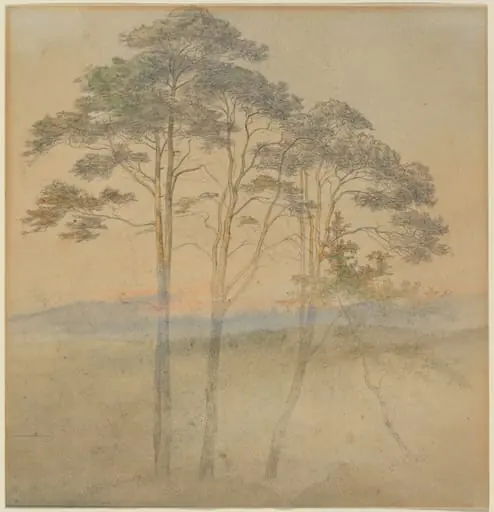
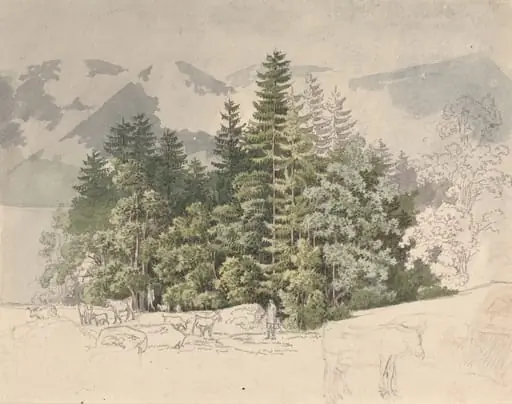
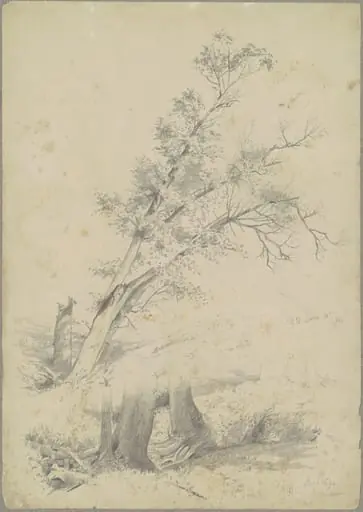
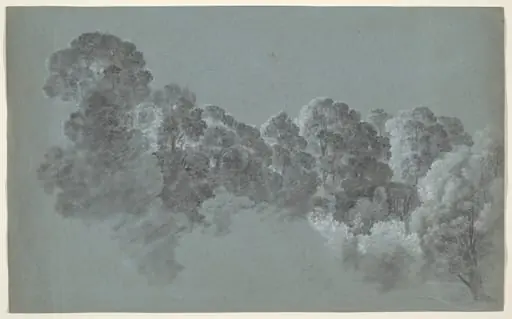
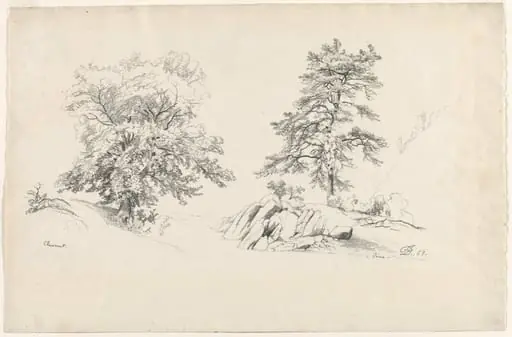
A Study of Pine Trees is a gouache drawing by the Romanticist artist Johann Jakob the younger Dorner. It dates from 1820 and is held in the collection of the National Gallery of Art.
About this work
Overview
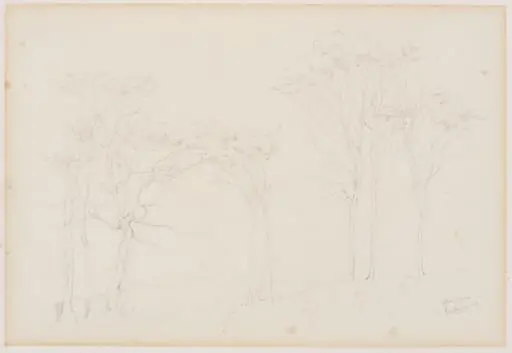
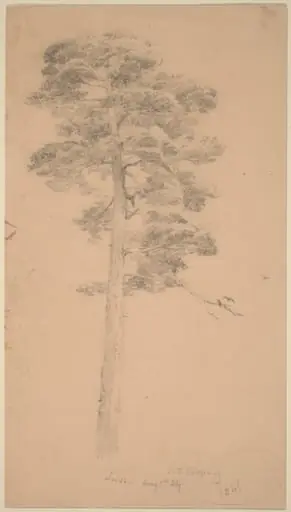
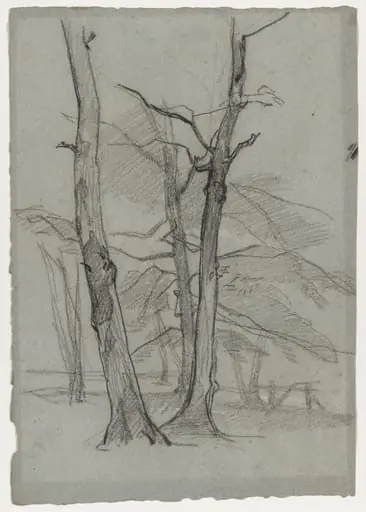
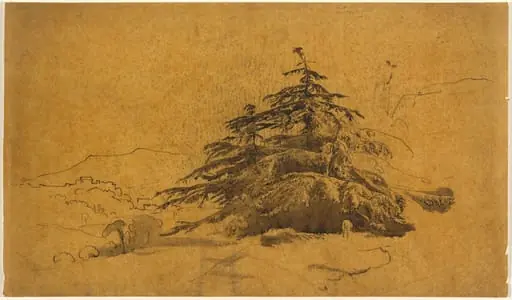
The work captures a group of pine trees with minimal background, emphasizing the trees’ structure through layered washes and controlled spontaneity.
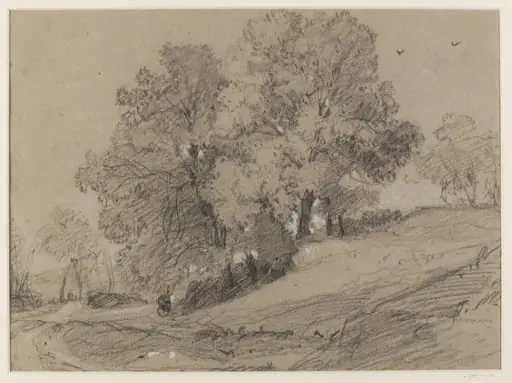
Created around 1820 by Johann Jakob Dörner the Younger, this drawing combines watercolor and gouache over graphite and pen-and-ink lines on a blue-gray prepared paper. The work captures a group of pine trees with minimal background, emphasizing the trees’ structure through layered washes and controlled spontaneity. Its small scale and unfinished quality suggest it was made as a direct observation, likely outdoors.
Subject & Meaning
The subject is a cluster of mature pine trees, rendered without idealization or narrative context. Their gnarled trunks and dense canopies are presented as natural forms, observed rather than composed. The absence of human presence or symbolic elements points to a focus on botanical accuracy and the quiet presence of the trees themselves, reflecting a Romantic-era interest in nature’s unadorned reality.
Technique & Style
Dörner employed loose, expressive ink lines to define branches and bark, contrasting with areas of layered watercolor and gouache that suggest foliage density. Pale greens and grays were built up gradually through glazing, allowing the blue-gray paper to influence the tonality. Some regions remain deliberately rough or bare, preserving the paper’s texture and enhancing the sense of immediacy.
History & Provenance
The work originates from the artistic practice of Johann Jakob Dörner the Younger, a Swiss painter known for topographical and natural studies. Though specific early ownership records are sparse, its survival in collections suggests it was valued within 19th-century artistic circles for its observational rigor. It remains a representative example of his preparatory sketches from the early 1820s.
Context
In early 19th-century Europe, artists increasingly turned to direct observation of nature, moving away from idealized landscapes. Dörner’s work aligns with this trend, particularly among Swiss and German draftsmen who documented regional flora with scientific and aesthetic precision. The use of colored paper was common among watercolorists seeking to enhance tonal contrast and reduce the need for full rendering.
Legacy
This drawing exemplifies a quiet but influential mode of naturalist study that bridged scientific illustration and Romantic landscape practice. While not widely exhibited, it contributes to understanding how artists of the period approached botanical subjects with both technical restraint and expressive sensitivity, influencing later generations focused on direct observation.
Artist & collection