Artwork
The Steamboat, Seascape with Porpoises
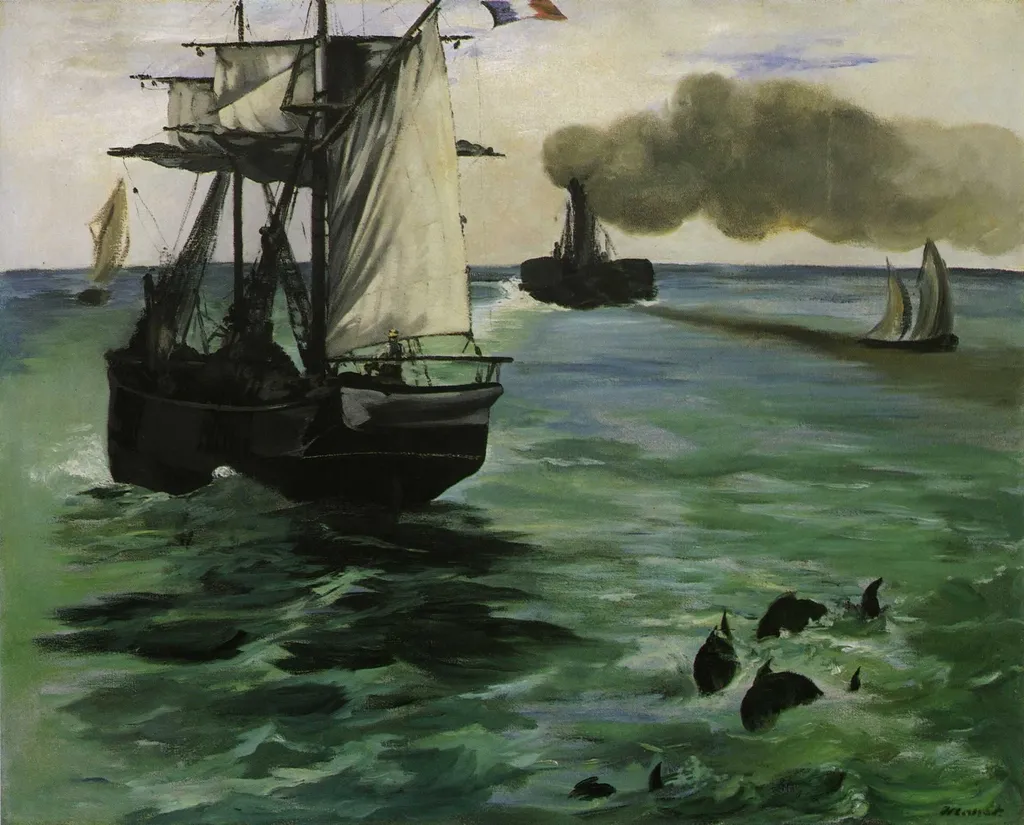
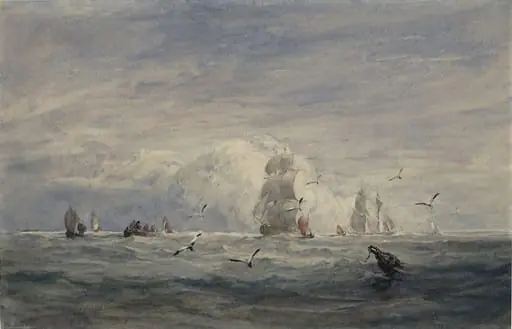
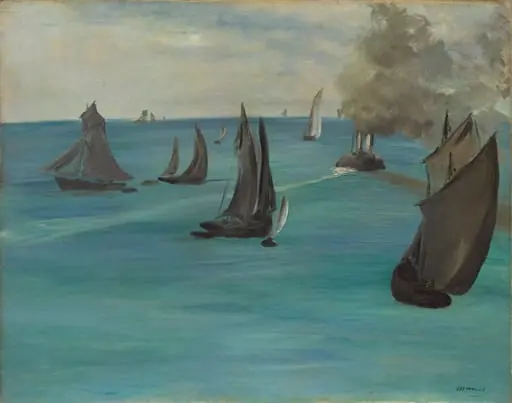
The Steamboat, Seascape with Porpoises is an oil painting by the Realist artist Edouard Manet. It dates from 1868 and is held in the collection of the Philadelphia Museum of Art. Painted in 1868 by Édouard Manet, this oil-on-canvas work depicts a steamboat navigating calm seas.
About this work
Overview
The vessel, rendered in dark tones with white sails and small flags, moves through greenish water where porpoises surface nearby.
Painted in 1868 by Édouard Manet, this oil-on-canvas work depicts a steamboat navigating calm seas. The vessel, rendered in dark tones with white sails and small flags, moves through greenish water where porpoises surface nearby. A muted gray sky overhead lends quiet atmosphere. The composition balances natural elements with industrial presence, avoiding dramatic tension in favor of subtle observation.
Subject & Meaning
The painting juxtaposes a modern steamboat with wild porpoises, suggesting a quiet coexistence between human technology and marine life. Neither dominates the scene; both move with similar rhythm through the water. Manet avoids symbolism, instead presenting the moment as a neutral observation—neither celebratory nor critical—inviting viewers to consider the changing relationship between industry and nature.
Technique & Style
Manet employs loose brushwork and restrained color to capture light and movement. Chiaroscuro is used subtly, with the steamboat’s dark hull contrasting against the sky and water’s pale highlights. The porpoises are suggested with swift strokes, their forms emerging from the fluid washes of sea and air. The paint is applied with economy, avoiding detail in favor of atmospheric effect and tonal harmony.
History & Provenance
Completed in 1868, the painting entered the collection of the Philadelphia Museum of Art in the 20th century. Its early ownership history is not well documented, but it was likely acquired by a private collector in France before crossing the Atlantic. Unlike Manet’s more famous works, it received little public attention during his lifetime, remaining a quiet study among his marine subjects.
Context
In the late 1860s, Manet was exploring coastal scenes and maritime themes, influenced by his travels along the Normandy coast. Steamships were becoming common, yet still novel enough to warrant artistic attention. This work aligns with his broader interest in modern life, capturing transitional moments where traditional seascapes met industrial progress without overt commentary.
Legacy
Though not widely exhibited during Manet’s career, the painting is now recognized as a thoughtful example of his marine studies. It reflects his ability to render contemporary subjects with restraint, avoiding sentimentality. Its quiet composition has influenced later artists interested in the intersection of nature and modernity, offering a restrained counterpoint to more dramatic maritime narratives.
Own this work as a print
Artist & collection

Artist
Édouard Manet didn’t have much time to make his mark—he died at 51—but he used every year.