Artwork
Seascape
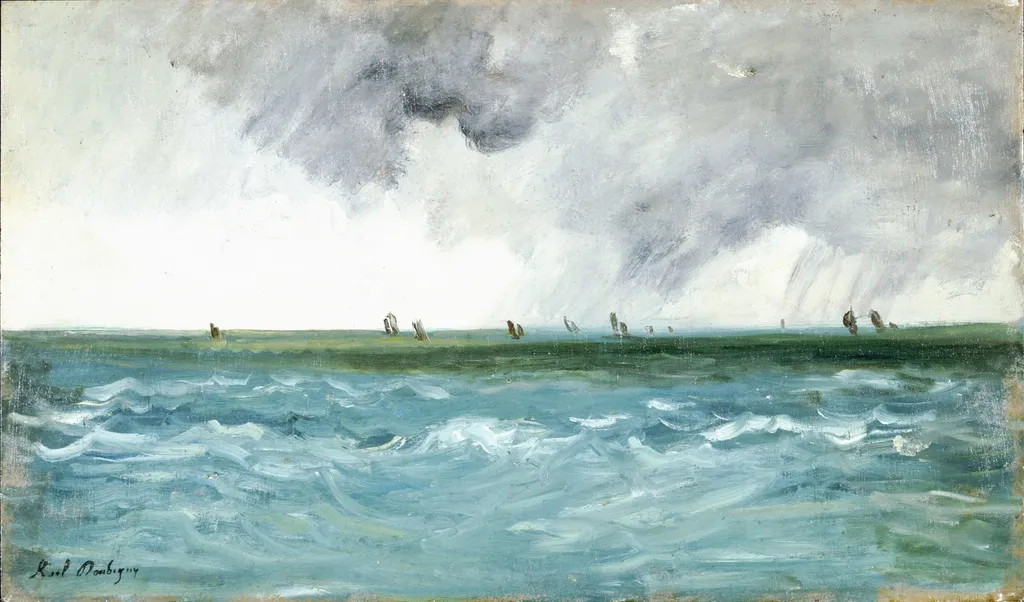
Seascape is an unspecified painting by Karl Daubigny. It dates from 1876 and is held in the collection of the Detroit Institute of Arts.
About this work
Overview
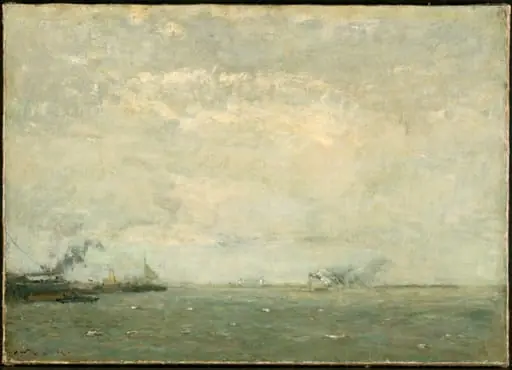
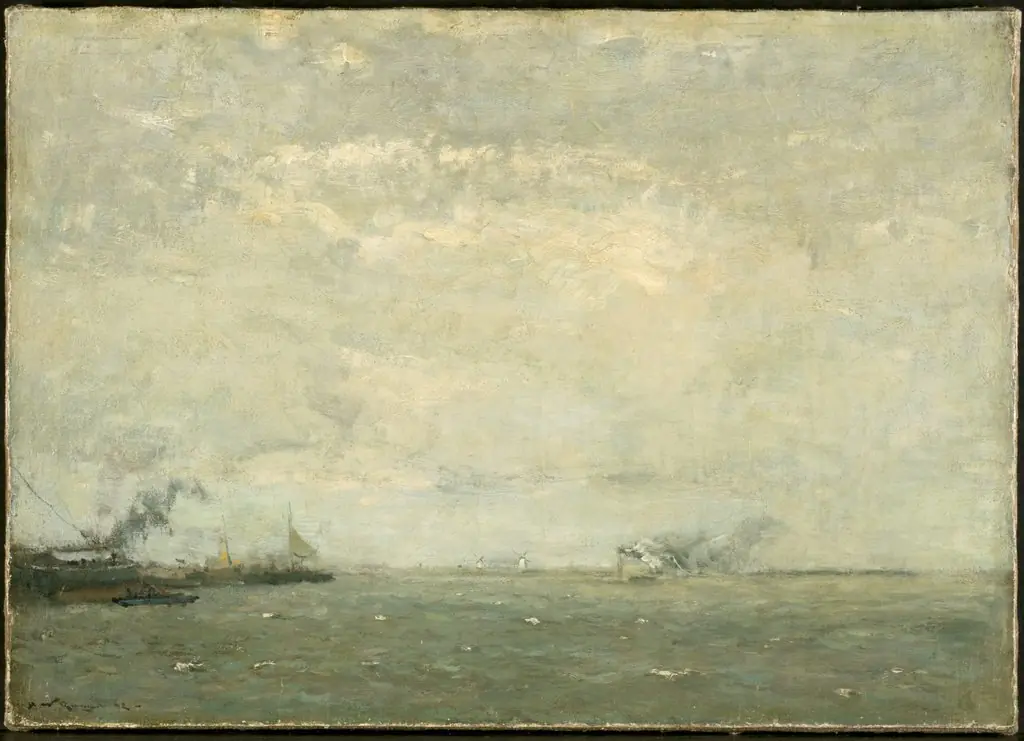
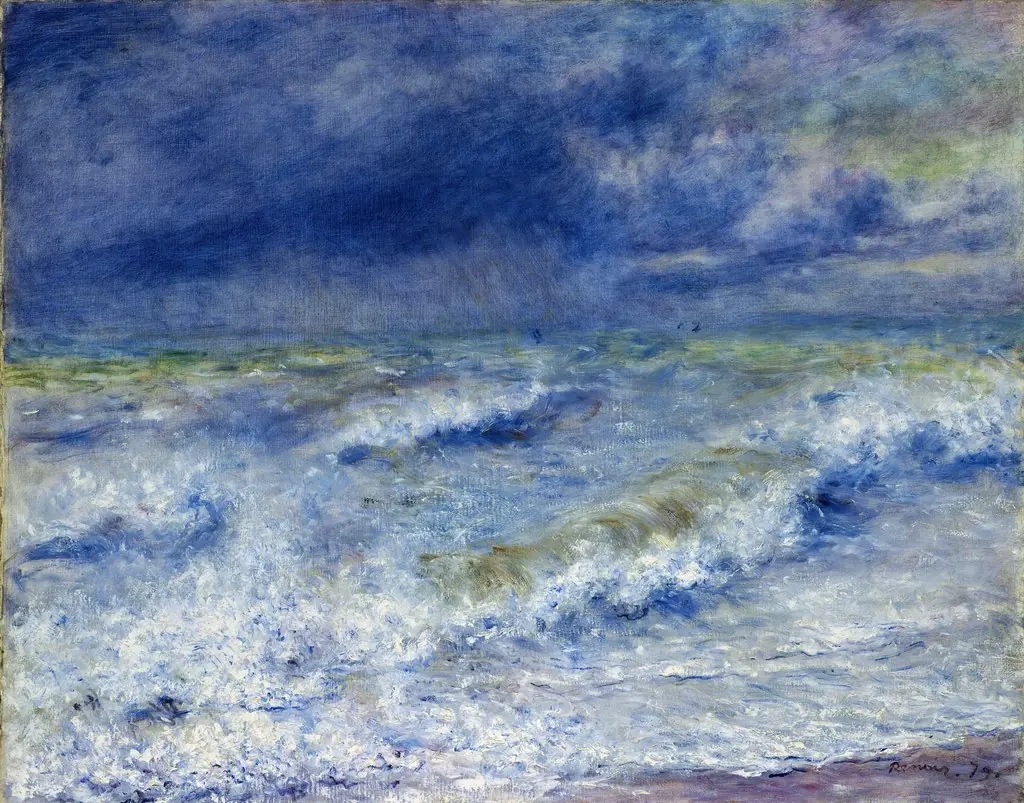
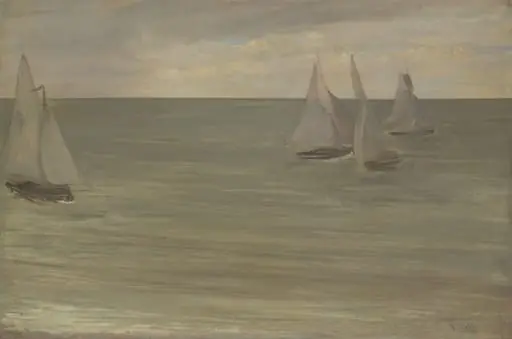
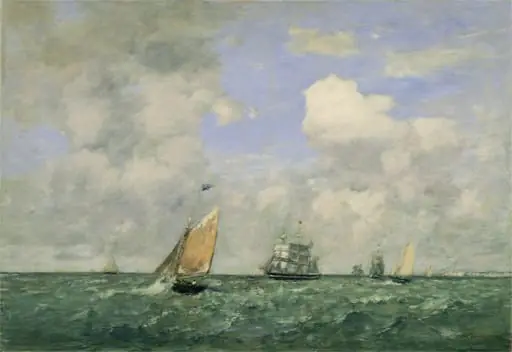
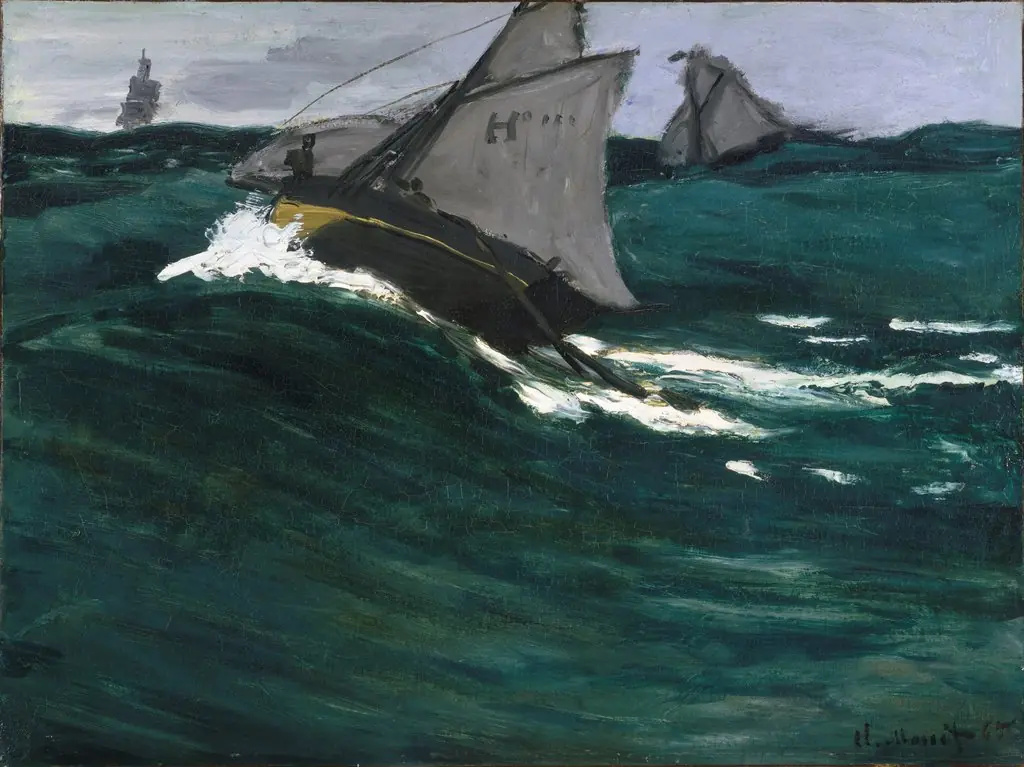
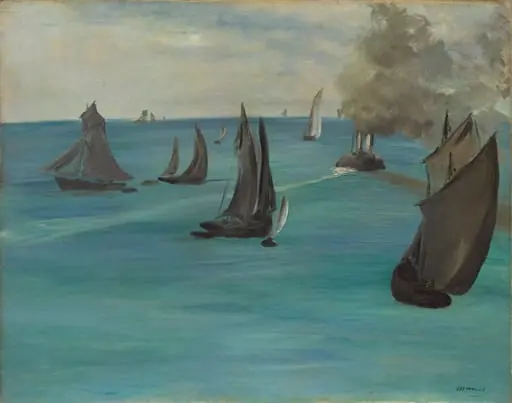
Seascape, painted around 1876 by Karl Daubigny, is a landscape focused on the interaction of sea and sky. The work is part of the Detroit Institute of Arts collection and reflects the artist’s interest in natural atmospheres. Its composition emphasizes motion and mood rather than precise detail, aligning with broader 19th-century tendencies toward expressive observation of nature.
Subject & Meaning
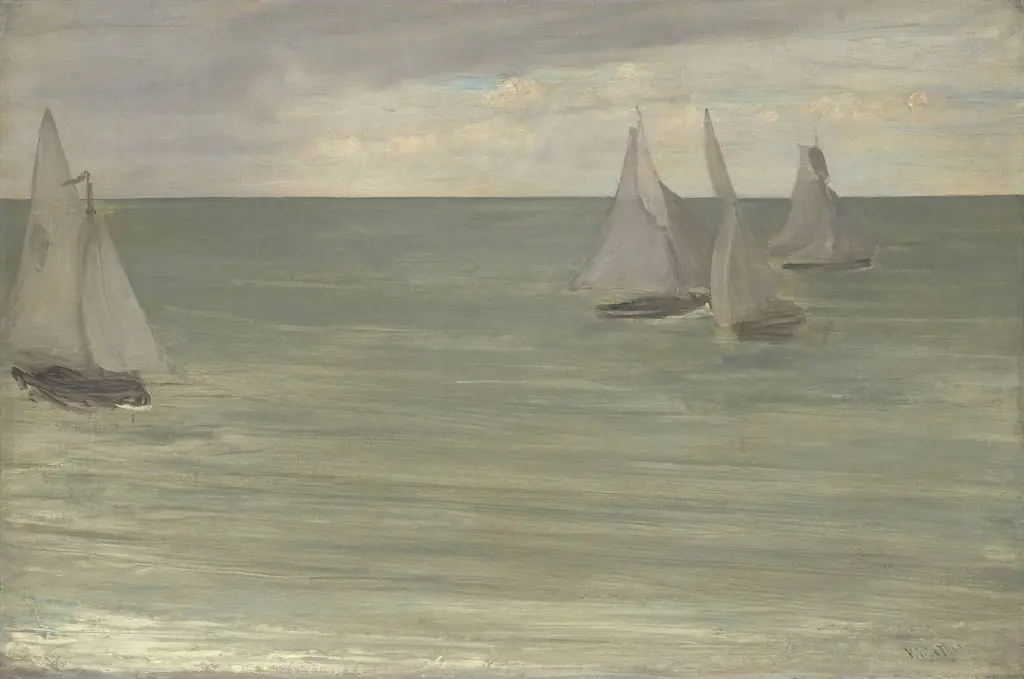
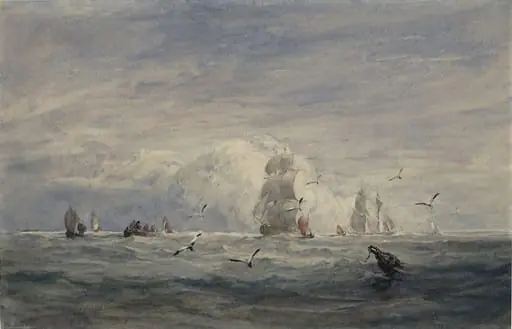
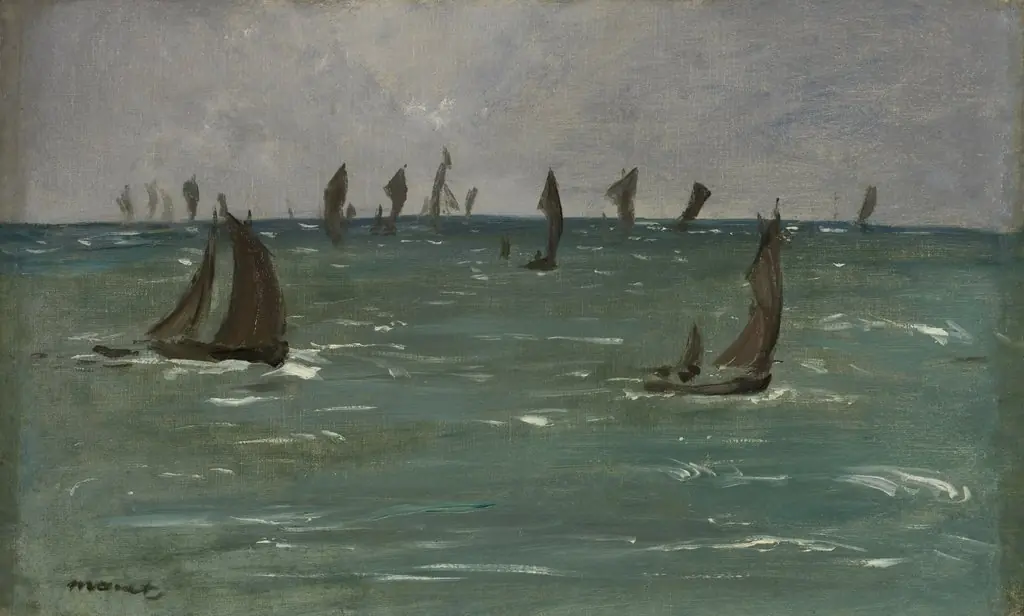
The painting presents a quiet yet active marine environment, with distant boats navigating under a turbulent sky. The vessels suggest human presence without narrative, reinforcing a sense of solitude within nature. The shifting clouds and rippling water convey transient conditions, evoking the rhythm of the sea without overt symbolism or sentimentality.
Technique & Style
Daubigny employed loose, fluid brushwork to render the sea and sky, using layered hues of blue and green to suggest depth and movement. The paint is applied with visible energy, capturing the texture of waves and the weight of clouds without fine detail. This approach prioritizes atmospheric effect over realism, reflecting an impressionistic sensibility grounded in direct observation.
History & Provenance
The painting entered the Detroit Institute of Arts collection in the 20th century, though its earlier ownership history is not widely documented. Created during a period when French and Belgian artists increasingly turned to coastal subjects, the work aligns with Daubigny’s broader practice of recording natural scenes with sensitivity to light and weather.
Context
Painted in the late 1870s, Seascape reflects a moment when artists across Europe moved away from idealized landscapes toward more immediate, transient views of nature. Daubigny’s focus on weather and motion parallels developments in French Impressionism, though his palette and structure remain more restrained, rooted in a quieter, observational tradition.
Legacy
While not widely exhibited outside institutional collections, the painting contributes to understanding Daubigny’s role in late 19th-century landscape painting. It exemplifies a generation of artists who valued emotional resonance through subtle shifts in tone and brushwork, influencing later regional approaches to marine subjects in Northern Europe.
Artist & collection