Artwork
Untitled
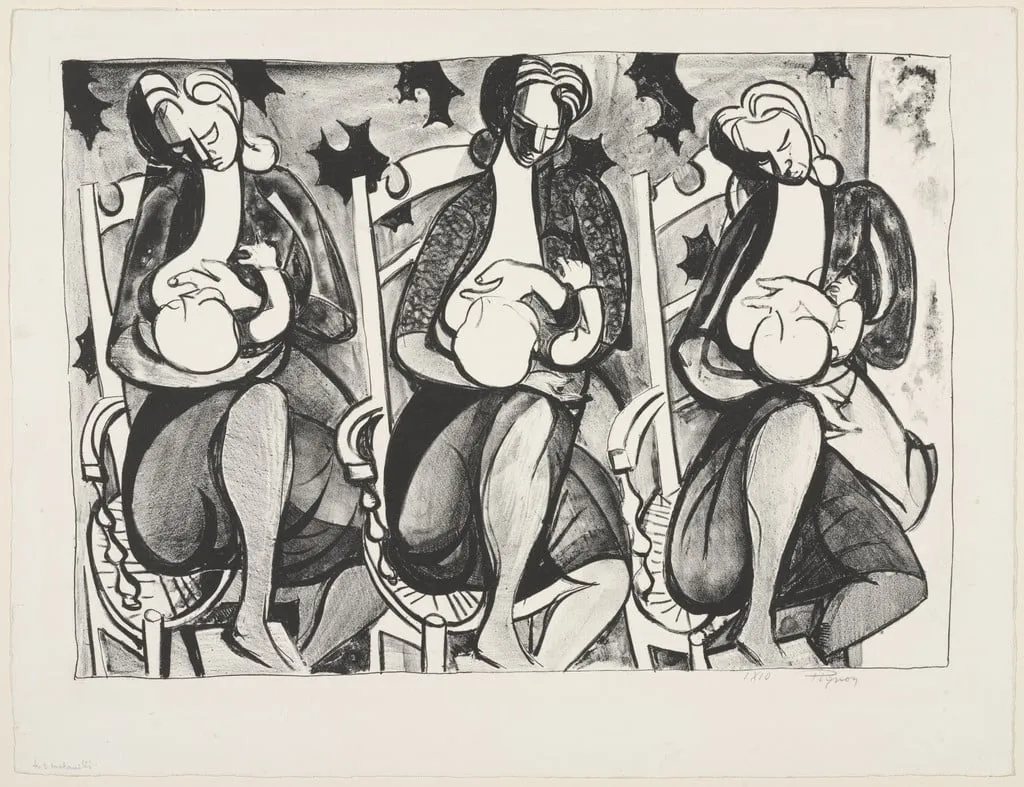
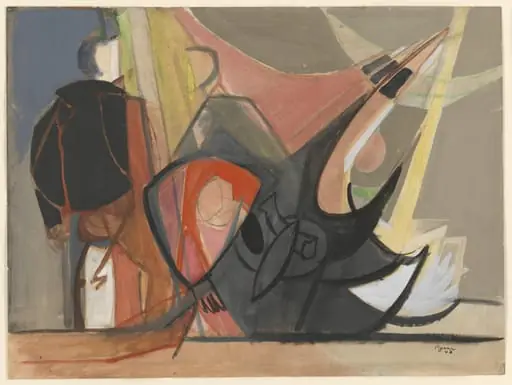
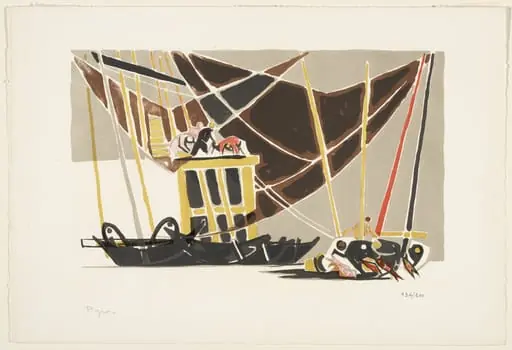
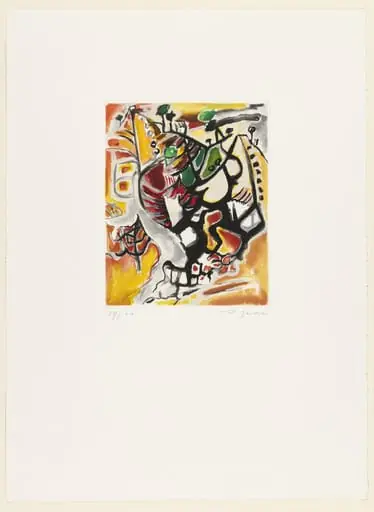
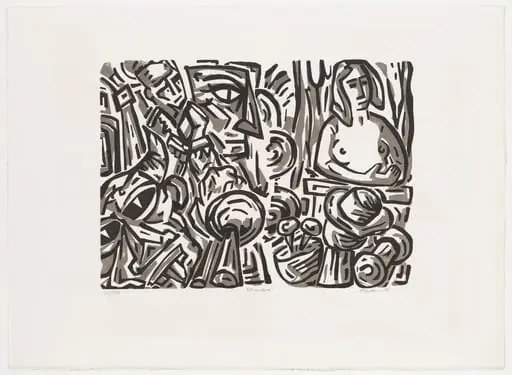
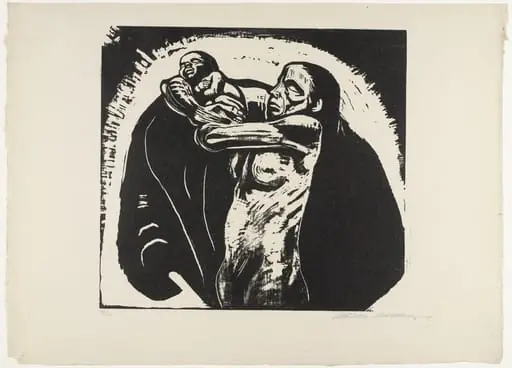
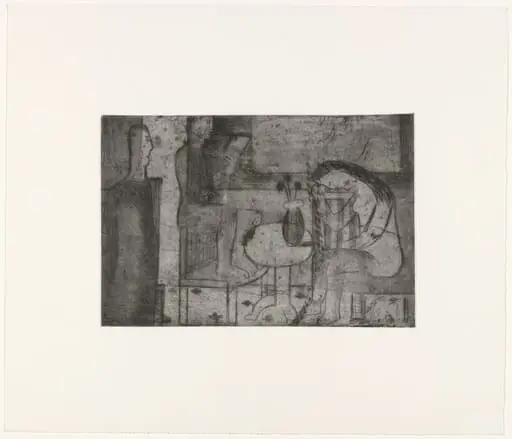
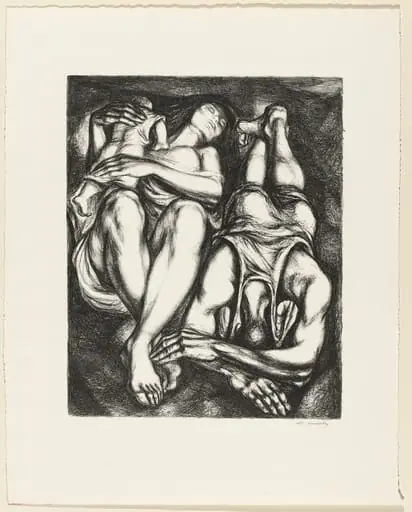
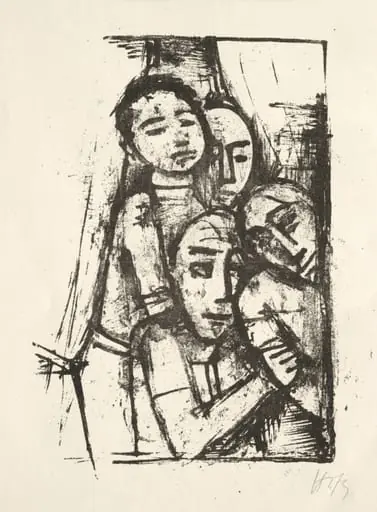
Untitled is an ink print by Édouard Pignon. It dates from 1945 and is held in the collection of the Museum of Modern Art.
About this work
Overview
It depicts three women standing in close proximity, rendered without concern for naturalistic detail.
Created in 1945, this lithograph by Édouard Pignon is part of The Museum of Modern Art’s collection. It depicts three women standing in close proximity, rendered without concern for naturalistic detail. The work belongs to a postwar period in which artists increasingly prioritized emotional expression over literal representation, using printmaking to explore psychological depth through simplified forms.
Subject & Meaning
The three figures appear isolated despite their proximity, their bodies and faces twisted into angular, fragmented shapes. There is no narrative context or identifiable setting, suggesting an internal state rather than an external scene. The distortion conveys unease or emotional strain, possibly reflecting the collective psychological aftermath of war, though the artist did not assign explicit meaning to the image.
Technique & Style
Pignon employed lithography to achieve sharp, bold contours and flat areas of tone. The lines are deliberate and unmodulated, rejecting chiaroscuro or texture in favor of graphic clarity. This stylistic choice aligns with mid-century European figuration that favored expressive abstraction over realism, using the medium’s capacity for stark contrast to amplify emotional intensity.
History & Provenance
The work entered MoMA’s collection shortly after its creation, indicating early institutional recognition of Pignon’s postwar contributions. Little is documented about its exhibition history prior to acquisition, but its inclusion in a major modern art museum suggests it was seen as representative of a broader shift in French printmaking during the late 1940s.
Context
Emerging in the immediate aftermath of World War II, the piece reflects a European artistic climate where trauma and existential uncertainty influenced visual language. Artists like Pignon turned away from prewar naturalism, embracing distortion and abstraction to convey psychological states. Lithography, accessible and reproducible, became a favored medium for such introspective work.
Legacy
Though not widely known outside specialized circles, this lithograph exemplifies how mid-century printmakers used minimal means to evoke complex emotional landscapes. Its presence in MoMA’s collection ensures its role as a reference point for studies of postwar figuration, illustrating how lithography could serve as a vehicle for non-narrative, psychologically charged imagery.
Artist & collection