Artwork
At Donderen, in the Woods of Drenthe
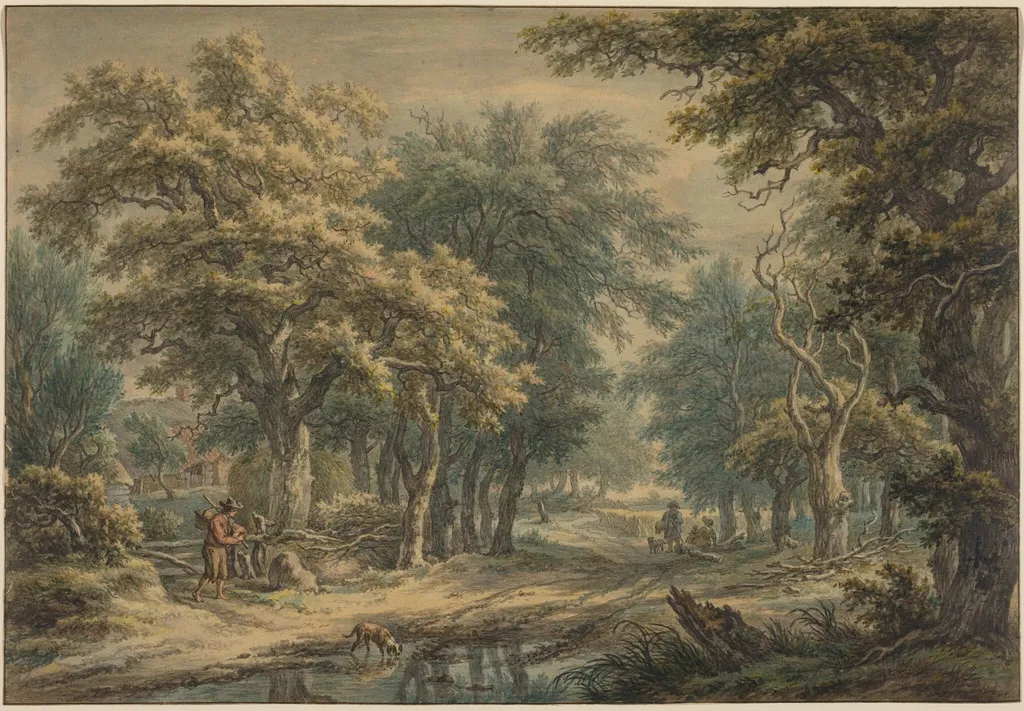
At Donderen, in the Woods of Drenthe is a chalk drawing by the Romanticist artist Egbert van Drielst. It dates from 1799 and is held in the collection of the National Gallery of Art.
About this work
The painting is called At Donderen, in the Woods of Drenthe.
It was made in 1799 by Egbert van Drielst.
The artist used watercolor over black chalk on wove paper to create this work, which is a landscape.
This technique gives the painting a unique look.
Egbert van Drielst was part of the Romanticism movement.
Check out the movement: Romanticism.
Overview
Created in 1799, this drawing by Egbert van Drielst is a landscape rendered in watercolor over black chalk on wove paper.
Created in 1799, this drawing by Egbert van Drielst is a landscape rendered in watercolor over black chalk on wove paper. It belongs to a body of work focused on the rural scenery of Drenthe, a region in the northern Netherlands. Van Drielst, originally trained in decorative arts, shifted to landscape drawing in his mature years, developing a quiet, observational style that emphasized natural detail over dramatic effect.
Subject & Meaning
The scene depicts a quiet woodland near Donderen, characterized by dense trees, uneven ground, and subtle atmospheric shifts. There is no human presence, and the composition avoids narrative or symbolic elements. The work reflects a contemplative engagement with nature, valuing the quiet dignity of unaltered terrain rather than idealized or heroic landscapes.
Technique & Style
Van Drielst employed black chalk to establish precise tonal structure, then layered translucent watercolor to suggest foliage, shadow, and light. The wove paper’s smooth surface allowed for fine gradations and delicate washes. His method shows familiarity with 17th-century Dutch landscape traditions, particularly in the careful rendering of tree forms and spatial depth, though without the theatrical lighting of earlier masters.
History & Provenance
The drawing was made during a period when van Drielst was deeply engaged in documenting the Dutch countryside, often traveling to remote areas like Drenthe. Little is known about its early ownership, but it entered institutional collections in the 20th century, where it is now recognized as a representative example of late 18th-century Dutch topographical drawing.
Context
While Romanticism emphasized emotion and the sublime, van Drielst’s approach remained restrained, rooted in the observational rigor of Dutch landscape tradition. His work aligns more closely with the late Enlightenment interest in natural science and regional documentation than with the dramatic intensity of Romantic painters elsewhere in Europe.
Legacy
Van Drielst’s drawings, including this one, are valued for their quiet precision and fidelity to local terrain. Though not widely known during his lifetime, his work has gained scholarly attention as an example of how Dutch landscape art evolved in the late 18th century—maintaining a connection to earlier traditions while adapting to new modes of natural study.
Own this work as a print
Artist & collection
Artist
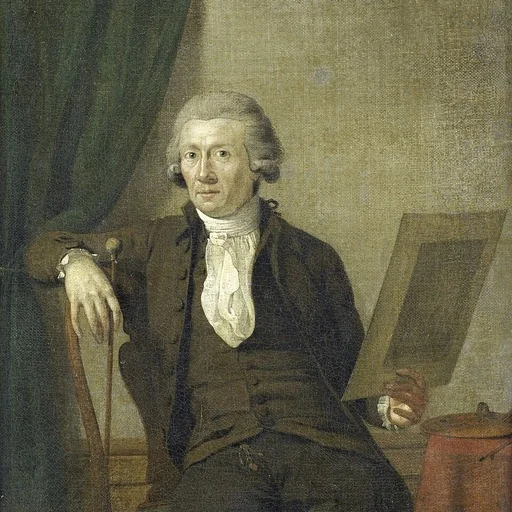
Egbert van Drielst (12 March 1745 – 4 June 1818) was a Dutch artist. He began his study of painting in a factory in his native Groningen which produced mainly lacquered objects. He soon went to Haarlem, where he became…

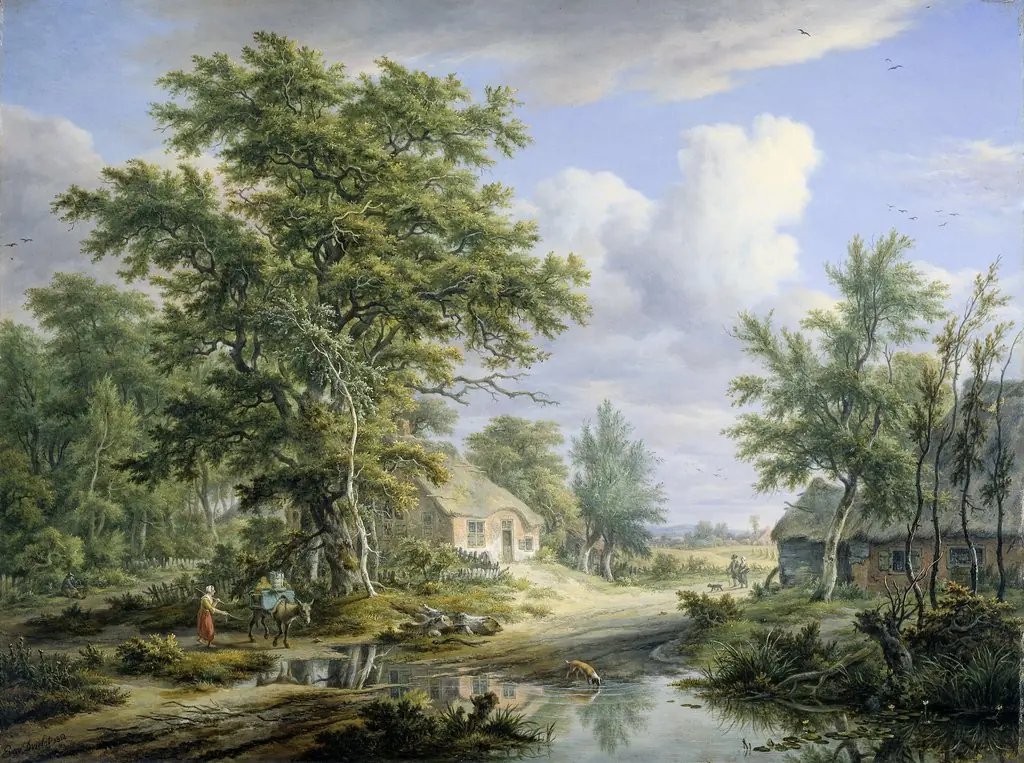
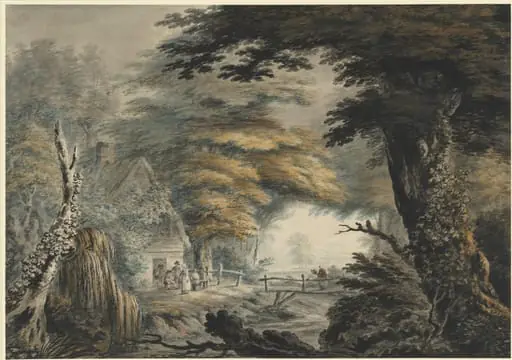 Wooded Landscape with Figures outside a Cottage
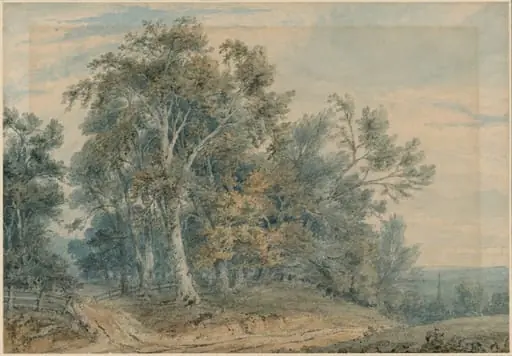 Wooded Landscape
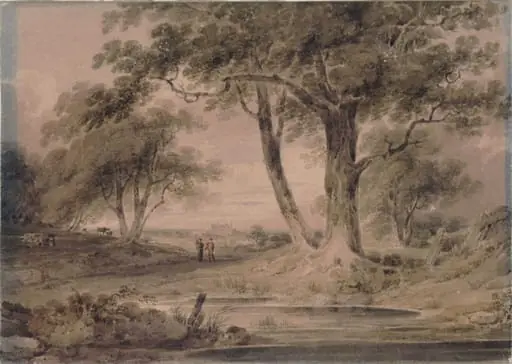 Landscape: Ripon Cathedral in the distance
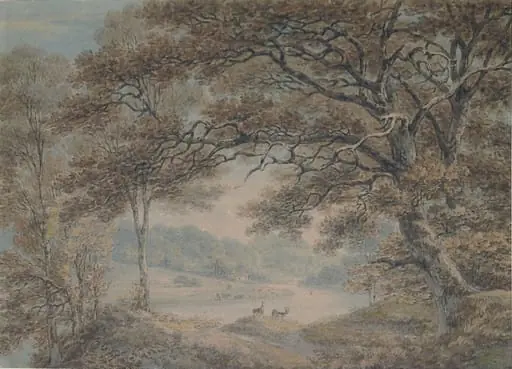 A Scene At Knights, Downton, Herefordshire
 An Italianate Landscape with Shepherds
 Scene in Windsor Forest
 The Trees, Bedford, New York
 Riverscape
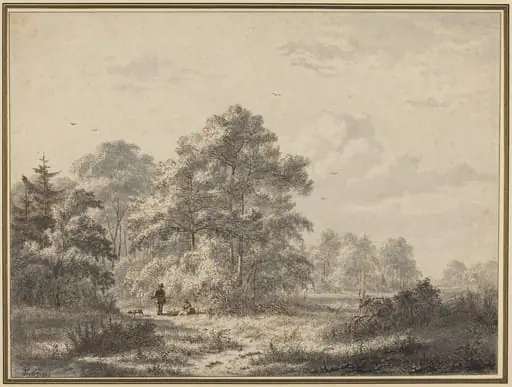 Hunters at the Edge of the Woods
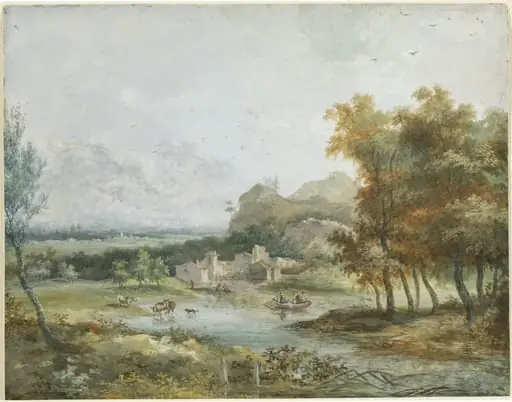 Italian Landscape with a Boating Party
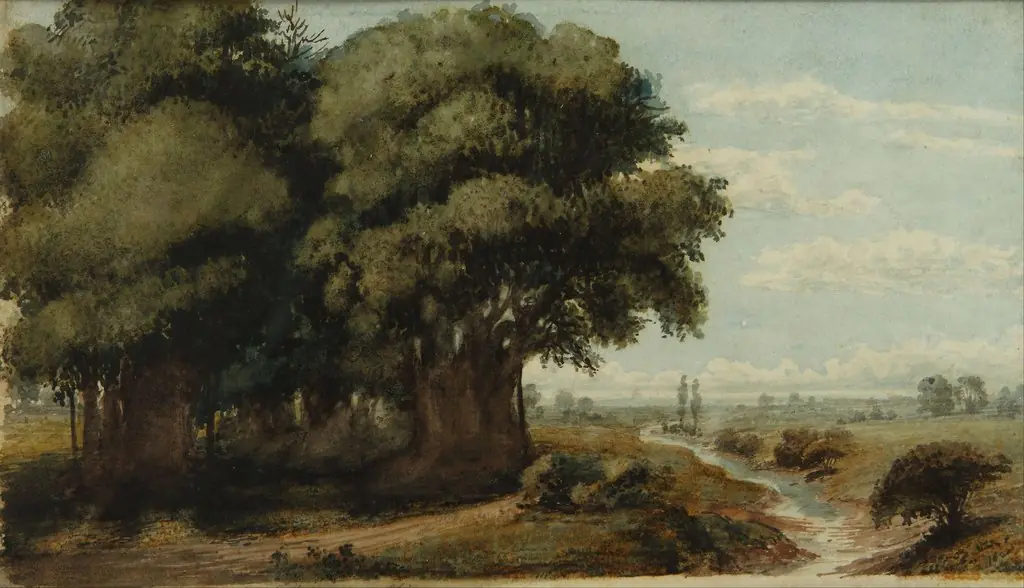 Capricho (Olivos 13 Nov. 1858)
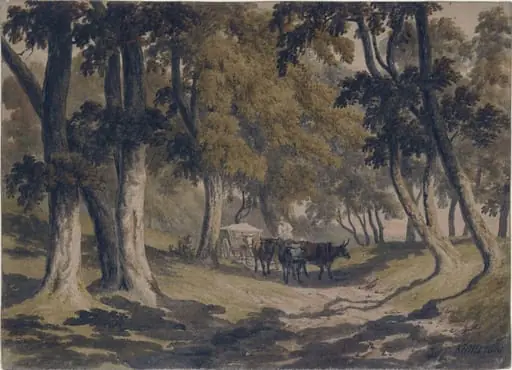 Woodland Road with Ox-waggon