Artwork
Isle of Wight: The Channel Fleet coming out of Portsmouth
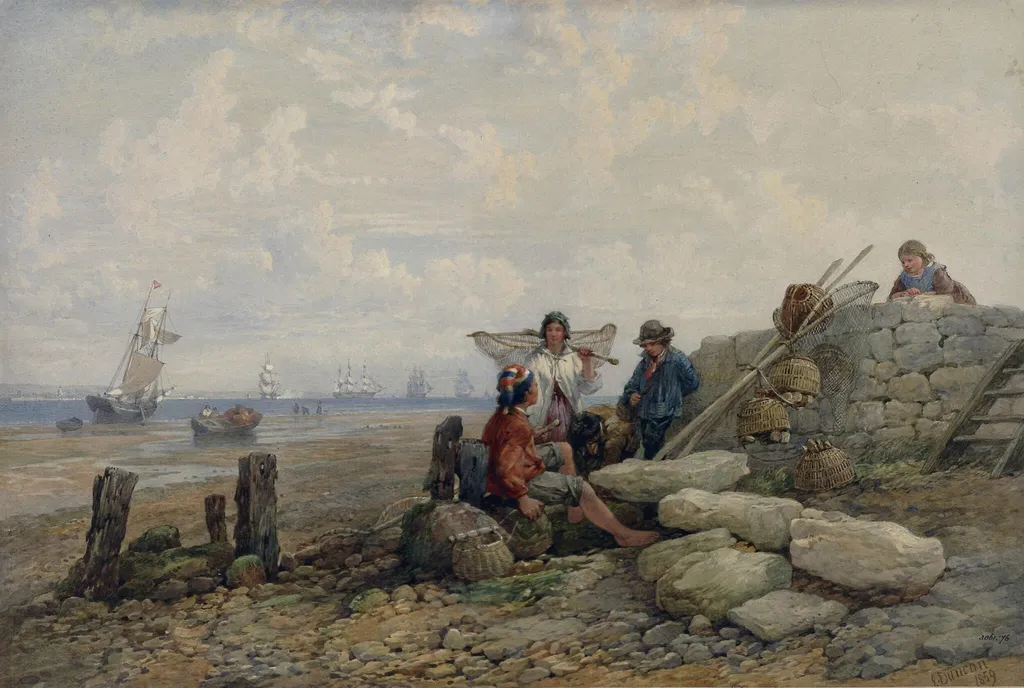
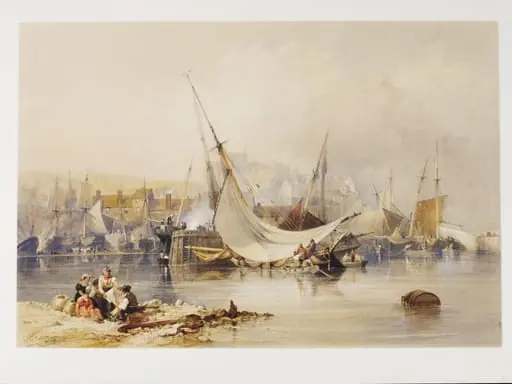
Isle of Wight: The Channel Fleet coming out of Portsmouth is a watercolor work on paper by the British Romanticist artist Edward RWS Duncan. It dates from 1859 and is held in the collection of the Victoria and Albert Museum.
About this work
Overview
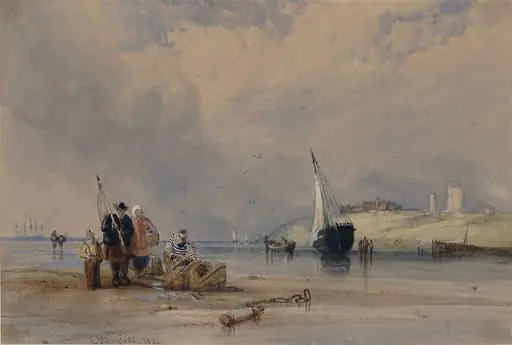
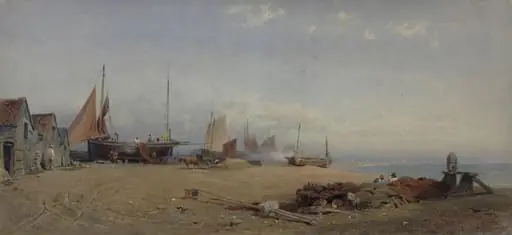
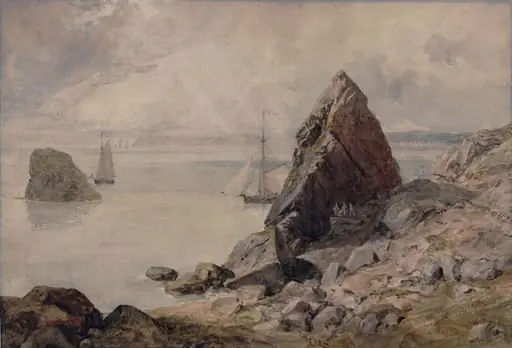
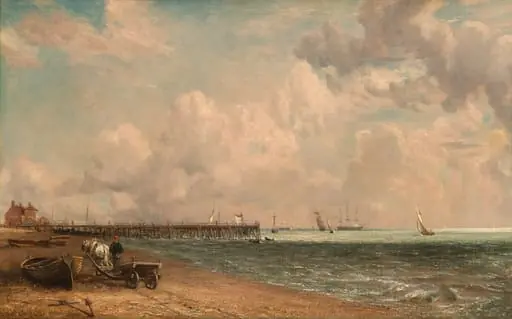
Edward RWS Duncan's 1859 watercolour, 'Isle of Wight: The Channel Fleet coming out of Portsmouth', captures a serene maritime scene with the Channel Fleet departing Portsmouth, set against the backdrop of the Isle of Wight.
Subject & Meaning
The subject is a historical naval event, conveying a sense of orderly naval operations. The inclusion of figures on the shore and rocks in the foreground adds a human scale to the grandeur of the fleet.
Technique & Style
Executed in a realistic style, the work emphasizes meticulous detail in ship and sea renderings. A muted colour palette, predominantly blues and grays, contributes to an overall atmosphere of calmness.
History & Provenance
Created in 1859, the watercolour is signed by the artist, Edward RWS Duncan. Specific provenance details are not provided in the available information.
Context
While the style is realistic, the emphasis on light and colour (though muted) might suggest a precursor to later Impressionist movements, though it remains firmly rooted in 19th-century realism.
Legacy
The artwork's legacy is not extensively detailed in the provided sources, suggesting it may be more noted for its historical and aesthetic value rather than a pivotal influence on subsequent art movements.
Artist & collection
Artist
Edward Duncan painted quiet coastal scenes and river views in Britain during the 1840s–1860s.