Artwork
Feline
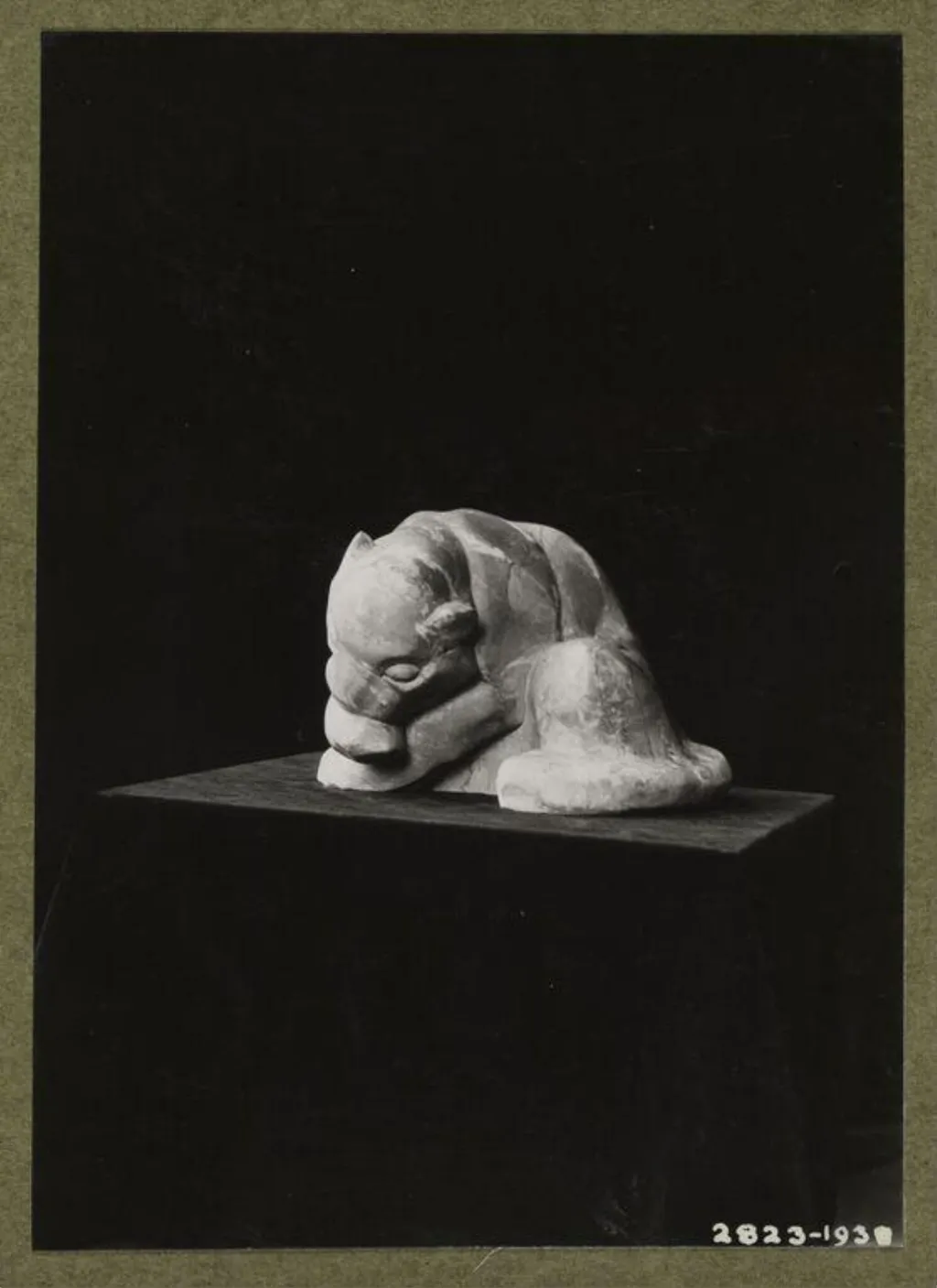
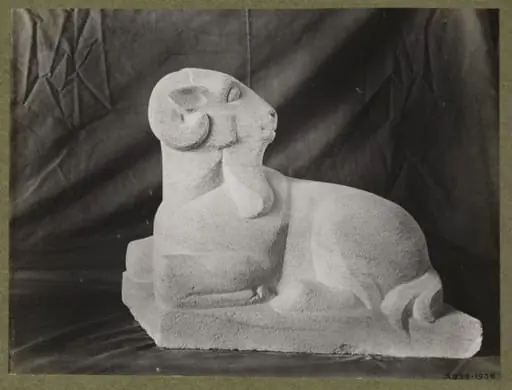
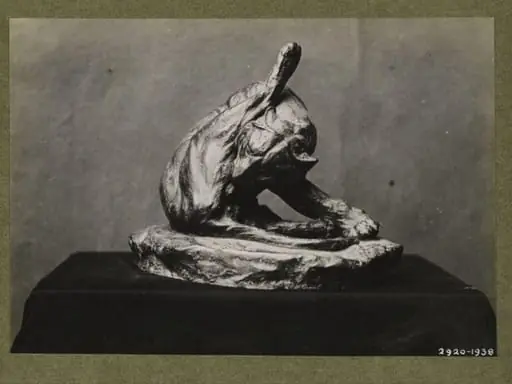
Feline is a photographic photography by Alan Lydiat Durst. It is held in the collection of the Victoria and Albert Museum.
About this work
Overview
It was included in a collection donated to the Archive of Art and Design in 1938 by William Kineton Parkes, a collector and writer with a focus on sculpture.
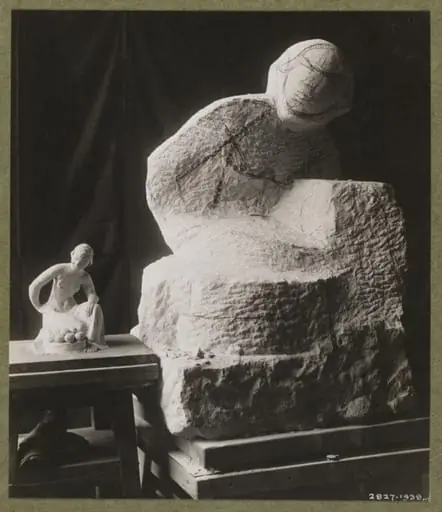
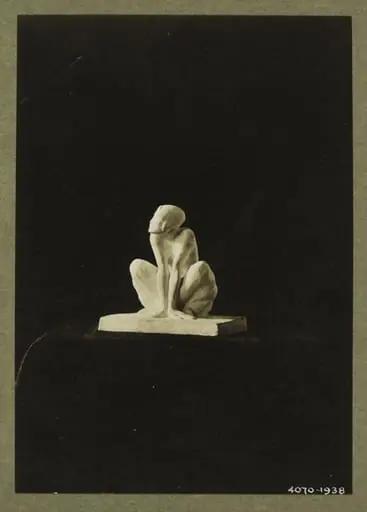
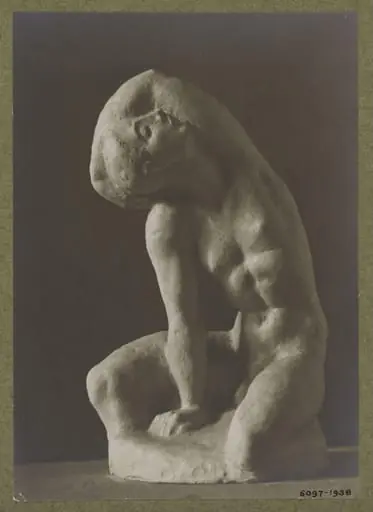
This black-and-white photograph, titled *Feline*, was taken by Alan Lydiat Durst and mounted on a green card. It was included in a collection donated to the Archive of Art and Design in 1938 by William Kineton Parkes, a collector and writer with a focus on sculpture. The image was originally submitted in response to Parkes’s 1920s survey of sculptors, serving as a visual contribution to his research on three-dimensional form.
Subject & Meaning
The photograph captures a small sculpted cat in a relaxed, curled posture, head resting on its paws and tail neatly wrapped beneath its body. The subject conveys stillness and quiet observation, emphasizing the animal’s natural repose. Rather than dramatizing the form, the image invites contemplation of the sculpture’s subtle modeling and the quiet dignity of its pose, reflecting a preference for understated realism in early 20th-century studio practice.
Technique & Style
Durst employed careful lighting to define the cat’s form, using soft contrasts to suggest the texture of fur and the smoothness of the sculpted surface. The composition is minimal, with no background distractions, focusing attention entirely on the animal’s contours. The photograph’s simplicity underscores its documentary purpose: to accurately record a sculptural object’s shape and detail for study, not to create an expressive image.
History & Provenance
The photograph entered the Archive of Art and Design through William Kineton Parkes’s 1938 bequest. Parkes, known for his scholarly work on sculpture, circulated questionnaires among artists in the 1920s to gather visual and written material on contemporary practice. This image was one of many responses, collected as reference material rather than as fine art, reflecting a broader effort to document the working methods of sculptors of the time.
Context
In the 1920s, artists and scholars increasingly used photography to archive and analyze three-dimensional work, especially as sculpture moved beyond public monuments into private studios. Parkes’s survey was part of this trend, seeking to map stylistic developments through direct visual evidence. The inclusion of a domestic subject like a cat suggests a growing interest in intimate, everyday forms within modernist sculpture, distinct from traditional heroic or mythological themes.
Legacy
The photograph remains a quiet artifact of early 20th-century artistic documentation. It illustrates how photography functioned as a tool for scholarly exchange rather than artistic expression. Today, it offers insight into the materials and subjects that informed sculptors’ practices, preserving a moment when the boundaries between art, research, and observation were still being defined.
Artist & collection
Artist
Alan Durst kept a studio cat named Boris, who posed so often his tail shows up in at least three negatives.