Artwork
Untitled
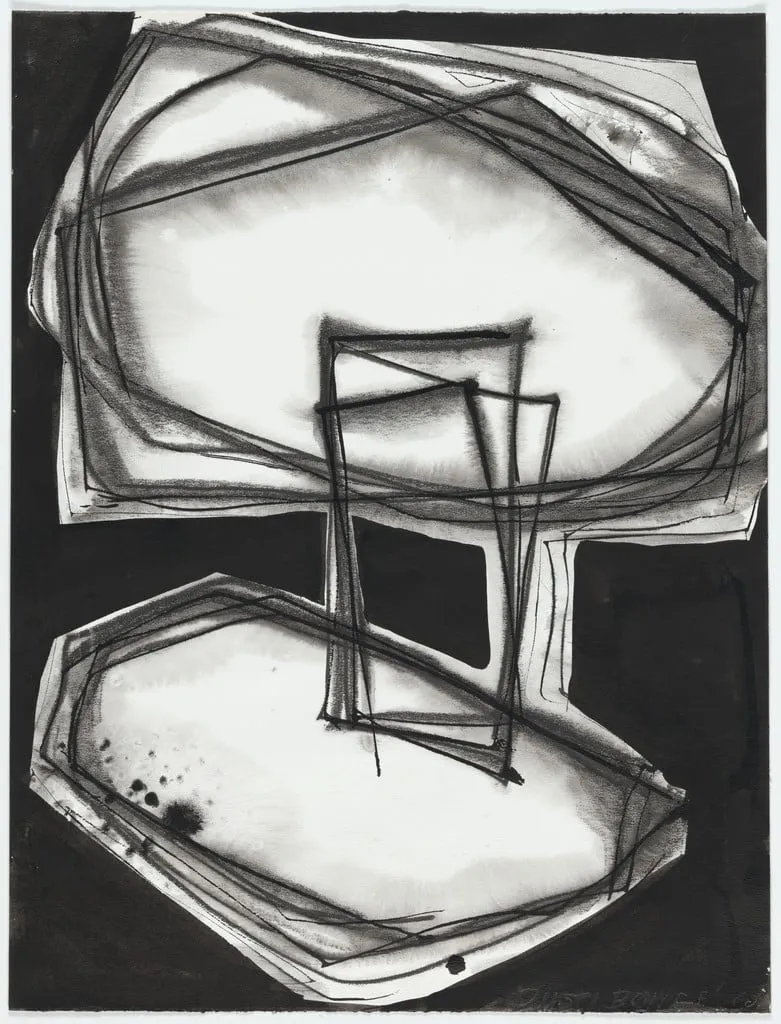
Untitled is an ink drawing by Dusti Bongé. It dates from 1960 and is held in the collection of the Museum of Modern Art.
About this work
Overview
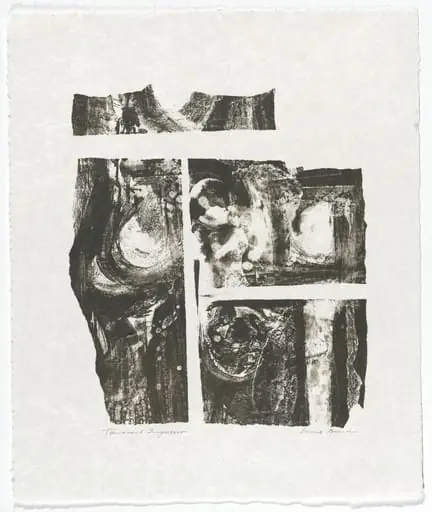
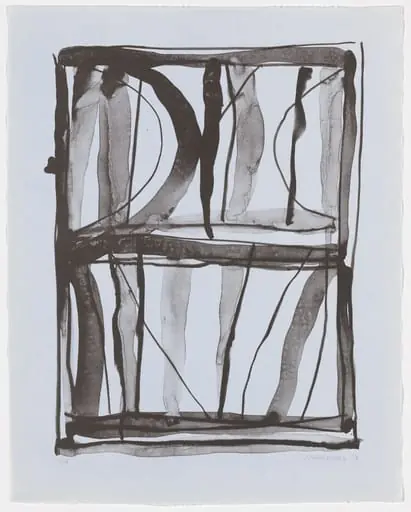
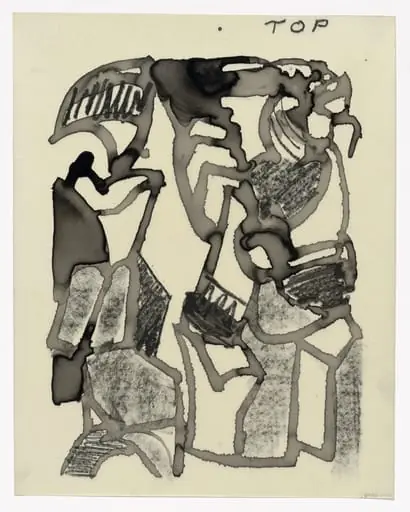
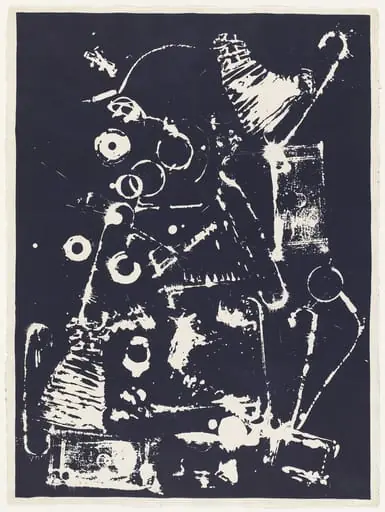
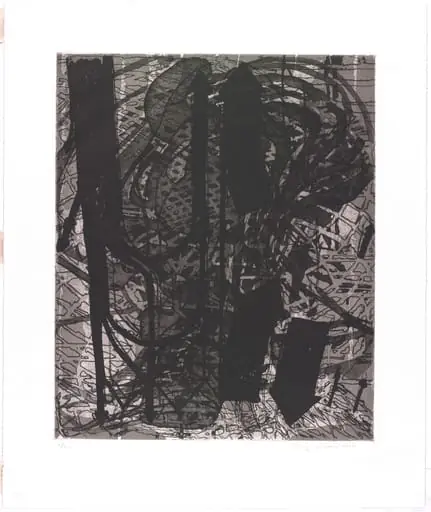
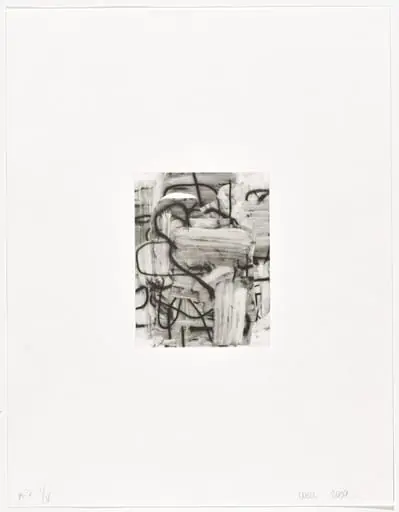
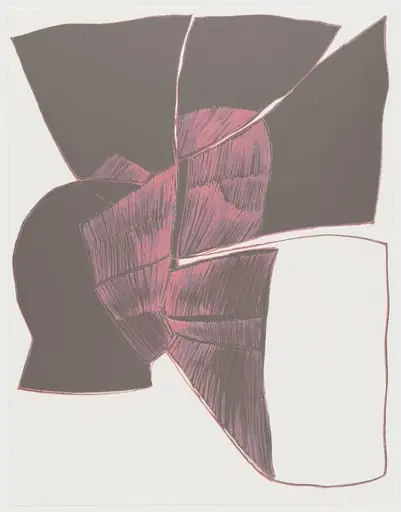
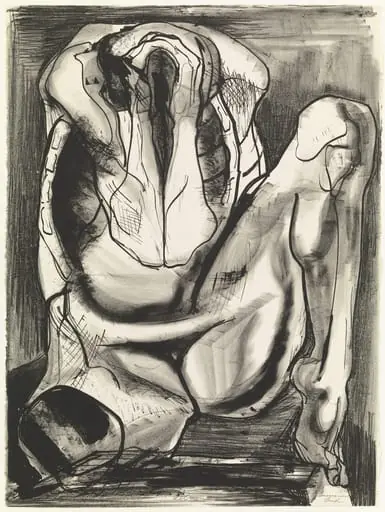
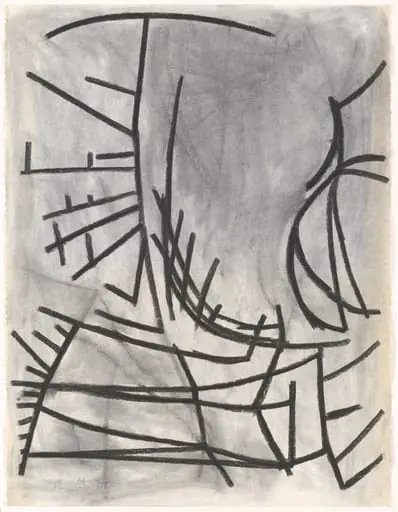
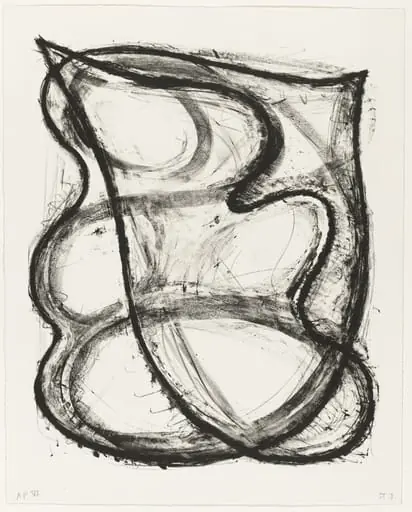
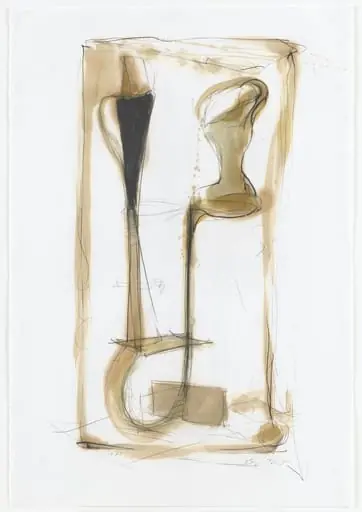
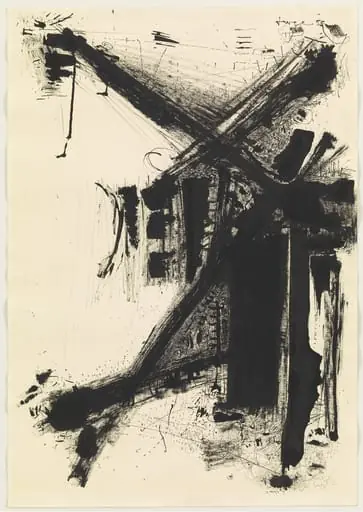
This untitled 1960 drawing by Dusti Bongé employs ink on paper to render two expansive, amorphous forms suspended in a neutral field. The work resists literal depiction, instead evoking transient states—fabric, liquid, or shadow—through gestural mark-making and tonal variation limited to black, white, and intermediate grays.
Subject & Meaning
The composition centers on two primary shapes, one of which encloses a skeletal structure resembling a chair or geometric outline. The ambiguity of these elements invites multiple readings: they may suggest dissolution, transformation, or the tension between solid form and ephemeral presence. The work’s title offers no interpretive guidance, leaving meaning open to conjecture.
Technique & Style
Bongé’s approach emphasizes immediacy and physicality. Ink is applied with rapid, uneven strokes, producing lines that vary in density and definition. Smudges and splatters disrupt clean edges, while areas of wet ink imply haste or spontaneity. The style aligns with mid-century abstraction, prioritizing expressive execution over precision.
History & Provenance
Created in 1960, the drawing entered the collection of The Museum of Modern Art at an unspecified date. Its early exhibition history and prior ownership remain undocumented in available records. The work’s inclusion in a major institutional collection underscores its recognition within Bongé’s broader artistic output.
Context
The drawing emerged during a period of experimentation in American art, as artists explored abstraction beyond formalist constraints. Bongé’s loose, improvisational style reflects influences from Abstract Expressionism, though her work retains a distinct focus on fluidity and indeterminate form. The absence of color and reliance on ink further distinguish her approach.
Legacy
While not widely reproduced, the drawing contributes to ongoing discussions of gestural abstraction and the role of ambiguity in modernist art.
While not widely reproduced, the drawing contributes to ongoing discussions of gestural abstraction and the role of ambiguity in modernist art. Its presence in a prominent museum collection ensures continued study, particularly among scholars examining lesser-known figures within mid-20th-century American art. The work’s unresolved forms continue to challenge expectations of compositional stability.
Artist & collection

Artist
Dusti Bongé was an American painter who worked from the 1930s through the early 1990s. She is considered Mississippi's first Abstract Expressionist painter and its first Modernist artist.