Artwork
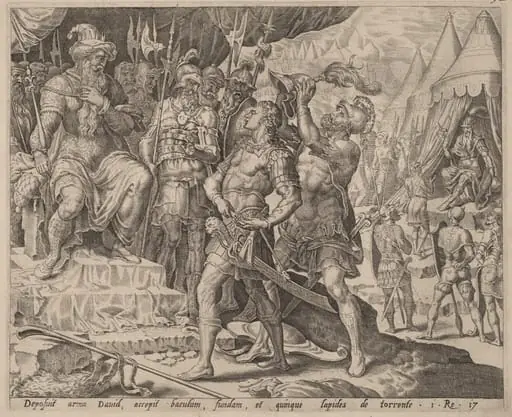
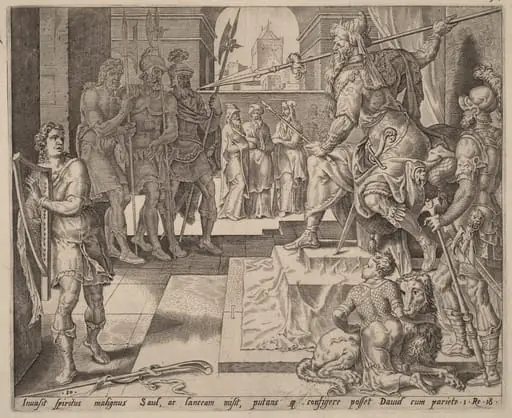
The Triumph of Saul and David
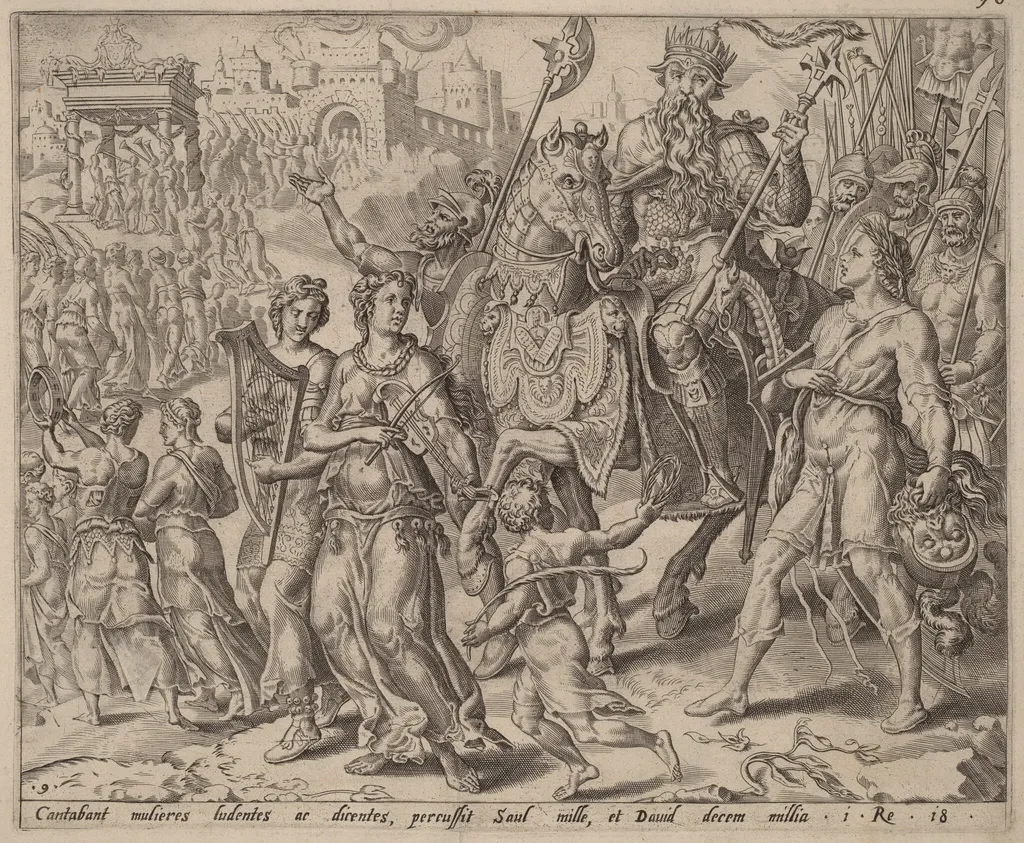
The Triumph of Saul and David is an ink print by the Renaissance artist Dutch 16th Century. It dates from 1556 and is held in the collection of the National Gallery of Art.
About this work
Overview
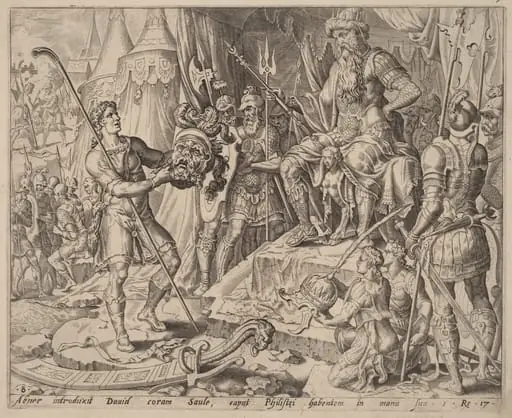
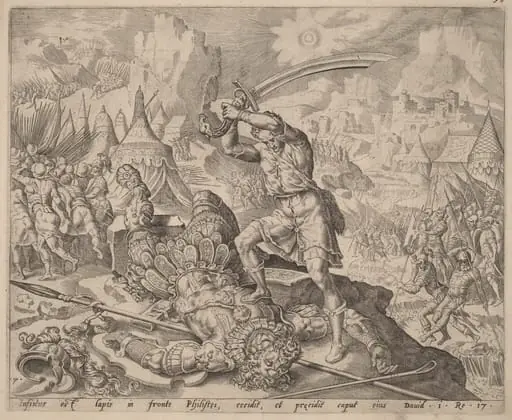
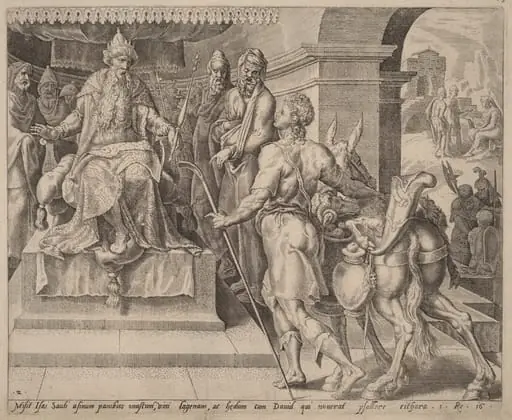
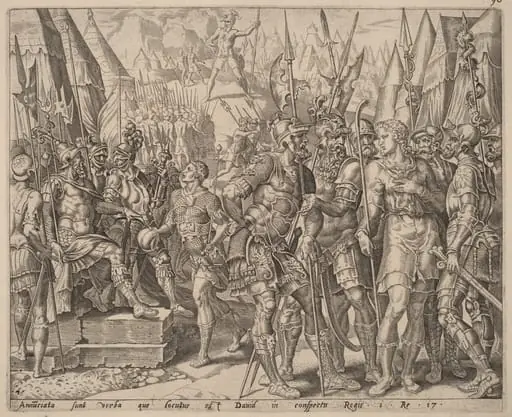
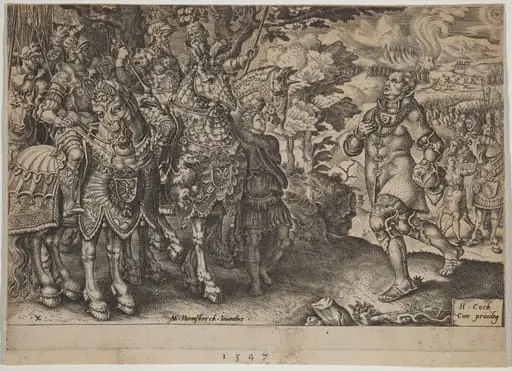
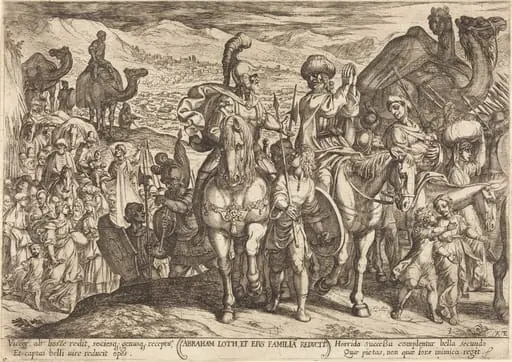
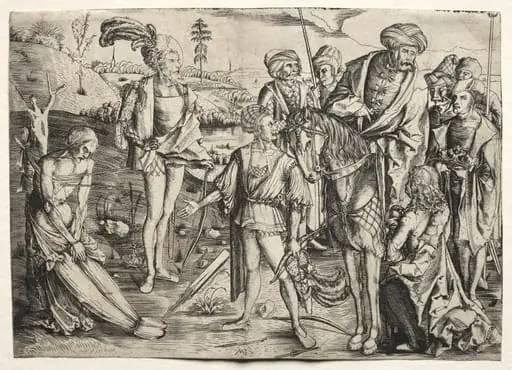
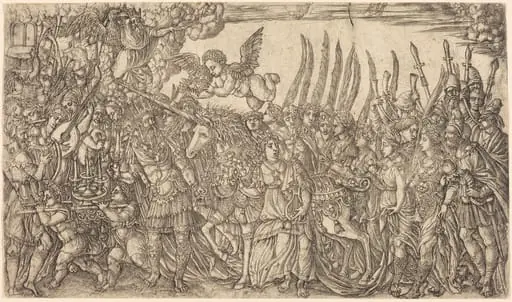
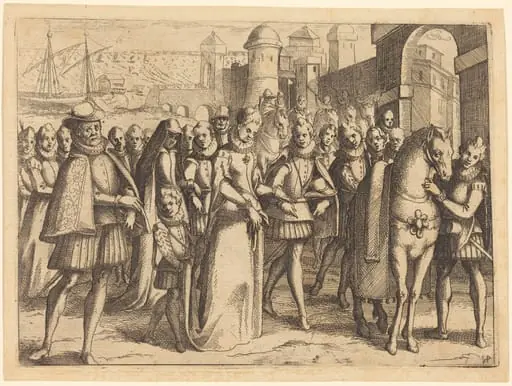
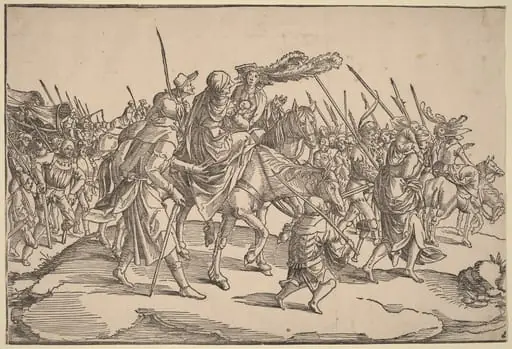
This engraving depicts a dynamic, densely packed scene drawn from biblical narrative, combining celebration and conflict in a single composition.
This engraving depicts a dynamic, densely packed scene drawn from biblical narrative, combining celebration and conflict in a single composition. The artist employs intricate line work to render a multitude of figures, animals, and architectural elements, creating a sense of motion and layered space within a confined frame. The precision of the technique highlights the artist’s control over fine detail, characteristic of printmaking traditions of the period.
Subject & Meaning
The scene illustrates the return of Saul and David after a military victory, as described in the Books of Samuel. On the left, musicians herald their triumph, while on the right, King Saul, armed and authoritative, stands amid soldiers and a lion—symbolizing strength and divine favor. The chaos of battle and joyous celebration coexist, reflecting the duality of power and gratitude in the narrative.
Technique & Style
The artist used fine, controlled engraving lines to model textures in armor, fabric, and fur, achieving a sense of volume and depth. Facial expressions and small gestures are rendered with meticulous care, lending vitality to the crowded composition. The background layers of buildings and clouds are suggested through gradations of line density, guiding the viewer’s eye through the narrative without perspective distortion.
History & Provenance
Created during the early modern period, this print likely circulated among collectors and religious audiences familiar with biblical stories. Its detailed style aligns with Northern European engraving traditions, possibly influenced by artists such as Albrecht Dürer. Though the maker’s identity is unrecorded, the work reflects the demand for illustrated religious themes in private collections of the time.
Context
Engravings like this served both devotional and educational purposes, making biblical stories accessible to those who could not read or afford painted altarpieces. The fusion of martial triumph and musical celebration mirrored contemporary ideals of leadership and divine sanction. Similar compositions appeared in printed Bibles and devotional books, reinforcing moral and political narratives through visual storytelling.
Legacy
The engraving exemplifies how printmaking extended the reach of religious imagery beyond elite patrons. Its emphasis on narrative clarity and intricate detail influenced later illustrators of biblical texts. Though not widely attributed today, it remains a representative artifact of the era’s technical skill and cultural engagement with sacred history.
Artist & collection

Artist
This Dutch artist made engravings in the 1550s that retell the biblical story of David and Saul.