Artwork
David with Goliath's Head before Saul
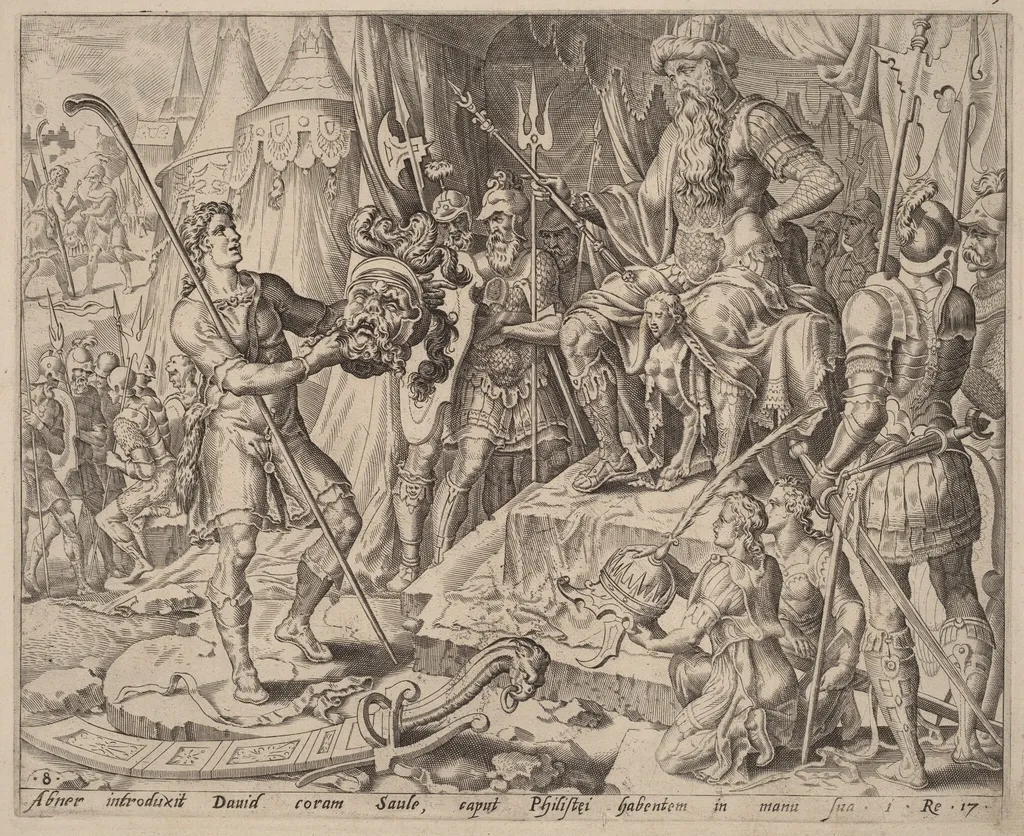
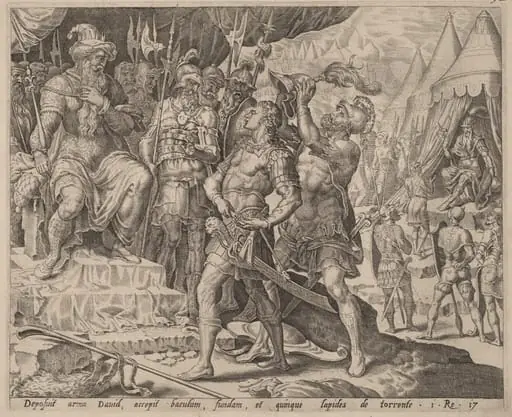
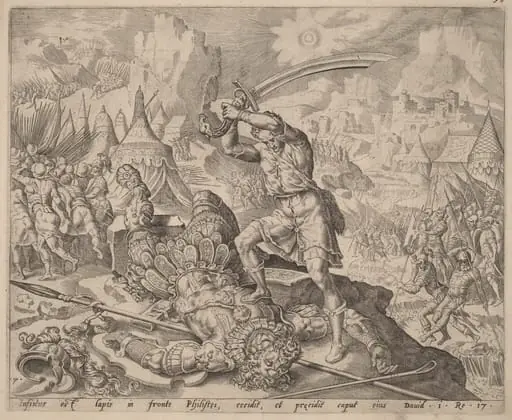
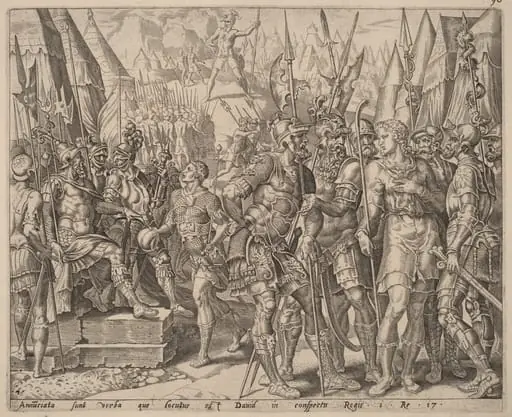
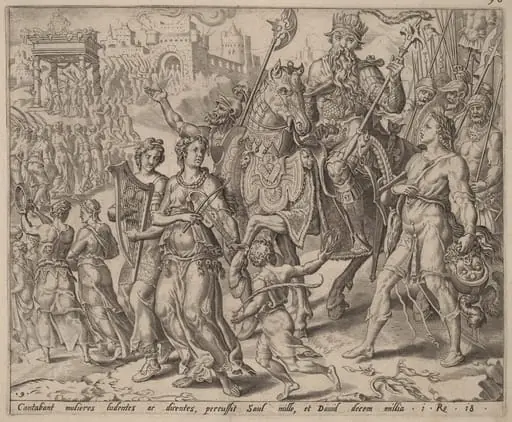
David with Goliath's Head before Saul is an ink print by the Renaissance artist Dutch 16th Century. It dates from 1556 and is held in the collection of the National Gallery of Art. The work is an engraving that presents a densely populated battle tableau.
About this work
Overview
The work is an engraving that presents a densely populated battle tableau. In the centre a figure clutches a giant’s severed head, while surrounding combatants wield swords and spears amid a tangle of bodies. Architectural forms and swirling lines fill the background, giving the scene a sense of movement and visual complexity.
Subject & Meaning
The image illustrates a moment from the biblical narrative in which David presents the head of the slain giant Goliath to King Saul. The dramatic composition emphasizes the triumph of the youthful hero over the formidable foe, while the chaotic surrounding combat underscores the broader conflict surrounding the event.
Technique & Style
Executed as an engraving, the piece relies on finely incised lines to model form and suggest volume. Cross‑hatching and varied line weight create shading, depth, and a sense of motion. The artist’s use of sharp, intersecting strokes contributes to the dense, energetic atmosphere of the battle.
Context
The engraving belongs to a tradition of biblical illustration that circulated in early modern Europe, where prints served both devotional and educational purposes. By rendering a well‑known scriptural episode in a vivid, action‑filled manner, the work would have appealed to viewers familiar with the story of David and Goliath.
Own this work as a print
Artist & collection

Artist
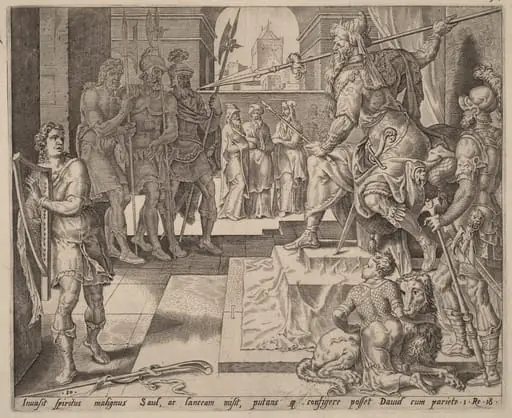
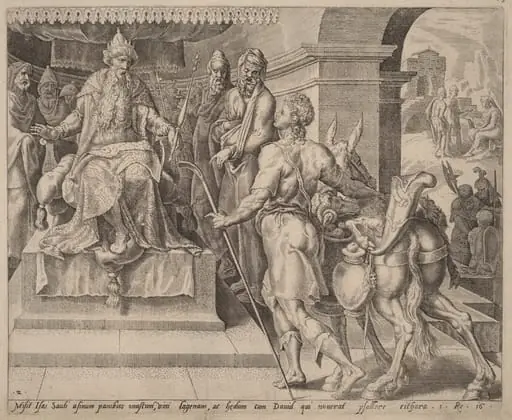
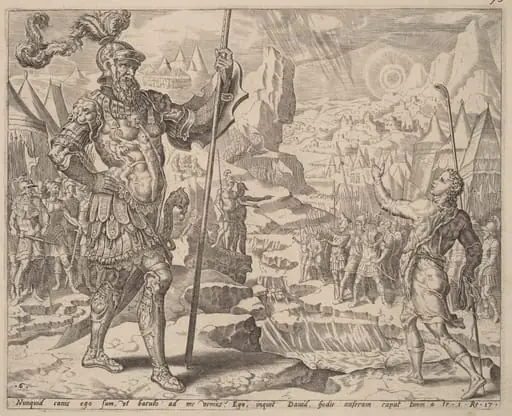
This Dutch artist made engravings in the 1550s that retell the biblical story of David and Saul.