Artwork
Frederick Henry of Nassau
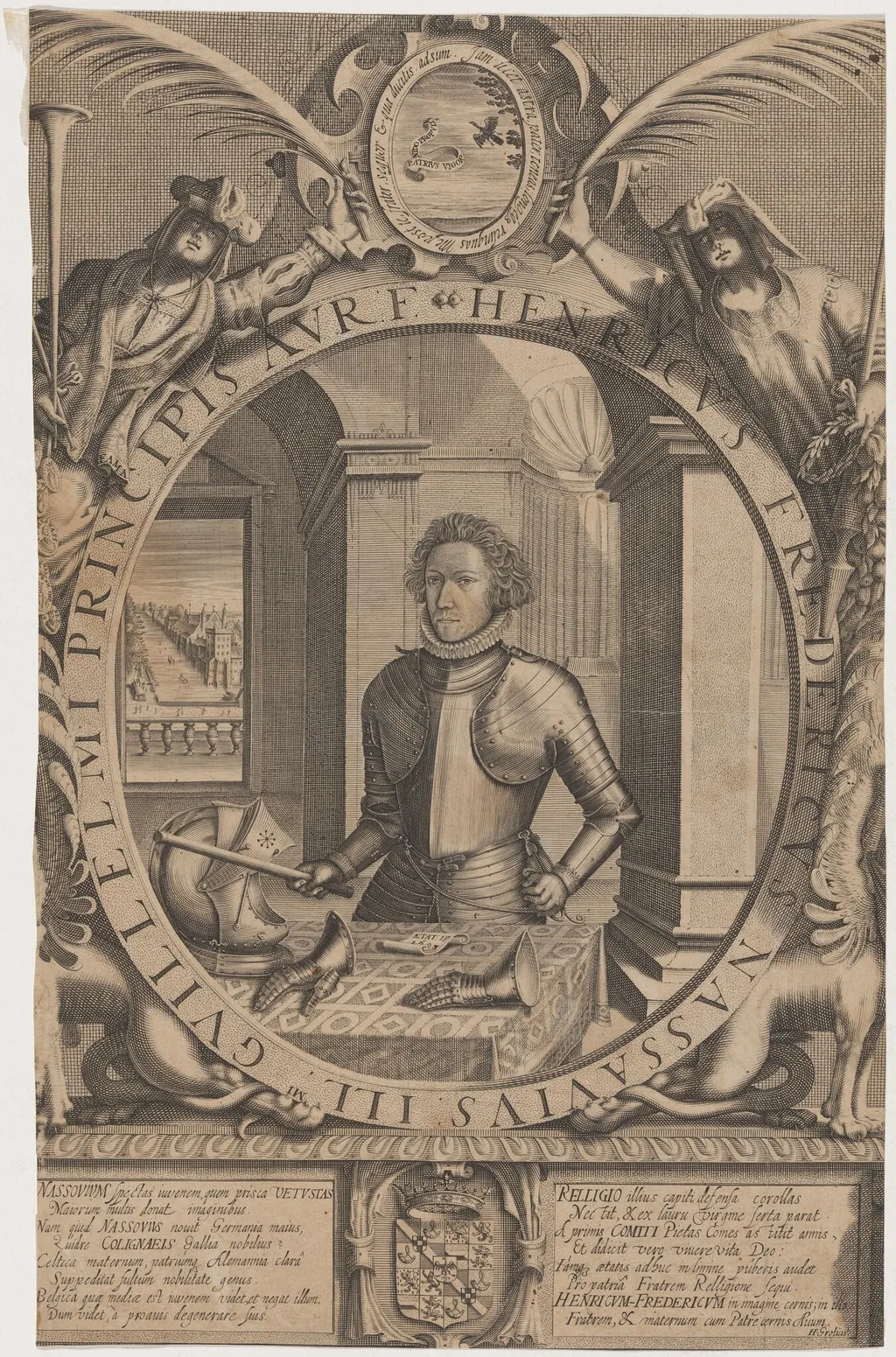
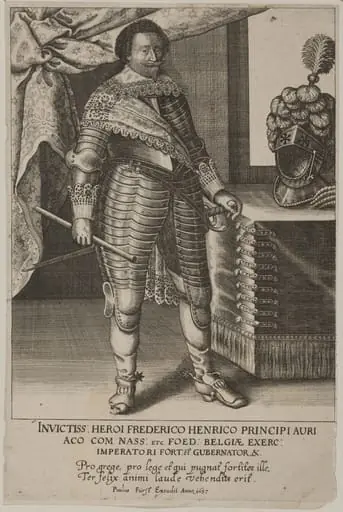
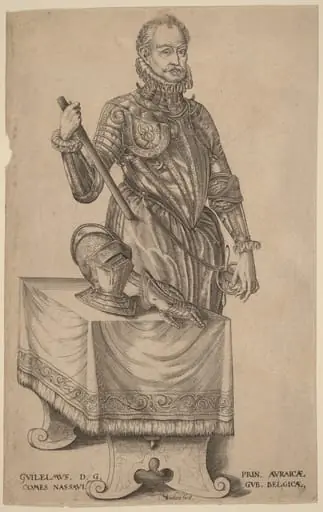
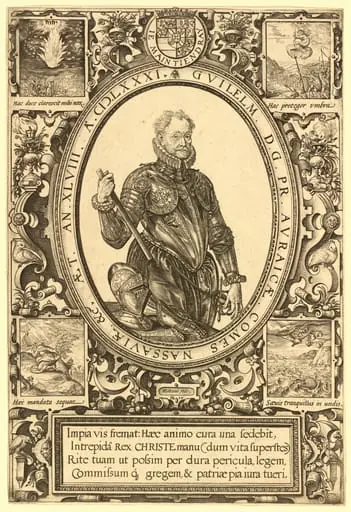
Frederick Henry of Nassau is an ink print by the Baroque artist Dutch 17th Century. It dates from 1630 and is held in the collection of the National Gallery of Art. The print is an engraving depicting a heavily armored figure seated on a chair, grasping a glove in one hand and a scroll in the other.
About this work
Overview
” The composition is dense with allegorical elements, including a broken column, crossed weapons, and a diminutive landscape rendered in the lower corner.
The print is an engraving depicting a heavily armored figure seated on a chair, grasping a glove in one hand and a scroll in the other. Flanking the central figure are two winged beings that frame a shield bearing a coat of arms and the inscription “Frederick Henry.” The composition is dense with allegorical elements, including a broken column, crossed weapons, and a diminutive landscape rendered in the lower corner.
Subject & Meaning
The armored sitter is identified as Frederick Henry of Nassau, a prominent 17th‑century Dutch military commander. The glove and scroll suggest authority and diplomatic activity, while the surrounding symbols—broken column, crossed arms, and winged figures—invoke themes of martial virtue, mortality, and perhaps triumph. The winged entities may personify abstract qualities such as Victory or History, a common convention in early modern portraiture.
Technique & Style
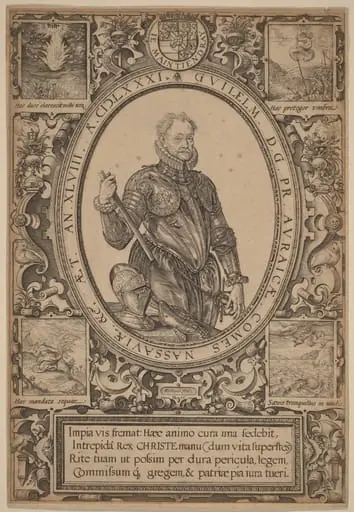
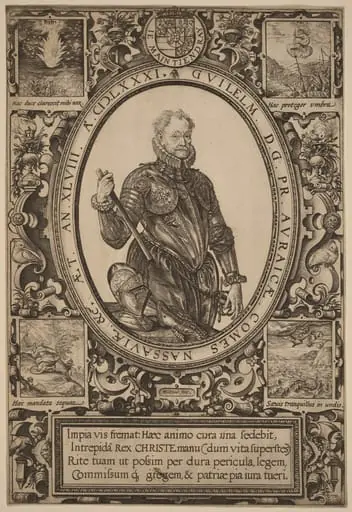
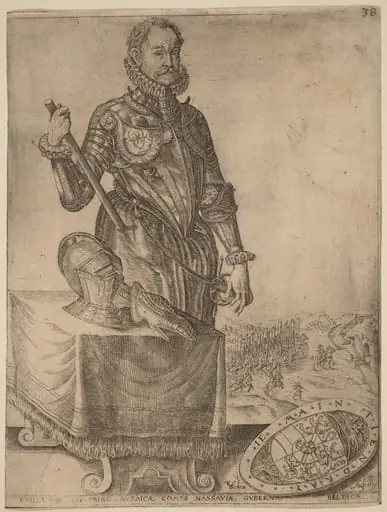
Executed as an intaglio engraving, the image was incised on a copper plate with a burin, allowing the artist to achieve fine, swirling lines and strong contrasts of light and dark. The dense hatching creates a dramatic chiaroscuro effect, while the bold, blocky lettering of the name and coat of arms demonstrates the print‑maker’s skill in integrating text with image.
History & Provenance
The engraving was produced in the early modern period, likely in the Netherlands, where portrait prints of notable statesmen were common. It has circulated in collections of prints and drawings, appearing in catalogues of Dutch engraving from the 17th century. No specific artist’s name is attached to the plate, a situation typical of commercial print workshops of the era.
Artist & collection

Artist
This Dutch artist made small, sharp engravings and etchings—mostly portraits and sea battles—printed from metal plates.