Artwork
Landscape with Log House near a River
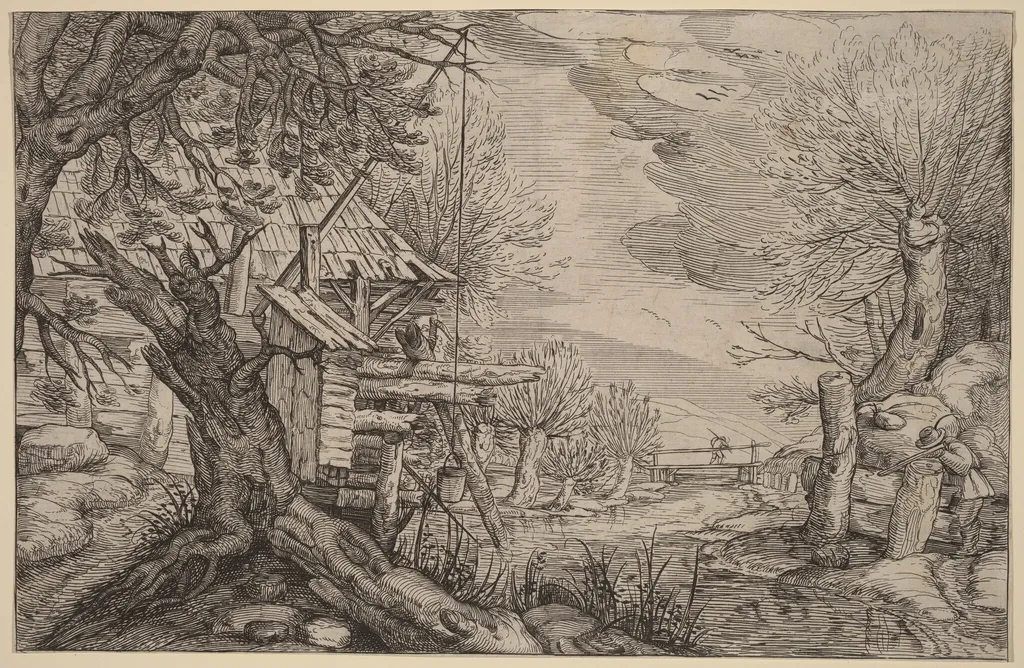
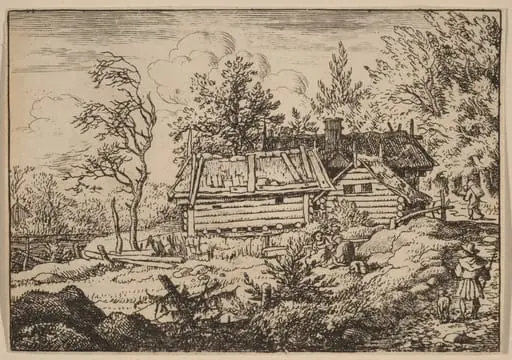
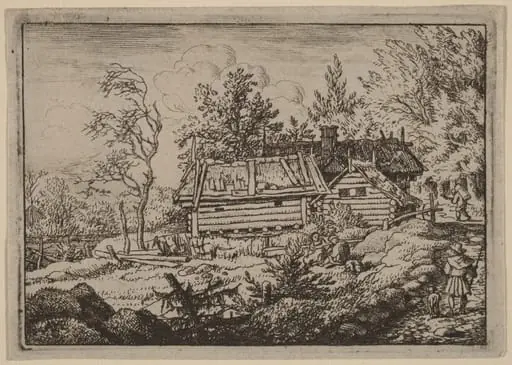
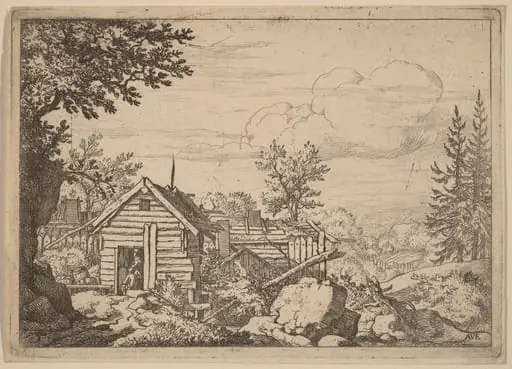
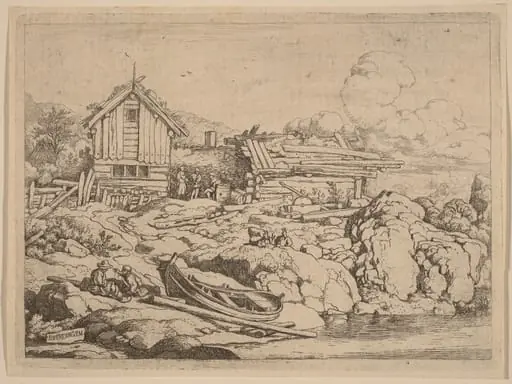
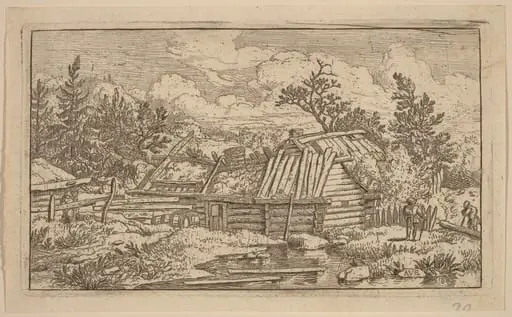
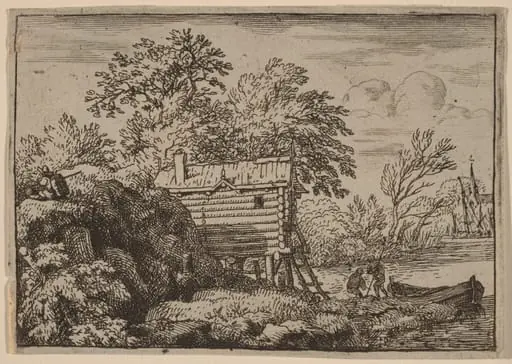
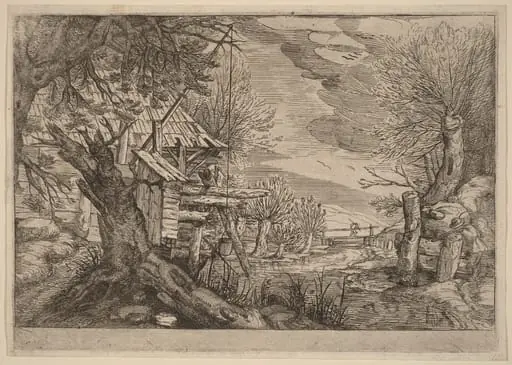
Landscape with Log House near a River is an ink print by the Baroque artist Dutch 17th Century. It dates from 1650 and is held in the collection of the National Gallery of Art. This etching on laid paper presents a quiet rural scene centered on a log cabin beside a winding river.
About this work
Overview
This etching on laid paper presents a quiet rural scene centered on a log cabin beside a winding river. The composition balances natural elements—trees, water, and architecture—with careful attention to spatial depth and texture. The work exemplifies the precision possible in printmaking, using fine lines to suggest light, shadow, and surface without color.
Subject & Meaning
The log house, modest and isolated, suggests a life removed from urban centers. The river, flowing calmly through the landscape, implies continuity and stillness. The dominant foreground tree, with its wide branches, frames the scene like a natural arch, drawing the viewer’s eye toward the dwelling and the distant structure across the water, evoking solitude and harmony with nature.
Technique & Style
The artist employed fine, controlled etching lines to render bark, water ripples, and roof shingles with subtle variation. The use of laid paper enhances the tactile quality of the image, its texture subtly reinforcing the rustic subject. Atmospheric perspective is achieved through lighter, sparser lines in the distance, while foreground details remain sharply defined.
History & Provenance
Though the artist’s identity is not specified, the work aligns with 17th-century Northern European print traditions, where landscape etchings were often produced for private collectors. The paper type and technique suggest a production date likely between 1620 and 1700, consistent with regional practices in the Low Countries or German-speaking territories.
Context
During the Baroque period, landscape prints gained popularity as expressions of natural order and quiet contemplation, distinct from grand historical or religious themes. This work reflects a growing interest in everyday rural scenes, influenced by Dutch and German printmakers who documented the countryside with observational fidelity.
Legacy
As a representative of early printmaking focused on naturalism, this etching contributes to a broader tradition of landscape documentation that preceded Romanticism. Its quiet detail and restrained composition influenced later artists seeking to capture the dignity of ordinary environments through linear precision rather than dramatic effect.
Artist & collection

Artist
This Dutch artist made small, sharp engravings and etchings—mostly portraits and sea battles—printed from metal plates.