Artwork
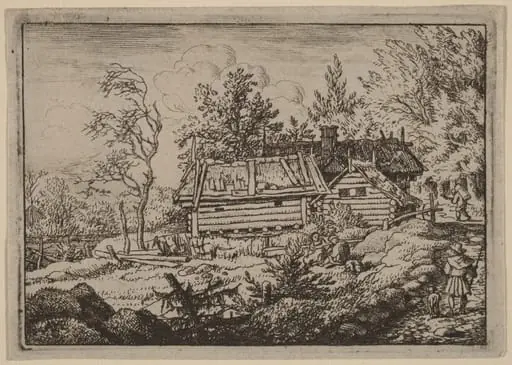
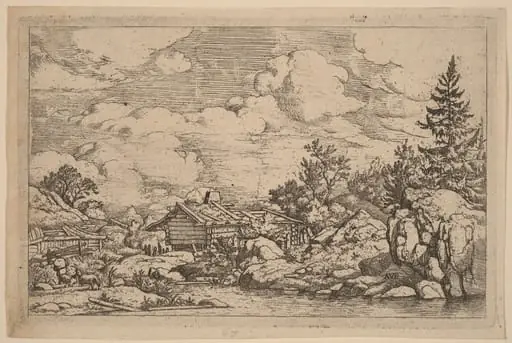
Landscape with Log House near a River
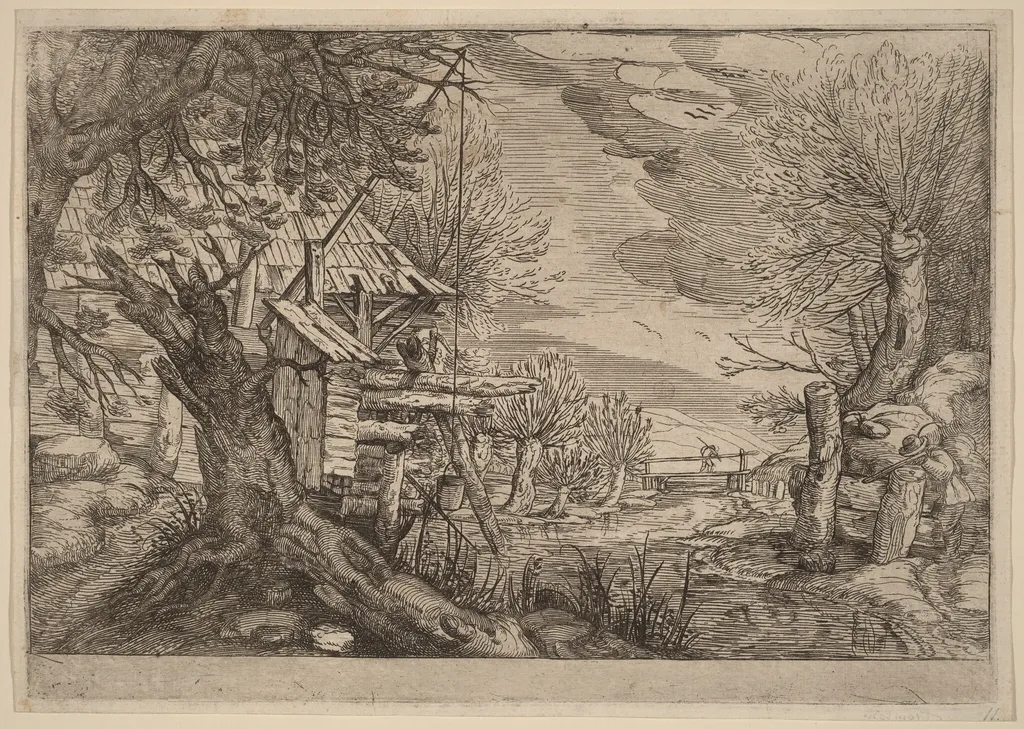
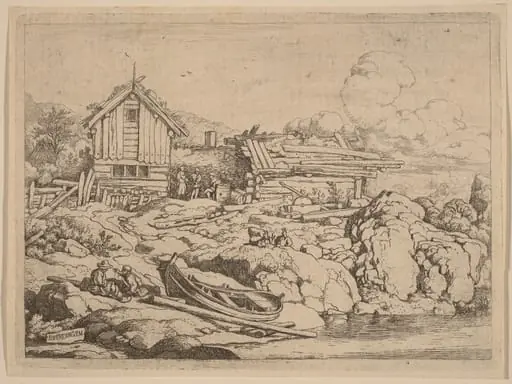
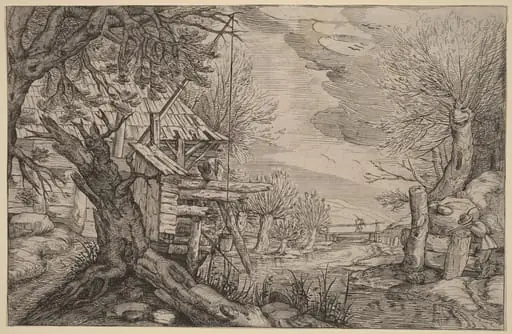
Landscape with Log House near a River is an ink print by the Baroque artist Dutch 17th Century. It dates from 1650 and is held in the collection of the National Gallery of Art. This etching on laid paper depicts a pastoral scene centered on a modest log structure adjacent to a river.
About this work
Overview
This etching on laid paper depicts a pastoral scene centered on a modest log structure adjacent to a river. The composition balances natural elements—dense foliage, exposed roots, and rocky terrain—with human presence, suggesting a moment of quiet interaction between the two. Light and shadow are rendered through varying line density, creating depth and texture across the print’s surface.
Subject & Meaning
The scene evokes rural solitude, with the log cabin serving as a focal point amid untamed surroundings. A lone figure near the structure holds an elongated object, possibly a tool or fishing implement, reinforcing themes of labor or subsistence. The tangled branches and uneven ground convey a sense of organic disorder, while the river introduces a dynamic yet tranquil element to the composition.
Technique & Style
Executed in etching, the print employs acid-bitten lines on a metal plate to achieve tonal contrasts. Fine, precise strokes define the foliage and cabin, while broader, softer lines suggest distance and atmosphere. The artist’s manipulation of line weight—sharp in foreground details, diffuse in background elements—enhances the illusion of spatial recession and tactile realism.
History & Provenance
Details regarding the print’s creation and early ownership remain sparse. As an etching on laid paper, it reflects techniques common in European printmaking during the period of its production. Its survival in this medium suggests careful preservation, though specific exhibitions or collections prior to modern documentation are unrecorded.
Context
The work aligns with traditions of landscape etching that emerged in the 17th and 18th centuries, where artists sought to capture both the specificity of natural settings and the poetic mood of rural life. Such prints often circulated as independent works or illustrations, appealing to audiences interested in pastoral themes or technical mastery of the etching process.
Legacy
While not widely cited in major art-historical narratives, the print exemplifies the enduring appeal of etched landscapes. Its attention to natural detail and atmospheric effects reflects broader trends in printmaking that influenced later artists. The work’s quiet composition continues to invite study of how modest scenes convey texture, light, and human presence.
Artist & collection

Artist
This Dutch artist made small, sharp engravings and etchings—mostly portraits and sea battles—printed from metal plates.