Artwork
Jan de Wael
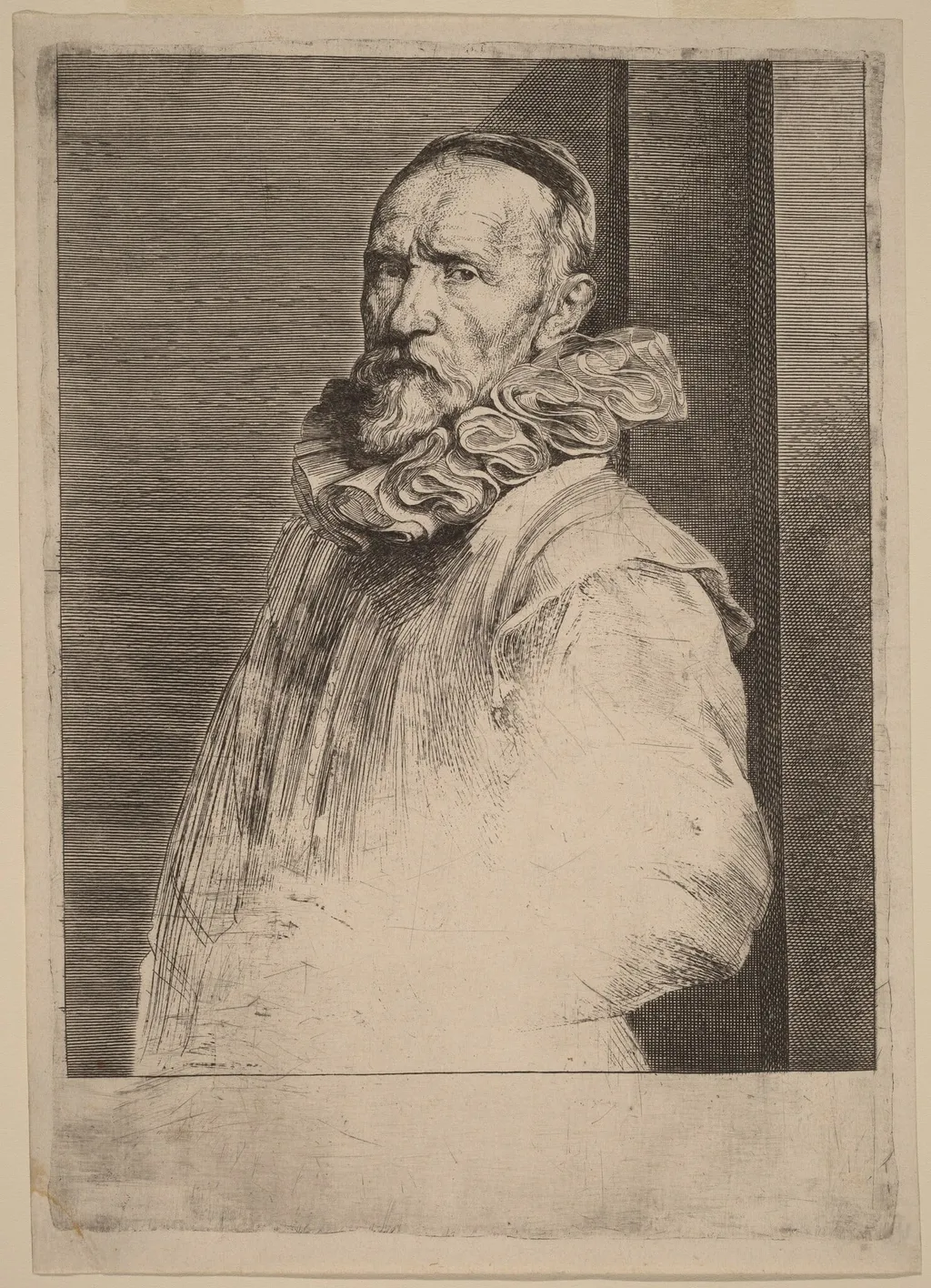
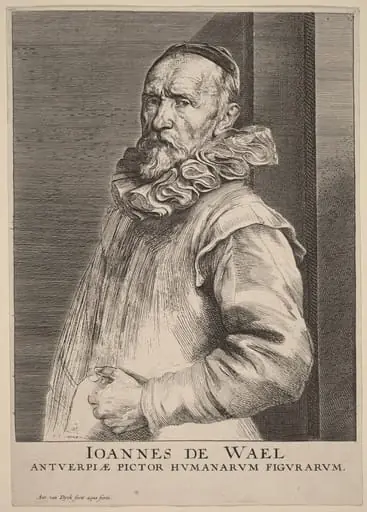
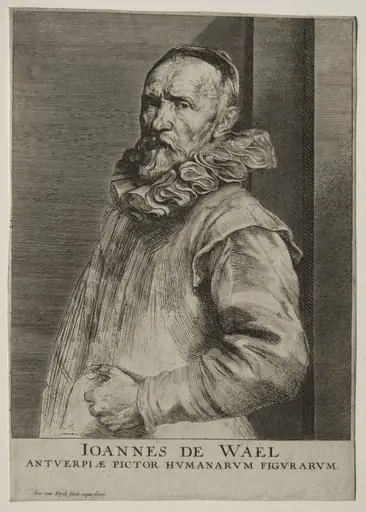
Jan de Wael is an ink print by the Baroque artist Anthony van Dyck. It dates from 1634 and is held in the collection of the National Gallery of Art.
About this work
Overview
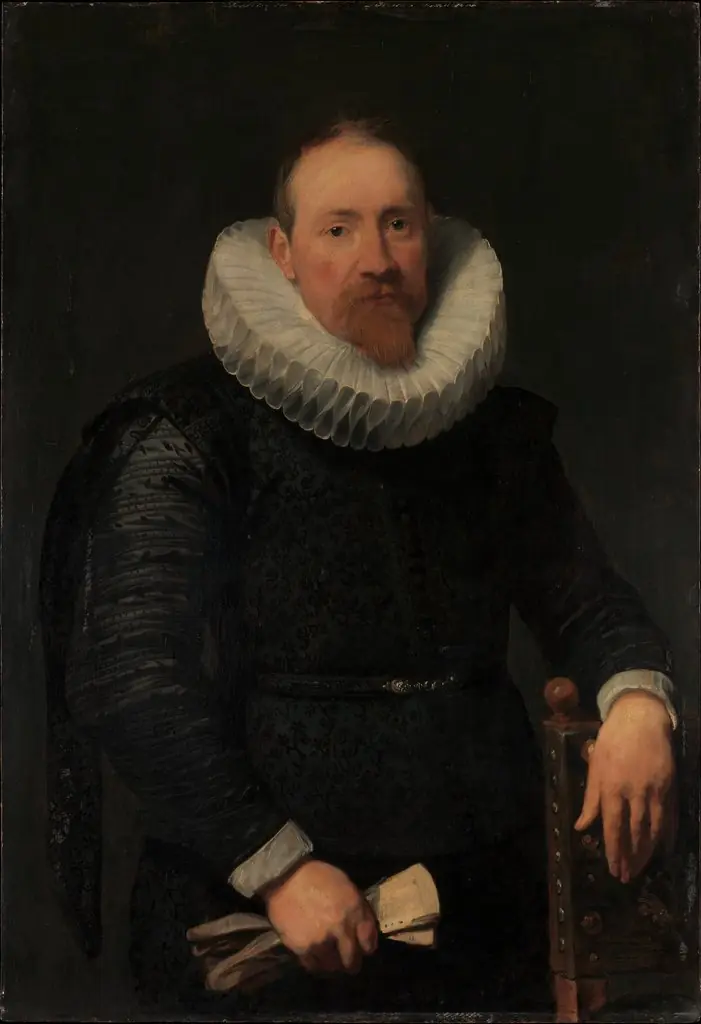
The image captures de Wael in profile, his face illuminated against a dark field, emphasizing texture and age through fine, deliberate lines.
This black-and-white print, created around 1634, depicts Jan de Wael, a Flemish artist and engraver. Rendered by Anthony van Dyck, it is a portrait executed through etching and engraving on metal. The image captures de Wael in profile, his face illuminated against a dark field, emphasizing texture and age through fine, deliberate lines. The technique allows for both precision and a tactile quality in the strokes.
Subject & Meaning
Jan de Wael is portrayed as a mature man with a long, curled beard and a high, ruffled collar, suggesting his status as a respected artisan. His turned gaze and lined brow convey quiet introspection rather than grandeur. The portrait avoids idealization, focusing instead on the physical marks of experience, aligning with van Dyck’s interest in capturing individual character over ceremonial representation.
Technique & Style
Van Dyck employed etching and engraving to achieve fine detail: acid bit lines into a metal plate, while a burin carved sharper, controlled grooves. The result is a contrast between the fluidity of etched contours and the crispness of engraved accents. The dark background heightens the contrast of the face and collar, while the texture of skin and fabric emerges through layered, deliberate strokes.
History & Provenance
The print was made during van Dyck’s time in Antwerp, where he documented local artists and intellectuals. Jan de Wael, known for his own engravings, was likely a peer or acquaintance. The work circulated among collectors and printmakers, contributing to van Dyck’s reputation for portraiture beyond painting. Its survival reflects the value placed on engraved likenesses in 17th-century artistic circles.
Context
In the 1630s, engraved portraits were vital for disseminating images of prominent figures across Europe. Van Dyck’s prints, including this one, formed part of a broader effort to document the intellectual and artistic community of the Southern Netherlands. Unlike painted portraits, these prints were reproducible, allowing wider access and influencing how artists were visually remembered.
Legacy
This print exemplifies van Dyck’s skill in translating the nuance of human expression into printmaking. It influenced later generations of engravers who sought to capture psychological depth through line work. While less celebrated than his paintings, this portrait remains a key example of how etching could serve as a serious medium for portraiture in the early modern period.
Artist & collection
Artist
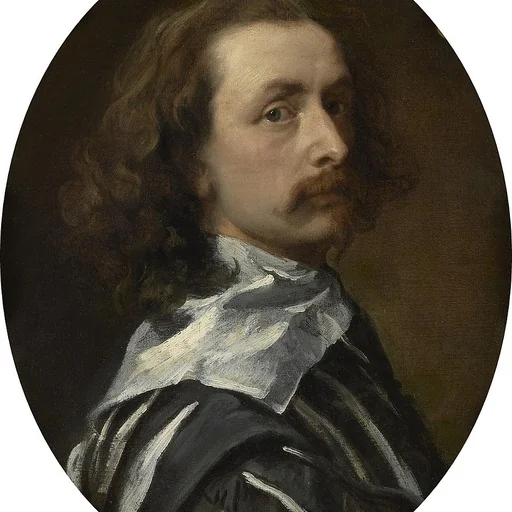
Sir Anthony van Dyck (; Dutch: Antoon van Dijck ; 22 March 1599 – 9 December 1641) was a Flemish Baroque artist, who became the leading court painter in England after success in the Spanish Netherlands and Italy.