Artwork
Jan Bruegel the Elder
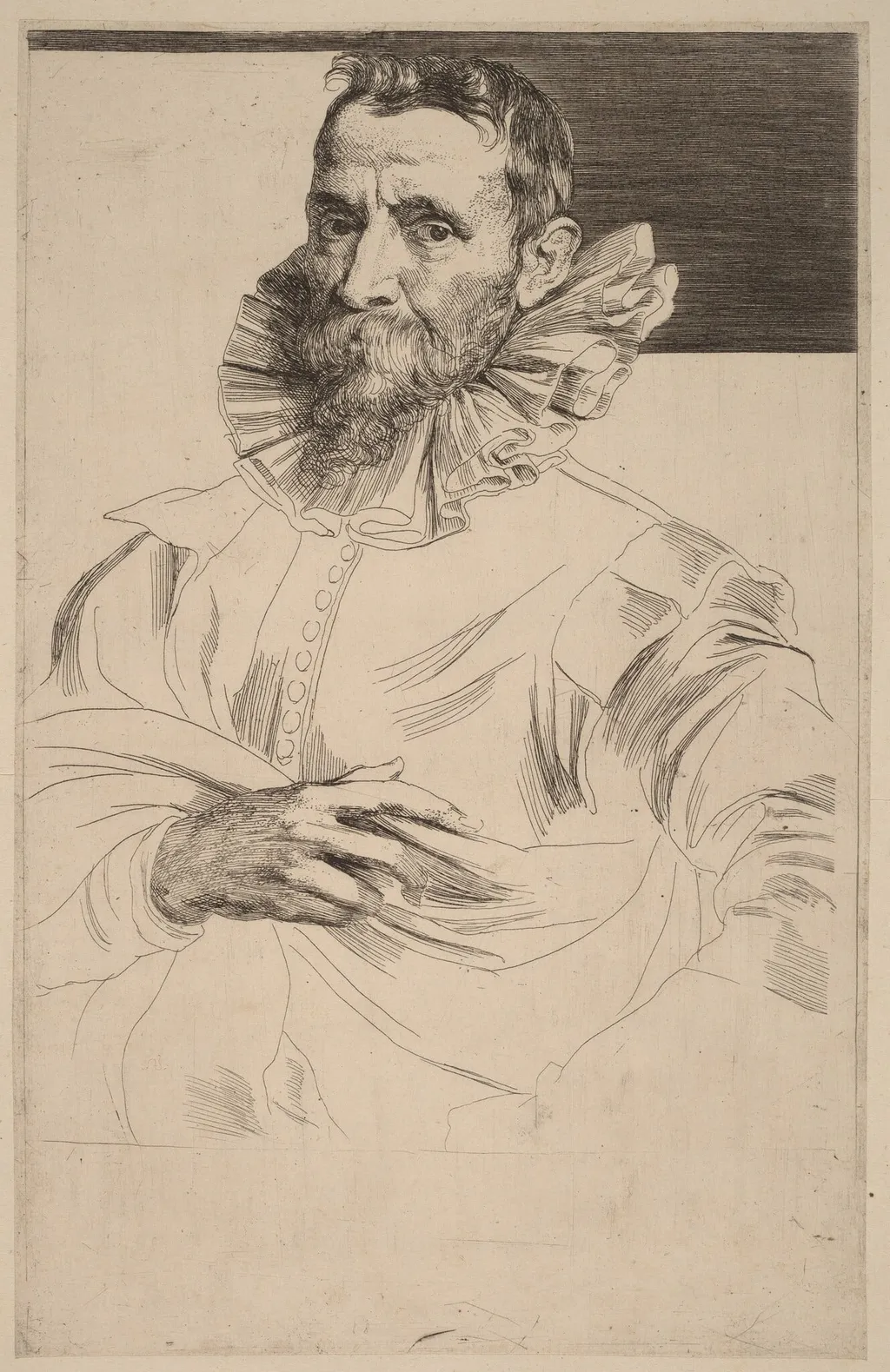
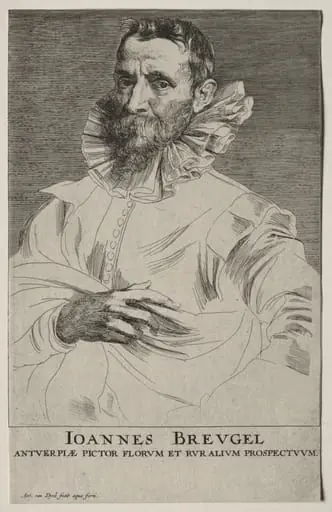
Jan Bruegel the Elder is an ink print by the Baroque artist Anthony van Dyck. It dates from 1634 and is held in the collection of the Rosenwald Collection.
About this work
Overview
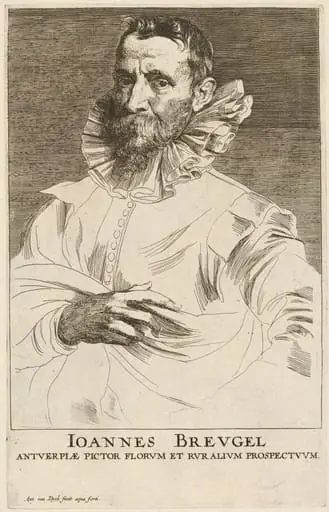
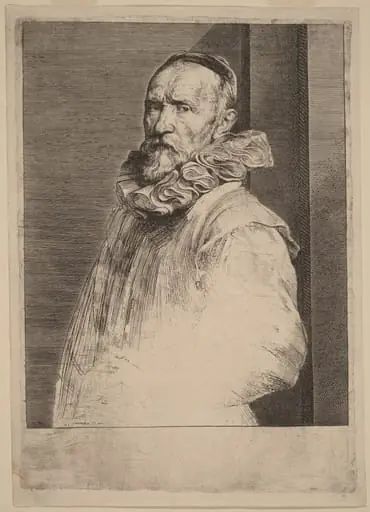
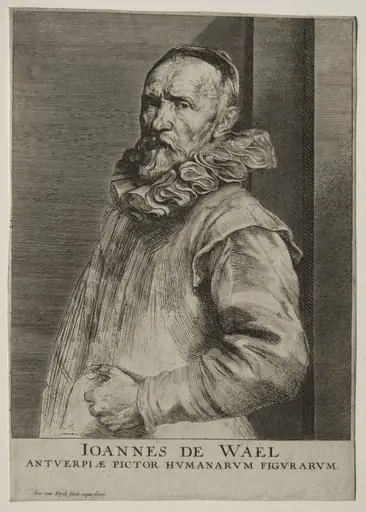
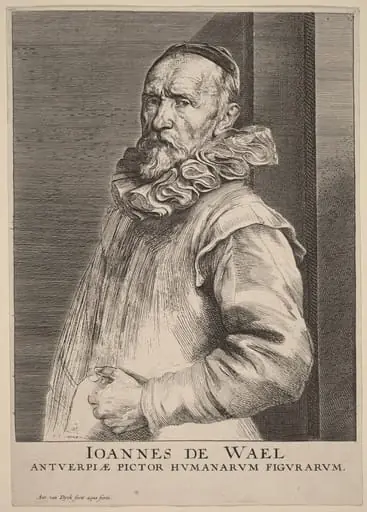
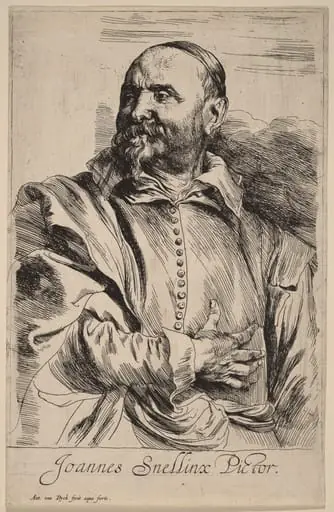
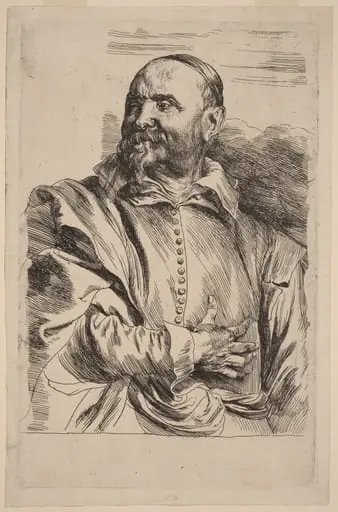
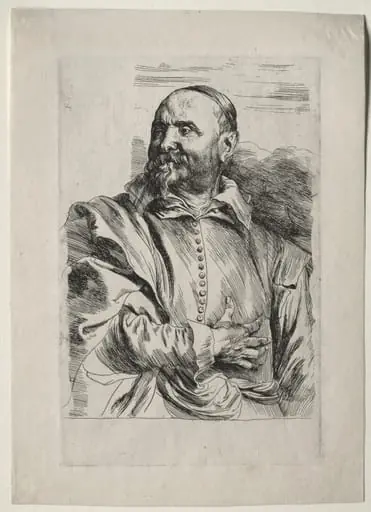
This print is a portrait of Jan Bruegel the Elder, created around 1634 by Anthony van Dyck. Executed in etching and engraving, it captures the artist in a moment of quiet concentration. The image is rendered with swift, deliberate lines that suggest immediacy, as if drawn from life. The contrast between dark ink and the untouched paper enhances the sense of presence and focus.
Subject & Meaning
His serious expression and large, carefully rendered hands emphasize his identity as a craftsman, grounding the image in the dignity of artistic labor.
The portrait depicts Jan Bruegel the Elder, a prominent Flemish painter known for his detailed landscapes and floral still lifes. He is shown with a ruff collar and one hand adjusting his cuff, a gesture that conveys introspection rather than formality. His serious expression and large, carefully rendered hands emphasize his identity as a craftsman, grounding the image in the dignity of artistic labor.
Technique & Style
Van Dyck employed etching and engraving to achieve a dynamic, sketch-like quality. The lines are fluid and economical, suggesting spontaneity rather than polished finish. The sharp tool scratched through a wax ground on a metal plate, then ink was pressed into the grooves. The resulting image relies on tonal contrast—dark, incised lines against the paper’s pale surface—to define form and texture with minimal detail.
History & Provenance
Created during Van Dyck’s time in Antwerp, this print likely served as a study or personal record rather than a commissioned work. It reflects the artist’s interest in documenting peers within the Flemish artistic community. The print was circulated among collectors and artists, contributing to the visual legacy of Bruegel’s persona beyond his painted works.
Context
In the early 17th century, portrait prints of artists were increasingly used to establish reputations and professional networks. Van Dyck, already renowned for his painted portraits, turned to print to capture the likenesses of contemporaries. This image aligns with a broader trend of artist-portraiture that emphasized character and craft over idealized representation.
Legacy
The print endures as a direct, unembellished record of Jan Bruegel the Elder’s appearance and demeanor. Its informal technique distinguishes it from formal painted portraits of the era, offering a more intimate glimpse into the life of a Northern Renaissance artist. It remains a key example of how printmaking facilitated the circulation of artistic identity in early modern Europe.
Artist & collection
Artist
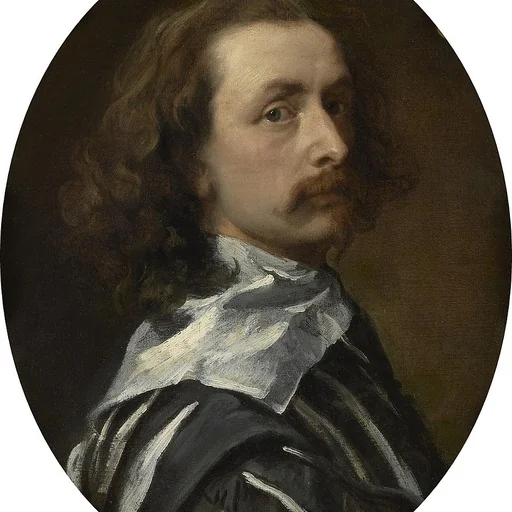
Sir Anthony van Dyck (; Dutch: Antoon van Dijck ; 22 March 1599 – 9 December 1641) was a Flemish Baroque artist, who became the leading court painter in England after success in the Spanish Netherlands and Italy.