Artwork
The Edge of a Wood
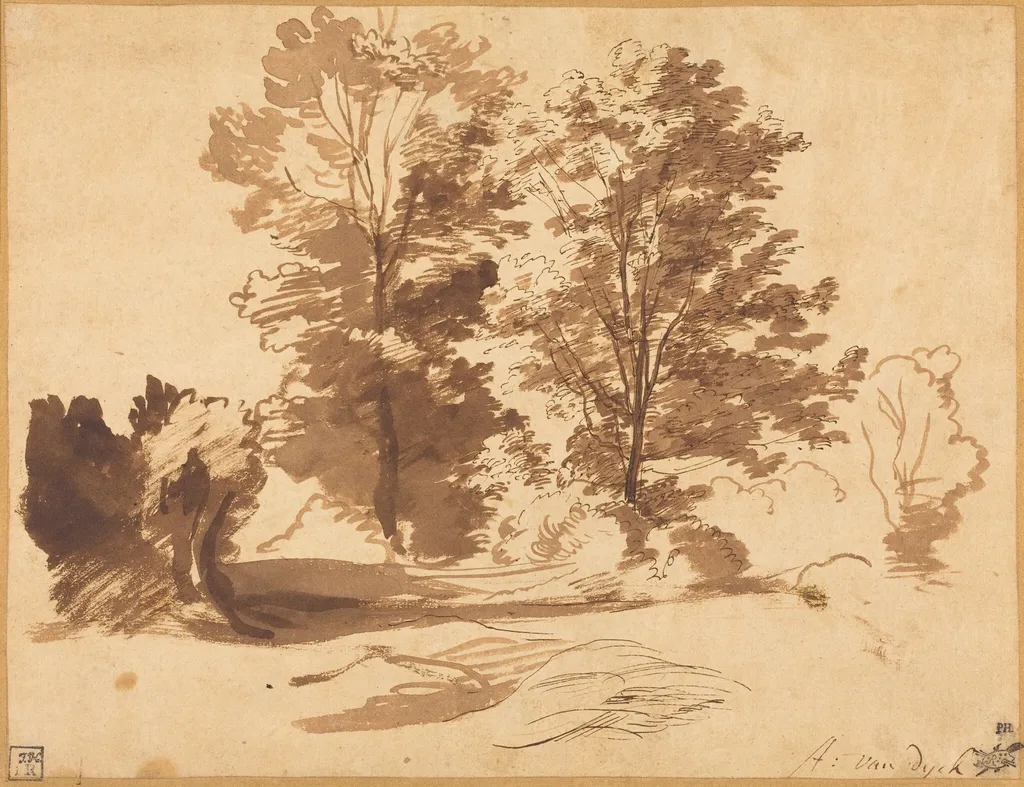
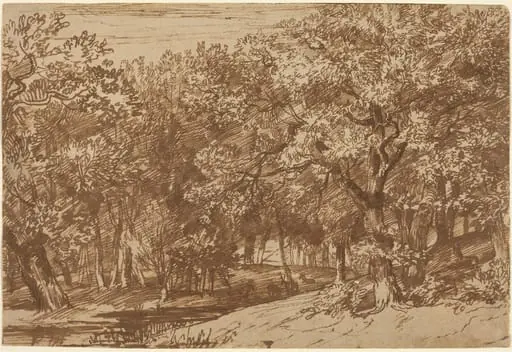
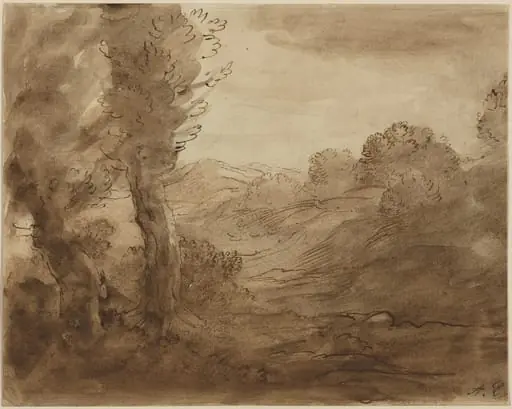
The Edge of a Wood is an ink drawing by the Baroque artist Anthony van Dyck. It dates from 1634 and is held in the collection of the National Gallery of Art.
About this work
Overview
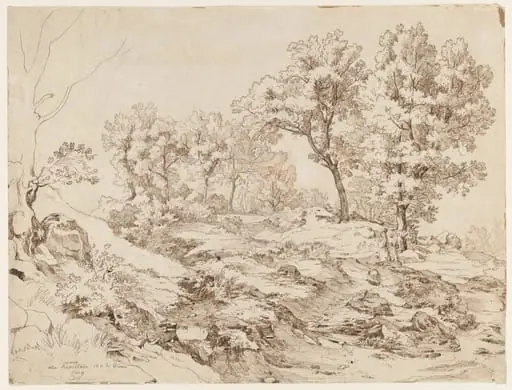
The Edge of a Wood, created by Anthony van Dyck around 1634, is a pen and brown ink drawing with brown wash on laid paper, depicting a serene wooded landscape.
Subject & Meaning
The drawing features a tranquil scene with two prominent trees and a rocky outcrop, suggesting a focus on capturing the natural environment in a quiet, possibly observational manner.
Technique & Style
Characterized by loose, quick ink lines and selective use of light brown wash, the work achieves soft shadows and textured effects, evoking the immediacy of an outdoor sketch. Faint strokes at the bottom imply vegetation or water.
History & Provenance
While the exact context of its creation is not detailed here, the subtle grid pattern on the paper hints at its potential use as a study or preparatory material.
Context
Technically, the piece exemplifies the use of cross-hatching principles, though this specific work focuses more on expressive, quick rendering than densely layered hatching for depth.
Legacy
No specific information is provided on the work's impact or legacy beyond its existence as part of Van Dyck's oeuvre.
Artist & collection
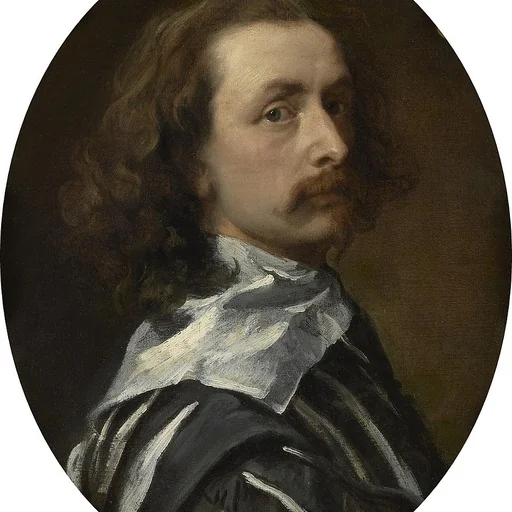
Artist
Sir Anthony van Dyck (; Dutch: Antoon van Dijck ; 22 March 1599 – 9 December 1641) was a Flemish Baroque artist, who became the leading court painter in England after success in the Spanish Netherlands and Italy.