Artwork
Grove of Trees
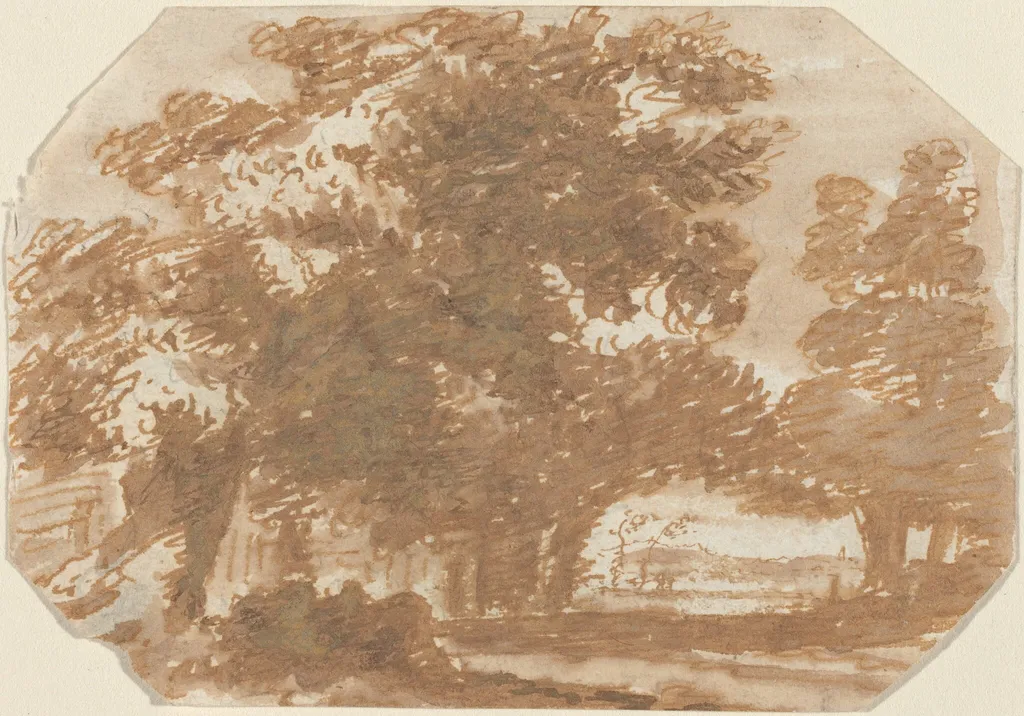
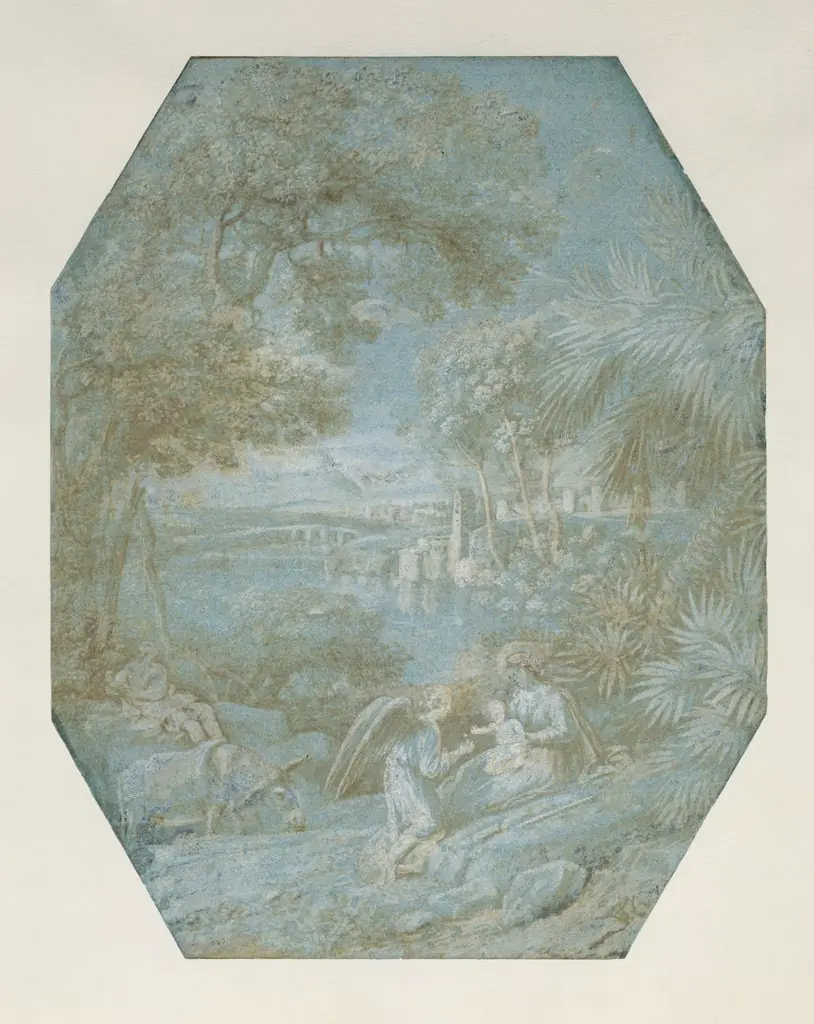
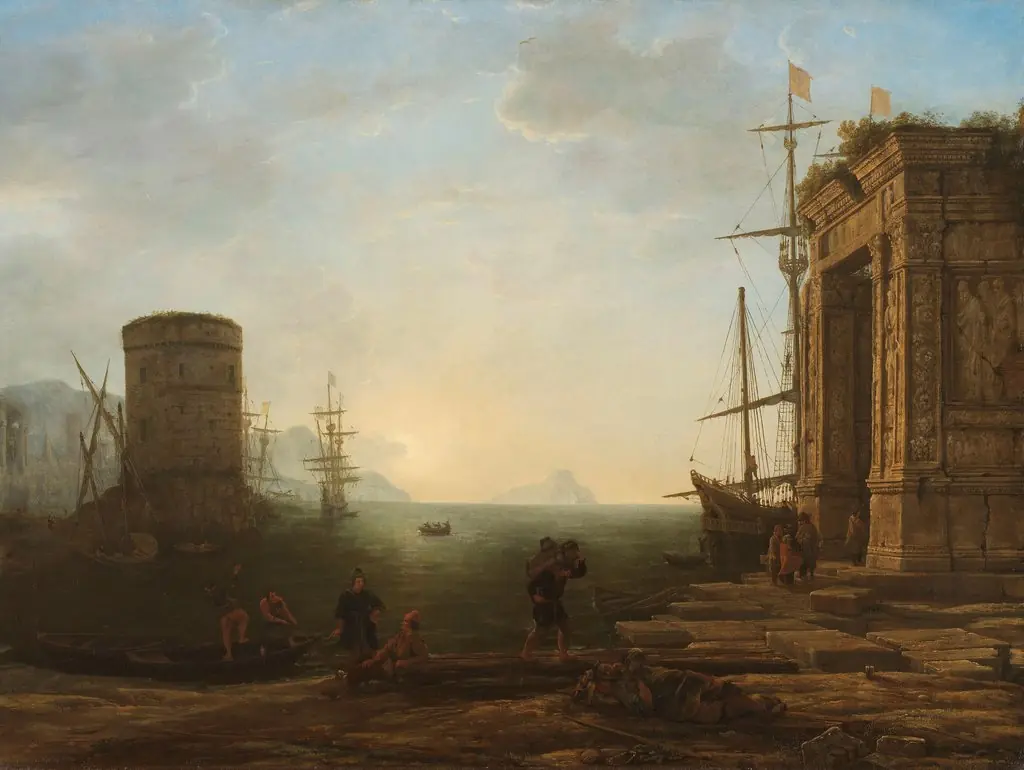
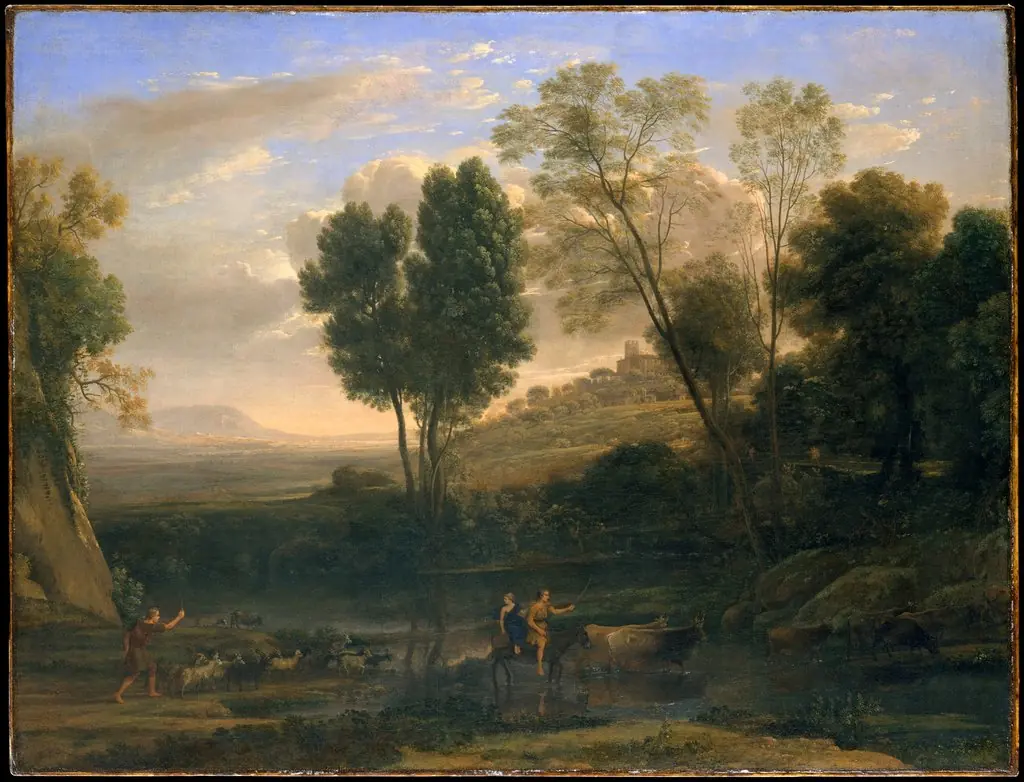
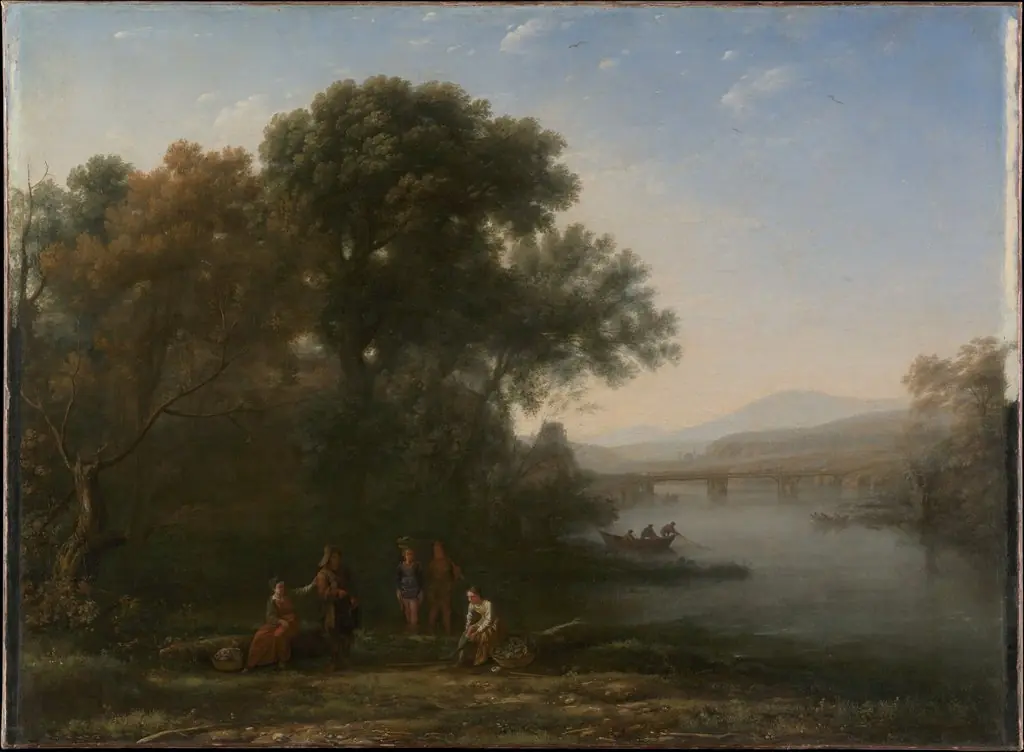
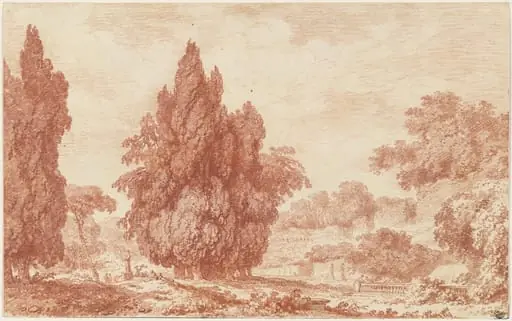
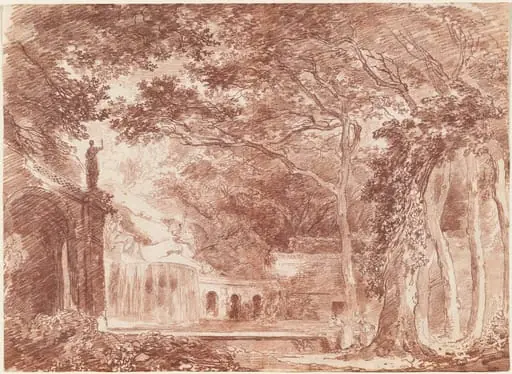
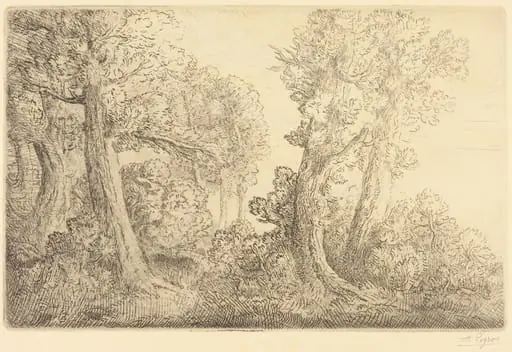
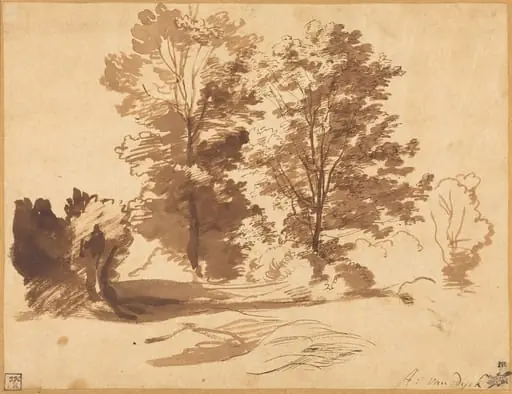
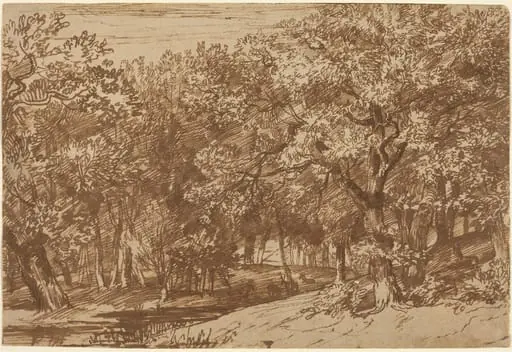
Grove of Trees is an ink drawing by the Baroque artist Claude Lorrain. It dates from 1640 and is held in the collection of the National Gallery of Art.
About this work
Overview
Created around 1640, this drawing by Claude Lorrain is executed in pen and brown ink with gray wash on laid paper. It belongs to a body of work produced during his years in Italy, where he developed a distinctive approach to landscape. Unlike finished paintings, this piece appears as a rapid, observational study, capturing the essence of a wooded area rather than a polished composition.
Subject & Meaning
The subject is a loosely rendered grove of trees, with no identifiable figures or narrative elements. The absence of classical or biblical characters distinguishes it from Lorrain’s more formal works. Instead, the focus lies in the natural arrangement of foliage and ground, suggesting an interest in the structure and mood of the landscape itself, independent of storytelling.
Technique & Style
Lorrain employed quick, overlapping pen strokes and diluted gray wash to suggest form and shadow. The lines are uneven and fluid, avoiding sharp definition. The wash bleeds softly into the paper, creating hazy transitions between light and dark. This method prioritizes atmospheric effect over precision, revealing his ability to convey depth through minimal, suggestive marks.
History & Provenance
Its survival suggests it was valued by later collectors for its insight into his working process rather than as a standalone finished piece.
The drawing’s early history is undocumented, but it aligns with Lorrain’s known practice of producing preparatory sketches during his travels in the Roman countryside. Such studies were likely kept for personal reference or used to develop larger compositions. Its survival suggests it was valued by later collectors for its insight into his working process rather than as a standalone finished piece.
Context
In mid-17th century Italy, landscape drawing was increasingly treated as a discipline worthy of study in its own right. Lorrain’s sketches, including this one, contributed to a shift away from purely idealized compositions toward more direct engagement with nature. His approach influenced later artists who sought to capture light and atmosphere through direct observation.
Legacy
This drawing exemplifies Lorrain’s role in elevating landscape studies from mere preparatory work to expressions of artistic sensitivity. Its informal quality reveals the artist’s attention to transient effects of light and texture, a concern that would become central to 18th- and 19th-century landscape traditions. It stands as a quiet testament to his observational discipline.
Artist & collection
Artist
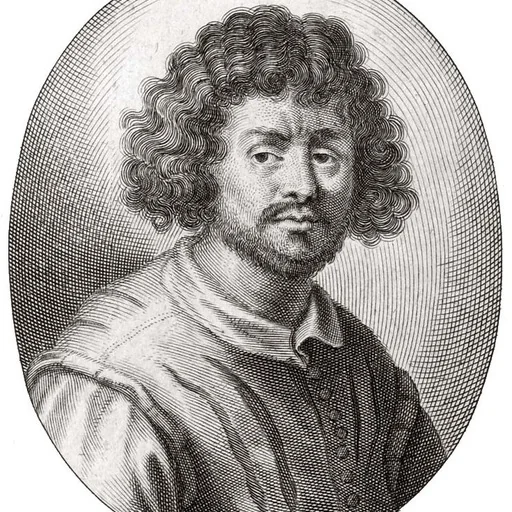
Claude Lorrain (French: ; born Claude Gellée , called le Lorrain in French; traditionally just Claude in English; c.