Artwork
Omakuva 1600-luvun asussa
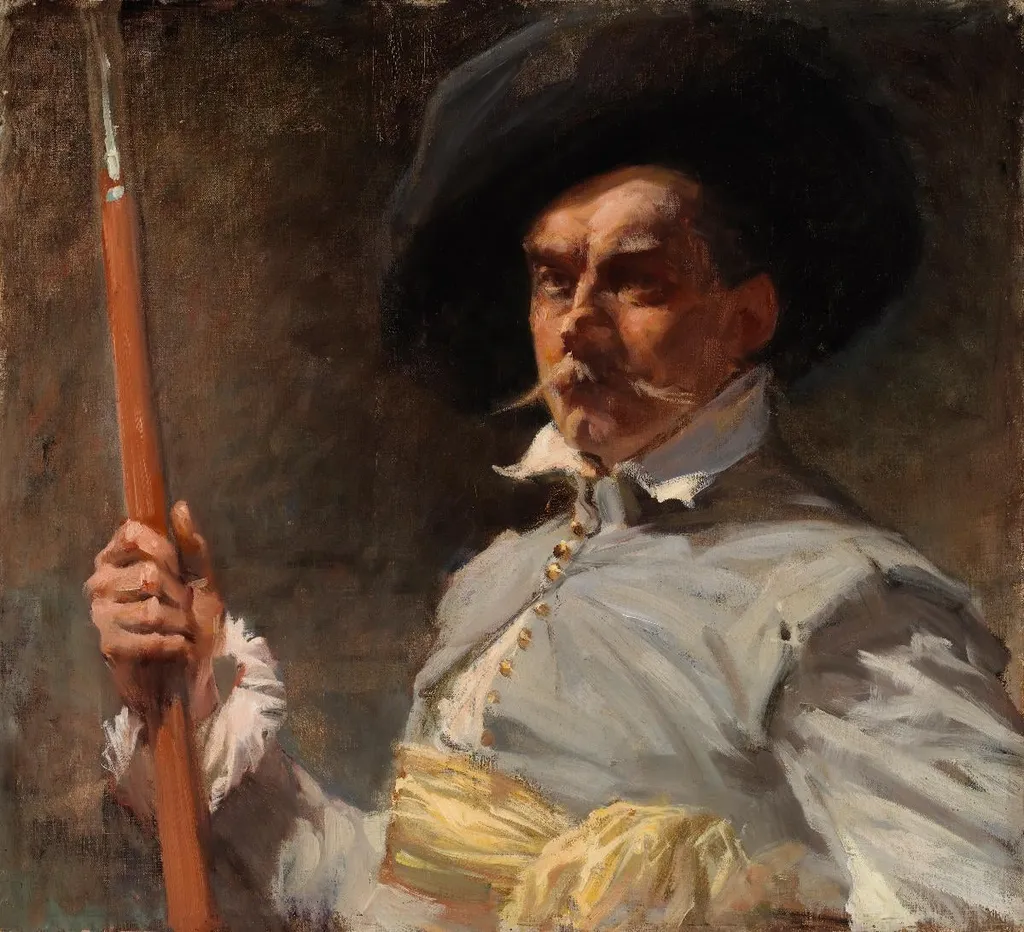
Omakuva 1600-luvun asussa is an unspecified painting by the Realist artist Albert Edelfelt. It dates from 1889 and is held in the collection of the Finnish National Gallery.
About this work
Overview
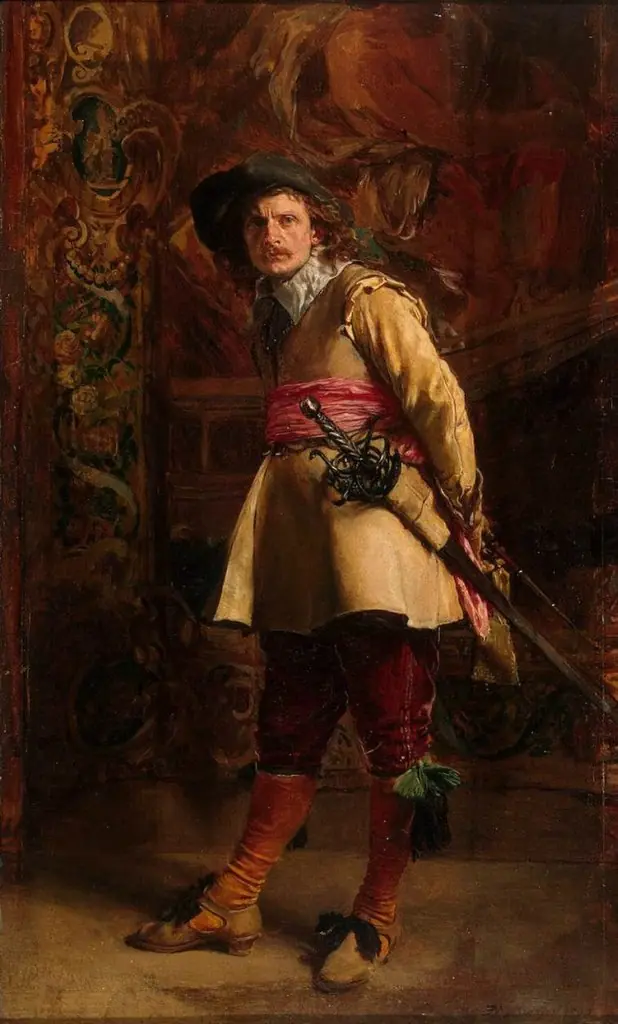
Albert Edelfelt painted this self-portrait around 1889, depicting himself in attire reminiscent of the 1600s. Set against a deep black background, the figure emerges with striking clarity, emphasizing form and texture through deliberate contrasts of light and shadow. The composition isolates the subject, focusing attention on his facial expression and historical costume.
Subject & Meaning
The subject is the artist himself, dressed not in contemporary 19th-century clothing but in a stylized 17th-century ensemble. This choice suggests a deliberate engagement with historical identity, possibly reflecting on artistic tradition or personal introspection. The red staff, held with quiet authority, may symbolize status or artistic vocation, though its exact significance remains open.
Technique & Style
Edelfelt employed thick, tactile brushwork on the jacket and hat, enhancing the material presence of the garments. The face and ruff are rendered with finer detail, contrasting with the loose, expressive strokes elsewhere. Strong chiaroscuro defines the contours of his features, drawing the eye to the subtle modeling of light across skin and fabric.
History & Provenance
Created near the end of Edelfelt’s career, the portrait was likely a private exercise rather than a commissioned work. It remained in the artist’s possession until his death in 1905, after which it entered a Finnish public collection. Its intimate scale and introspective tone suggest it was not intended for public display at the time of creation.
Context
In late 19th-century Finland, artists increasingly looked to historical dress as a means of exploring identity beyond national or contemporary norms. Edelfelt, trained in Paris and influenced by Realism, used this costume not as mere theatricality but as a vehicle for psychological depth, aligning with broader European trends of self-examination in portraiture.
Legacy
The painting stands as a quiet testament to Edelfelt’s technical command and his interest in historical persona. Though less known than his larger public works, it reveals his sensitivity to light and texture, and his willingness to engage with the past as a mirror for the self. It remains a key example of Finnish portraiture that bridges realism and introspection.
Artist & collection
Artist
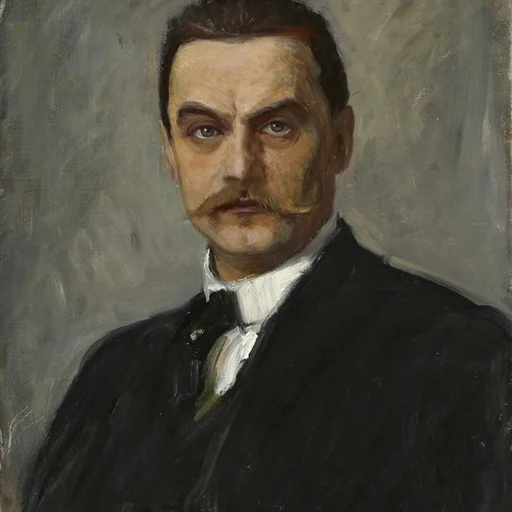
Albert Gustaf Aristides Edelfelt (21 July 1854 – 18 August 1905) was a Finnish painter noted for his naturalistic style and Realist approach to art.