Artwork
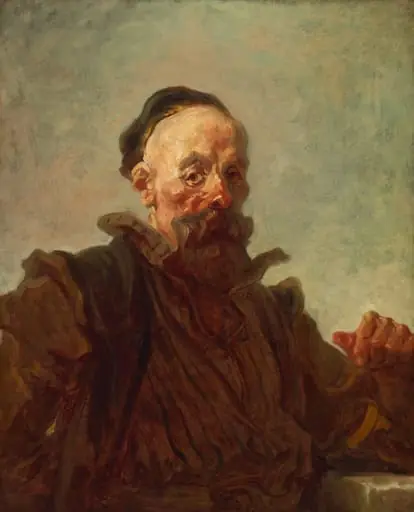
Portrait of a Man in Spanish Costume
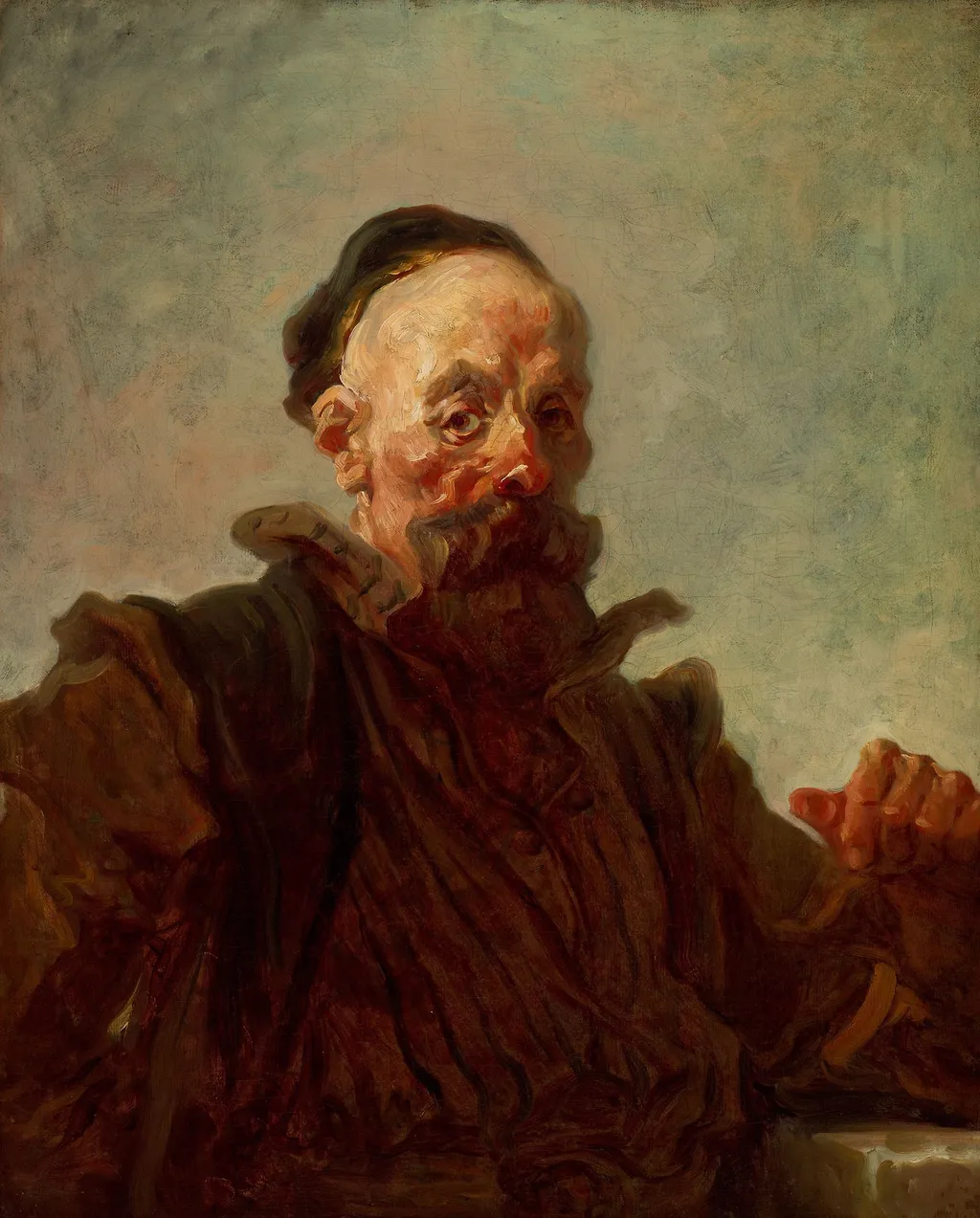
Portrait of a Man in Spanish Costume is an oil painting by the Rococo painting artist Jean Honoré Fragonard. It dates from 1769 and is held in the collection of the Art Institute of Chicago.
About this work
Overview
The subject is rendered with careful attention to texture and shadow, suggesting a deliberate departure from the artist’s typical decorative style.
Painted in 1769 by Jean-Honoré Fragonard, this oil portrait depicts a man dressed in Spanish-style attire. The work is part of the collection at the Art Institute of Chicago. Unlike Fragonard’s more ornate Rococo scenes, this piece adopts a restrained, introspective tone. The subject is rendered with careful attention to texture and shadow, suggesting a deliberate departure from the artist’s typical decorative style.
Subject & Meaning
The sitter wears a dark jacket and broad-brimmed hat, elements associated with Spanish nobility or military dress of the period. His gaze, directed to the right and slightly distant, conveys quiet introspection rather than engagement with the viewer. The absence of identifying symbols or context leaves his identity unknown, reinforcing a sense of anonymity and contemplative solitude.
Technique & Style
Fragonard employs a muted palette dominated by deep browns and blacks, contrasted against a pale, neutral background. Brushwork is precise yet fluid, particularly in the rendering of fabric folds and the soft modeling of facial features. Light falls unevenly across the face, enhancing the three-dimensionality of the form and deepening the psychological tone of the portrait.
History & Provenance
The painting entered the Art Institute of Chicago’s collection in the early 20th century, though its earlier ownership remains undocumented. It was likely created during Fragonard’s travels or in response to contemporary European fascination with Spanish culture. No records confirm the identity of the sitter or the commission’s origin, leaving its purpose speculative.
Context
In the late 1760s, French artists often drew inspiration from Spanish aesthetics, particularly in dress and demeanor, as part of a broader interest in exoticism. Fragonard, primarily known for lively genre scenes, produced a handful of portraits during this period that reflect a more somber, classical influence—possibly shaped by his exposure to Italian and Spanish art during his travels.
Legacy
This portrait stands as an atypical example within Fragonard’s oeuvre, revealing his capacity for restraint and psychological depth. While not widely exhibited, it remains a significant study in how Rococo artists adapted to more serious modes of representation. Its quiet intensity continues to invite interpretation, offering a counterpoint to the artist’s more celebrated works.
Own this work as a print
Artist & collection

Artist
Jean-Honoré Fragonard was born on 5 April 1732 in Grasse, the son of a glover, and moved with his family to Paris in 1738.