Artwork
After the Bath (Woman Drying Herself)
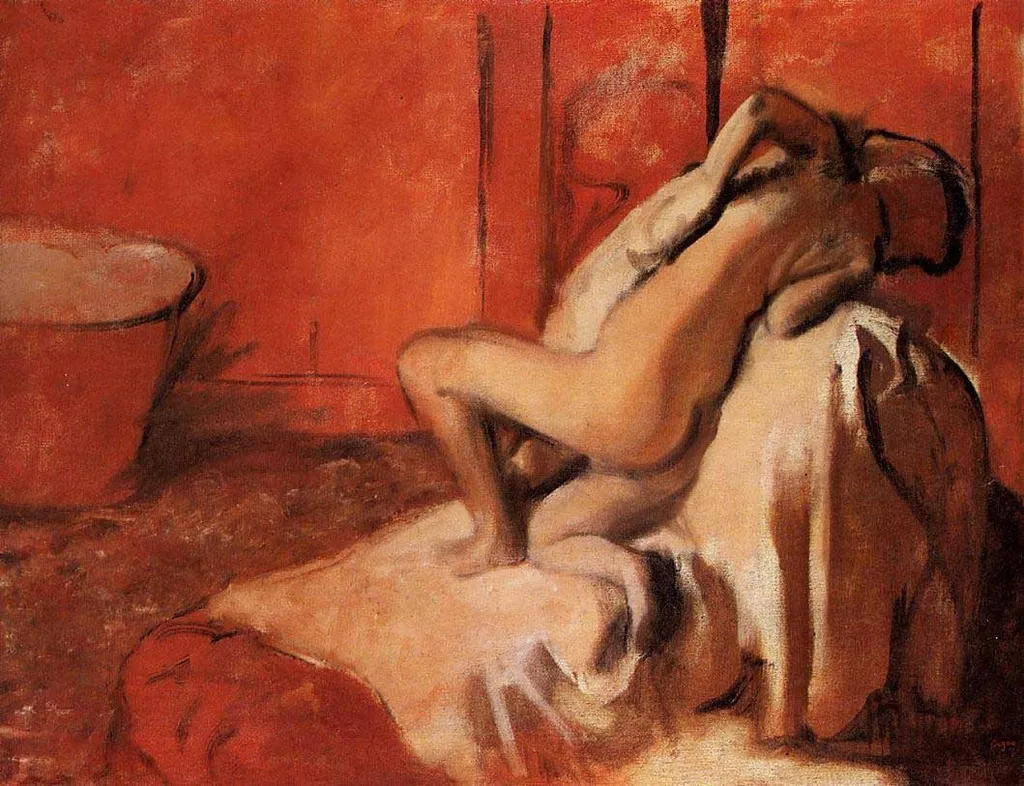
After the Bath (Woman Drying Herself) is an oil painting by the Impressionist artist Edgar Degas. It dates from 1898 and is held in the collection of the Philadelphia Museum of Art.
About this work
Overview
Created in 1898, Edgar Degas’s oil painting titled *After the Bath (Woman Drying Herself)* presents a solitary figure in an intimate domestic setting. The work is part of the collection of the Philadelphia Museum of Art, where it is displayed among the museum’s late‑19th‑century French paintings.
Subject & Meaning
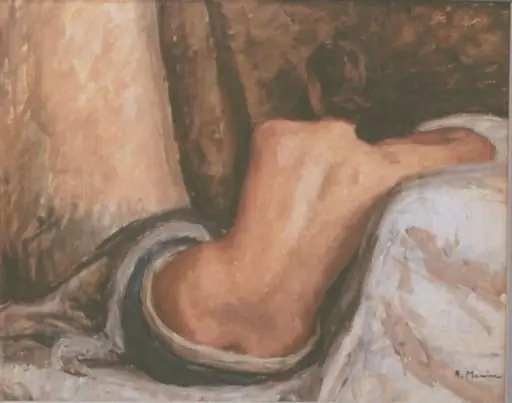
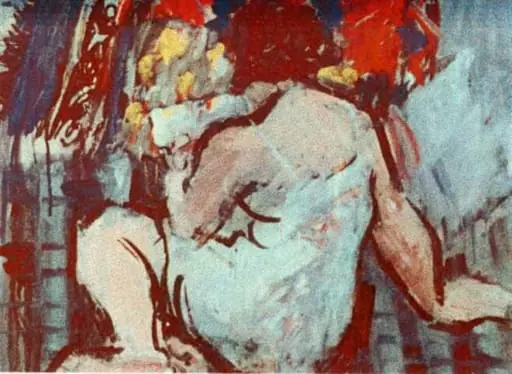
The composition captures a woman seated on a bed, wrapped in a towel and engaged in the act of drying her hair. A metal basin rests on the floor, suggesting the recent completion of a bath. The scene conveys a private, unguarded moment, emphasizing everyday routine over idealized beauty.
Technique & Style
Degas applies the paint with a pronounced impasto, allowing the brushstrokes to remain visible and give texture to both skin and fabric. The palette is dominated by warm, muted reds that bathe the room in a subdued glow. This handling of paint creates a tactile surface that heightens the immediacy of the gesture.
History & Provenance
The painting entered the Philadelphia Museum of Art’s holdings through acquisition in the early 20th century, though specific details of its previous owners remain limited. Its presence in the museum reflects the institution’s commitment to representing Degas’s later oeuvre, which increasingly explored intimate interior scenes.
Context
During the final decade of his career, Degas turned away from the public spectacles of ballet and racecourses, focusing instead on private, domestic subjects. *After the Bath* aligns with this shift, illustrating his interest in capturing fleeting moments of everyday life through a combination of observational detail and painterly abstraction.
Artist & collection
Artist
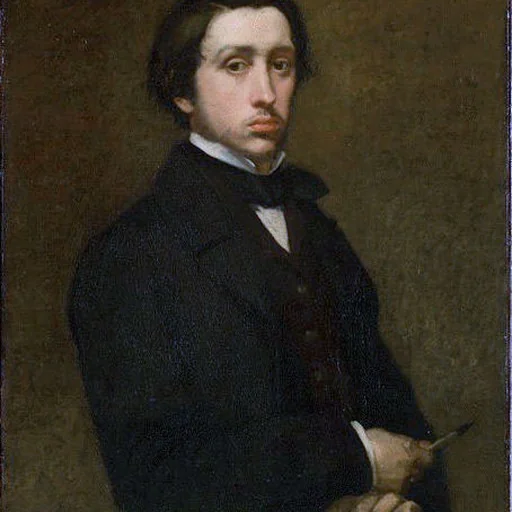
Born Hilaire-Germain-Edgar De Gas on 19 July 1834 in Paris, Edgar Degas came from an affluent banking family with aristocratic roots and spent his childhood among the cultivated circles of the French capital.