Artwork
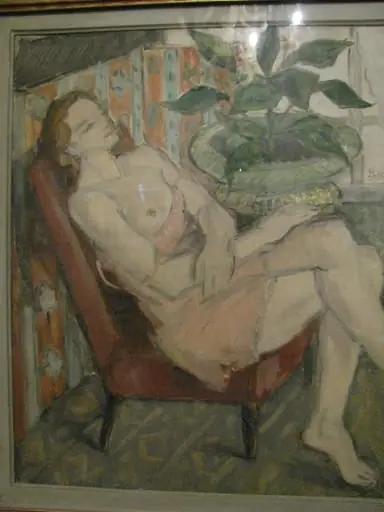
Nud pe canapea
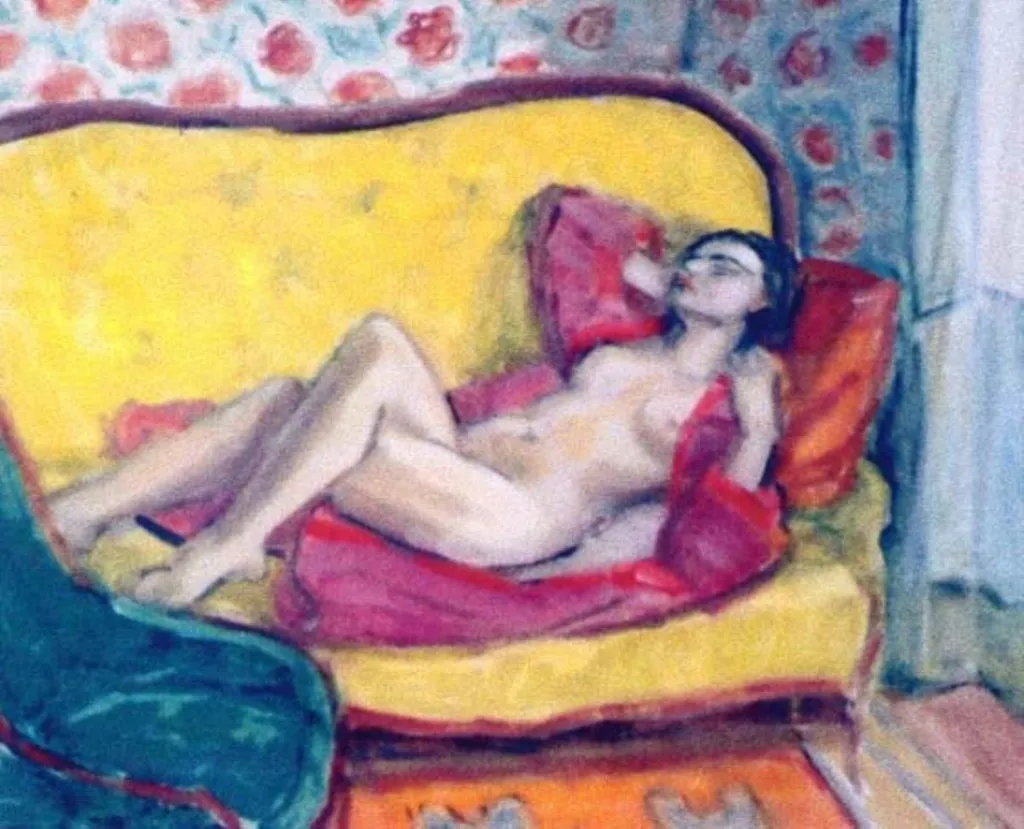
Nud pe canapea is an unspecified painting by Theodor Pallady. It dates from 1921 and is held in the collection of the Art Museum of Constanta.
About this work
Overview
Created around 1921, the work titled Nud pe canapea is attributed to Romanian painter Theodor Pallady. It is part of the collection of the Museum of Ethnography, where it is displayed as an example of early‑twentieth‑century figurative painting.
Subject & Meaning
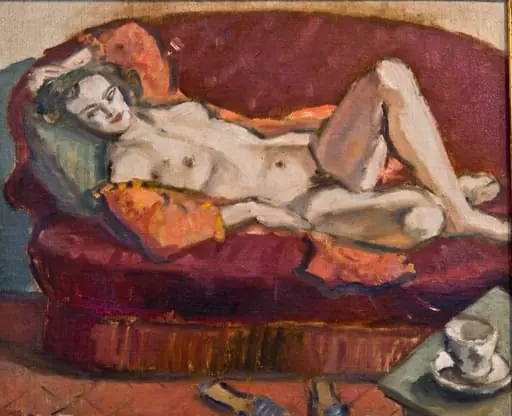
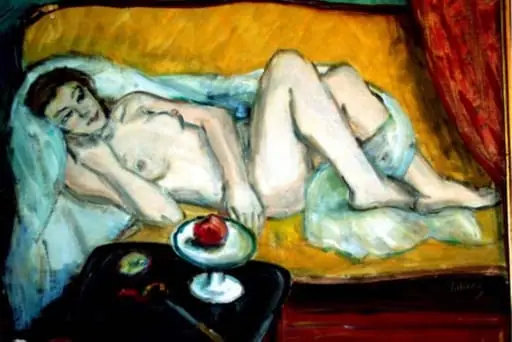
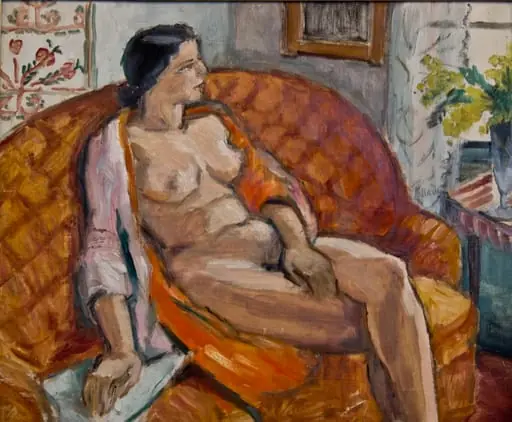
The composition shows a reclining figure on a vivid yellow sofa, half‑reclined with an arm supporting the head. The figure’s skin is rendered in a pale tone and is covered only by a red drape around the hips, suggesting a casual intimacy within an interior setting.
Technique & Style
Pallady employs a thick impasto application, allowing brushstrokes to remain visible and giving the surface a tactile quality. Bold, saturated hues—yellow, red, orange, and the floral wallpaper’s pink, green and blue—contrast sharply, emphasizing the three‑dimensionality of the couch and the figure.
History & Provenance
The painting entered the Museum of Ethnography’s holdings sometime after its creation, though precise acquisition details are not recorded in the available sources. Its presence in the museum links Pallady’s work to broader collections of Romanian visual culture.
Context
The early 1920s marked a period when Pallady explored modernist tendencies, integrating vivid color and textured paintwork while retaining a representational approach. The domestic interior, rendered with decorative wallpaper, reflects contemporary tastes and the artist’s interest in everyday scenes.
Artist & collection