Artwork
After the Bath III
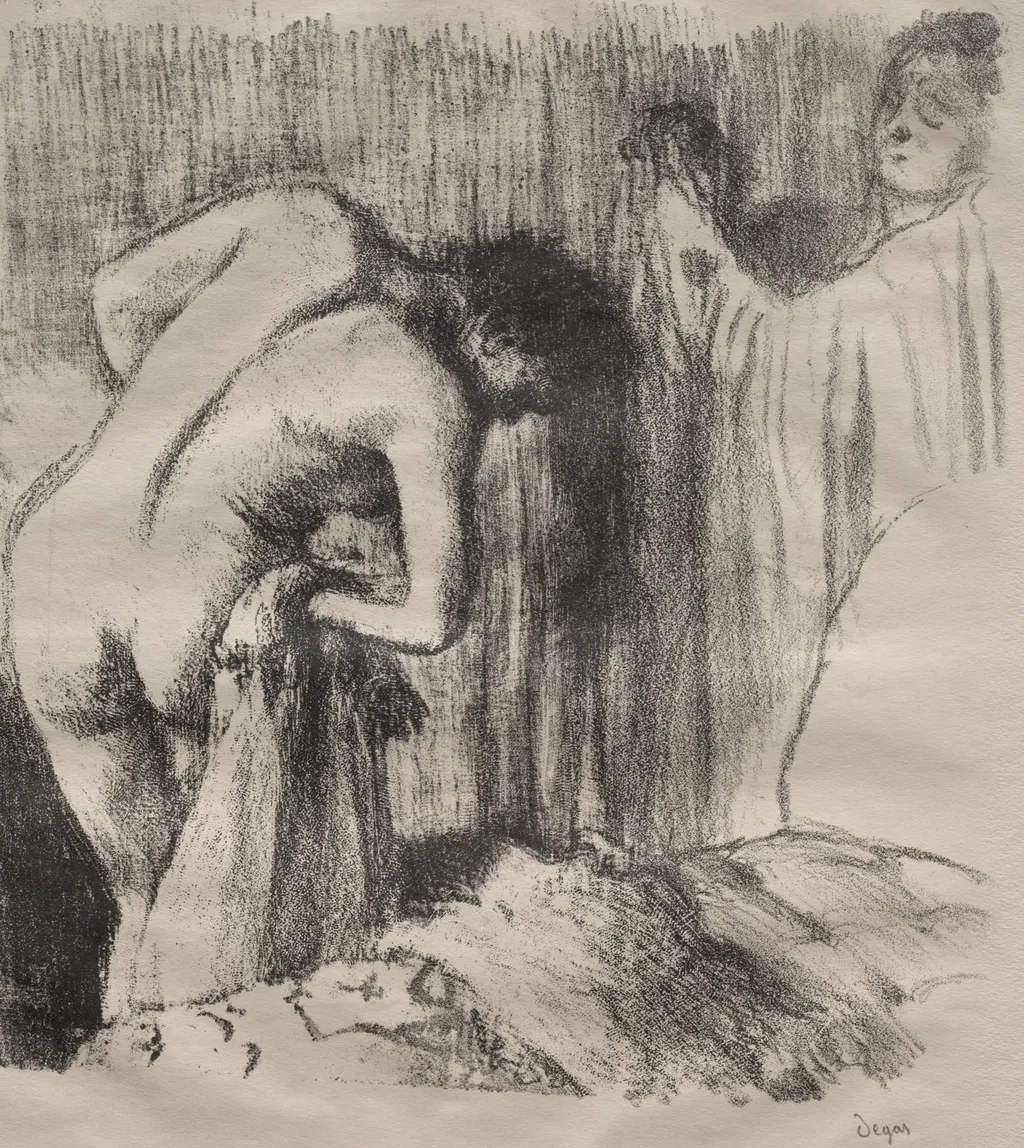
After the Bath III is a print by the Impressionist artist Edgar Degas. It dates from 1892 and is held in the collection of the Cleveland Museum of Art.
About this work
Overview
After the Bath III is a late 19th-century drypoint and aquatint by Edgar Degas, dated to 1892. It belongs to a series exploring private, unguarded moments of women at their toilette. The work is part of the permanent collection at The Cleveland Museum of Art, where it is displayed as an example of Degas’s interest in intimate, non-idealized domestic scenes rendered through printmaking.
Subject & Meaning
The print depicts two women in a modest interior, one standing and drying her hair, the other seated with her head bowed, wrapped in a towel.
The print depicts two women in a modest interior, one standing and drying her hair, the other seated with her head bowed, wrapped in a towel. Neither figure is posed for the viewer; their actions are private and unremarkable. Degas avoids theatricality, instead emphasizing quiet routine. The absence of narrative or ornament suggests an interest in the dignity of ordinary life, observed without judgment or embellishment.
Technique & Style
Degas employed drypoint and aquatint to achieve a range of soft grays and blurred contours. The lines are loose, almost sketchlike, with minimal detail and no sharp definition. Shadows dissolve into tone, and edges fade, creating a sense of immediacy. The technique mirrors the fleeting nature of the moment, prioritizing atmosphere over precision, and evoking the tactile presence of fabric and damp skin through texture rather than detail.
History & Provenance
Created in 1892, After the Bath III was produced during Degas’s most prolific period in printmaking. It was likely printed in a small edition, as was typical for his experimental works. The Cleveland Museum of Art acquired the print in the 20th century, and it has since been recognized as a significant example of his graphic output, reflecting his shift from oil painting to more intimate, tactile media.
Context
In the 1890s, Degas turned increasingly to printmaking as a means to explore form and movement outside the constraints of traditional painting. His bathers and dressing women were part of a broader interest in private female rituals, a theme also pursued by contemporaries like Mary Cassatt. Unlike academic nudes, Degas’s figures are unidealized, grounded in observation rather than myth or ideal beauty.
Legacy
After the Bath III exemplifies Degas’s influence on modern printmaking through its emphasis on spontaneity and psychological realism. Its informal composition and tactile surface inspired later artists to value the sketch-like quality in finished works. The print remains a touchstone for discussions on the representation of everyday life and the role of technique in conveying authenticity.
Artist & collection
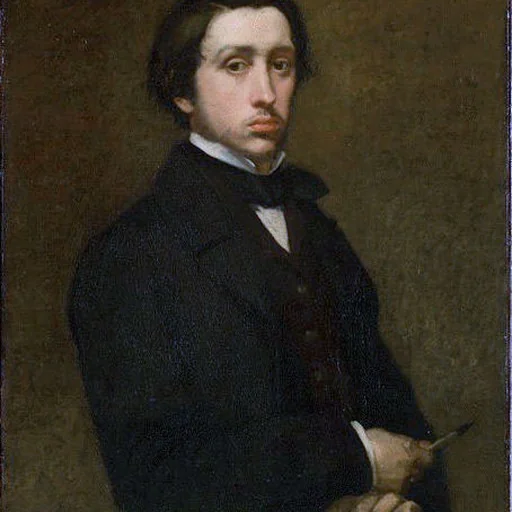
Artist
Born Hilaire-Germain-Edgar De Gas on 19 July 1834 in Paris, Edgar Degas came from an affluent banking family with aristocratic roots and spent his childhood among the cultivated circles of the French capital.

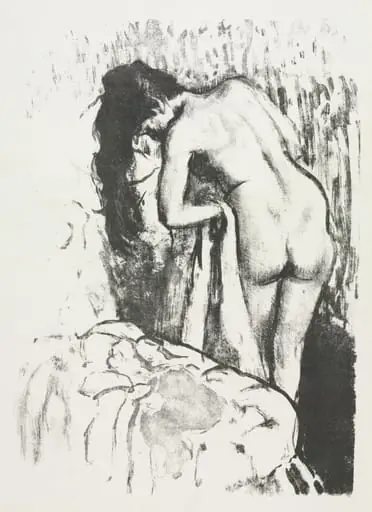 Nude Woman Standing, Drying Herself
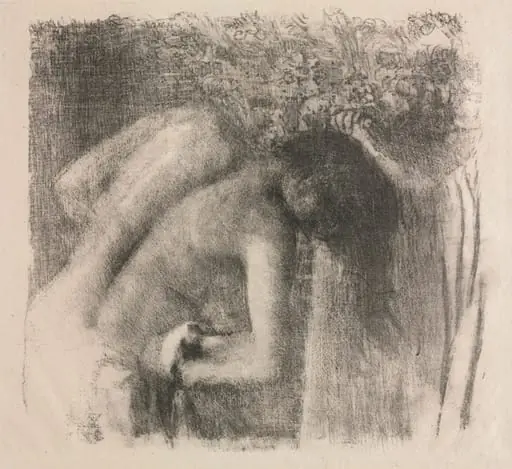 After the Bath (Large Version)
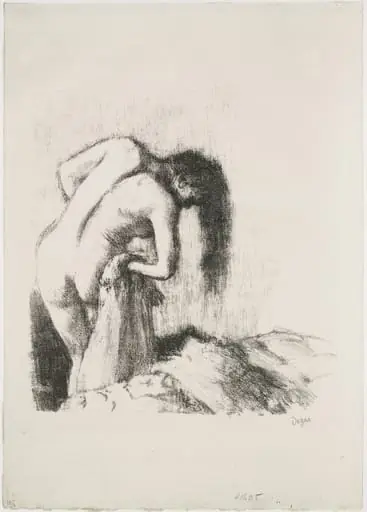 Untitled
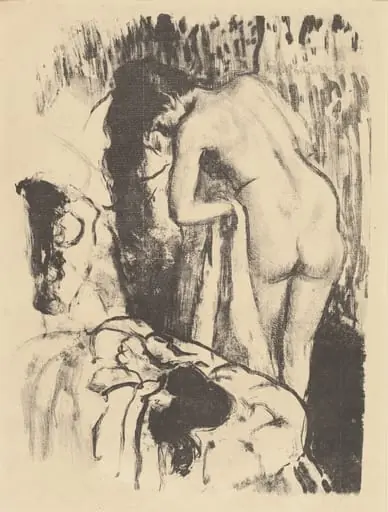 Nude Woman Standing, Drying Herself (Femme nue debout, a sa toilette)
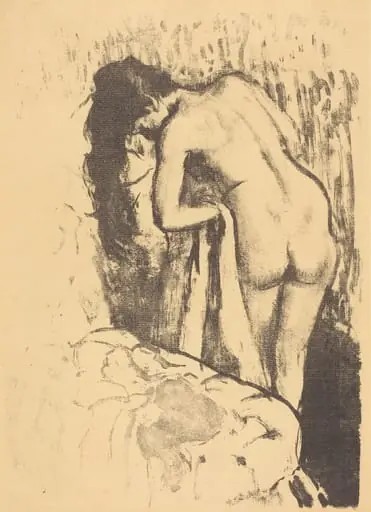 Nude Woman Standing, Drying Herself (Femme nue debout, a sa toilette)
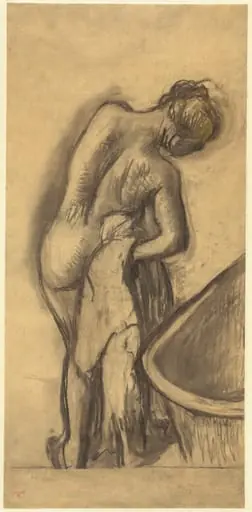 After the Bath: Woman Drying Herself
 Two Girls, first state
 The Old Rascal
 Sur le lit (On the Bed)