Artwork
Self-Portrait
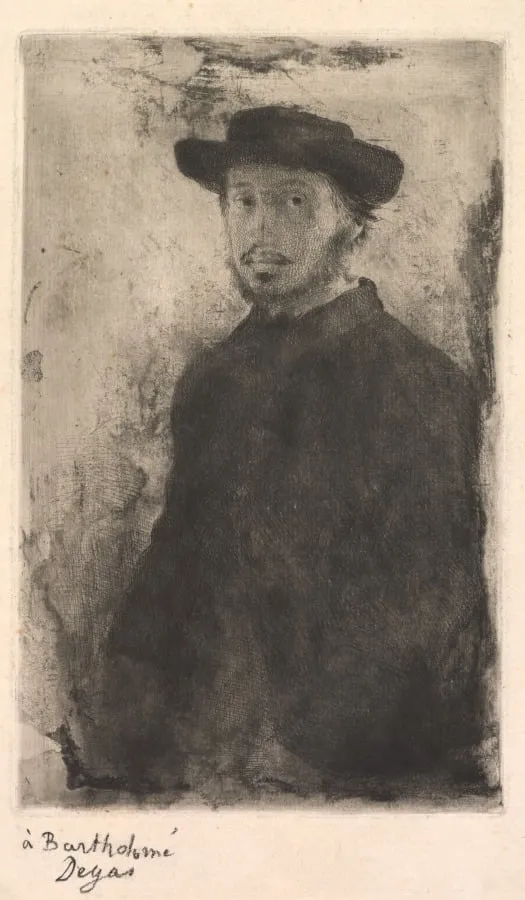
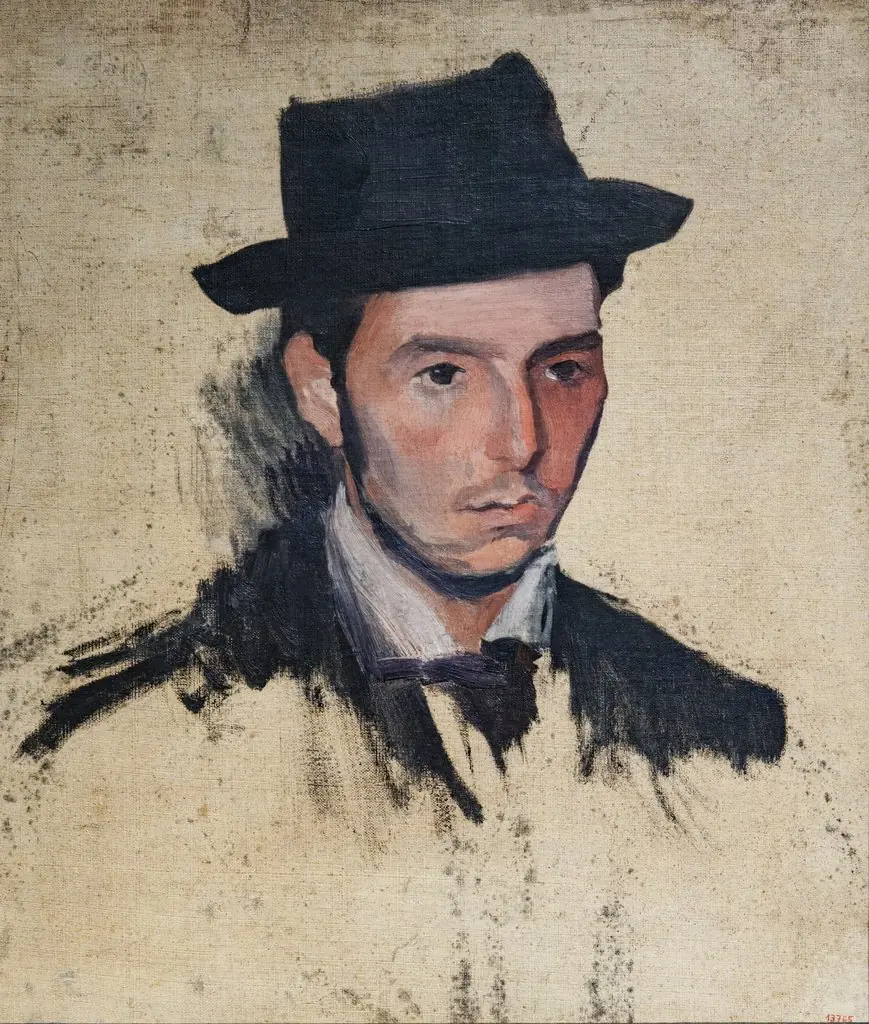
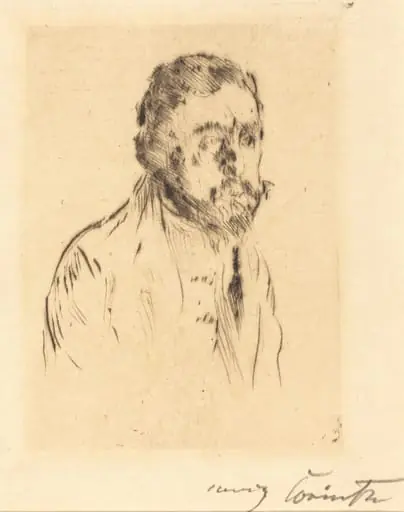
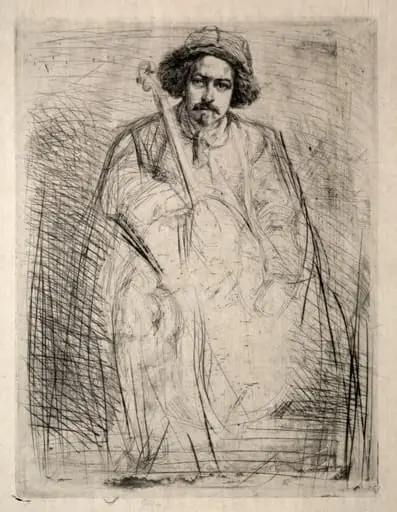
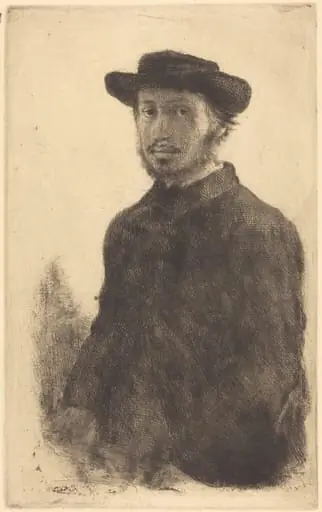
Self-Portrait is a print by the Impressionist artist Edgar Degas. It dates from 1857 and is held in the collection of the Cleveland Museum of Art.
About this work
Overview
Unlike his numerous drawn or painted self-studies, this etching stands as a singular achievement in printmaking.
Degas created only one printed self-portrait, produced in the early 1850s when he was twenty-three. Unlike his numerous drawn or painted self-studies, this etching stands as a singular achievement in printmaking. The image captures him with deliberate intensity, using layered etching and selective wiping to achieve a moody, atmospheric presence that distinguishes it from his other works of the period.
Subject & Meaning
The portrait presents Degas as a young man confronting the viewer with direct, unyielding gaze. His hat is pulled low and coat collar turned up, framing a face half-submerged in shadow. The sharp focus on his eyes suggests introspection and self-awareness, conveying not just likeness but psychological presence. The dedication to Bartholomé, a close artistic peer, implies a personal gesture tied to mutual artistic identity.
Technique & Style
Degas built the image through repeated biting of the copper plate, layering crosshatched lines to deepen shadows gradually. He selectively wiped the ink to soften edges and create a smoky, atmospheric tone around the figure. Fine etched lines define the hat brim, coat texture, and facial contours, while the background remains muted, enhancing the figure’s isolation and immediacy.
History & Provenance
This print was made during Degas’s formative years in Paris, before his association with Impressionism. It was dedicated to Paul Albert Bartholomé, a fellow artist and friend, suggesting its significance as a personal exchange rather than a public statement. Only a small number of impressions were pulled, and few survive, making it one of the rarest of his printed works.
Context
In the 1850s, Degas was experimenting with printmaking as a means to explore form and expression beyond academic painting. While many artists of the time used self-portraits to assert status, Degas’s approach was introspective and restrained. The work reflects his engagement with Old Master techniques, particularly the subtle tonal transitions seen in sfumato, adapted through the medium of etching.
Legacy
The print remains a unique document of Degas’s early artistic identity. Its psychological depth and technical refinement influenced later generations of printmakers interested in expressive portraiture. Though not widely exhibited in his lifetime, it now stands as a key example of how private self-examination could be rendered with public resonance through the print medium.
Artist & collection
Artist
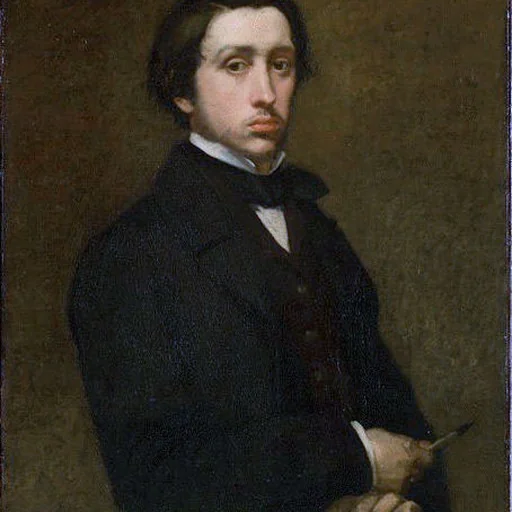
Born Hilaire-Germain-Edgar De Gas on 19 July 1834 in Paris, Edgar Degas came from an affluent banking family with aristocratic roots and spent his childhood among the cultivated circles of the French capital.