Artwork
Bildnisstudie H. St. (Portrait Study of H. St.)
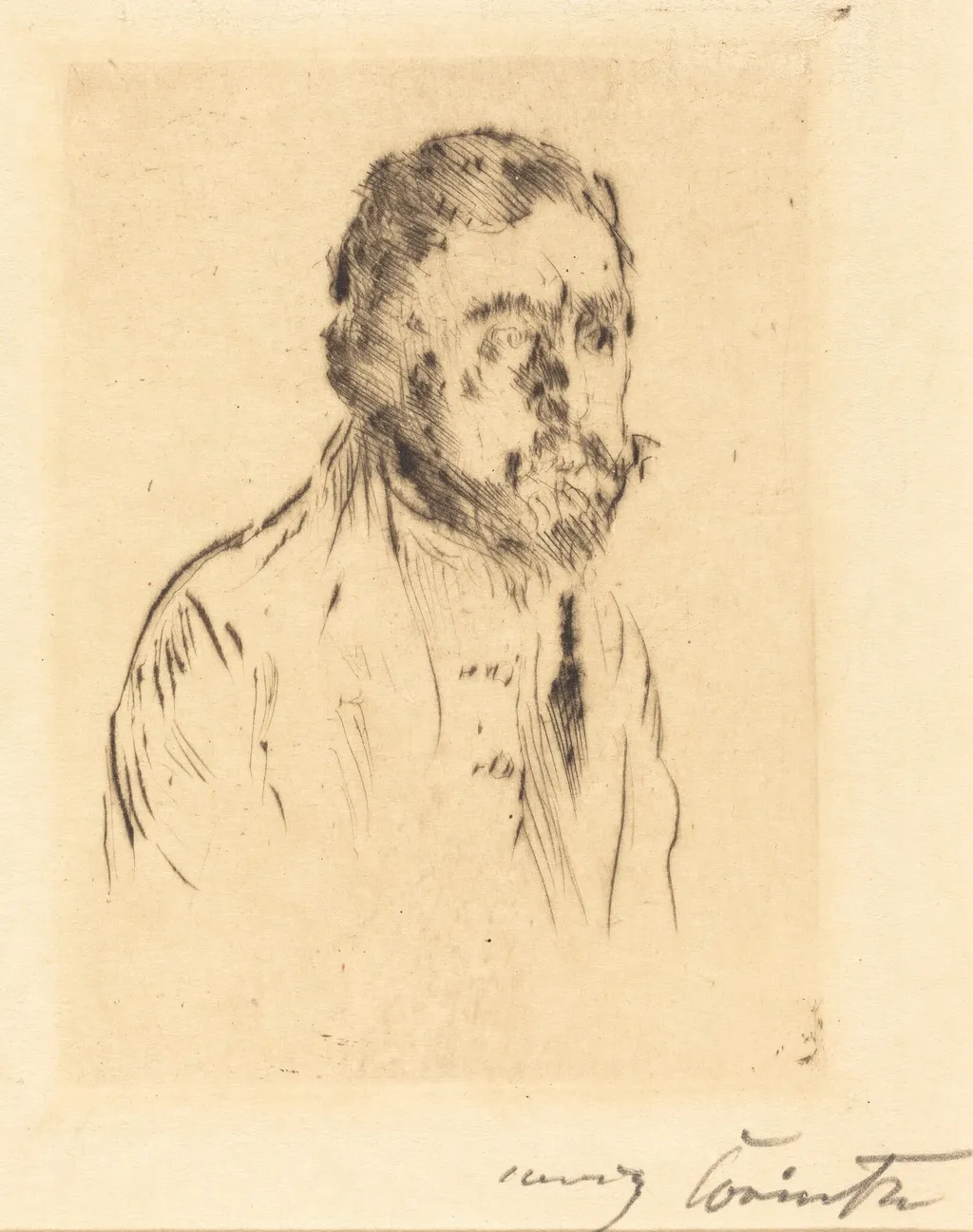
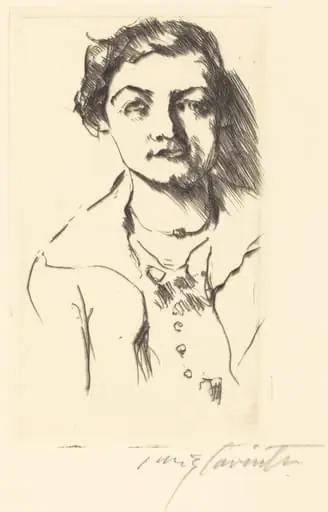
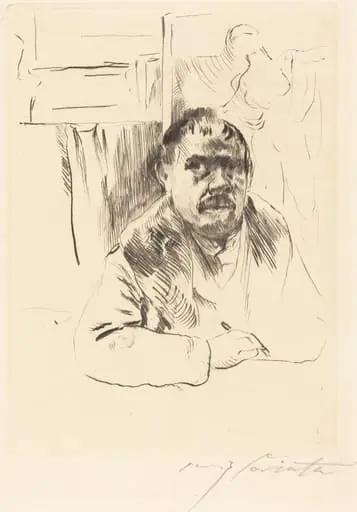
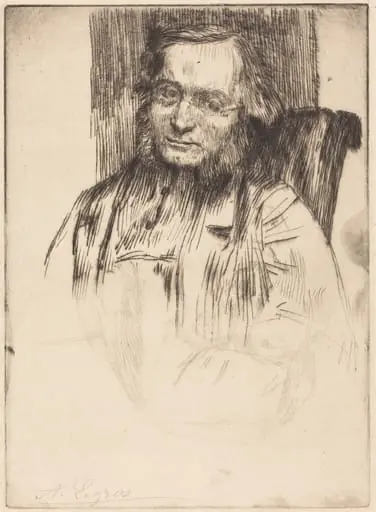
Bildnisstudie H. St. (Portrait Study of H. St.) is an ink print by Lovis Corinth. It dates from 1920 and is held in the collection of the National Gallery of Art. Created in 1920, *Bildnisstudie H.
About this work
Overview
It belongs to a phase in his career following a 1911 stroke, during which his artistic approach shifted toward greater emotional intensity and formal freedom.
Created in 1920, *Bildnisstudie H. St.* is a drypoint print by Lovis Corinth on wove paper. It belongs to a phase in his career following a 1911 stroke, during which his artistic approach shifted toward greater emotional intensity and formal freedom. Though primarily known as a painter, Corinth increasingly turned to printmaking in this period, using the directness of drypoint to explore portraiture with renewed urgency.
Subject & Meaning
The portrait depicts a man, H. St., turned slightly to the right, his gaze directed inward. The composition centers on the face, rendered with minimal detail but strong emotional presence. The absence of context or background isolates the figure, emphasizing psychological depth over physical likeness. The quiet intensity suggests introspection, aligning with Corinth’s broader interest in inner states during his later years.
Technique & Style
Corinth employed drypoint to create dense, scratchy lines that build form through texture rather than outline. The black ink sinks into the paper’s fibers, producing rich, velvety shadows that define the contours of the face and neck. The technique’s immediacy suits his looser, more expressive style post-stroke, where spontaneity replaced the precision of his earlier naturalism.
History & Provenance
The work emerged during a time when Corinth was actively producing prints alongside paintings, often revisiting familiar subjects with new technical approaches. While specific ownership history is not widely documented, the piece is recognized as part of his late print oeuvre, held in institutional collections alongside other drypoints from the 1910s and 1920s.
Context
In the aftermath of World War I and his own physical decline, Corinth’s art became more personal and less concerned with external narratives. His portraits from this period reflect a broader trend among German artists who turned inward, using expressive means to convey vulnerability and resilience. Drypoint, with its raw, unpolished quality, suited this shift toward emotional authenticity.
Legacy
Corinth’s late prints, including this study, are regarded as pivotal in the evolution of modern German printmaking. They demonstrate how traditional techniques could be adapted to express psychological complexity. Though less celebrated than his paintings, these works reveal a sustained engagement with the human condition, influencing later generations of figurative artists.
Artist & collection

Artist
Lovis Corinth was a German artist and writer whose mature work as a painter and printmaker realized a synthesis of impressionism and expressionism.