Artwork
Landscape with Smokestacks
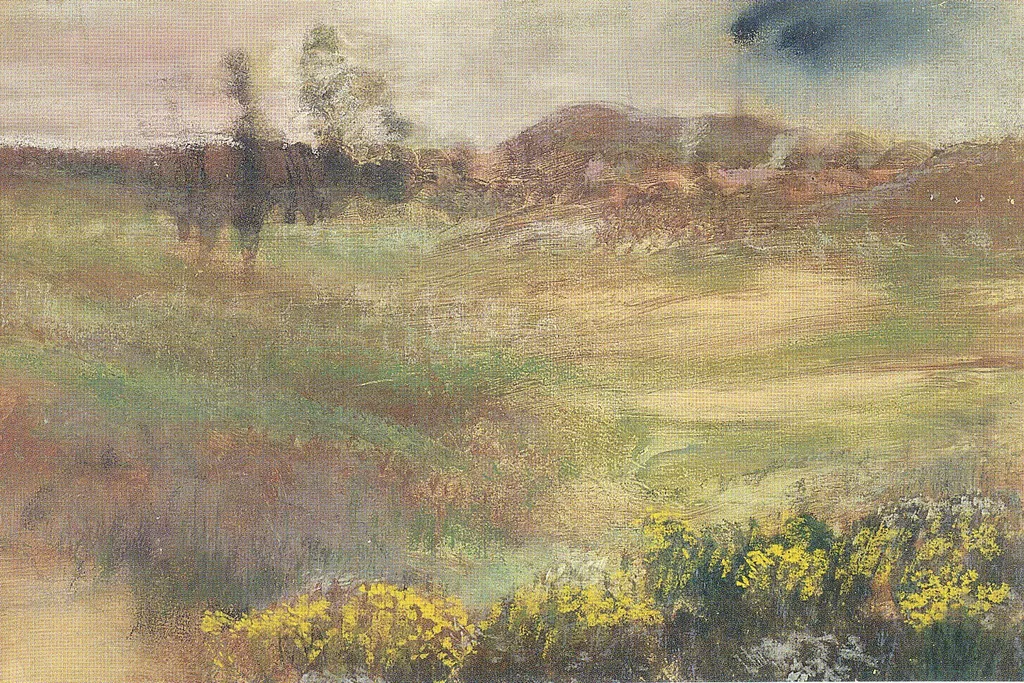
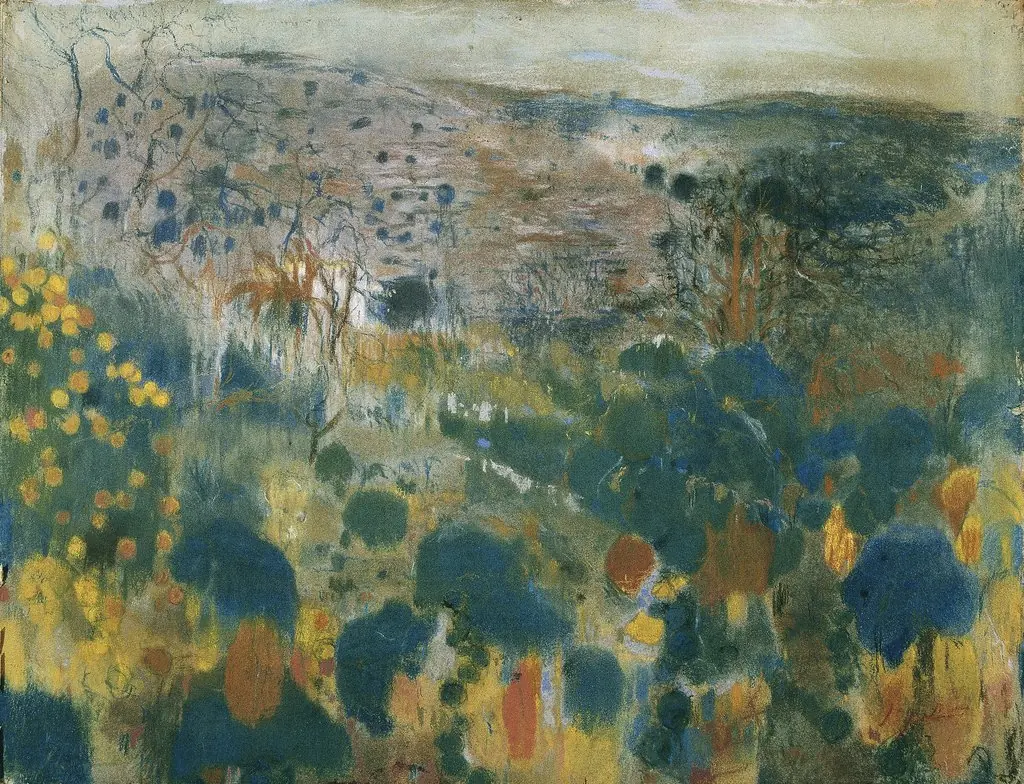
Landscape with Smokestacks is an unspecified painting by the Impressionist artist Edgar Degas. It dates from 1896 and is held in the collection of the Art Institute of Chicago.
About this work
Overview
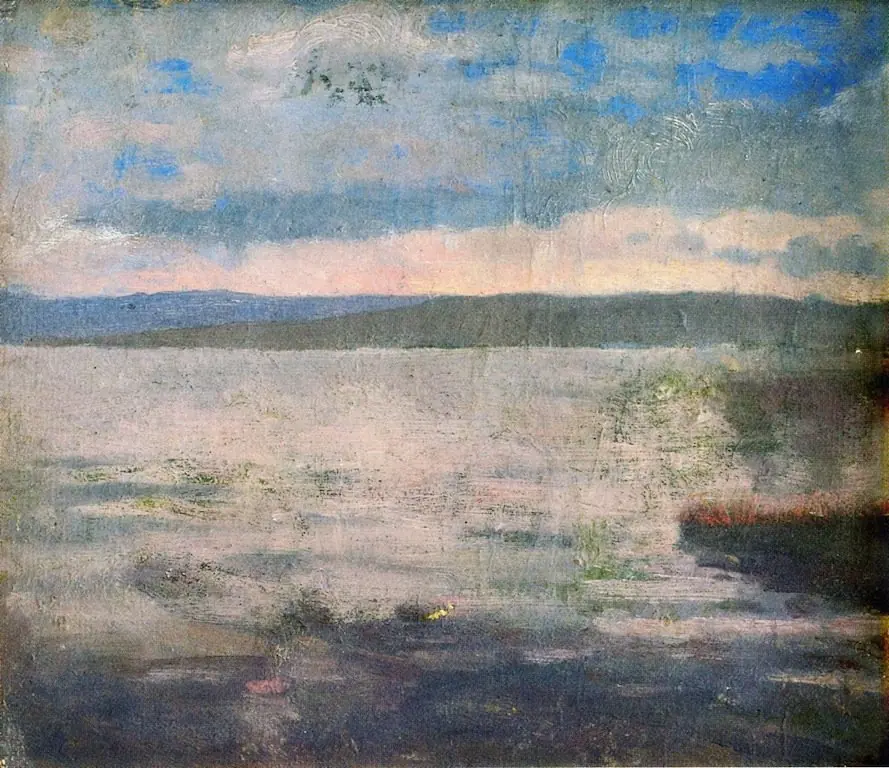
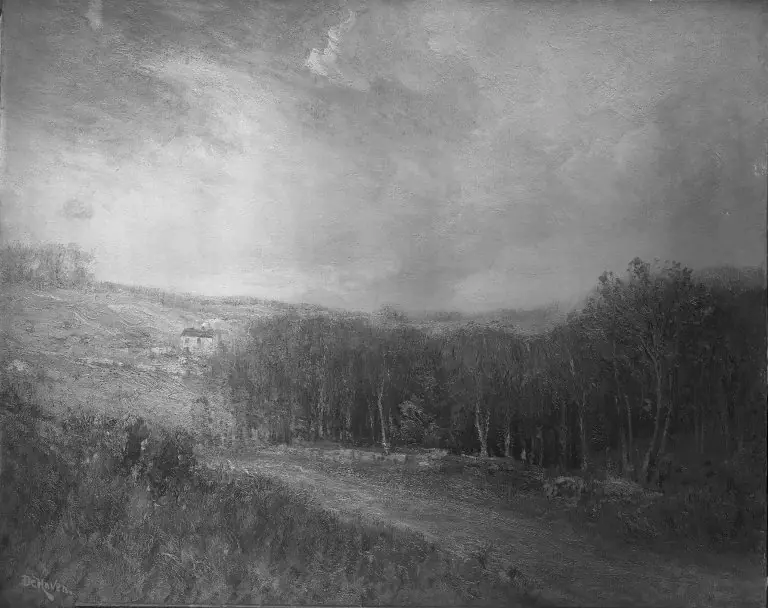
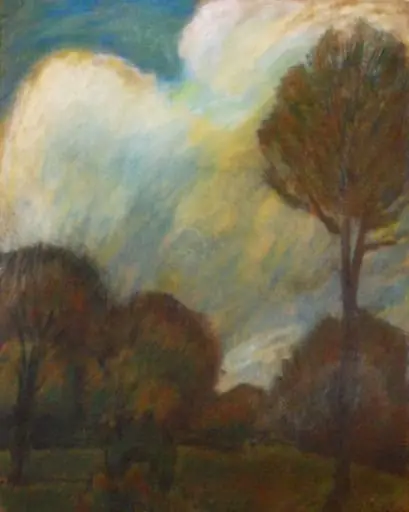
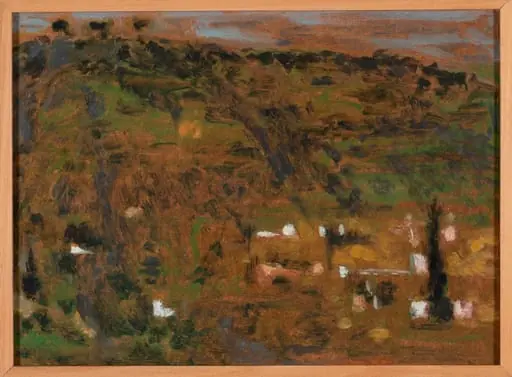
Painted in 1896, Landscape with Smokestacks is a landscape work by Edgar Degas that captures an industrializing countryside.
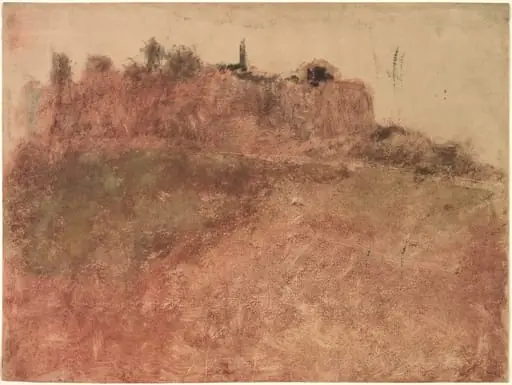
Painted in 1896, Landscape with Smokestacks is a landscape work by Edgar Degas that captures an industrializing countryside. It depicts distant smokestacks rising above a hazy horizon, framed by fields and scattered trees in the foreground. The composition avoids dramatic focal points, instead favoring a quiet, observational tone. The painting is part of the permanent collection at the Art Institute of Chicago.
Subject & Meaning
The painting presents a subtle tension between nature and industry. Smokestacks, though distant, dominate the skyline with their dark plumes, suggesting the encroachment of industrial activity on rural land. The muted tones and diffuse atmosphere convey a sense of quiet transformation rather than overt disruption. Degas does not romanticize or condemn the scene, but observes it with detached neutrality.
Technique & Style
Degas employs loose, visible brushwork to build texture across the canvas, characteristic of his late style. The palette is restrained—dominated by earthy browns, muted greens, and ashen grays—enhancing the hazy, atmospheric quality of the sky and smoke. Unlike his figure studies, this work emphasizes landscape and light, with forms softened by layered strokes that suggest movement and diffusion rather than sharp definition.
History & Provenance
Created during Degas’s later years, the painting reflects his increasing interest in rural and industrial scenes beyond his usual urban subjects. It entered the Art Institute of Chicago’s collection in 1922 through the Clara Barth Leonard bequest. Its provenance is well-documented, with no significant gaps in ownership since its completion, and it has been exhibited periodically in exhibitions focused on Degas’s landscape works.
Context
In the 1890s, France’s industrial expansion transformed its countryside, a shift Degas observed but rarely dramatized. While contemporaries like Monet painted factories as aesthetic curiosities, Degas treated them as unremarkable elements within a broader environmental shift. This work aligns with his late-period tendency to explore peripheral subjects with psychological subtlety, avoiding overt commentary while preserving visual truth.
Legacy
Landscape with Smokestacks stands as a quiet testament to Degas’s evolving vision in his final decades. It demonstrates his capacity to find artistic resonance in overlooked or mundane subjects, extending Impressionist concerns beyond light and figure into the textures of modern change. Though less celebrated than his ballet or horse paintings, it remains a significant example of his late landscape practice.
Artist & collection

Artist
Born Hilaire-Germain-Edgar De Gas on 19 July 1834 in Paris, Edgar Degas came from an affluent banking family with aristocratic roots and spent his childhood among the cultivated circles of the French capital.