Artwork
Estérel Village
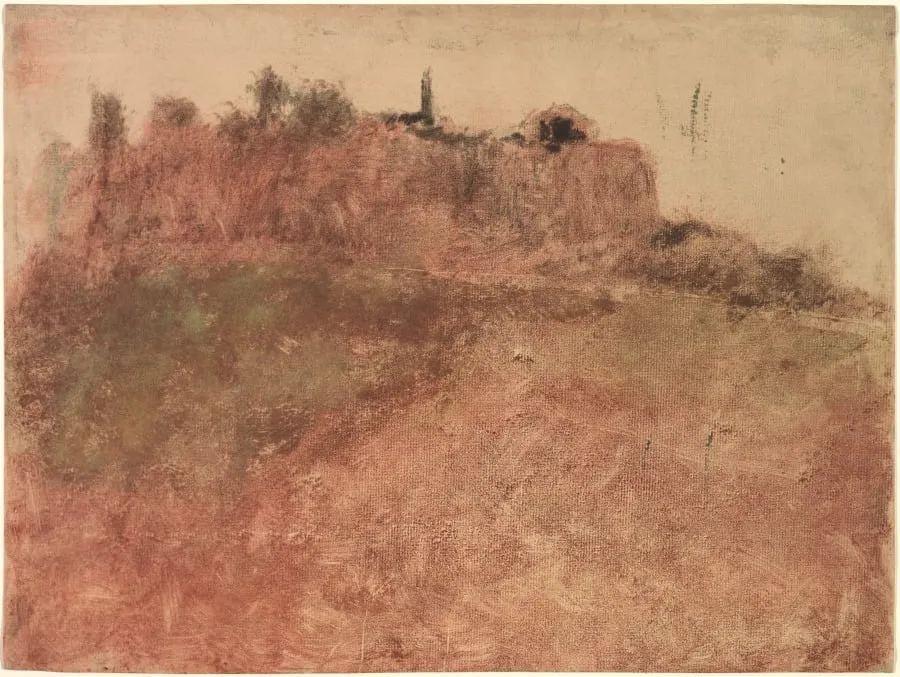
Estérel Village is a print by the Impressionist artist Edgar Degas. It dates from 1890 and is held in the collection of the Cleveland Museum of Art.
About this work
It’s one of Degas’s many monotypes—prints made by painting on a smooth surface, then pressing paper on top.
This painting shows a hazy French village with soft, layered colors. It’s one of Degas’s many monotypes—prints made by painting on a smooth surface, then pressing paper on top. The blurry edges mimic how things look from a moving carriage or train.
He built up texture to suggest weather and terrain, almost like abstract art. The scene feels quiet, but full of small details if you look close.
Want more like this? Check out Edgar Degas (French, 1834–1917).
Overview
This monotype by Edgar Degas depicts a quiet village in the Estérel region of southern France. Created during a visit to a friend’s countryside home, it belongs to a group of prints Degas made while traveling through rural areas. The work exemplifies his experimental approach to printmaking, using layered pigments and pressure to capture fleeting visual impressions rather than precise detail.
Subject & Meaning
The scene presents a hazy aggregation of buildings and landscape forms, rendered without sharp outlines. Rather than documenting a specific location, Degas conveys the sensation of observing the countryside from a moving vehicle. The ambiguity of form suggests memory or transient perception, emphasizing atmosphere over topographical accuracy.
Technique & Style
Degas employed the monotype process, applying ink and pigment to a smooth plate before pressing paper onto it. He built up textures through multiple impressions and manual manipulation, creating soft edges and blended tones. The resulting surface approximates the blur of motion and atmospheric conditions, pushing the image toward abstraction while retaining recognizable elements of the landscape.
History & Provenance
The print was made during Degas’s travels in the late 1870s or early 1880s, a period when he increasingly turned to printmaking as a means of exploration. Unlike his more famous ballet and horse subjects, these monotypes were private experiments, often shared only with close associates. Its origin remains tied to his time in the Var region, though exact documentation of its early ownership is limited.
Context
Degas’s monotypes from this period reflect broader artistic interests in perception and transience, paralleling developments in photography and Impressionist painting. While his contemporaries painted en plein air, Degas captured landscape through the filtered lens of motion and memory. These works reveal his fascination with how sight is shaped by movement and environment.
Legacy
Though less widely exhibited than his figurative works, these monotypes influenced later artists interested in process-driven abstraction and the expressive potential of print media. Degas’s willingness to abandon clarity in favor of sensory suggestion expanded the boundaries of what a print could convey, leaving a quiet but enduring mark on modern graphic art.
Artist & collection
Artist
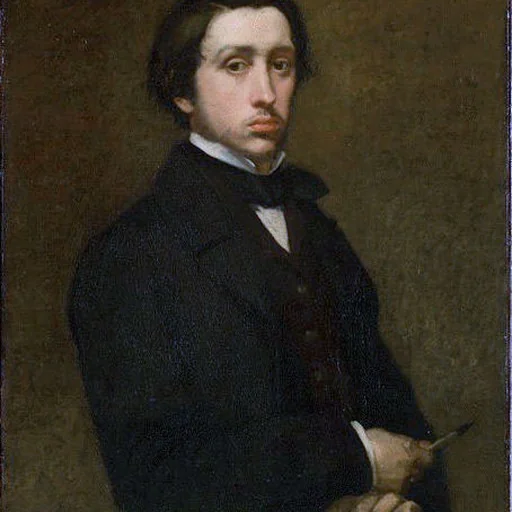
Born Hilaire-Germain-Edgar De Gas on 19 July 1834 in Paris, Edgar Degas came from an affluent banking family with aristocratic roots and spent his childhood among the cultivated circles of the French capital.

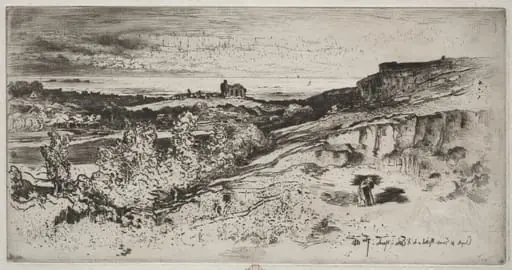 The Chapel Saint-Michel at l'Estre
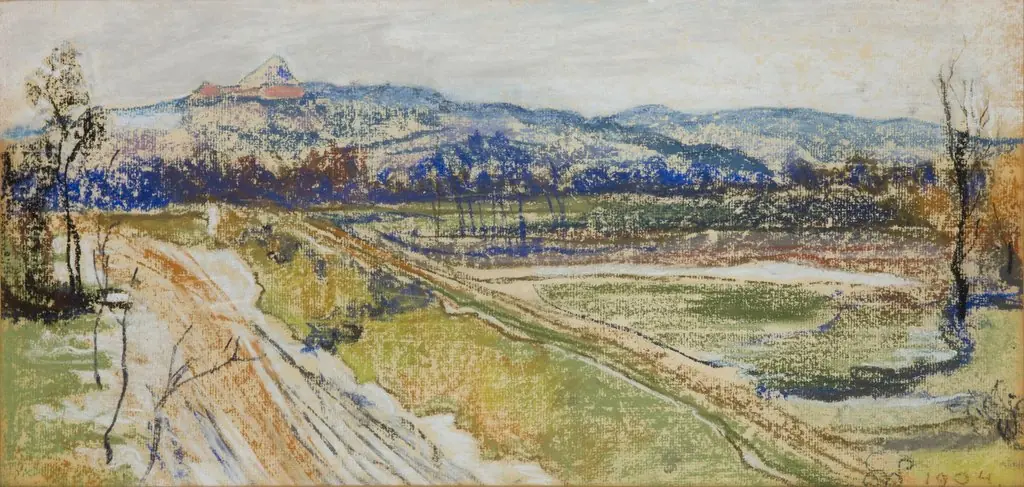 View of the Kościuszko Mound in Krakow from the Window in the Artist's Studio
 Autumn Landscape
 Spring at Cardross
 Cottage on a Hillside (Chaumiere sur le coteau)
 Fisherman's thatched cottage
 Stacks
 Untitled
 Autumn Avondale
 Outdoor study
 Outdoor study
 Bordighera. From the journey to Italy