Artwork
Mary Cassatt at the Louvre: The Etruscan Gallery
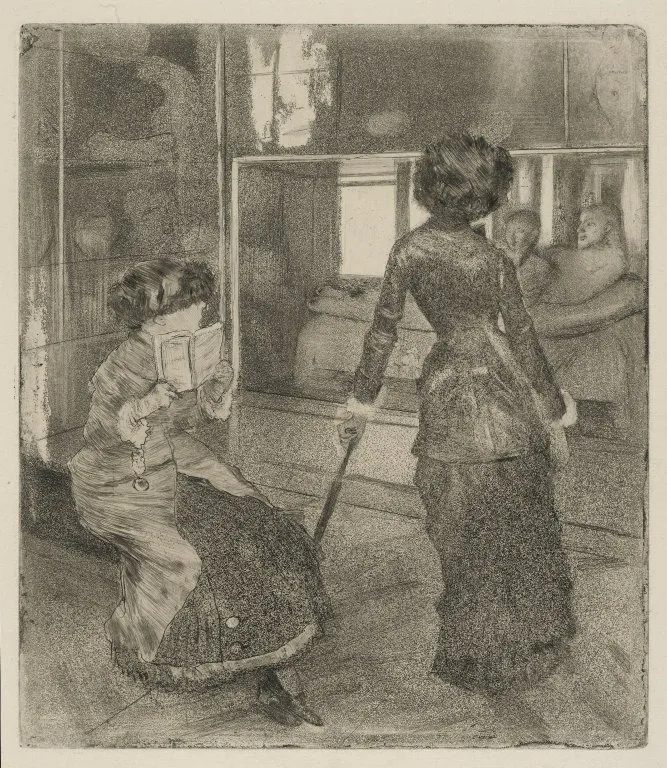
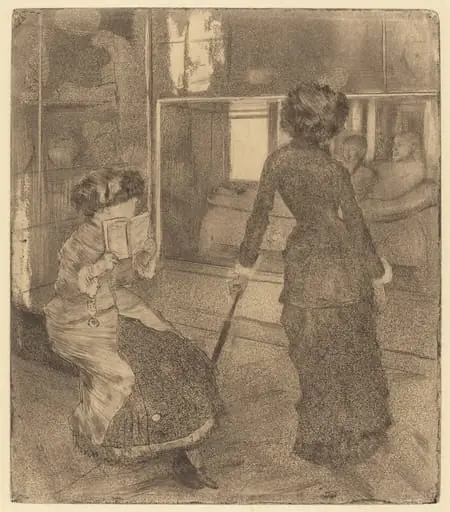
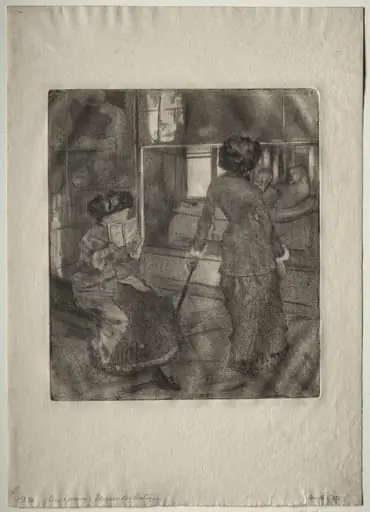
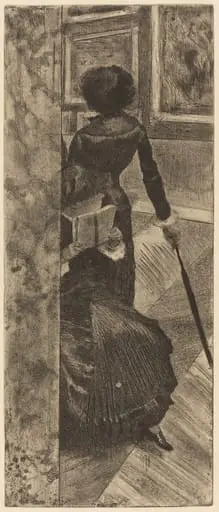
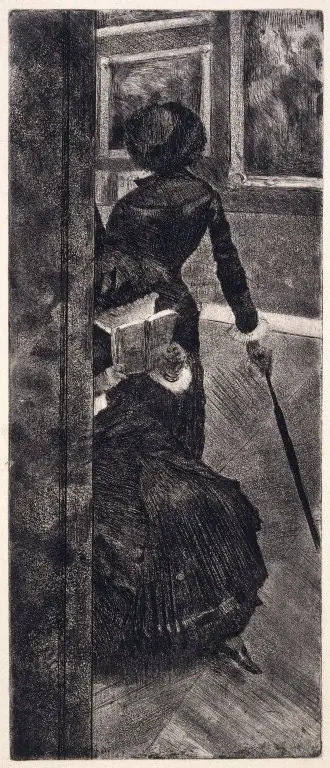
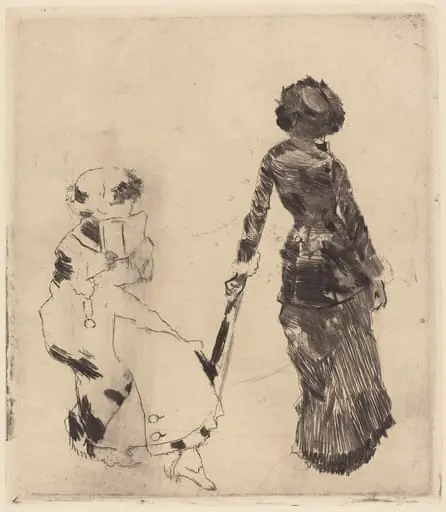
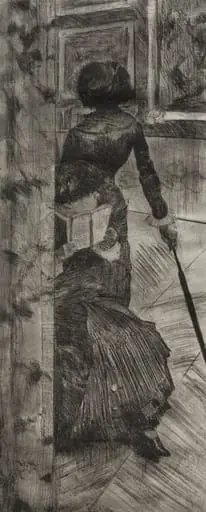
Mary Cassatt at the Louvre: The Etruscan Gallery is an unspecified painting by the Impressionist artist Edgar Degas. It dates from 1874 and is held in the collection of the Brooklyn Museum.
About this work
Overview
Mary Cassatt at the Louvre: The Etruscan Gallery, painted by Edgar Degas in 1874, is a depiction of two women observing ancient sculptures in a gallery setting, now part of the Brooklyn Museum's collection.
Subject & Meaning
The painting captures a moment of contemplation as two women, distinct in their attire—a lady in a long coat and hat and another in a dark dress—immerse themselves in the study of Etruscan artifacts, conveying a sense of serene engagement with the past.
Technique & Style
Degas employs chiaroscuro to achieve depth and volume, guiding the viewer's eye into the scene. The dimly lit room, illuminated softly by background windows, enhances the contemplative atmosphere.
History & Provenance
Created in 1874, the work is attributed to Edgar Degas. It is currently housed at the Brooklyn Museum, though the full provenance history prior to its acquisition is not detailed here.
Context
This piece reflects Degas' interest in modern life and his unique approach to capturing everyday moments, set against the backdrop of historical art, highlighting the intersection of contemporary observation with ancient cultural heritage.
Legacy
While specific influences or direct artistic lineage are not highlighted in available information, the work contributes to Degas' broader oeuvre exploring modernity and the human experience, potentially inspiring later artists in their depiction of quiet, introspective scenes.
Artist & collection
Artist
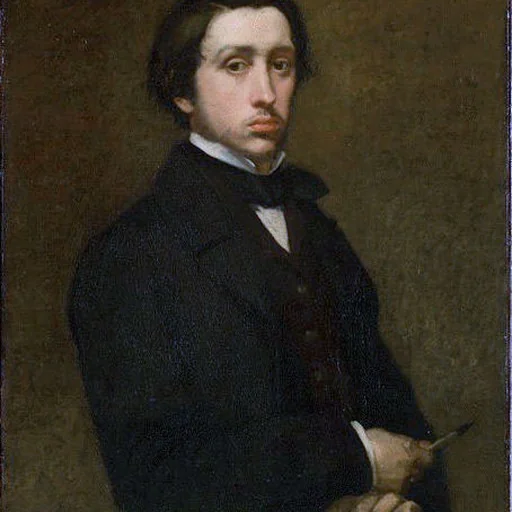
Born Hilaire-Germain-Edgar De Gas on 19 July 1834 in Paris, Edgar Degas came from an affluent banking family with aristocratic roots and spent his childhood among the cultivated circles of the French capital.