Artwork
Two Men
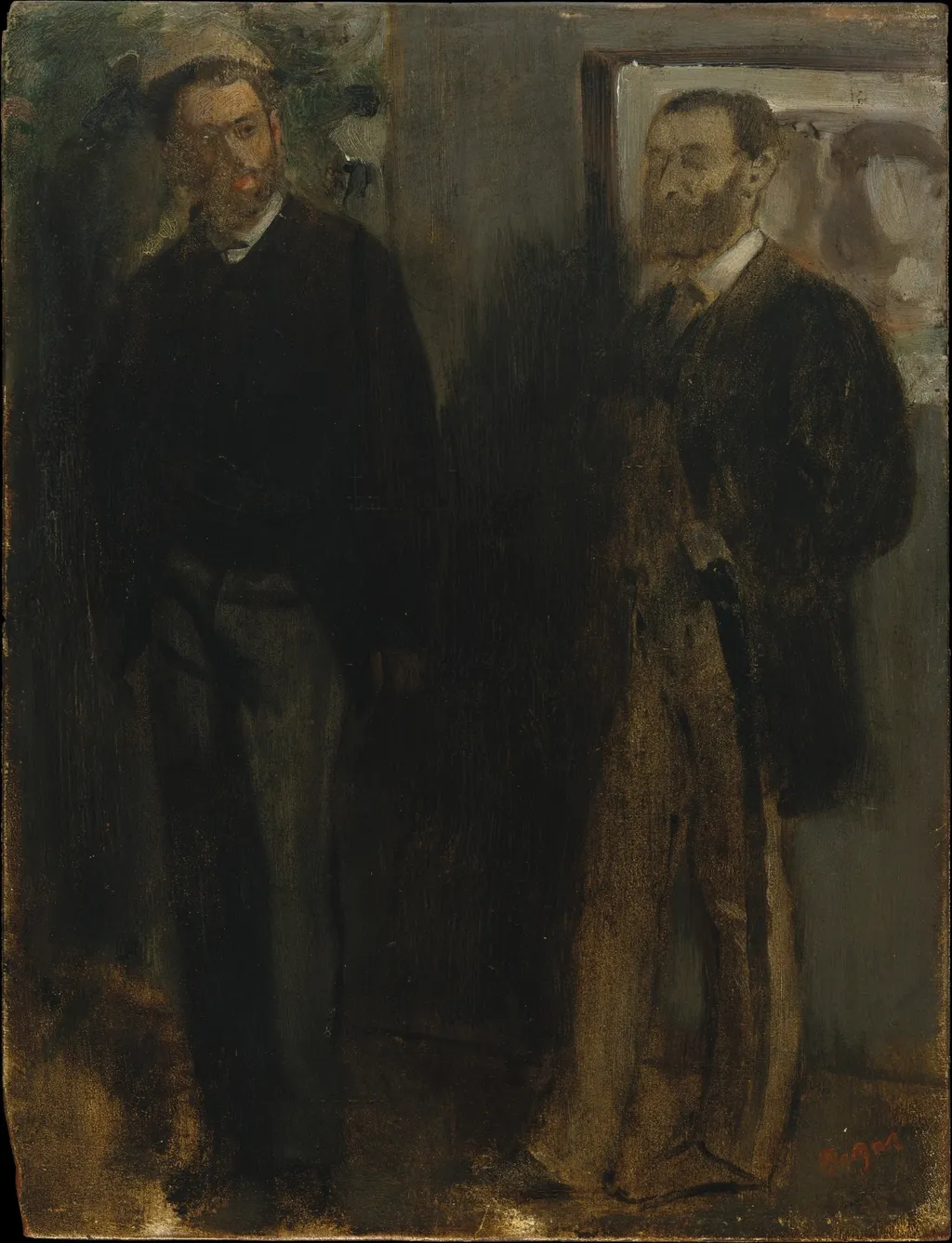
Two Men is an oil painting by Edgar Degas. It dates from 1865 and is held in the collection of the Metropolitan Museum of Art.
About this work
Overview
The painting demonstrates Degas's interest in capturing the psychological presence of his subjects through posture and gaze rather than elaborate setting.
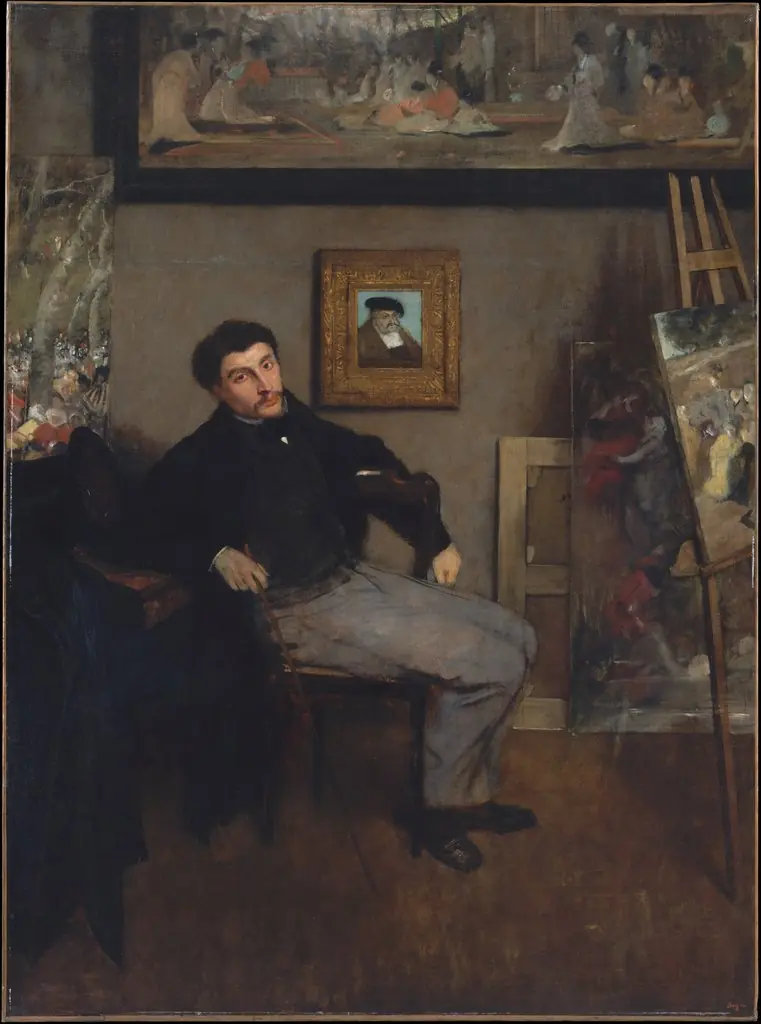
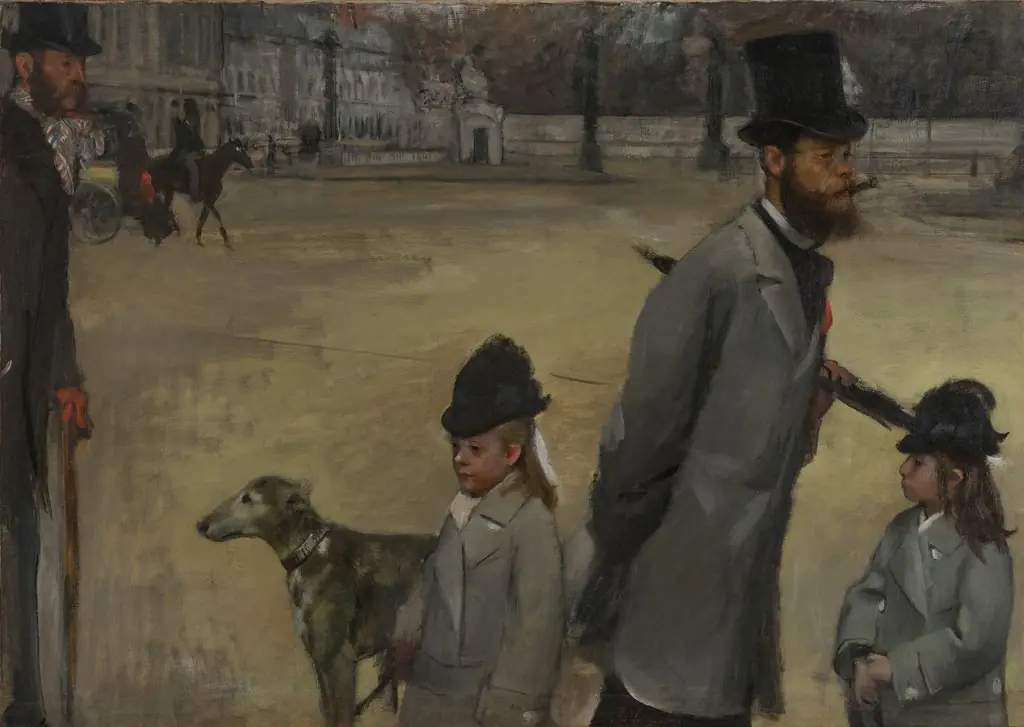
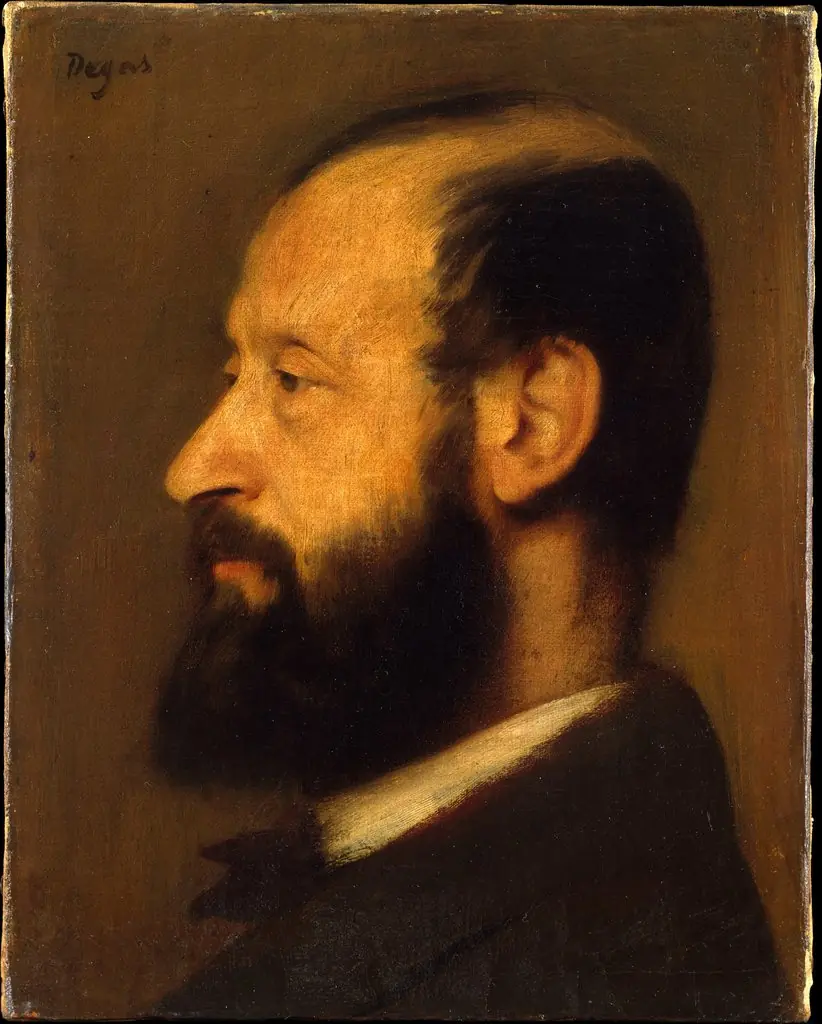
Edgar Degas's Two Men, executed in 1865, is an oil painting that captures two figures in a dimly lit interior. The composition features a full-length portrait of two men standing against a dark, indistinct background that emphasizes their silhouettes. The figure on the left, dressed in a black coat, turns his head to the right, while the man on the right, clad in a dark suit, faces forward. Degas employs a restrained palette dominated by blacks and deep browns, utilizing loose brushwork to define the forms without excessive detail. Created during the artist's early career, shortly after his return from Italy, the work reflects his ongoing engagement with portraiture and figure studies before his full immersion in scenes of modern Parisian life. The painting demonstrates Degas's interest in capturing the psychological presence of his subjects through posture and gaze rather than elaborate setting. It stands as a significant example of his mid-1860s exploration of the human figure, bridging his academic training with the emerging modernist sensibility that would later define his reputation.
Subject & Meaning
The composition shows one man in a black coat turning his gaze toward the other, who is dressed in a dark suit and looks straight ahead. Their solemn expressions and the muted palette convey a restrained, contemplative atmosphere, suggesting a moment of private interaction or shared contemplation.
Technique & Style
Degas employs a realistic approach, emphasizing precise rendering of fabric folds, facial features, and the subtle play of light on the figures. The darkened background recedes, allowing the clothing and posture of the men to dominate the visual field, while the limited tonal range reinforces the work’s subdued mood.
History & Provenance
Painted early in Degas’s career, the piece reflects his interest in everyday subjects beyond his later focus on ballet and urban life. It entered the Metropolitan Museum of Art’s holdings in the 20th century, where it remains on display as part of the museum’s European paintings collection.
Artist & collection
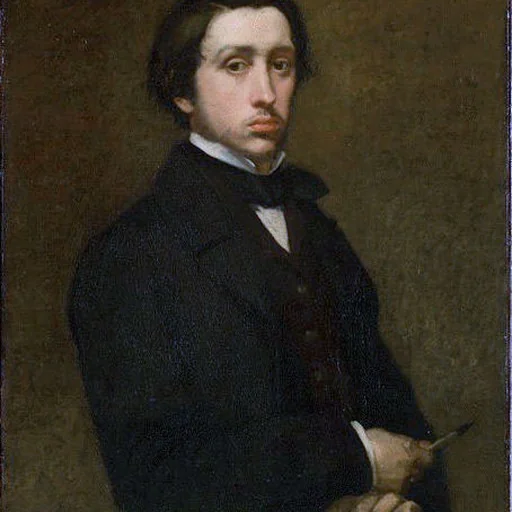
Artist
Born Hilaire-Germain-Edgar De Gas on 19 July 1834 in Paris, Edgar Degas came from an affluent banking family with aristocratic roots and spent his childhood among the cultivated circles of the French capital.