Artwork
Woman Drying Her Arm
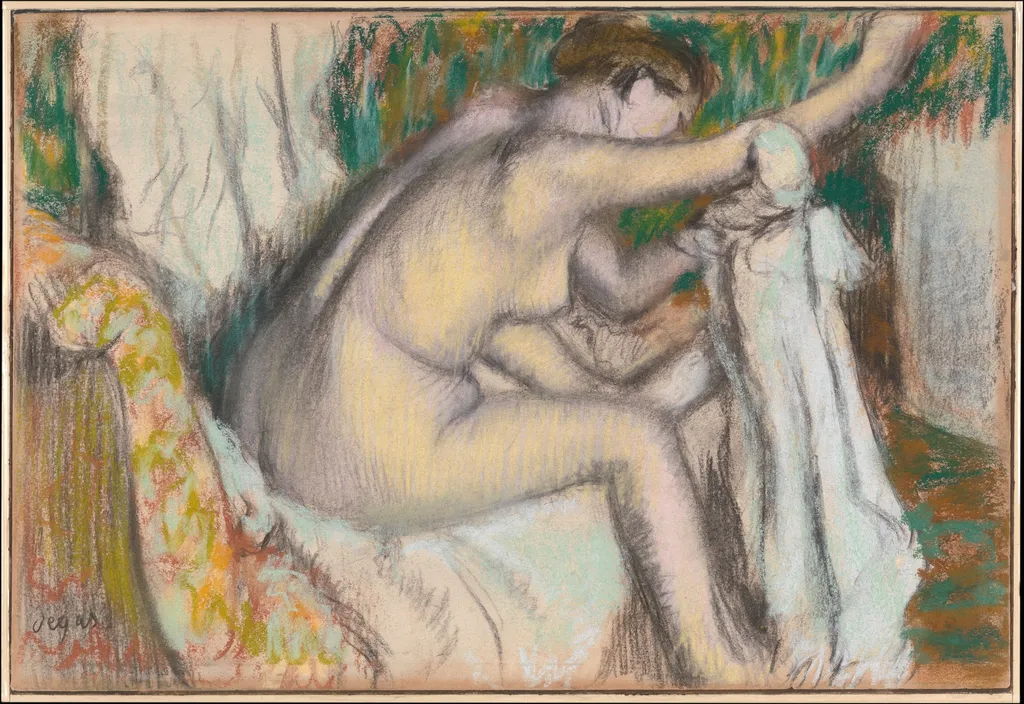
Woman Drying Her Arm is an unspecified painting by the Impressionist artist Edgar Degas. It dates from 1896 and is held in the collection of the Metropolitan Museum of Art.
About this work
Overview
Created in 1896, this oil painting by Edgar Degas portrays a solitary woman in the act of drying her arm after a bath. The work is part of the collection at the Metropolitan Museum of Art in New York, where it is displayed among the museum’s holdings of late‑19th‑century French art.
Subject & Meaning
The composition captures an intimate, everyday gesture: the figure lifts her right arm while her left elbow rests bent, suggesting a moment of private self‑care. Her face is turned away from the viewer, and her hair is neatly pulled back, emphasizing the focus on the body’s relaxed posture rather than personal identity.
Technique & Style
Degas employs a muted palette of greens and browns for the background, allowing the soft, warm flesh tones of the model to stand out. The brushwork is delicate, rendering the skin with gentle transitions that convey a sense of tactile warmth, while the surrounding tones create a subdued, contemplative atmosphere.
History & Provenance
The painting entered the Metropolitan Museum of Art’s collection in the early 20th century, having passed through several private hands after Degas’s death. Its acquisition reflects the museum’s effort to represent the breadth of Degas’s oeuvre, including his lesser‑known studies of private domestic scenes.
Context
During the 1890s Degas increasingly explored private, informal moments, moving beyond his famous ballet and racecourse subjects. This work exemplifies his interest in the candid observation of daily life, aligning with the broader Impressionist aim to capture fleeting, unposed experiences.
Artist & collection
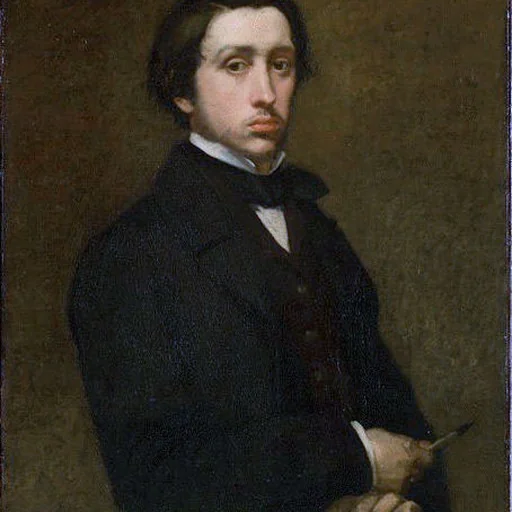
Artist
Born Hilaire-Germain-Edgar De Gas on 19 July 1834 in Paris, Edgar Degas came from an affluent banking family with aristocratic roots and spent his childhood among the cultivated circles of the French capital.