Artwork
A Windy Moor
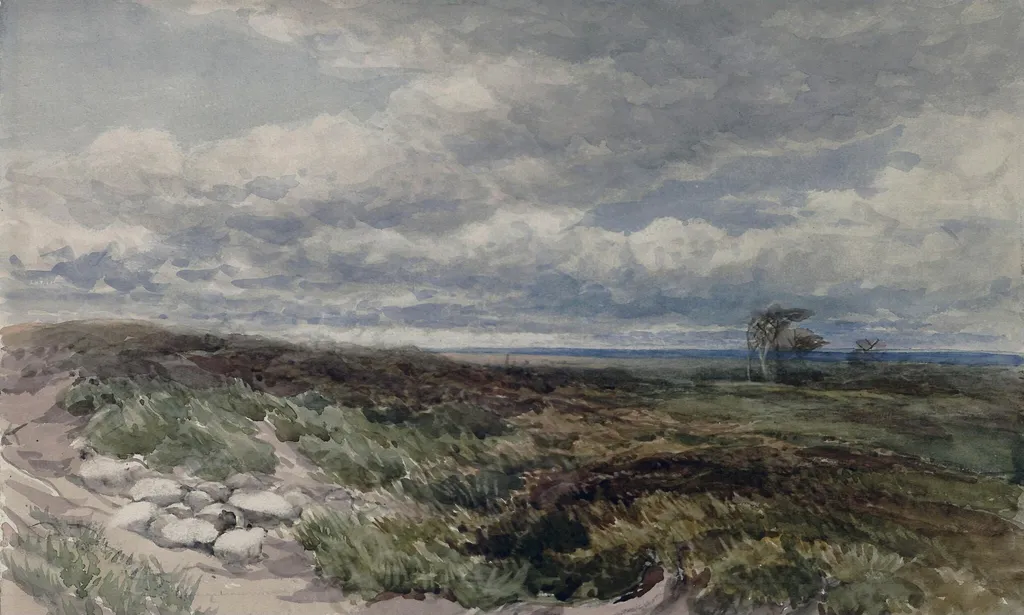
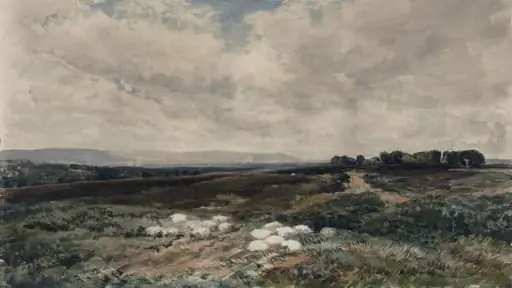
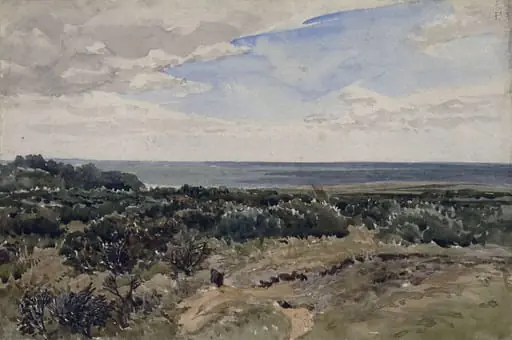
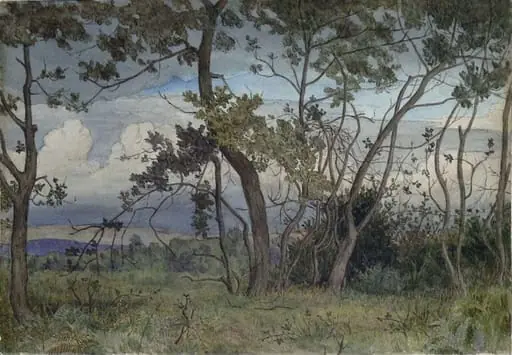
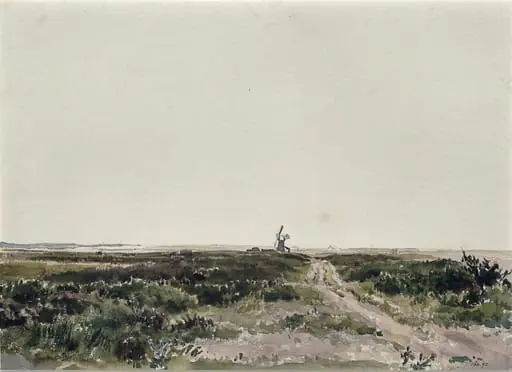
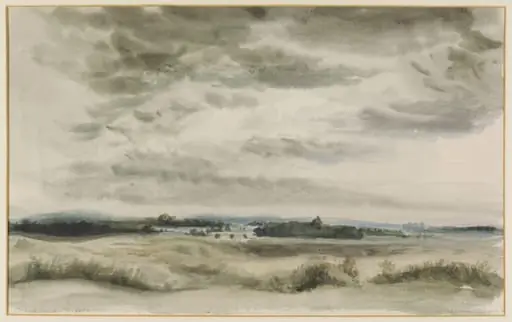
A Windy Moor is a watercolor work on paper by the Impressionist artist Edmund Morison Wimperis. It dates from 1855 and is held in the collection of the Victoria and Albert Museum.
About this work
Overview
The composition emphasizes atmospheric conditions over detailed topography, focusing on the interaction of light, wind, and terrain.
A Windy Moor is a watercolour landscape painted by Edmund Morison Wimperis in 1855. It captures a broad, open moor under a turbulent sky, rendered with loose, fluid brushwork. The composition emphasizes atmospheric conditions over detailed topography, focusing on the interaction of light, wind, and terrain. The work reflects Wimperis’s interest in naturalistic scenes and his skill in watercolour’s transient effects.
Subject & Meaning
The scene portrays a windswept upland, with scattered shrubs, a winding path, and a cluster of sheep huddled against the elements. The sheep, rendered in pale tones, contrast with the muted earth and overcast sky, suggesting vulnerability to nature’s forces. There is no human presence, reinforcing a quiet, solitary mood. The painting conveys the rawness of the landscape rather than idealized pastoral harmony.
Technique & Style
Wimperis employed loose, agile brushstrokes to suggest movement in grasses and clouds, allowing the paper’s texture to contribute to the effect. Washes of diluted pigment create subtle gradations in the sky and ground, while selective opacity defines the sheep and distant trees. Chiaroscuro is used sparingly but effectively to model form and guide the eye toward the receding path, enhancing spatial depth without heavy modeling.
History & Provenance
The painting remained in Wimperis’s possession until his death in 1900. The following year, it was included in a posthumous sale at Christie’s on 12 February 1901, which dispersed his remaining works. No record of prior ownership or exhibition is documented, suggesting it was not widely shown during his lifetime. Its survival indicates it was valued by the artist as a personal study.
Context
Created during a period when British watercolour was gaining recognition as a serious medium, the work aligns with the tradition of topographical and landscape watercolours popular among amateur and professional artists. Wimperis, though not part of the Royal Watercolour Society, shared their interest in capturing natural conditions with immediacy. The painting reflects a broader 19th-century fascination with the emotional resonance of rural England’s wilder regions.
Legacy
A Windy Moor remains a representative example of Wimperis’s watercolour practice, though he is not widely studied today. The painting’s survival in institutional or private collections underscores its role as a quiet testament to his technical command and sensitivity to atmospheric change. It contributes to the understated legacy of mid-Victorian landscape watercolours outside the mainstream art historical canon.
Own this work as a print
Artist & collection

Artist
Edmund Morison Wimperis, was an English landscape painter, mostly in watercolour, and in his earlier career an illustrative wood engraver.