Artwork
Near Aldeburgh, Suffolk
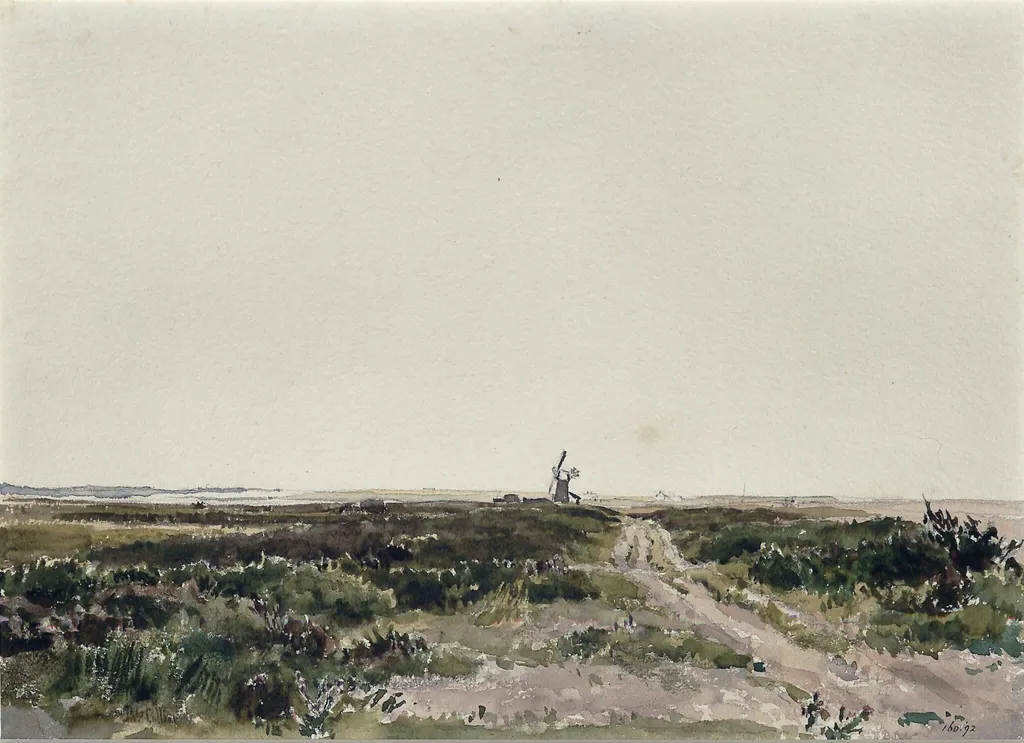
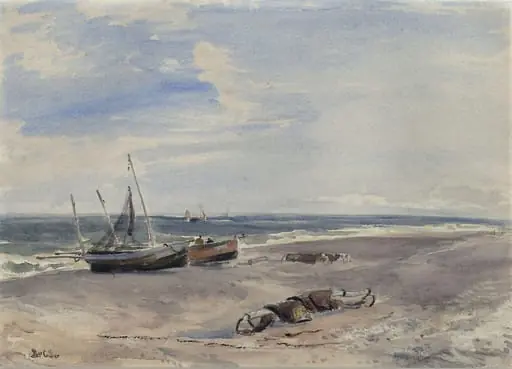
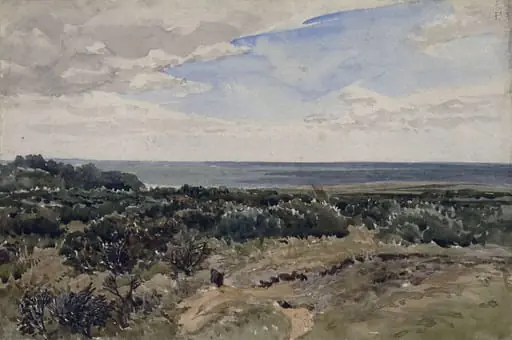
Near Aldeburgh, Suffolk is a watercolor work on paper by the Impressionist artist Thomas Collier. It dates from 1880 and is held in the collection of the Victoria and Albert Museum.
About this work
Overview
Thomas Collier created this watercolour in 1880, capturing a quiet stretch of coastline near Aldeburgh in Suffolk.
Thomas Collier created this watercolour in 1880, capturing a quiet stretch of coastline near Aldeburgh in Suffolk. The work is signed and dated, confirming its origin in the late Victorian period. Executed in transparent washes, it reflects the artist’s interest in landscape observation and the transient effects of natural light, aligning with broader trends in British watercolour practice of the time.
Subject & Meaning
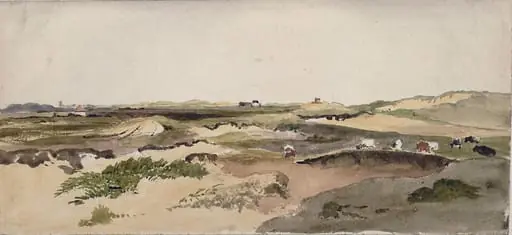
The scene presents a solitary dirt path threading through low dunes, leading the eye toward a distant windmill under a pale sky. No figures are present, emphasizing stillness and isolation. The composition suggests a contemplative engagement with the rural coast, valuing quietude over narrative. The windmill, a functional relic, anchors the landscape in its agricultural context without romanticizing it.
Technique & Style
Collier employed loose, rapid brushwork and diluted pigments to suggest texture and atmosphere. Greens and browns dominate the foreground, softened by muted blues in the sky and sea. The watercolour medium allowed for subtle gradations, capturing the fleeting quality of light across the dunes. The technique avoids detail in favor of impressionistic suggestion, reflecting contemporary interest in direct outdoor observation.
History & Provenance
The work is documented as part of Collier’s output during his active years in East Anglia. While its immediate provenance after 1880 is not widely recorded, it aligns with the tradition of British watercolours collected by regional patrons and institutions. Its survival and recognition suggest it was valued within artistic circles focused on topographical and naturalistic representation.
Context
In the late 19th century, artists increasingly turned to coastal and rural England as subjects, drawn by accessibility and changing perceptions of nature. Collier’s approach echoed the plein air practices of French Impressionists but remained rooted in the British watercolour tradition, emphasizing restraint and atmospheric nuance over bold color or dramatic composition.
Legacy
Collier’s work, including this piece, contributed to the recognition of watercolour as a serious medium for landscape expression. Though not widely known today, his paintings are held in regional collections and studied for their quiet fidelity to place. They represent a quieter strand of Victorian art, one that valued observation over spectacle.
Own this work as a print
Artist & collection
Artist
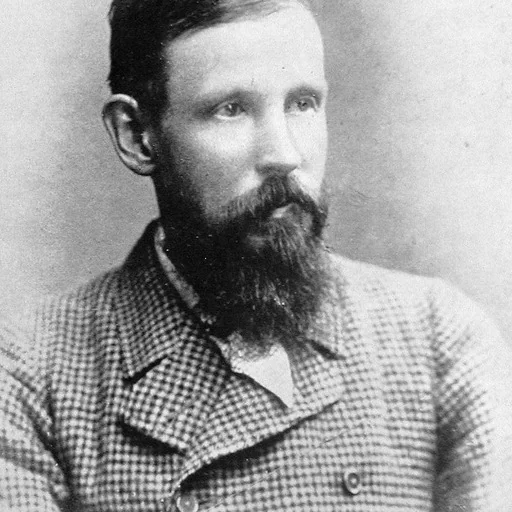
Thomas Collier RI (12 November 1840 – 14 May 1891) was an English landscape painter, mainly in watercolour.