Artwork
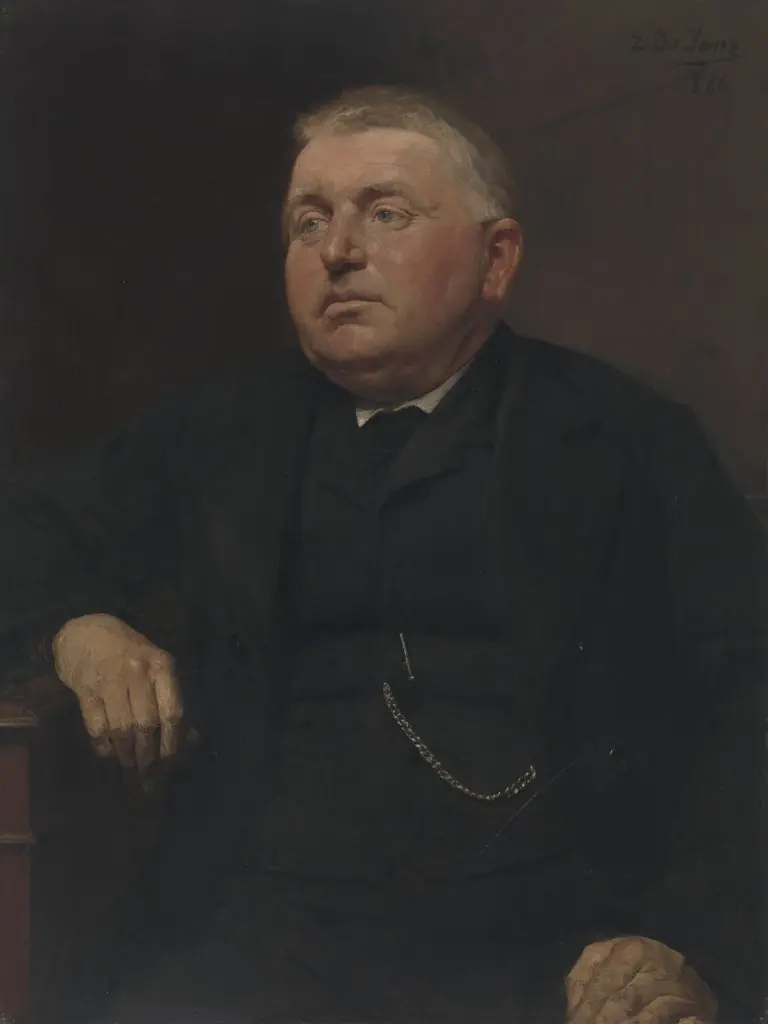
Portret van Eugeen Lefébure
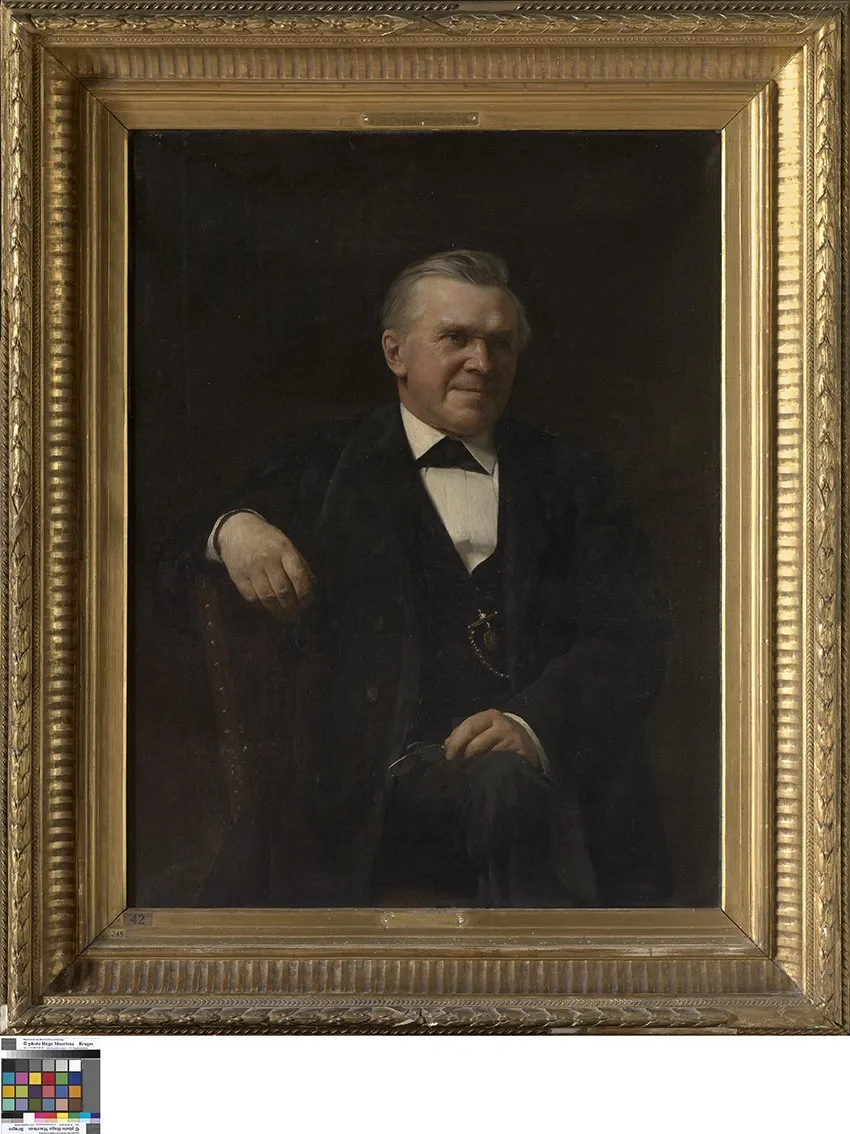
Portret van Eugeen Lefébure is an oil painting by the Impressionist artist Edouard de Jans. It dates from 1892 and is held in the collection of the Groeningemuseum.
About this work
Overview
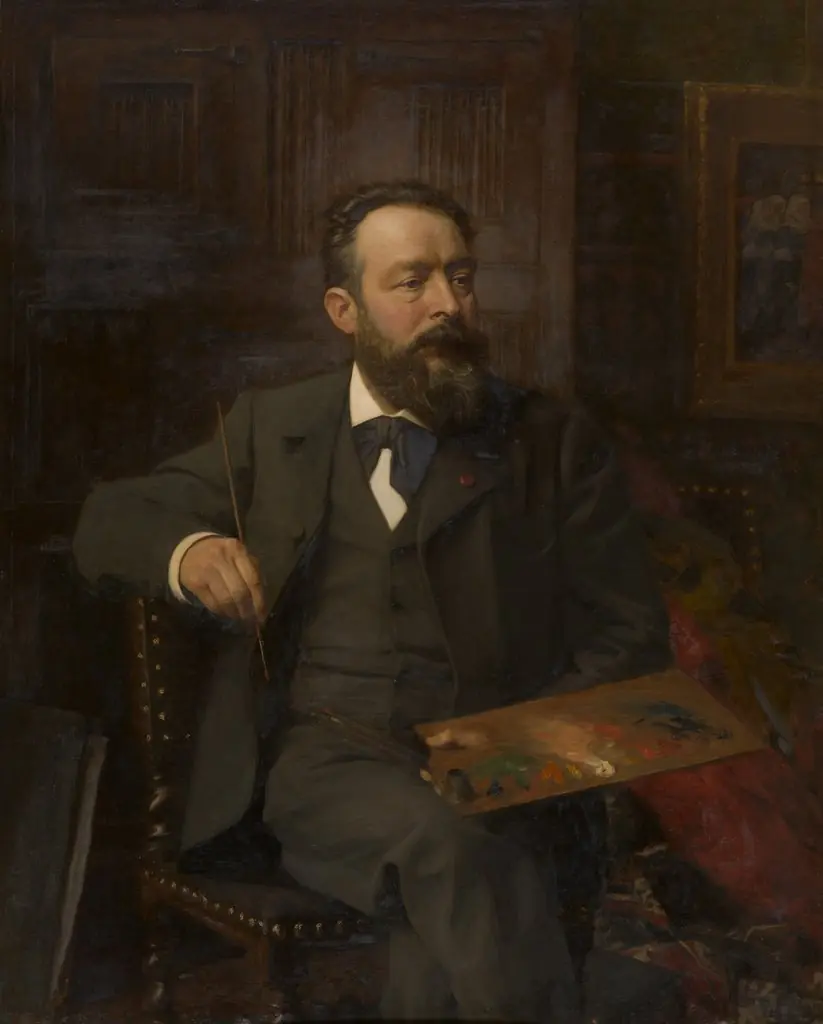
The composition centers on the subject seated in a simple chair, holding spectacles in one hand while the other rests on the chair’s back.
Painted in 1892 by Edouard de Jans, this oil portrait captures Eugeen Lefébure, a Belgian figure of standing. The composition centers on the subject seated in a simple chair, holding spectacles in one hand while the other rests on the chair’s back. The dark, unadorned background isolates the figure, emphasizing his presence. The work is part of the Groeningemuseum’s collection in Bruges, where it remains a quiet example of late 19th-century Belgian portraiture.
Subject & Meaning
Eugeen Lefébure is portrayed not as an idealized figure but as a man of measured dignity. His formal black suit, white shirt, and bow tie suggest professional or civic status. The glasses in his hand imply intellect or habitual use, while his direct gaze and upright posture convey quiet authority. The absence of symbols or settings shifts focus entirely to his demeanor, presenting an intimate yet restrained portrait of personal gravitas.
Technique & Style
De Jans employs chiaroscuro to model the subject’s face and hands, drawing light from a single source to carve volume against the deep background. Brushwork is precise but not overly polished, favoring texture in fabric and skin over idealized smoothness. The palette is restrained—dominated by blacks, grays, and muted whites—reinforcing the somber tone. This approach aligns with academic traditions of the period, prioritizing psychological presence over decorative flourish.
History & Provenance
The painting was completed in 1892 and entered the Groeningemuseum’s collection shortly thereafter. Its provenance remains largely undocumented beyond its acquisition by the museum, suggesting it may have been donated or purchased from the artist’s circle. No significant exhibitions or public records detail its early ownership, but its preservation in a major Belgian institution indicates early recognition of its artistic merit.
Context
In the late 19th century, Belgian portraiture often balanced realism with a sense of solemnity, reflecting bourgeois values and the cultural weight of individual identity. De Jans, trained in the academic tradition, worked within this framework, avoiding the experimental styles emerging in France. Lefébure’s portrait fits this mold: a quiet affirmation of character, rooted in observation rather than narrative or symbolism.
Legacy
Though not widely reproduced or studied outside regional art circles, the portrait endures as a representative work of its time and place. It exemplifies how Belgian artists of the era captured individuality through restraint, avoiding theatricality in favor of psychological nuance. Its continued presence in the Groeningemuseum underscores its role as a quiet testament to the dignity of ordinary prominence in late 19th-century society.
Artist & collection

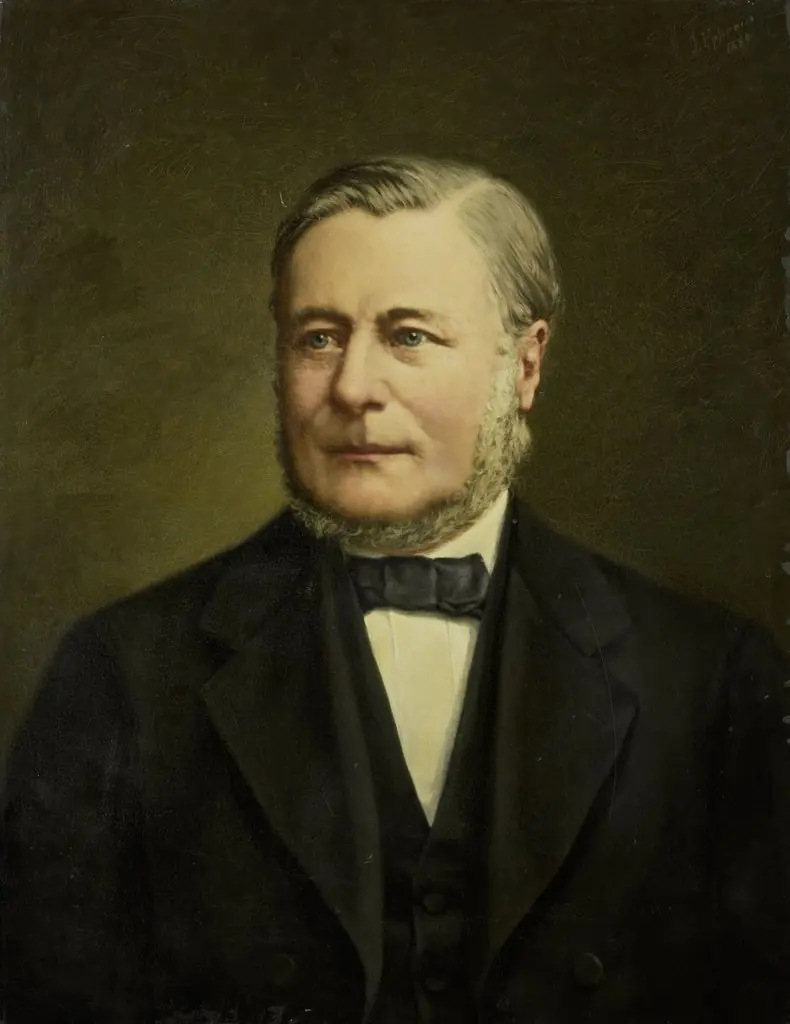 Portrait of Pieter Hendrik van Gelder (1822-1883)
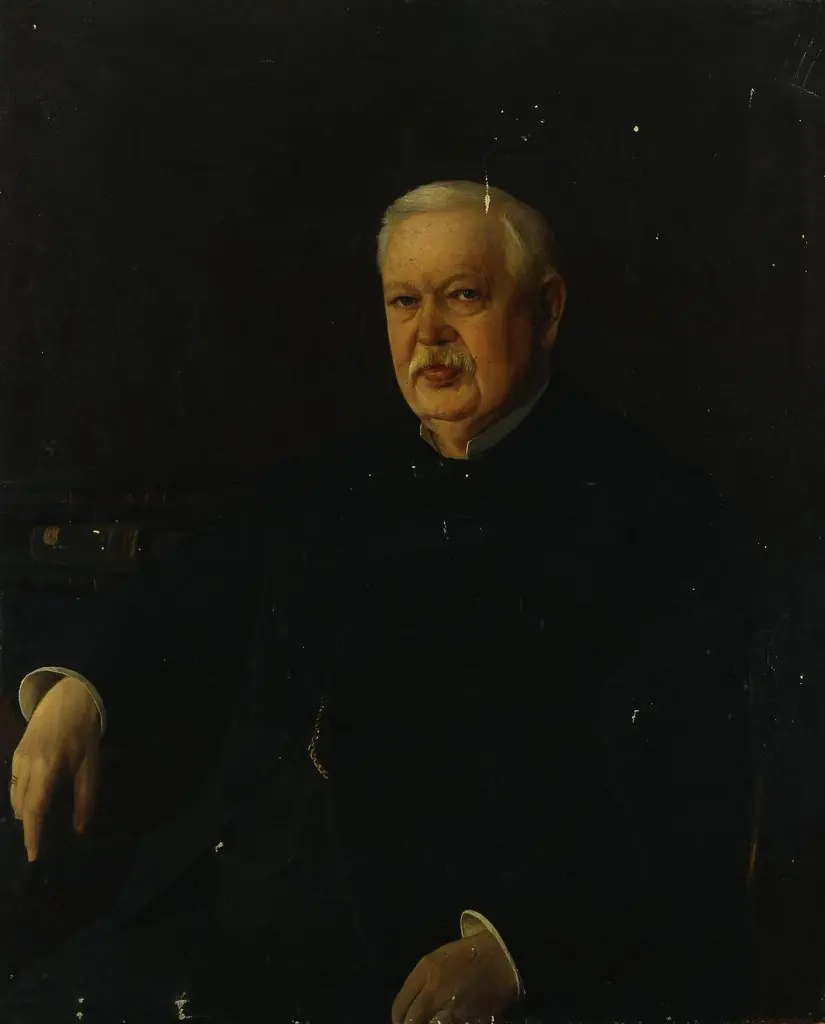 Portrait of Nikolai Koksharov
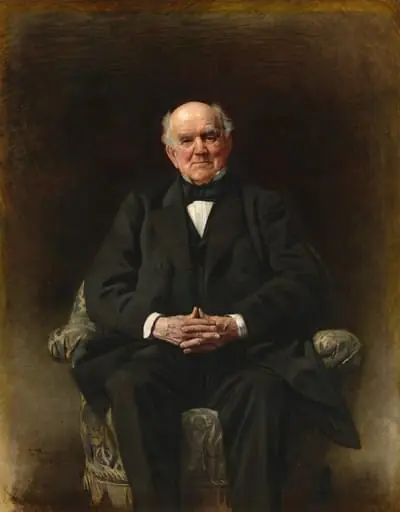 Henry White
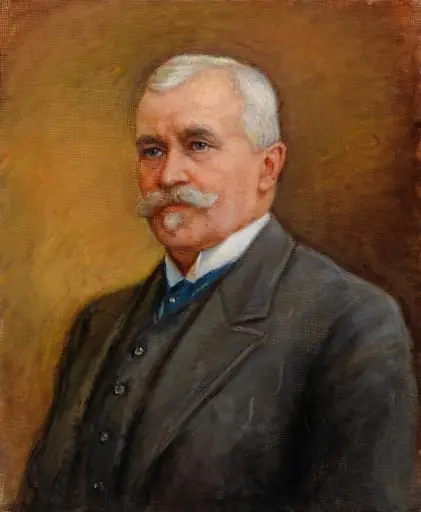 Paul Sinebrychoff nuorempi
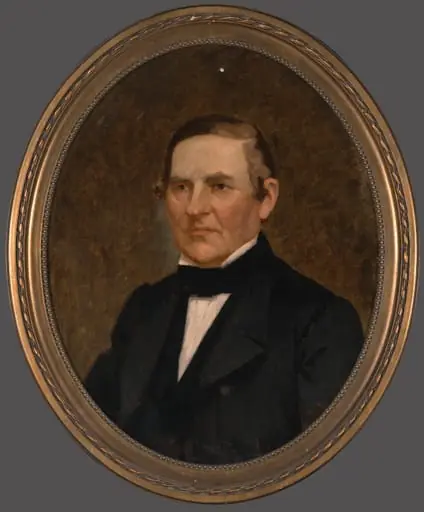 Johan Lindroos vanhana.
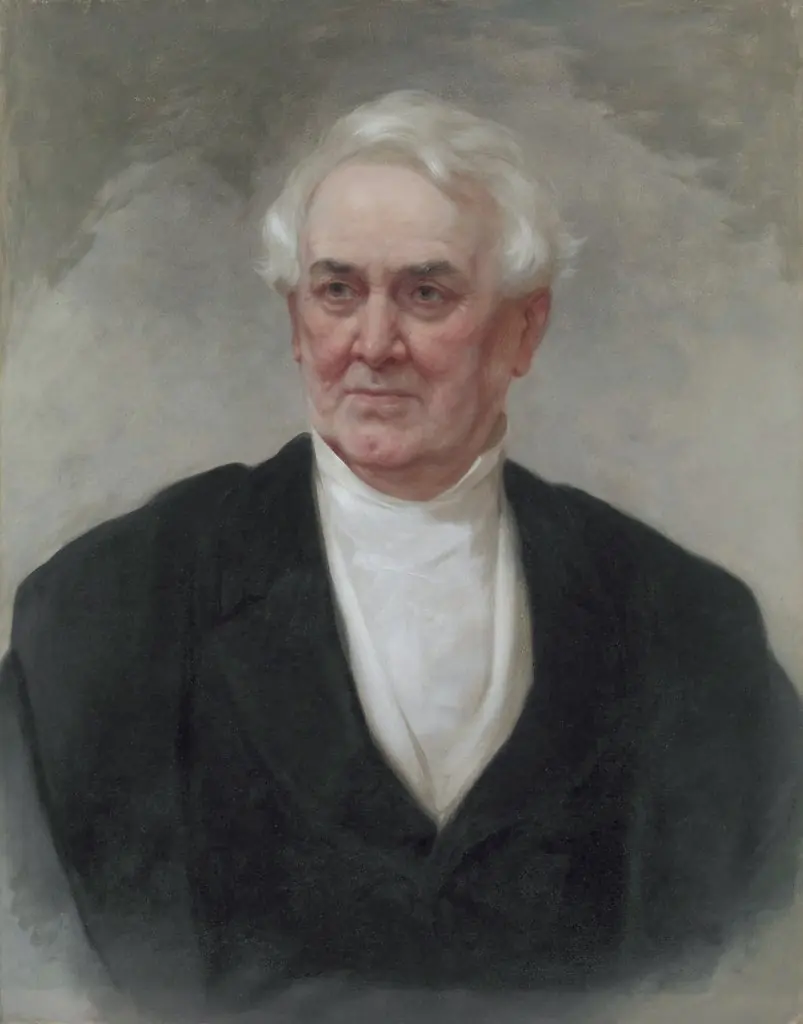 Portrait of William Wilson Corcoran (1798-1888)
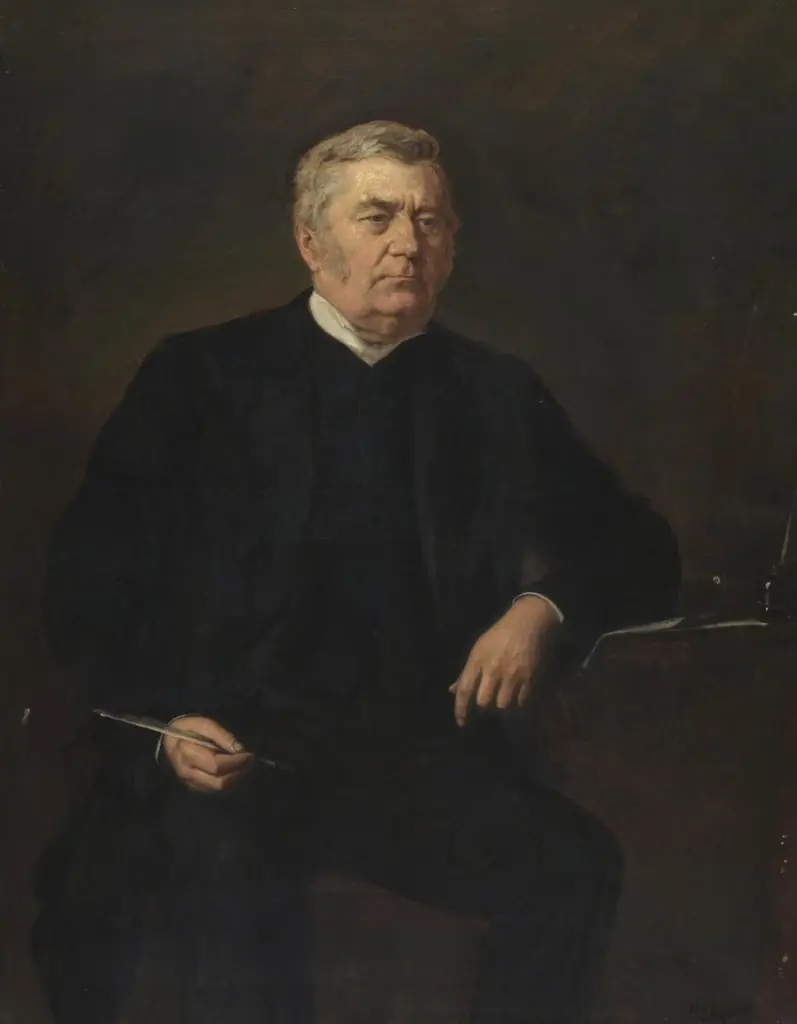 Rev. Edward Matthews
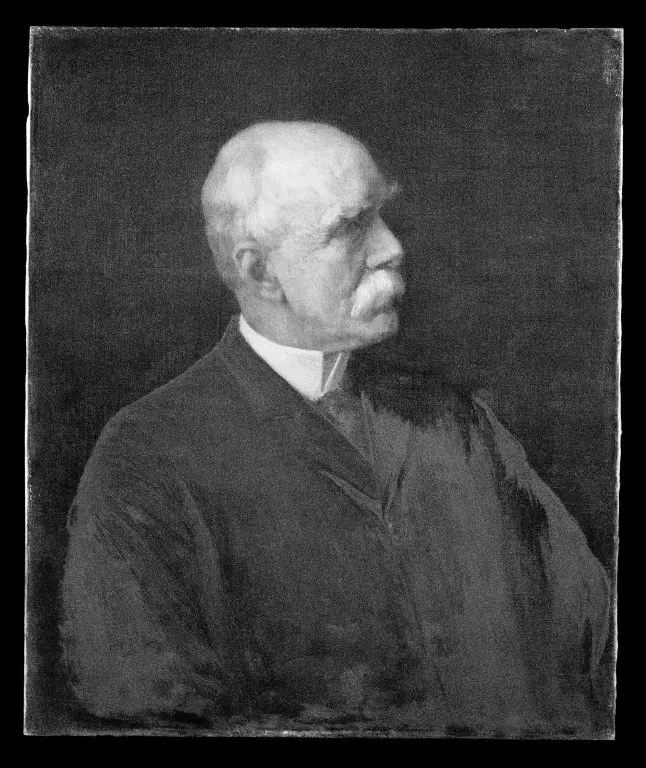 George Callendar Brackett
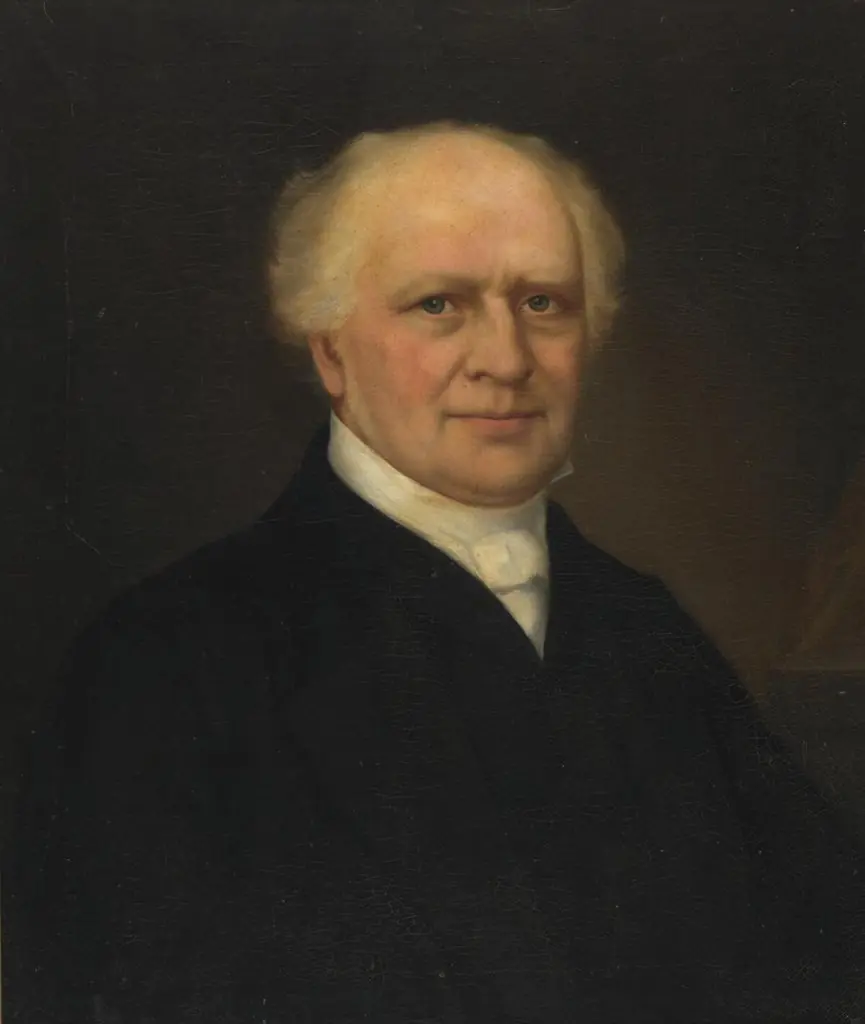 Parch. Henry Rees, Lerpwl, 1798-1869
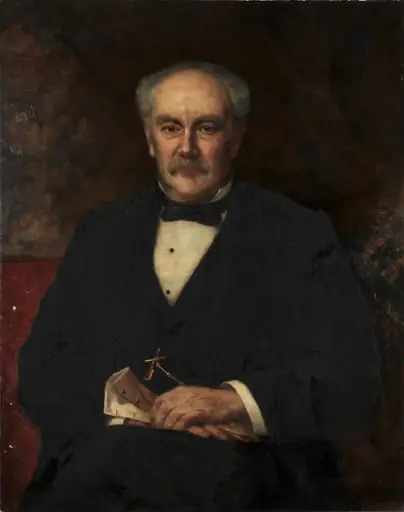 Hinman B. Hurlbut
 The Architect Tieleman Franciscus Suys
 Portret van Auguste Beernaert