Artwork
Ploughing in Bavaria
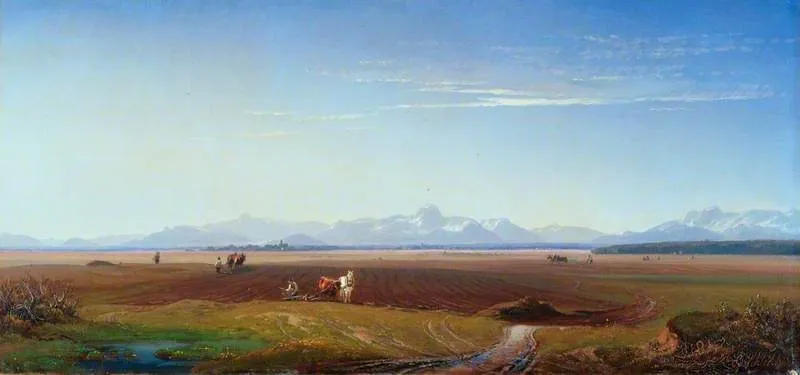
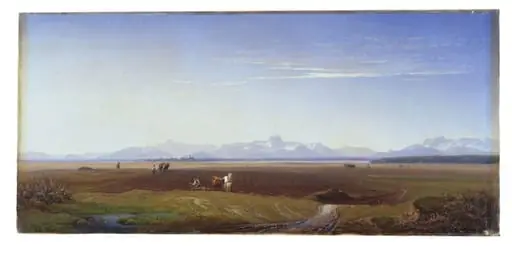
Ploughing in Bavaria is an oil painting by Eduard Schleich the Elder. It dates from 1853 and is held in the collection of the Victoria and Albert Museum.
About this work
Overview
Eduard Schleich the Elder painted *Ploughing in Bavaria* circa 1853, an oil-on-canvas work that captures rural labor in southern Germany.
Eduard Schleich the Elder painted *Ploughing in Bavaria* circa 1853, an oil-on-canvas work that captures rural labor in southern Germany. A Munich-based artist known for his attention to regional landscapes, Schleich focused on the quiet rhythms of agricultural life. The painting is part of the Victoria and Albert Museum’s collection, reflecting its significance in 19th-century German genre painting.
Subject & Meaning
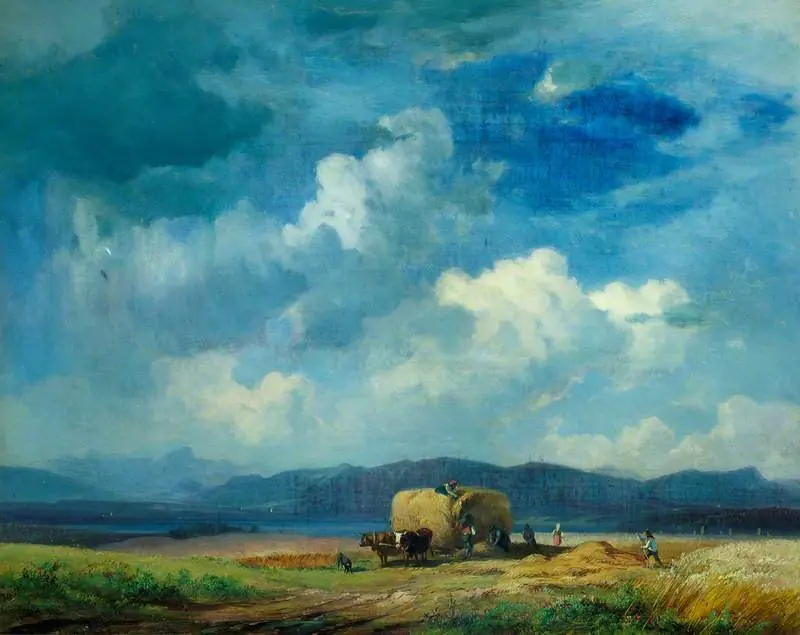
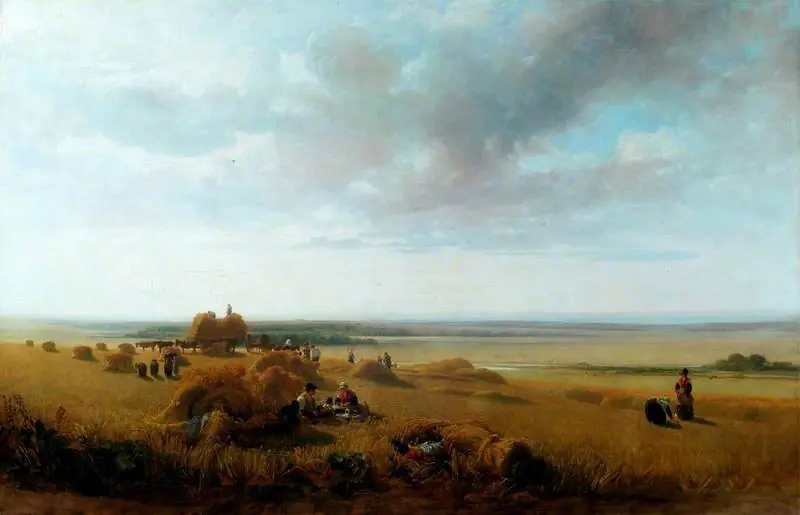
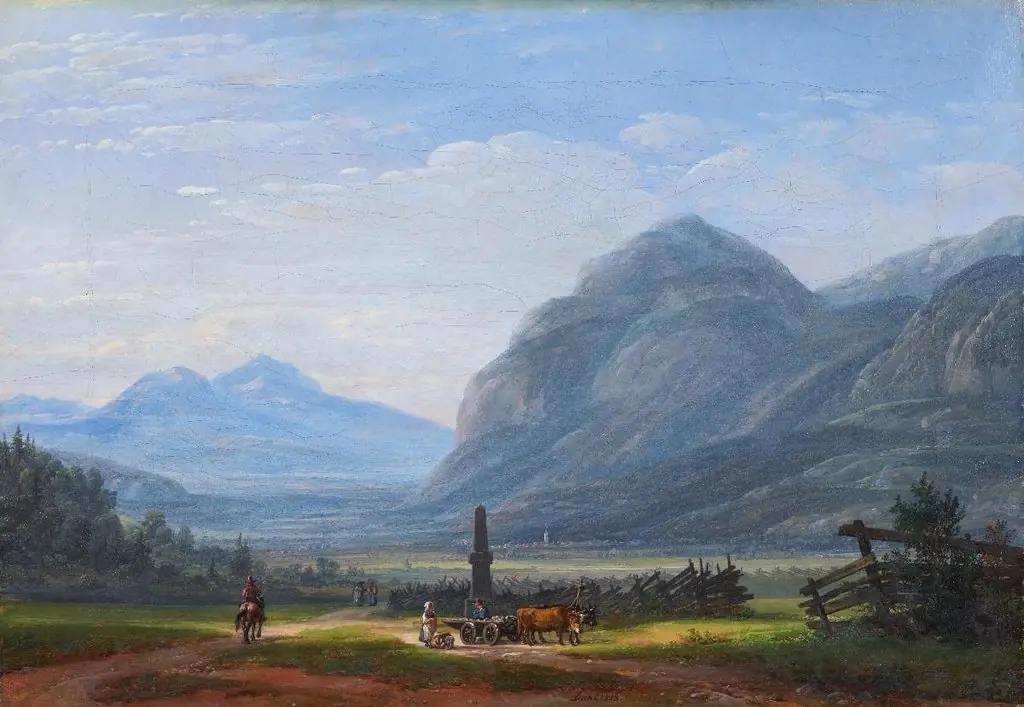
The scene portrays a team of oxen drawing a wooden plough across a broad, open field, guided by a farmer in modest attire. No dramatic narrative is present—instead, the work emphasizes the dignity of daily toil. The quiet solitude of the figures and the unadorned landscape suggest an appreciation for the endurance of rural tradition, free from romantic idealization.
Technique & Style
Schleich employed broad, deliberate brushwork to convey texture and motion—the furrows in the soil, the movement of the oxen, the sway of distant trees. Warm ochres and browns dominate the earth, contrasted with a pale, hazy sky. The composition leads the eye along a winding path toward the horizon, reinforcing a sense of quiet continuity between land and labor.
History & Provenance
Created during Schleich’s mature period, the painting emerged from his sustained interest in Bavarian countryside subjects. It entered the Victoria and Albert Museum’s collection in the late 19th or early 20th century, likely through acquisition or donation. Its preservation reflects institutional recognition of regional German realism during a time when academic art dominated European galleries.
Context
In mid-19th-century Germany, industrialization was reshaping society, prompting artists to document vanishing rural ways. Schleich’s work aligns with a broader trend of regionalist painting that valued authenticity over idealized history or myth. Unlike urban-focused contemporaries, he turned to the fields and farms of Bavaria, offering a grounded vision of national identity rooted in the land.
Legacy
Though not widely known outside Germany, Schleich’s oeuvre contributed to the development of regional realism in 19th-century European art. *Ploughing in Bavaria* remains a representative example of his commitment to depicting ordinary life with observational clarity. The painting continues to serve as a quiet testament to the agricultural rhythms that shaped rural communities before modernization.
Artist & collection
Artist
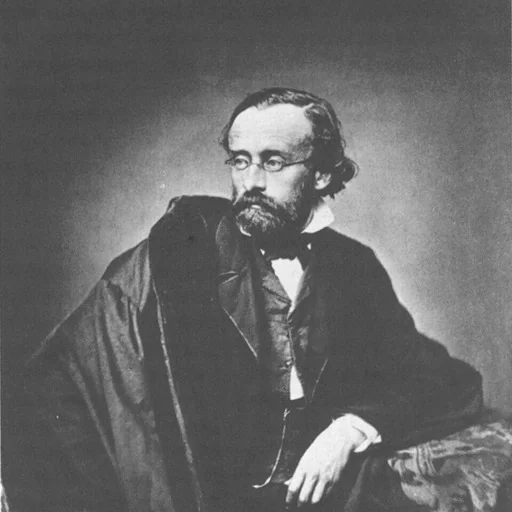
Eduard Schleich (14 October 1812 in Vilsbiburg – 8 January 1874 in Munich) was a German painter. He is generally referred to as The Elder to distinguish him from his son Eduard, who was also a painter.