Artwork
Dort (Dordrecht)
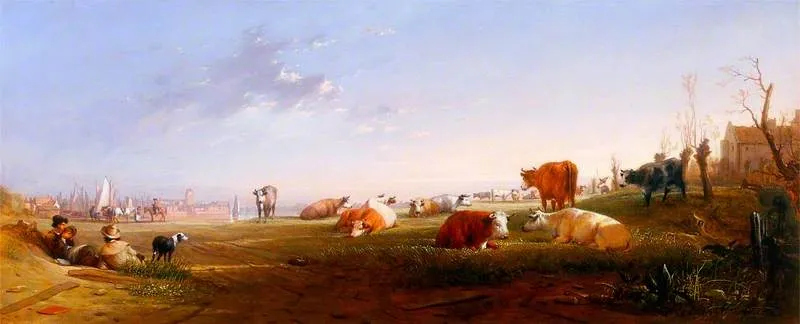
Dort (Dordrecht) is an oil painting by Augustus Wall Callcott. It dates from 1841 and is held in the collection of the Victoria and Albert Museum.
About this work
Overview
The composition avoids dramatic elements, favoring a measured, observational tone characteristic of mid-19th-century British landscape painting.
Painted in 1841 by Augustus Wall Callcott, this oil on canvas depicts the Dutch town of Dordrecht. The work belongs to the collection of the Victoria and Albert Museum in London. It presents a quiet rural scene, emphasizing calm natural light and gentle human activity. The composition avoids dramatic elements, favoring a measured, observational tone characteristic of mid-19th-century British landscape painting.
Subject & Meaning
The scene centers on cows grazing in a low-lying field, with a distant church steeple and modest buildings framing the horizon. Figures seated near the foreground suggest moments of rest, reinforcing a sense of stillness. There is no narrative or symbolic intent; the painting’s value lies in its quiet documentation of everyday life, reflecting a broader 19th-century interest in peaceful, unidealized rural existence.
Technique & Style
Callcott employed soft brushwork and muted tones to render the landscape with subtle gradations of light. The sky, rendered in pale blues and wisps of cloud, diffuses natural illumination across the scene. Foreground details are loosely defined, while distant architecture is rendered with minimal detail, creating atmospheric depth. The technique prioritizes harmony over precision, aligning with contemporary British landscape traditions.
History & Provenance
The painting was completed in 1841 during Callcott’s travels in the Netherlands. It entered the Victoria and Albert Museum’s collection in the 19th century, likely through acquisition or donation. Its preservation reflects institutional interest in British artists’ responses to continental scenery. No significant alterations or documented restorations are recorded in public archives.
Context
Callcott painted during a period when British artists increasingly traveled Europe to study light and landscape. Dordrecht, a historic Dutch town, offered a model of orderly rural life that appealed to Victorian sensibilities. The work aligns with contemporaries like John Constable and David Cox, who valued quiet observation over romanticized grandeur, reflecting a shift toward realism in British art.
Legacy
Though not widely exhibited today, the painting remains a representative example of mid-19th-century British landscape practice. It contributes to the understanding of how British artists engaged with Dutch scenery, not as exotic subjects but as sites of tranquil, ordinary beauty. Its presence in a major museum underscores its role in documenting artistic trends rather than asserting individual genius.
Artist & collection

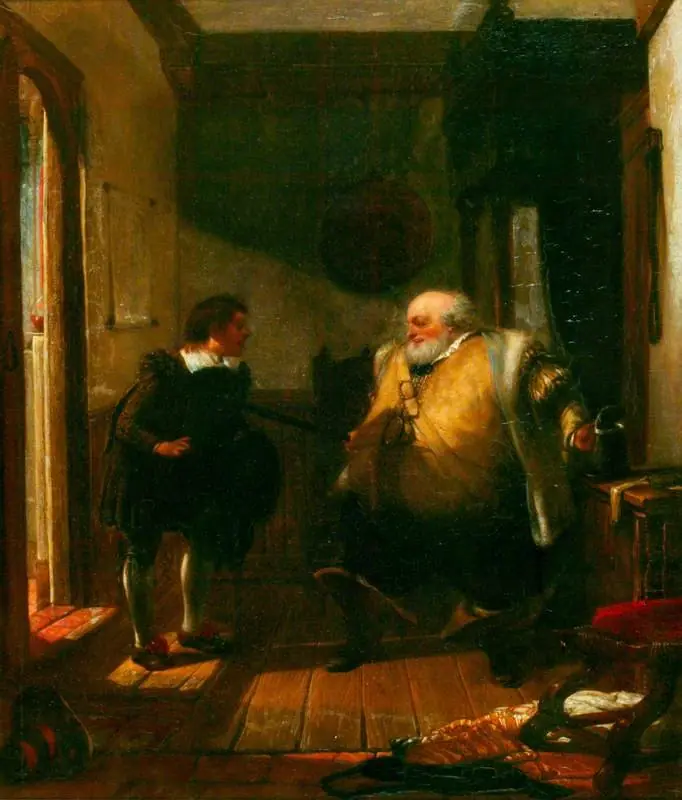 Falstaff and Simple (from 'The Merry Wives of Windsor' by William Shakespeare)
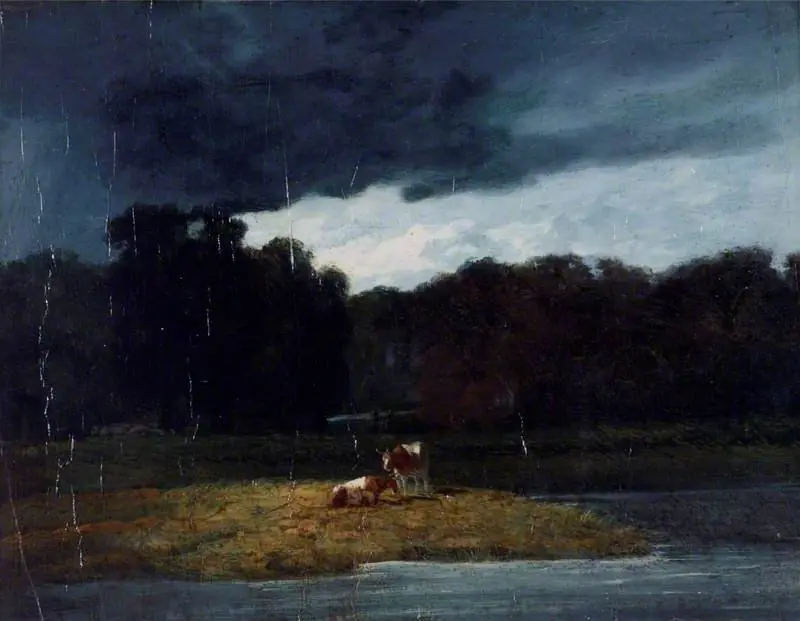 Landscape: A Wood and Cattle under a Stormy Sky
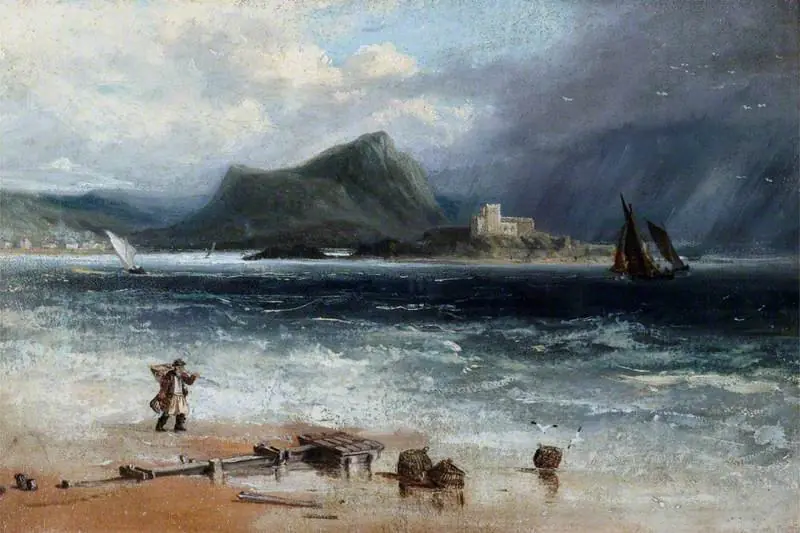 Coast Scene with a Shrimper
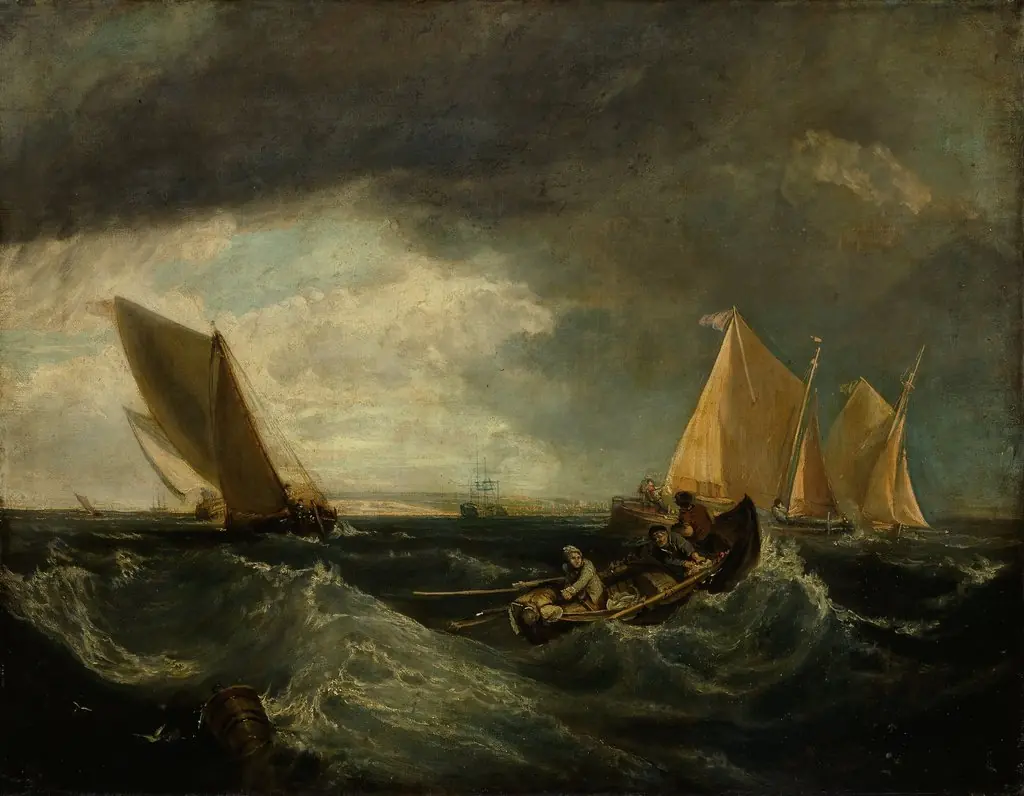 Sheerness and the Isle of Sheppey (after J.M.W. Turner)
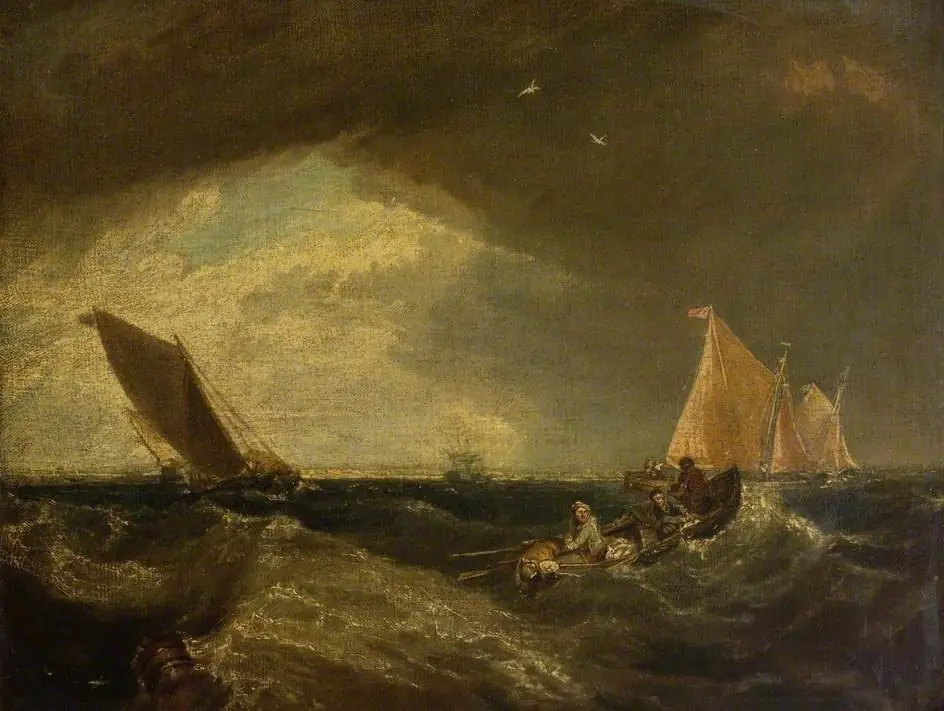 The Junction of the Thames and the Medway
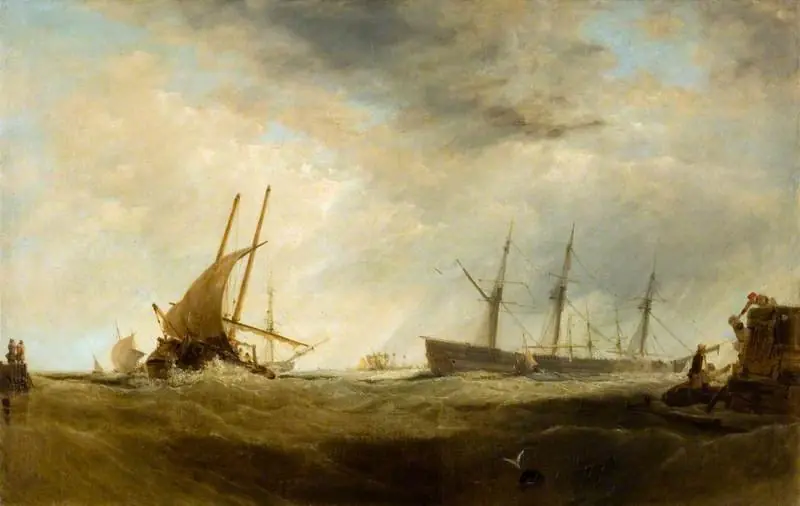 A Brisk Gale: A Dutch East-Indiaman Landing Passengers
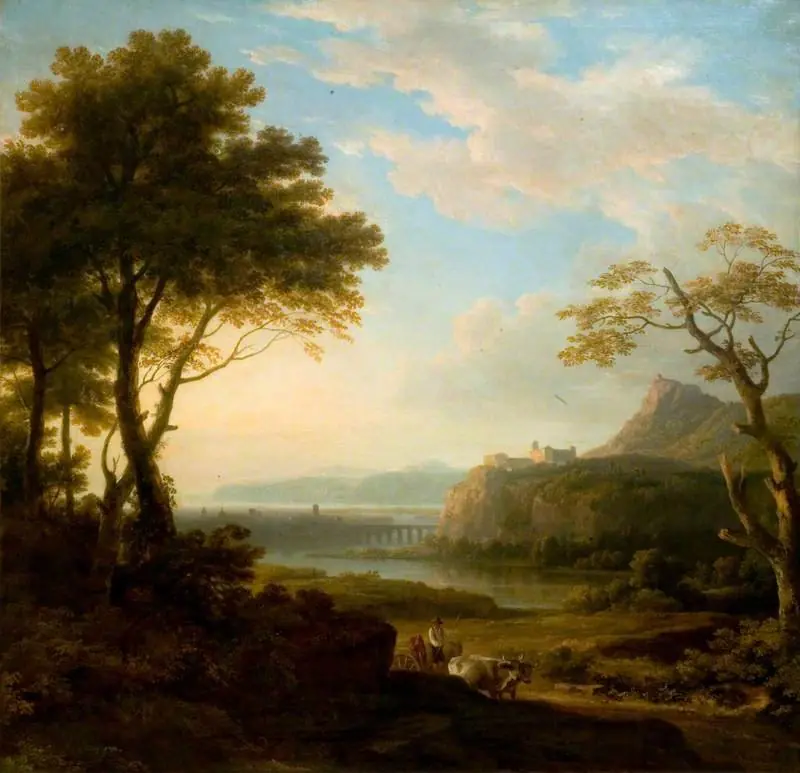 Classical Landscape
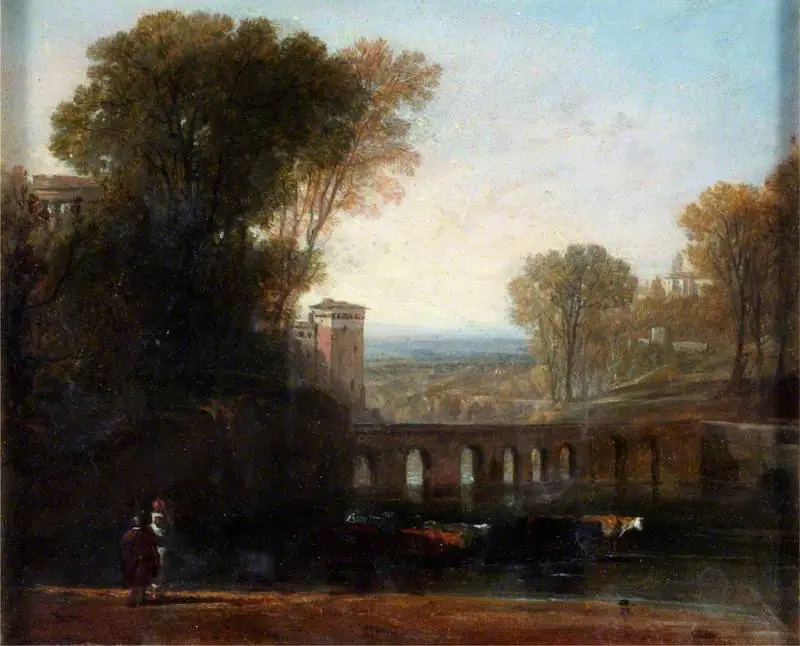 Italian Landscape with Cows Watering
 En fåreflok. Motivet fra Faxingeskoven ved Nysø
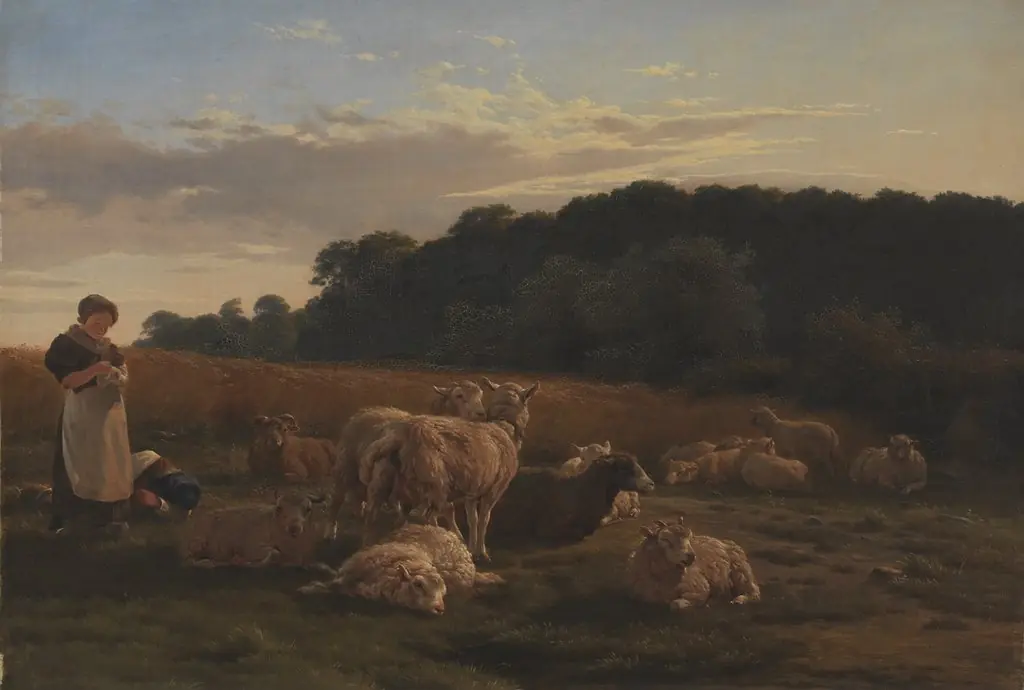 En fåreflok. Motivet fra Faxingeskoven ved Nysø
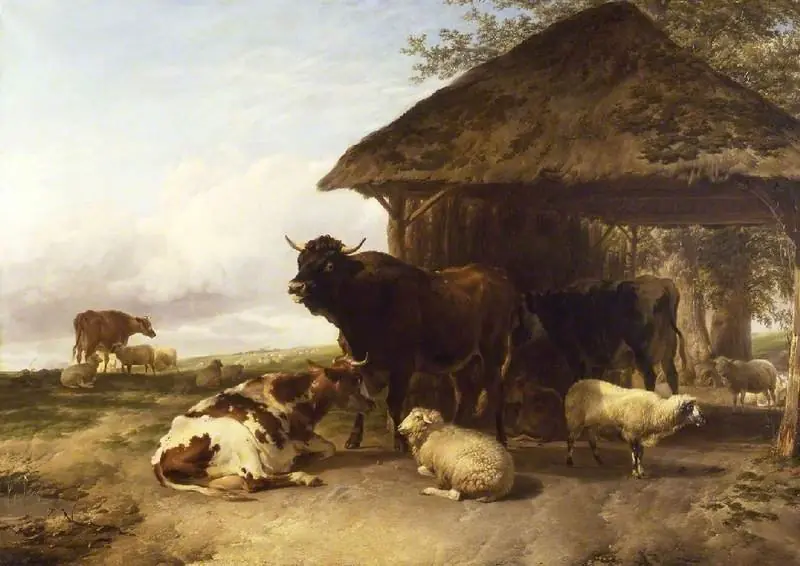 Cattle reposing (1846)
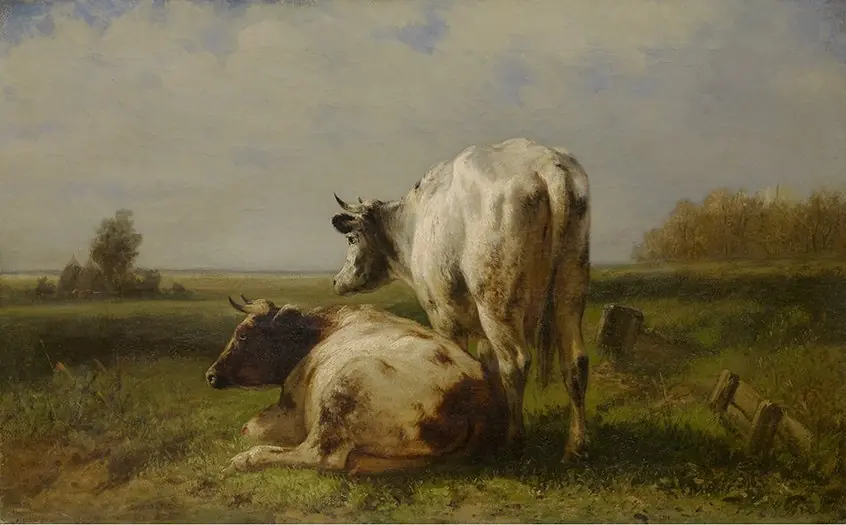 Koeien in de weide
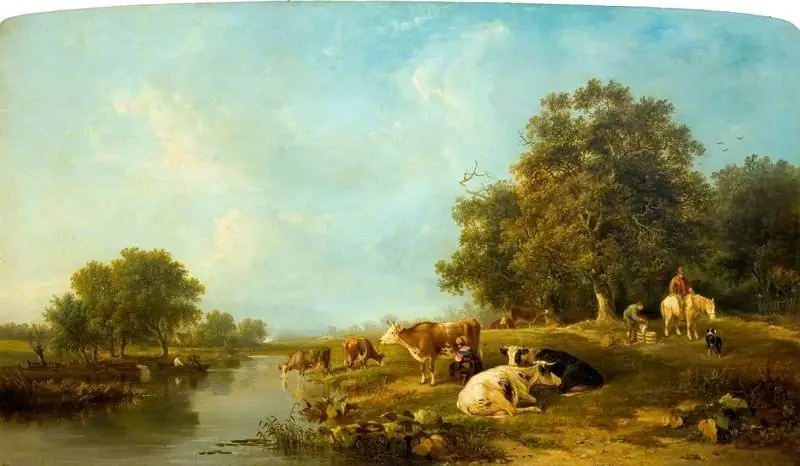 Landscape with Cattle: Milking Time
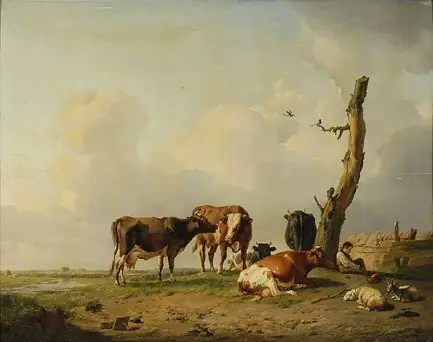 Landschap met herder en vee bij een boom
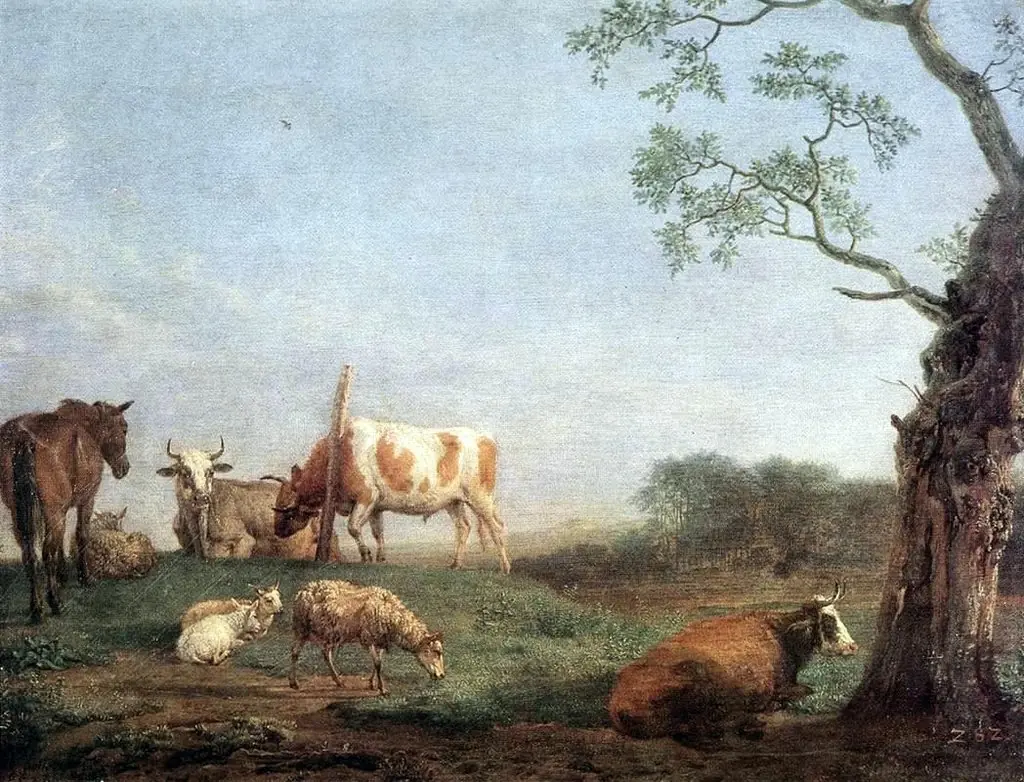 Resting Herd
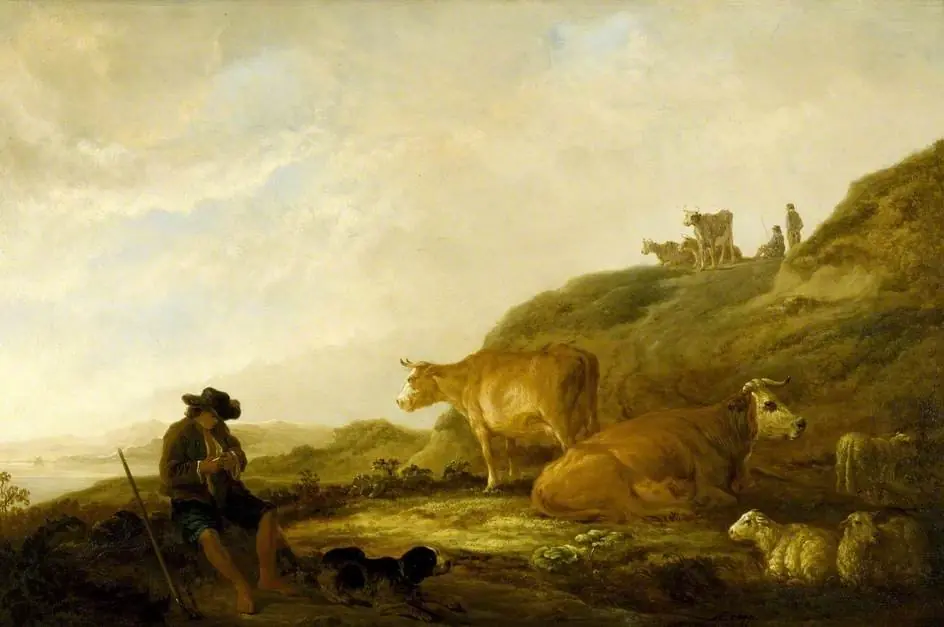 Seated Shepherd with Cows and Sheep in a Meadow
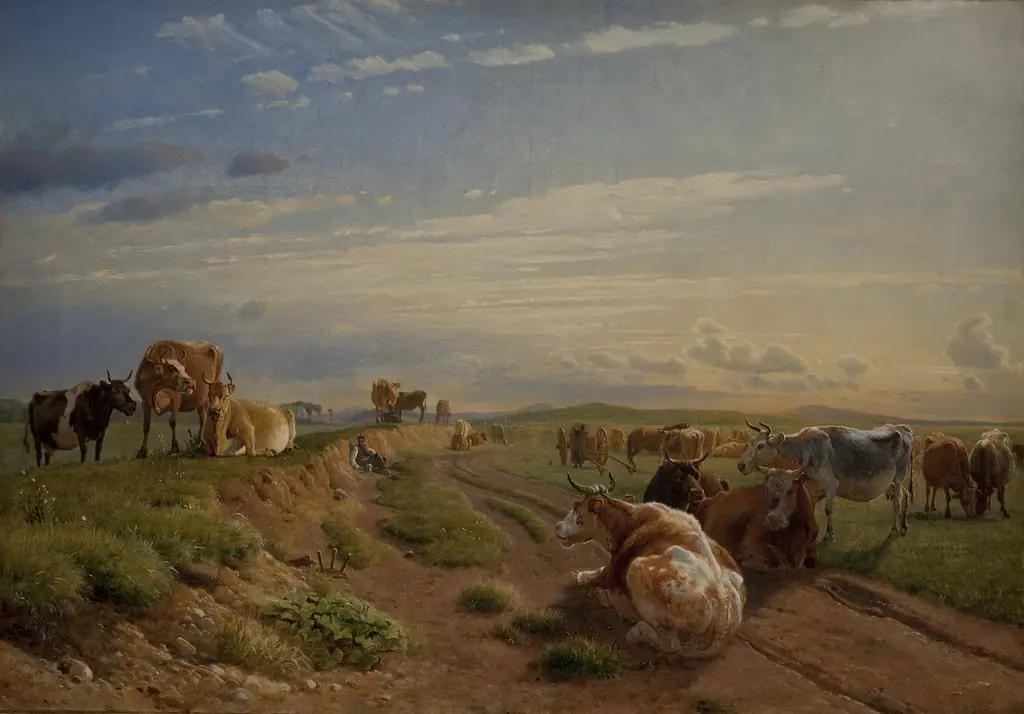 A Milking Place near Vognserup Manor, Zealand
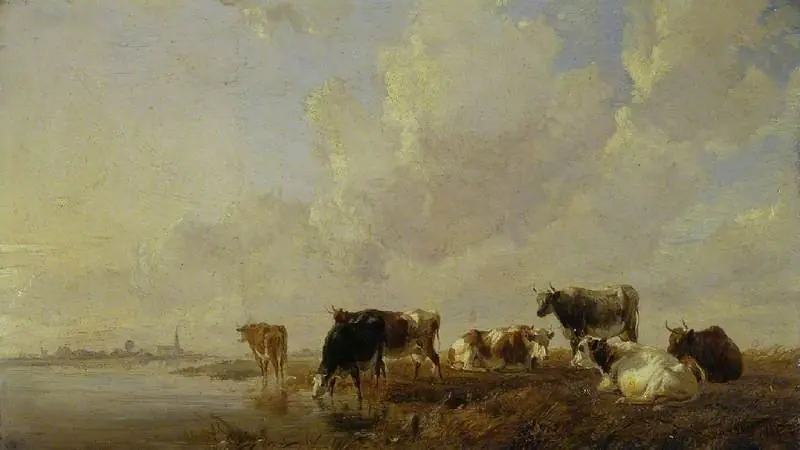 Cattle by a river
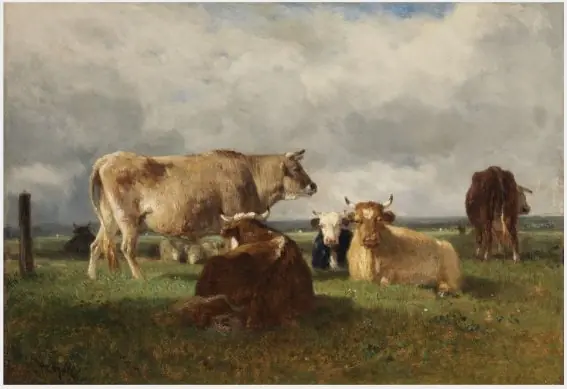 Cattle and Sheep
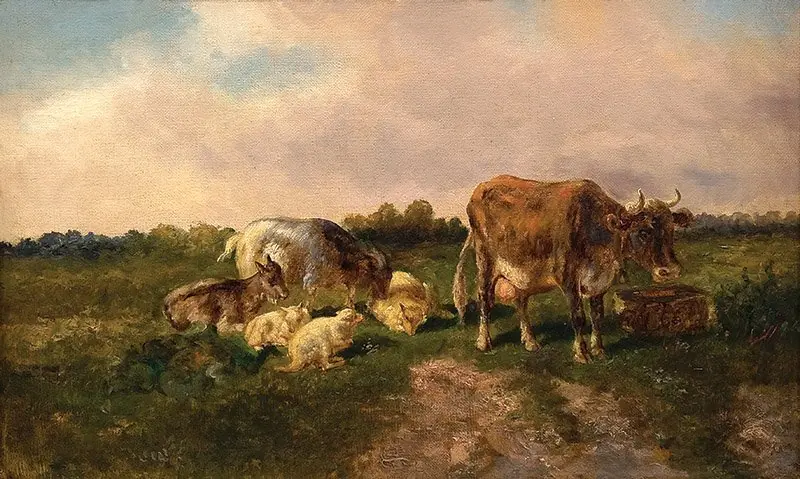 At Pasture