Artwork
Untitled
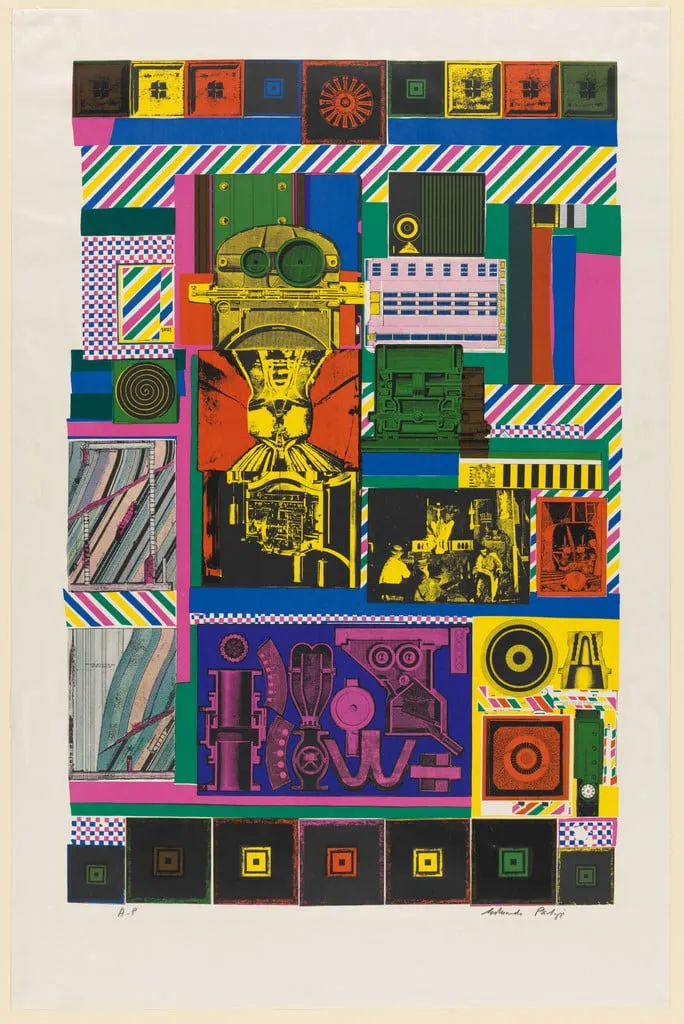
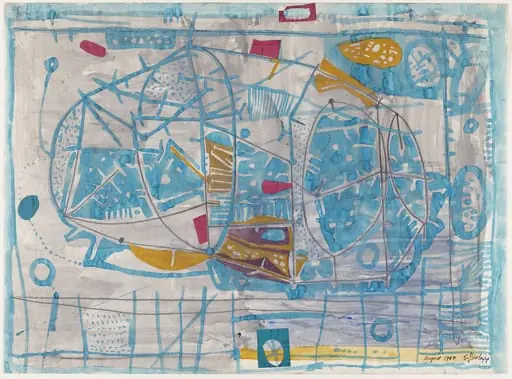
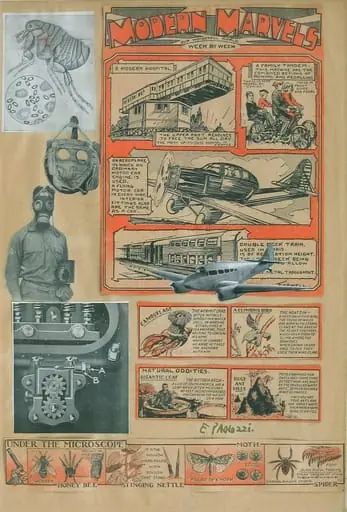
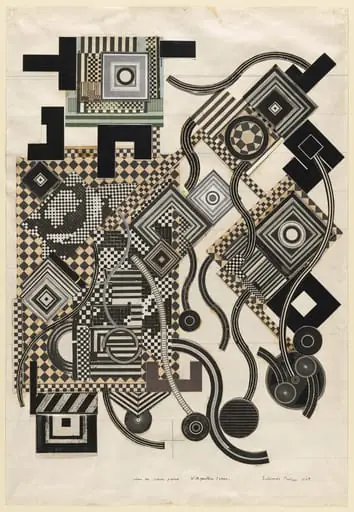
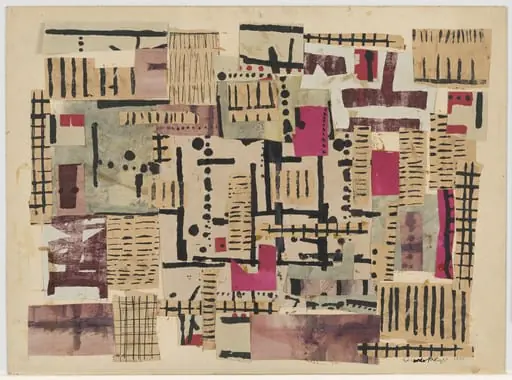
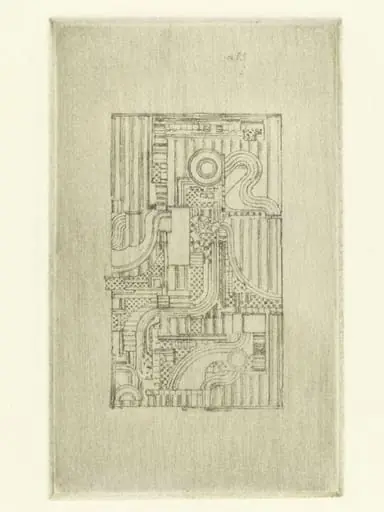
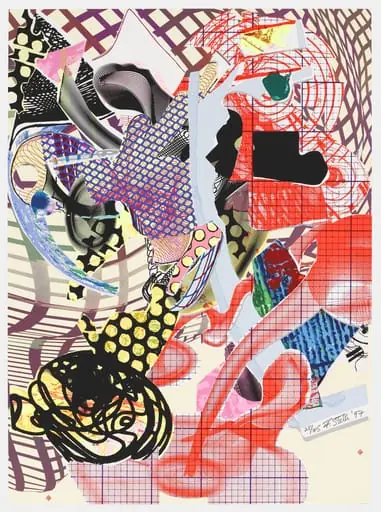
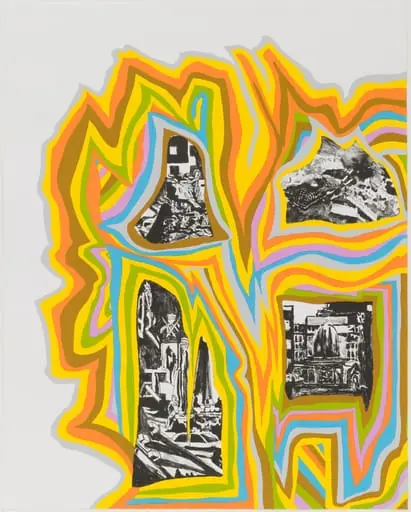
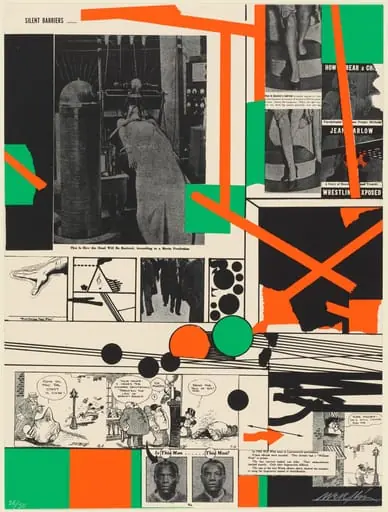
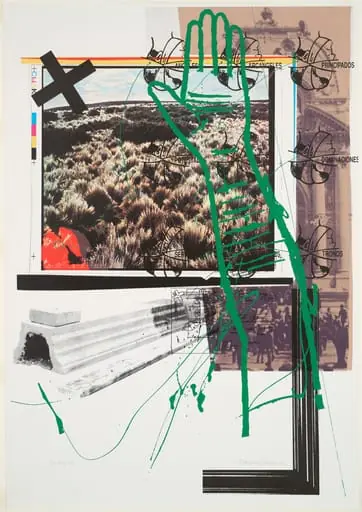
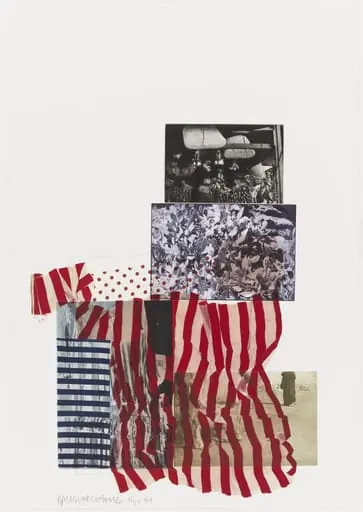
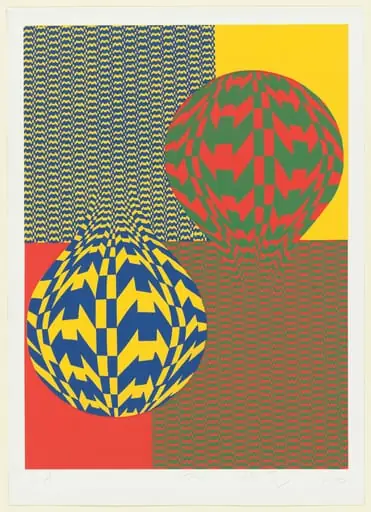
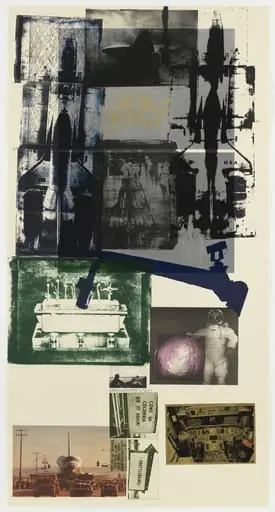
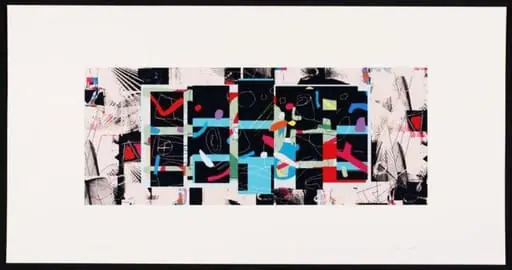
Untitled is an ink print by Eduardo Paolozzi. It dates from 1963 and is held in the collection of the Museum of Modern Art.
About this work
Overview
The technique of screenprinting allowed for sharp, flat color fields and repetitive motifs, aligning with his broader exploration of mechanical reproduction.
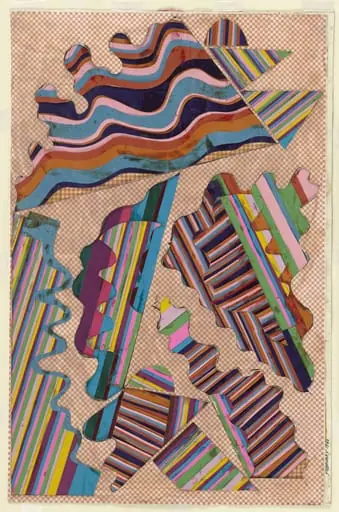
Created in 1963, this screenprint by Scottish artist Eduardo Paolozzi belongs to a series of graphic works that interrogate the visual noise of postwar consumer society. Using layered imagery drawn from advertising, technology, and popular media, the piece exemplifies Paolozzi’s interest in the collision of industrial forms and mass-produced culture. The technique of screenprinting allowed for sharp, flat color fields and repetitive motifs, aligning with his broader exploration of mechanical reproduction.
Subject & Meaning
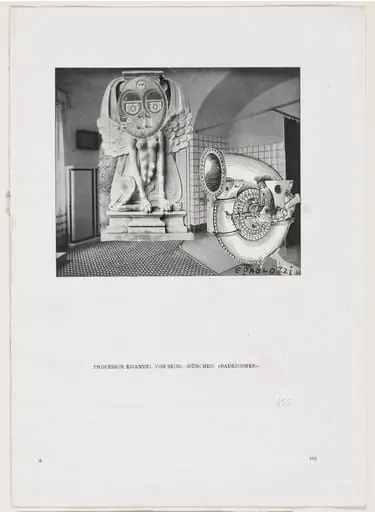
At the center of the composition stands a stylized, mechanical figure resembling a robot, its glowing eyes suggesting artificial consciousness. Surrounding it are fragmented depictions of human figures, trains, and abstract geometric shapes, evoking the dehumanizing pace of modern life. The imagery draws from mid-century sci-fi and advertising, presenting a world where organic and mechanical elements coexist uneasily. The work does not offer clear narrative but instead reflects the disorienting overload of visual stimuli in contemporary society.
Technique & Style
Paolozzi assembled the image through collage, cutting and arranging printed materials before transferring them to a screen for printing. This method enabled the layering of disparate textures—dots, stripes, checks, and swirled lines—into a single, dense composition. Bold primary colors dominate, applied in flat, unmodulated planes typical of screenprint. The result is a visual rhythm that mimics the fragmented, rapid-fire nature of media imagery, rejecting traditional perspective in favor of chaotic simultaneity.
History & Provenance
This screenprint was produced during a period when Paolozzi was deeply engaged with the emerging Pop Art movement, though his approach remained distinct in its emphasis on mechanization and dystopian undertones. It was created in London, where he was part of a circle of artists responding to American consumer culture through British sensibilities. The work has been held in institutional collections since the 1960s, including the Tate and the Museum of Modern Art, reflecting its significance in postwar British printmaking.
Context
Emerging in the early 1960s, this work responds to rapid technological change and the saturation of public space with commercial imagery. Paolozzi’s use of found visual material aligns with broader European tendencies to critique modernity through collage, echoing Dada and Surrealist precedents while engaging with the aesthetics of advertising and science fiction. Unlike American Pop artists who often celebrated consumer culture, Paolozzi’s work conveys unease, positioning the machine as both marvel and menace.
Legacy
Paolozzi’s screenprints, including this one, influenced later generations of artists working with appropriation and layered imagery. His fusion of industrial motifs with graphic design helped bridge fine art and popular culture in British art. While not widely exhibited in mainstream pop art surveys, his work remains a critical reference in discussions of postwar printmaking and the visual language of technology. Institutions continue to include his prints in exhibitions examining the intersection of art and mass media.
Artist & collection
Artist
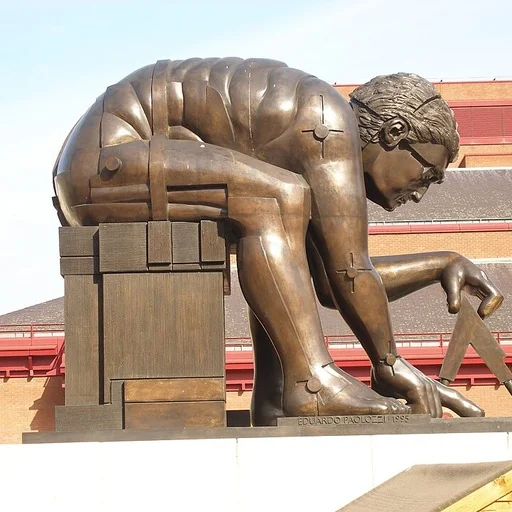
Sir Eduardo Luigi Paolozzi (, Italian: ; 7 March 1924 – 22 April 2005) was a Scottish artist, known for his sculpture and graphic works. He is widely considered to be one of the pioneers of pop art.