Artwork
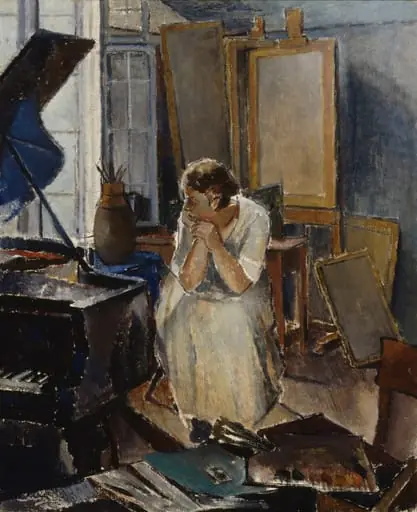
At the Grand Piano
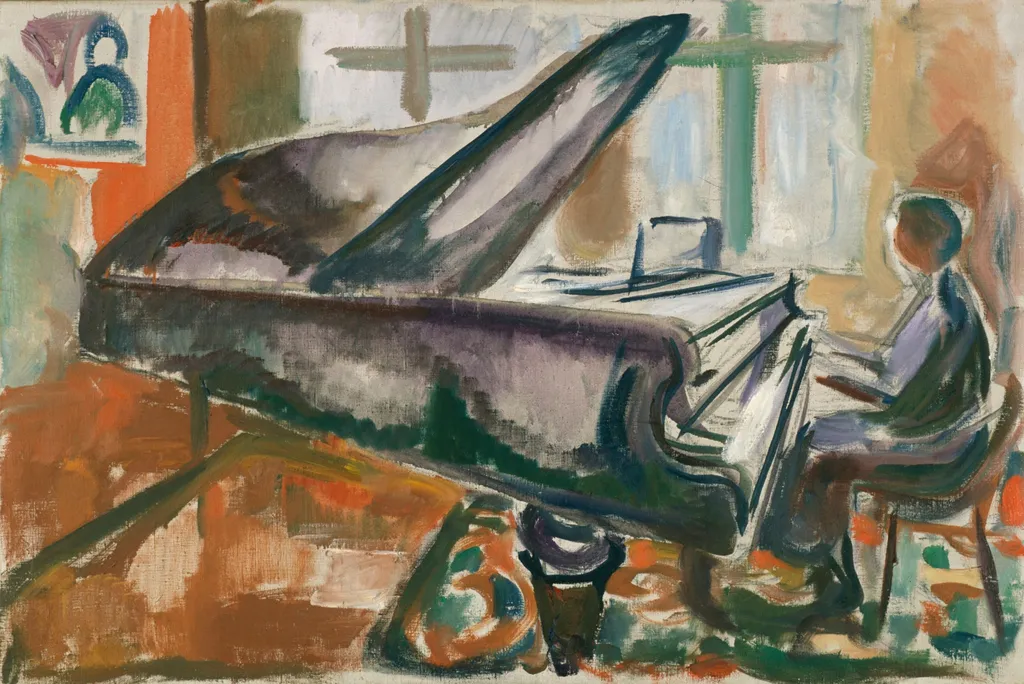
At the Grand Piano is an oil painting by the Post-Impressionist artist Edvard Munch. It dates from 1916 and is held in the collection of the Munch Museum.
About this work
Overview
The composition emphasizes stillness and inward focus, consistent with Munch’s broader interest in psychological atmosphere.
Painted in 1916, *At the Grand Piano* is an oil work by Norwegian artist Edvard Munch. It captures a solitary woman seated at a grand piano, her back turned to the viewer. The composition emphasizes stillness and inward focus, consistent with Munch’s broader interest in psychological atmosphere. The painting resides in the Munch Museum in Oslo, part of a collection that preserves his personal and artistic legacy.
Subject & Meaning
The figure at the piano is not engaged in performance but in quiet reflection, suggesting an internal rather than external narrative. Munch often used solitary figures to convey emotional isolation or introspection. Here, the absence of facial expression and the muted interaction with the instrument invite speculation about memory, solitude, or unspoken thought, aligning with his lifelong thematic concerns.
Technique & Style
Munch employed thick, deliberate brushwork typical of his post-impressionist phase, layering oil paint to build texture and depth. The warm, earthy palette—ochres, burnt yellows, and muted oranges—creates a contained, intimate space. Light from the window falls softly, modeling form without dramatic contrast. The flattened perspective and simplified architecture reflect his move away from naturalism toward emotional expression.
History & Provenance
Created during Munch’s mature period, the painting emerged after decades of personal turmoil and artistic development. He studied at the Royal School of Art and Design in Kristiania and was shaped by the radical intellectual circles of Oslo, particularly the ideas of Hans Jæger. The work remained in his possession until his death, eventually entering the Munch Museum’s collection, which holds the largest assemblage of his works.
Context
In 1916, Munch was living in relative seclusion near Oslo, focusing on domestic interiors and quiet figures after years of public acclaim and personal crisis. This period saw a shift from overt symbolism to more subdued, contemplative scenes. *At the Grand Piano* reflects this transition, echoing themes from his earlier works but with greater restraint and a quieter emotional register.
Legacy
The painting contributes to the understanding of Munch’s later oeuvre, where psychological depth replaced overt expressionism. It demonstrates his sustained interest in the private moments of human experience. While less widely known than *The Scream*, it remains a significant example of his ability to convey inner life through atmosphere, composition, and restrained color.
Own this work as a print
Artist & collection
Artist
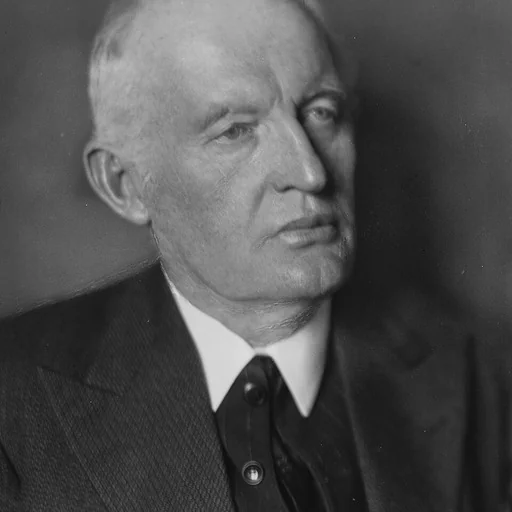
Edvard Munch ( MUUNK; Norwegian: ; 12 December 1863 – 23 January 1944) was a Norwegian painter.